

Campus News
Liverpool fans insight
March 12th, 2013
Researchers in Nottingham are studying the response to a fly-on-the wall documentary about Liverpool FC which reached a worldwide audience of 500 million.
BEING: Liverpool was screened by Channel 5 last year and researchers from the University’s Institute for Screen Industries Research looked at the impact of the programme on behalf of the FOX Soccer network.
The researchers looked at reaction from British viewers. They studied over 5,000 online messages on sources such as Twitter, fan sites and national and regional newspaper websites. Hundreds of questionnaires were distributed and focus groups of viewers also contributed to the findings.
The research was led by Dr Gianluca Sergi, Director of the Institute for Screen Industries Research at the School of Cultures, Languages and Area Studies. He said: “The research work we have done on BEING: Liverpool with FOX Soccer, demonstrates the value that the Institute can provide to TV and film production companies and other businesses in this sector. The findings of this research will help FOX ensure that future programmes can be designed to more closely appeal to the needs of the viewers.”
Rarely seen insights such as the day-to-day work of the manager and what goes on when players get transferred and undergo medicals particularly interested viewers, the study found.
David Nathanson, Executive Vice President and General Manager of FOX Soccer, said: “It was a great opportunity for us to work with the Institute for Screen Industries Research on this project. BEING: Liverpool was a ground-breaking, behind-the-scenes documentary that provided fans with never-before-seen footage of one of soccer’s most celebrated clubs.
“The research the University provided us with will be incredibly useful in informing the development of future productions of this type, as well as the associated marketing activities and messages for a British audience.”
The Institute offers a range of research and expertise for partners in industry, including mobile TV and film viewing, emerging markets, new audiences, brand identity, global production trends and film policy and culture.
Mike Carr, Director of Business Engagement and Innovation Services at the University, added: “The excellent work which Dr Sergi’s team has done with FOX is a great example of the breadth of expertise that we have here at the University that businesses are able to tap into. My advice to any business that either requires help with a particular piece of research, or perhaps needs specialist consultancy support, is to contact us in the first instance to discuss how we may be able to assist.”
Tags: BEING: Liverpool, Channel 5, David Nathanson, Director of Business Engagement and Innovation Services, Director of the Institute for Screen Industries Research, Dr Gianluca Sergi, Executive Vice President and General Manager of FOX Soccer, FOX Soccer, Institute for Screen Industries Research, Liverpool FC, Mike Carr
Posted in Research | Comments Off on Liverpool fans insight
Lakeside’s hit show
March 12th, 2013
More than 18,000 people visited the Saturday Night and Sunday Morning exhibition at Lakeside Arts Centre.
Saturday Night and Sunday Morning: The Authentic Moment in British Photography was inspired by Alan Sillitoe’s groundbreaking Nottingham-based novel and film adaptation.
This exhibition comes on the back of a year- and-a-half of impressive visitor numbers for Lakeside, which started with the LS Lowry exhibition, which attracted over 46,000 visitors.
Lakeside director Shona Powell said: “I’m thrilled that Saturday Night and Sunday Morning has reached more than 18,000 people, making it our second most successful exhibition in the history of the Djanogly Art Gallery.
“We’ve had an incredibly enthusiastic response from visitors, and walking around it you could always hear people talking about memories evoked by the photographs on display. It really has touched many people who live in Nottingham, or have at some stage of their lives lived here.”
Tags: Alan Sillitoe, Djanogly Art Gallery, Lakeside Arts Centre, Saturday Night and Sunday Morning: The Authentic Moment in British Photography, Shona Powell
Posted in News, Uncategorized | Comments Off on Lakeside’s hit show
LGBT research
March 11th, 2013
Researchers are asking LGBT people 60 and over about their experiences and concerns surrounding end of life care. The group are the most likely to face discrimination during end of life care, a Department of Health consultation discovered.
Experiences shared with the University’s The Last Outing project will be used to inform and improve end of life policy for these groups.
The project, the first of its kind in the UK, is funded by the Marie Curie Cancer Care Research Programme and is based at the University’s Sue Ryder Care Centre.
Dr Kathryn Almack, who is leading the project, said: “This is a chance for people who have felt invisible a lot of the time to have their voice heard. The Sue Ryder Care Centre is very committed to ensuring that our research improves service delivery and goes out to policy makers and practitioners.”
Little research has been done in this area and there is a lack of awareness that end of life care for LGBT people is even an issue. Dr Almack said: “Very often we’ve found, talking to care providers, they would say ‘oh we don’t have any LGBT clients’. But statistics say five to seven per cent per cent of the population is LGBT. They must be using care services — that suggests to us they’re not disclosing sexual orientation or their needs are not being met.”
The two-year project is running until August 2014. Participants are asked to fill out a survey. The researchers are looking for lesbian, gay, bisexual or trans people aged 60 or over and people under 60 who have LGBT partners aged 60 or over. Participants must live in the UK.
Dr Almack said: “The message we got from earlier discussion groups was that organisations need to put a lot more work in so that LGBT people can know that there are services they can approach confidently and know that they’ll be treated with dignity and respect and their gender identity and sexual orientation will be understood.
“One woman told us she tended to put photographs of her and her same sex partner away when new carers came in because she wasn’t sure how they were going to respond. She didn’t feel safe initially and I think that’s a key thing that comes through: people not feeling safe about their needs as an LGBT person being understood.”
Following the survey, 60 of the respondents will be interviewed. A public engagement workshop will feed back findings and develop recommendations.
The survey is at: www.surveymonkey.com/s/thelastouting. Alternatively, email: thelastouting@nottingham.ac.uk for a hard copy.
Tags: Dr Kathryn Almack, LGBT, Marie Curie Cancer Care Research Programme, Sue Ryder Care Centre, The Last Outing
Posted in Research | Comments Off on LGBT research
Profile: Professor Brigitte Nerlich
March 11th, 2013
Tell me a bit about yourself?
“I’m Professor of Science, Language and Society. My title feels very general — I’m to blame, I wrote it myself. But I do sometimes wish I was a Professor of Quantum Mechanics or something — because that would tell you exactly what I do!”
Do you have a typical day?
I wake up in the morning, look at Twitter, have a coffee…I don’t really have a typical day. I do some teaching, but not much compared to other research colleagues. I do lead the Emerging Technologies and Society course within Sociology, but this is team taught so my teaching hours vary throughout the year. I also contribute to various other courses across different faculties — for example every year I go and talk to the bioscientists at Sutton Bonington on the public perception of food risk. And I give lectures in the Nottingham Nanotechnology and Nanoscience Centre on the social impact of nanoscience.
What drew you to this area of research?
Brigitte was part of the Department of Linguistics which closed in 1989. She then moved into Psychology, lectured on the history of semantics and pragmatics, while also tutoring in French.
She was asked to be part of a Leverhulme programme grant application that examined public perception of risk – this became the Institute of Science and Society. In 2009 the Institute was integrated into the School of Sociology and Social Policy. Brigitte was made Professor in 2007. She’s now programme director for ‘Making Science Public’, a five-year Leverhulme-funded programme, looking at language used by media, policy makers – what rhetorical tools they use.
“My core identity is metaphor analysis,” she says. “I had to become interested in science. Before, I was an arty-farty person, science wasn’t something I looked at at all. Arts was my focus, now it’s not.”
How does your work impact on the man/woman in the street?
“My work is all about how ‘ordinary’ people read and digest scientific language, and how language is used to shape their perceptions and understanding of complex subjects. It affects the way they view the world.”
What would you hope your research will achieve?
“I hope my work will be read by people who find it interesting. I try to write in such a way that people can interact with my research. I want them to be able to take something from it.”
What advice would you give to you young research students?
“Find something that you’re passionate about. Don’t just do your work because it has to be done, do it because you really want to. There has to be a spark.”
She recognises that students today are faced with a financial angle to their educational choice that she didn’t have to consider. “But don’t let this drown out the spark. Students today must answer the question, ‘How do I balance out the enjoyment issue with the financial issue.’”
“I never thought of getting a job. I did the stuff I was passionate about and the job came later. Take any opportunities you can to do something new — don’t just go through life on one road, branch out and explore if you can.”
What living person do you most admire and why?
“One of the people I most admire at the moment is Athene Donald, Professor of Soft Matter and Biological Physics at Cambridge. She blogs about women in science and I follow her on Twitter. She does a lot of outreach and engagement work and is on committees for various societies. When I read her blogs I think, how does she do it? Put things so clearly and eloquently? Where does she find the time?”
If you weren’t doing this what else would you be doing?
“At one point I thought about setting up a company to rewrite academic texts… Other than that, I would probably be a teacher, but not a very happy one.”
Where do you call home?
Home is Wollaton, not Germany – particularly from a work perspective. “German academia is very rigid, hierarchical and stuffy.”
If you could go back in time where would you go and why?
“I would go back to the 1830s, anywhere near Darwin’s house. That is my time. What was happening across science and society was so exciting.”
How do you relax?
“My husband says I don’t…”
Brigitte enjoys walking, gardening, taking photographs and “reading crappy books” — chick lit and crime novels interspersed with the classics “to make me feel better”. But she also reads Dickens and Austin: “for the beautiful language.”
Tags: Athene Donald, Brigitte Nerlich, Emerging Technologies and Society, Nottingham Nanotechnology and Nanoscience Centre, Professor of Science Language and Society, Professor of Soft Matter and Biological Physics
Posted in People profiles | Comments Off on Profile: Professor Brigitte Nerlich
Royal Society award
March 11th, 2013
A Nottingham professor has received a prestigious award from the Royal Society to support his research into the development of regenerative medicines.
Kevin Shakesheff, Head of the University’s School of Pharmacy and Professor of Drug Delivery and Tissue Engineering, is one of 25 new Royal Society Wolfson Research Merit Award holders.
Jointly funded by the Wolfson Foundation and the Department for Business, Innovation and Skills, the scheme helps universities attract and retain outstanding scientists.
Professor Shakesheff said: “This award is a major boost at a time when we are very excited about the potential of stem cells as future medicines.”
The award recognises Professor Shakesheff’s expertise in developing new types of medicine that cause damaged or diseased tissues to regenerate. For diseases such as heart attacks, spinal cord damage and loss of blood vessels in long-term diabetes, there are no treatments that reverse tissue loss.
Human tissues self-assemble as the embryo and foetus develops but this ability to form tissues is silenced by the cells of the body.
Professor Shakesheff added: “New therapies using stem cells as ‘living drugs’ are beginning to make a clinical impact in treatment and trials for the repair of cartilage, bone, heart, nerve and other tissues. However, there is a huge gap between the ability of an embryo to form a tissue and the efficacy of the best stem cell therapies in regenerative medicine. My research group is aiming to learn from the process of human tissue development and apply findings to the design of stem cell medicines.”
For example, the precise release of protein molecules drives the formation of early stage organs in the embryo. Advanced materials can replicate this type of control outside the embryo and accelerate the formation of blood vessels and complex human tissues.
Professor Shakesheff’s research groups are translating these advanced materials into products for the stem cell industry and for new therapies. Promising, but early, results in animal models have been published on stroke recovery, reformation of blood vessels, accelerating heart cell formation and constructing new bone.
The new award will support study of the embryo with the aim of informing the design of stem cell therapies that may transform medicine over the next 50 years.
Tags: Department for Business, Innovation and Skills, Kevin Shakesheff, Professor of Drug Delivery and Tissue Engineering, Royal Society, School of Pharmacy, Wolfson Foundation, Wolfson Research Merit Award
Posted in Research | Comments Off on Royal Society award
Bold drugs vision
March 11th, 2013
Chemists from The University of Nottingham are taking part in the biggest-ever European research programme to speed up the discovery of new drugs.
The scientists will be working with Sygnature Discovery in BioCity Nottingham as part of a new European Lead Factory — a collaboration between pharmaceutical giants, small and medium-sized enterprises (SMEs) and academic researchers. The project will bring €6.2m into the city.
BioCity Scotland in Lanarkshire will host the European Lead Factory screening centre and Joint European Compound Collection with a second screening centre in the Netherlands. This new facility will house a library of 300,000 compounds donated by pharmaceutical companies, with an additional 200,000 to be created by academics and SMEs including the universities of Nottingham and Leeds. It is the first time pioneering academic chemists will have access to synthetic production facilities of SMEs and the medicinal chemistry expertise of the pharmaceutical industry. This will allow the production of libraries of new molecules for screening against a whole raft of diseases.
To create new drugs the consortium will design hundreds of thousands of new molecules. The compounds will be synthesised by academic and SME-based scientists and then combined with collections from pharmaceutical companies. Compounds that are found to be ‘hit’ molecules — inhibit a disease target — will undergo further development.
Each new compound be screened against diseases including the world’s biggest killers, cancer, heart/lung disease and infections.
Dr Robert Stockman, Associate Professor and Reader of Organic Chemistry in Nottingham’s School of Chemistry, said: “This is a fantastic opportunity for academic chemists to pit their creativity against a wide range of therapeutic targets to further the potential of drug discovery. If this ‘grand experiment’ is successful, it will no doubt be the blueprint for a whole new collaborative approach towards the discovery of drugs.”
Dr Simon Hirst, from Sygnature Discovery, said: “The really exciting aspect of this project is the opportunity to discover novel drugs through the collaboration of seven international pharma companies and an open call to academics and industry across Europe.”
The €196m project is funded by the EU’s Innovative Medicines Initiative. It includes €80m funding from the European Commission’s Seventh Framework Programme for Research, and €91m from pharmaceutical firms AztraZeneca, UCB, Janssen, Lundbeck, Sanofi, Bayer, and Merck. The remaining €25m comes from the non-EFPIA members. Sygnature Discovery and four other chemical synthesis SMEs, 11 universities, including Nottingham, Leeds, Dundee and Oxford, and three other companies are also partners.
Tags: Associate Professor and Reader of Organic Chemistry, AztraZeneca, Bayer, BioCity, Dr Robert Stockman, Dr Simon Hirst, Janssen, Lundbeck, Merck., Sanofi, School of Chemistry, Seventh Framework Programme for Research, Sygnature Discovery, UCB
Posted in Research | Comments Off on Bold drugs vision



Casting light on natural charms
January 31st, 2013
Nature’s ability to create iridescent flowers has been recreated by mathematicians at the University.
The team of researchers have collaborated with colleagues at the University of Cambridge to create a mathematical model of a plant’s petals to help us learn more about iridescence in flowering plants and the role it may play in attracting pollinators.
An iridescent surface appears to change colour when viewed from different angles. It is found in nature in insects, feathers inside sea shells and in some plants. Iridescence in flowers may signal to pollinators such as bumblebees, which are crucial to crop production.
Understanding how petals produce iridescence to attract pollinators is a major goal in plant biology. About 35% of global crop production depends on petal-mediated animal pollination but a fall in pollinator numbers has started to limit the odds of pollination and reduce crop production rates.
Flowers and the animals that pollinate plants interact at the petal surface. Iridescence in plants is produced by nanoscale ridges on the top of the cells in the petal’s epidermal surface. These tiny ridges produce structures called diffraction gratings. The particular shape and spacing of these ridges and the shape of the cells sculpt the outermost layer of the petal, giving it a unique physical, mechanical or optical property. These properties interfere with different wavelengths of light creating the colour variation when it is seen at different angles. Pollinators, such as bumblebees, can detect the iridescent signal produced by petal nanoridges and can learn to use this signal to identify rewarding flowers.
The research has been published in the Journal of The Royal Society, Interface. Rea Antoniou Kourounioti, a PhD student in the School of Biosciences, said: “We provide a first analysis of how petal surface patterns might be produced. Our team of researchers combined experimental data with mathematical modelling to develop a biomechanical model of the outer layers of a petal or leaf. We used this to demonstrate that mechanical buckling of the outermost, waxy cuticle layer, can create the ridge patterns observed in nature on petals and leaves. Learning more about how iridescence is produced is important for pollination of crops and also for other types of patterning in biology.”
The research was undertaken by The University of Nottingham, University of Cambridge, University of Manchester and Biotalentum Ltd. The study was initiated by the Mathematics in the Plant Sciences Study Group, an annual UK-based workshop organised by The University of Nottingham’s Centre for Plant Integrative Biology, which kick-starts collaborations between plant scientists and mathematicians.
Tags: Centre for Plant Integrative Biology, Interface, Mathematics in the Plant Sciences Study Group, Rea Antoniou Kourounioti, Royal Society, School of Biosciences
Posted in Research | Comments Off on Casting light on natural charms
Si Yuan Centre opens
January 31st, 2013
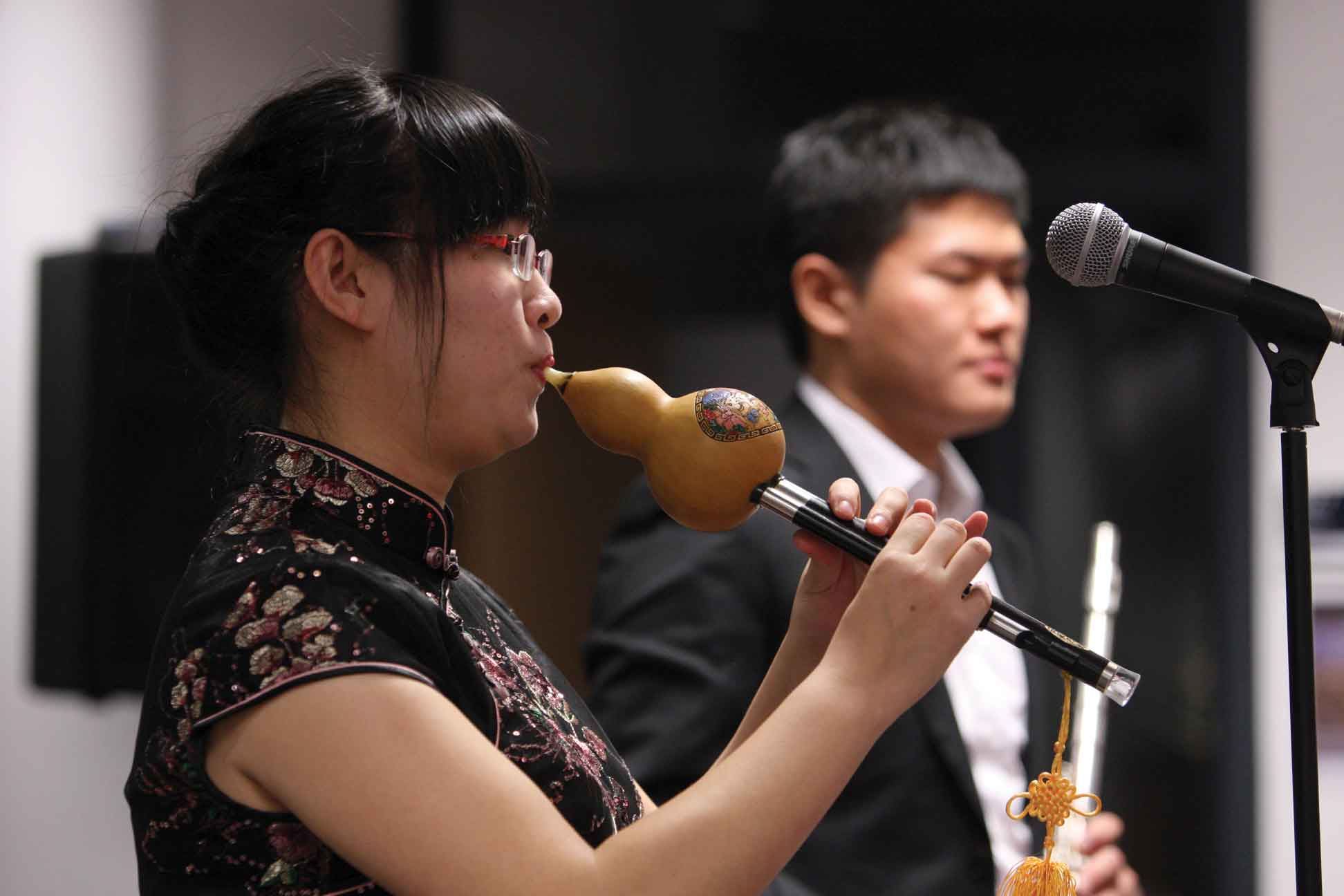
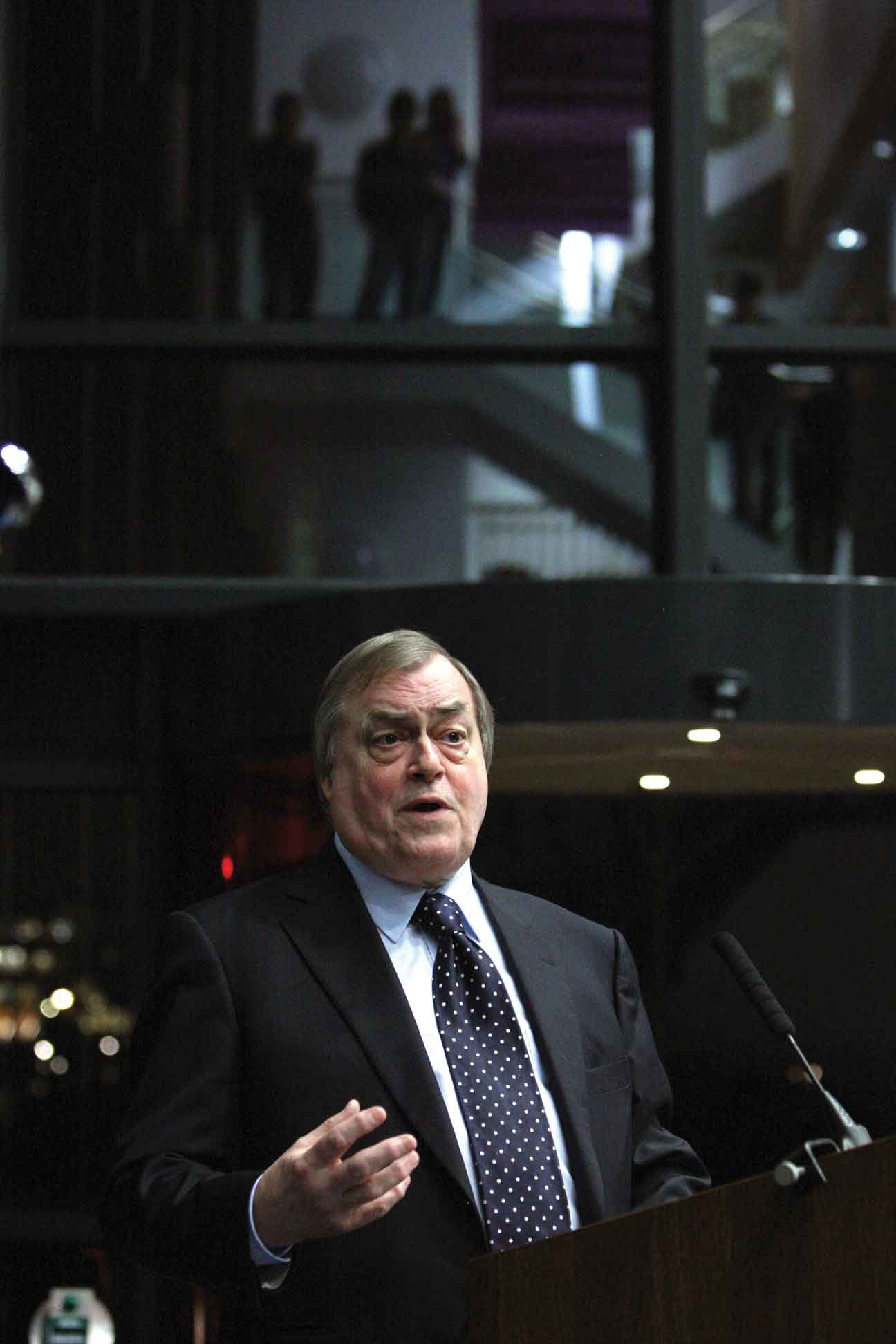
The Chinese Ambassador and Lord Prescott have officially opened the University’s School of Contemporary Chinese Studies (SCCS).
His Excellency Liu Xiaoming, Ambassador of the People’s Republic of China to the UK, joined the former Deputy Prime Minster to open the Si Yuan Centre. The centre houses the SCCS, a leading national and international institute dedicated to research and degree programmes about the study of China.
The SCCS was established in 2007 to bring together the former Institute of Contemporary Chinese Studies with the China Policy Institute (CPI). The school also houses the prestigious Nottingham Confucius Institute.
The new, low-carbon, £4m facility is on Jubilee Campus and provides a peaceful and creative environment for teaching and the study of Chinese language and culture. It will also be used for visiting exhibitions and for hosting Sino-UK business engagement events.
The new iconic building enhances the campus — sitting among other ground-breaking, low-carbon buildings — and sets a new standard in sustainability.
The University has committed considerable resources to the development of the education it offers in the UK and China, particularly through its Chinese Studies programme.
Professor Shujie Yao, a well-known economist specialising in China, founding head of the School of Contemporary Chinese Studies and director of the Nottingham Confucius Institute, said: “Since the inception of the school over five years ago, our dream was to build the best centre of Contemporary Chinese Studies in the UK and Europe. This beautiful and inspiring building situated on this picturesque campus will provide the exact physical space to realise our ambition. I thank Dr Thomas Chen [a member of the University’s College of Benefactors], of the Si Yuan Foundation, and our Vice-Chancellor Professor David Greenaway for their generosity and support for making our dream come true.”
The Si Yuan Centre, funded by the Si Yuan Foundation, is part of Impact: The Nottingham Campaign, delivering the University’s vision to change lives, tackle global issues and shape the future.
Professor David Greenaway said: “We are very proud of the quality and calibre of many of our buildings at the University, and the Si Yuan Centre continues to enhance the environment on Jubilee Campus with its inspiring style and innovative construction. The support for the development of the building by Dr Thomas Chen has helped us achieve a burning ambition for the School of Contemporary Chinese Studies, and we are honoured to have HE Liu opening the building.”
The University of Nottingham is a pioneer in international education and has a strong relationship with China. It has 42,000 students across its three international campuses in the UK, Malaysia and China. The University of Nottingham Ningbo China (UNNC) opened its doors in 2004 and now has more than 5,500 students.
Tags: Ambassador of the People’s Republic of China, Dr Thomas Chen, Liu Xiaoming, Lord Prescott, Professor Shujie Yao, School of Contemporary Chinese Studies, Si Yuan Centre
Posted in News | Comments Off on Si Yuan Centre opens