

Campus News

Let it snow
January 31st, 2013
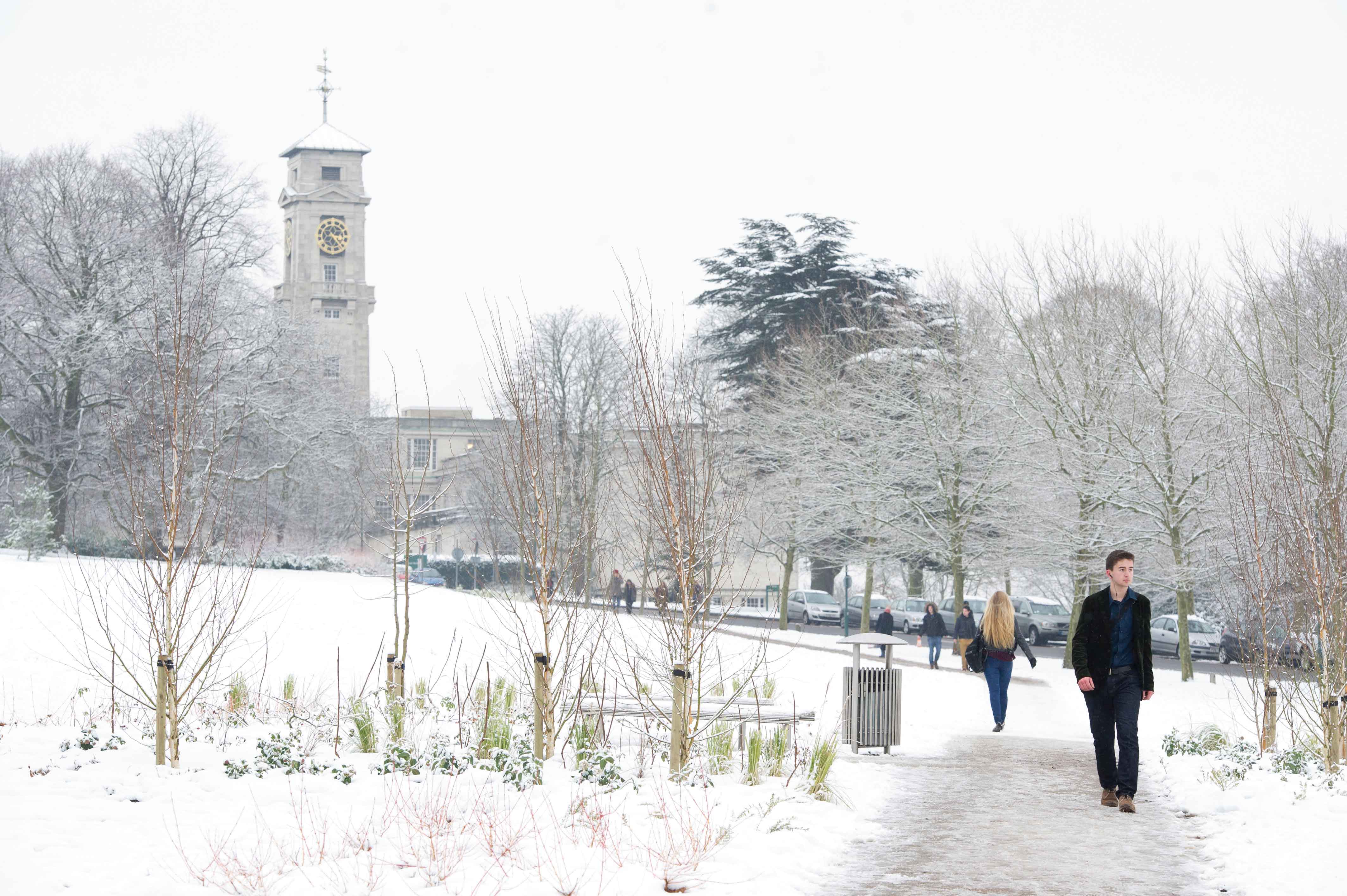
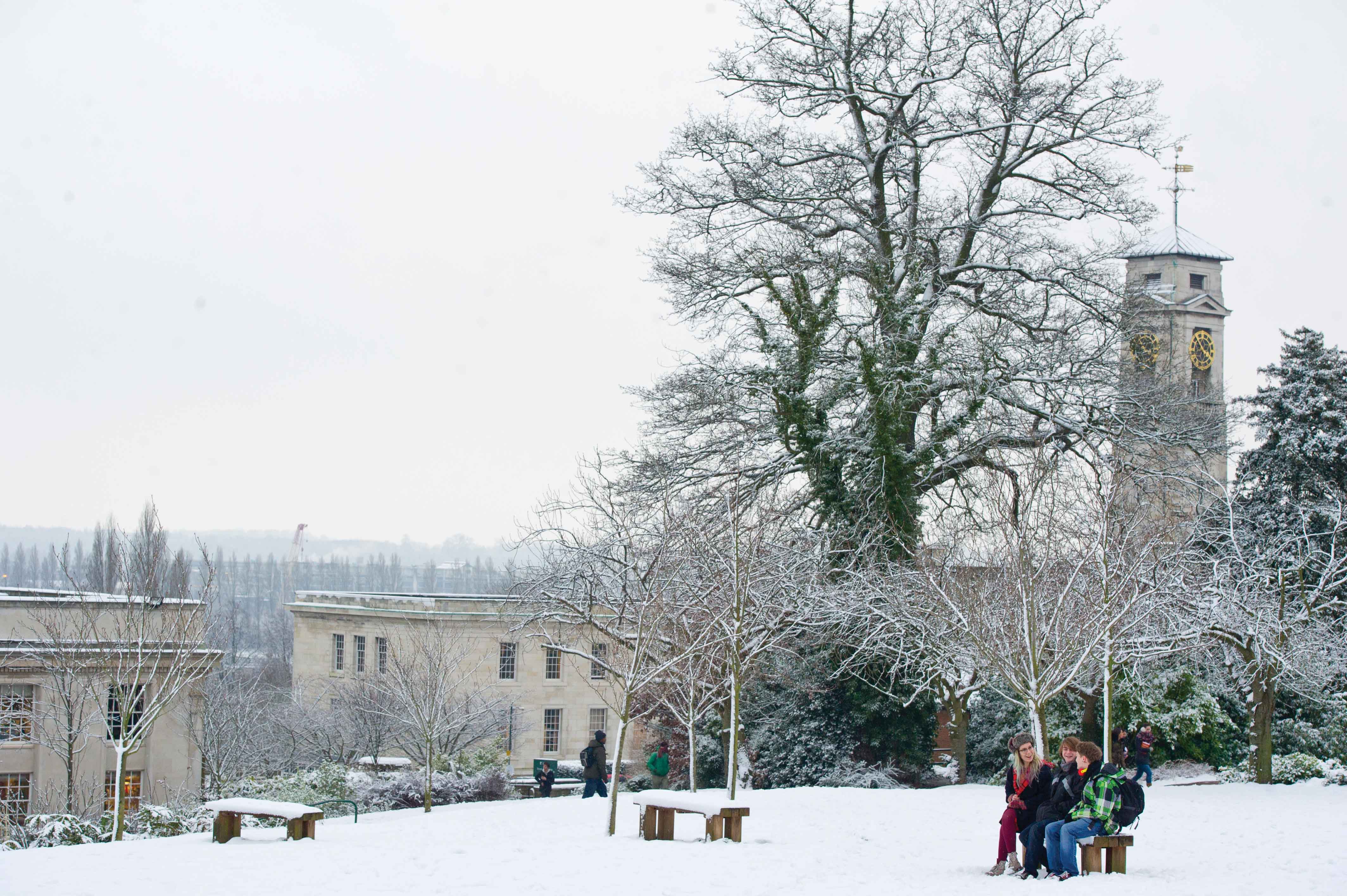
Nottingham got its fair share of snow in January. Despite the icy conditions, it was business as usual at the University’s University Park, Sutton Bonington and Jubilee campuses.
Exams and classes went ahead and the University’s Image Editor Lisa Gilligan-Lee captured students enjoying the snow-covered grounds of University Park.
The University of Nottingham Ningbo China also looked picturesque after snow fell, inspiring Troy Chen of the Communications and Marketing team to get out his camera.





Tags: Lisa Gilligan-Lee, Snow, The University of Nottingham Ningbo China, Troy Chen
Posted in Features | Comments Off on Let it snow
Secret sex life a boost for penicillin
January 31st, 2013
Penicillin could be produced more cheaply and effectively after scientists exposed the secret sex life of Sir Alexander Fleming’s fungus Penicillium chrysogenum (P. chrysogenum), the fungus that produces the antibiotic.
For over 100 years the filamentous fungus Penicillium chrysogenum was thought to be asexual. But scientists from The University of Nottingham, Ruhr-University Bochum, The University of Göttingen, and Sandoz GmbH discovered that by enticing the fungus into sexual reproduction, sexual crosses can be used to develop new strains capable of increased penicillin production. Their research has been published online in the leading academic journal Proceedings of the National Academy of Sciences USA (PNAS).
Dr Paul Dyer, an expert in the sexual development and genetics of filamentous fungi in the School of Biology at Nottingham, said: “We now have a valuable tool for creating new strains of P. chrysogenum with increased penicillin production. This will make it cheaper to produce penicillin, as using more efficient strains will lower production costs.
“Our method might also be used to help discover hidden sexual cycles in other economically important fungi that are assumed to be exclusively asexual.”
Sir Alexander Fleming’s 1928 discovery that pencillin released by a penicillium mould inhibited the growth of bacteria, followed by Ernst Chain and Howard Florey’s success in growing the fungus to meet medical demand for penicillin, ushered in the antibiotic era. It remains one of medicine’s great advances and all three shared the Nobel Prize.
Until now, it has only been possible to develop strains of P. chrysogenum with elevated production of penicillin by conventional mutagenesis. The researchers found that sexual reproduction could be induced in P. chrysogenum when strains were mated in the dark on oatmeal with a vitamin supplement. The sexual cycle can be used to develop strains that combine important biotechnological properties for penicillin production. Furthermore, the team discovered that mating-type genes, which control sex in fungi, have additional roles regulating other developmental processes of biotechnological relevance.
Fungi are used to produce many pharmaceutical products including statins as well as antibiotics. The findings suggest that sexual reproduction could be triggered in other supposedly asexual fungi.
The research was led by Professors Ulrich Kück and Stefanie Pöggeler from Germany, Dr Paul Dyer from the UK, and scientists from Sandoz GmbH, a world leader in the industrial production of penicillin and other pharmaceuticals. Other major contributors were PhD student Julia Böhm (Bochum) and postdoctoral research fellow Dr Céline O’Gorman (Nottingham). The work was funded by The Christian Doppler Society (Austria) and The Wellcome Trust (UK).
Tags: Dr Paul Dyer, Penicillin, Penicillium chrysogenum, Proceedings of the National Academy of Sciences USA, School of Biology
Posted in Research | Comments Off on Secret sex life a boost for penicillin
IUD helps heavy periods
January 30th, 2013
The hormone-releasing Mirena coil intrauterine device (IUD) is a better treatment for heavy menstrual periods than other conventional medical approaches, according to results of a major clinical trial led by scientists from the Universities of Nottingham and Birmingham.
The findings of the ECLIPSE study, funded by the National Institute for Health Research (NIHR), are expected to change standard clinical practice.
Heavy periods, or menorrhagia, affect the lives of many women aged 25-50, accounting for many GP consultations and 20% of gynaecological referrals in the UK. Yet there has been limited evidence to support informed choices about treatments.
The ECLIPSE trial compared the clinical effectiveness of the levonorgestrel-releasing intrauterine system (also known as LNG-IUS or the Mirena contraceptive coil) with other medical treatments on offer in primary care.
A total of 571 women, consulting their GPs for heavy menstrual bleeding, agreed to be randomly assigned to LNG-IUS or to another standard medical treatment, such as tranexamic acid, mefanamic acid, combined estrogen and progestogen or progestogen only.
Over two years, outcomes improved more with LNG-IUS than with other treatments, including women’s experience of social, family and work life, and psychological and physical health.
The research, published online in the New England Journal of Medicine, found women allocated to LNG-IUS were almost twice as likely to still be using it than those taking other medication after two years. Some 49% of other trial participants switched to LNG-IUS citing ‘lack of effectiveness’ of other treatments.
Joe Kai, a GP and Professor of Primary Care at The University of Nottingham, said: “We hope our results are very positive news for women and their GPs. This trial tells us not only that treatments can be effective, but also what to choose, bearing in mind a woman’s preferences for having a contraceptive IUS inserted or not.
“Heavy menstrual bleeding can be very debilitating but we know many do not seek help. We need to make women more aware beneficial treatments are available, and to offer options such as LNG-IUS more often.”
Janesh Gupta, Professor of Obstetrics and Gynaecology at the University of Birmingham and based at Birmingham Women’s Hospital, said: “While the interventions studied in this trial represent options available in primary care settings in the UK, insertion of IUDs is not part of primary care in all health care settings, and in some circumstances requires gynaecologist consultation. This trial should encourage the use of IUDs in primary care.”
Tags: ECLIPSE study, Janesh Gupta, Joe Kai, National Institute for Health Research, Professor of Primary Care
Posted in Research | Comments Off on IUD helps heavy periods
Tough call on climate change
January 30th, 2013
Tough limits on global emissions of greenhouse gases could avoid 20 to 65% of the damaging effects of climate change by 2100, according to new research.
Dr Simon Gosling, an expert in climate change impacts in the University’s School of Geography, assessed the effects of climate change on water stress. He said: “This is the first comprehensive assessment to show the benefits that global action on climate change could have across different sectors of society. Essentially, we found that the sooner emissions peak and decline, the greater the benefits are.”
The research, published in Nature Climate Change, looked at a stringent emissions scenario that kept the global temperature rise below 2°C and had greenhouse gas emissions peaking in 2016 and then reducing at five per cent per year to 2050. The 2° target is the focus of international climate negotiations. However, relatively little research has been done to quantify its benefits.
Crop productivity, flooding and energy for cooling would see the greatest benefit from emission reductions, experiencing a reduced global impact of 40 to 65% by 2100 if warming can be limited to 2°. The impact on water availability, however, would only reduce by 20% as even a small amount of warming can alter rainfall patterns.
Secretary of State for Energy and Climate Change, Edward Davey, said: “We can avoid many of the worst impacts of climate change if we work hard together to keep global emissions down. This research helps us quantify the benefits of limiting temperature rise to 2°C and underlines why it’s vital we stick with the UN climate change negotiations and secure a global legally binding deal by 2015.”
The research is part of the AVOID research programme funded by DECC/Defra and led by the Met Office in a consortium with the Walker Institute, Tyndall Centre and Grantham Institute. The research was led by the University of Reading’s Walker Institute in collaboration with the Met Office, University of Southampton, Tyndall Centre for Climate Change Research, The University of Nottingham, PIK in Potsdam, the University of Aberdeen and the University of East Anglia.
Tags: climate change, Dr Simon Gosling, Edward Davey, greenhouse gases, Nature Climate Change, School of Geography, Secretary of State for Energy and Climate Change
Posted in Research | Comments Off on Tough call on climate change
‘Superbug’ Professor retires
January 30th, 2013
It’s 1986 and academics at the University of East Anglia are discussing the Chernobyl nuclear disaster. Amid reports that radiation from the Ukraine could reach the UK, one microbiologist warns his colleagues: it’s not radiation exposure we should be most worried about — but the rise of antibiotic-resistant bacteria.
Almost 30 years later and the prescience of Professor Richard James can hardly be underestimated. Heading up The University of Nottingham’s Centre for Healthcare Acquired Infections (CHAI), Professor James has dedicated his 12 years here to the study and fight against so-called superbugs such as Methicillin Resistant Staphyloccocus aureus (MRSA) and Clostridium difficile (C.diff), which have killed thousands of hospital patients and have now begun to colonise many of our communities.
As he reaches retirement, Professor James can look back on a career that has courted controversy over his predictions of superbug pandemics yet has seen many of the measures he championed for tackling infections adopted in our hospitals.
Professor James began his career during the mid-70s following discoveries that offered the tantalising prospect of antibiotics vanquishing human infection.
But just 10 years later, as Professor James joined UEA to establish a course in medical microbiology, it was becoming clear such complacency was dangerous. Some bacteria had developed resistance to the drugs used to treat them.
Professor James came to Nottingham in 2000 — at the height of the MRSA epidemic in hospitals — and with colleagues began to plan a research centre dedicated to eradicating superbugs.
CHAI was launched in February 2007 amid a flurry of media interest. Its patron was actor Leslie Ash, who contracted a strain of Methicillin Sensitive Staphyloccocus aureus (MSSA) MRSA in 2004.
His outspokenness on hospital infections ruffled feathers; on the day that CHAI launched the Chief Nursing Officer at the Department of Health publicly condemned Professor James’ comments.
Professor James said: “To be accused of being a sensationalist and scaremonger on the launch day was interesting — my first thought was don’t shoot the messenger.
“Tony Blair’s government was very sensitive about the issue and didn’t want people speaking honestly about how serious the situation with infections really was in our hospitals and was desperate to avoid bad news because a General Election was due to take place in the summer of 2007.
“Interestingly, MRSA screening for all hospital admissions was announced shortly before the announcement that there wasn’t going to be an election and I am certain that wasn’t a coincidence.”
In 2008, Professor James was awarded the Society for Applied Microbiology Communications award for raising the profile of the problem of HAIs and antibiotic resistance.
He also wrote an article — Battling the Bug — for the House of Commons magazine House, in which he outlined an strategy to tackle hospital-acquired infections, which included screening of all hospital admissions for MRSA, monitoring infection rates in individual wards, the introduction of effective measures to increase staff hand hygiene and improved staff training and involvement on infection control. Almost all of these recommendations have since been put into place.
Since 2000, the rates of MRSA and C.diff in our hospitals have been steadily falling. However, Professor James warns that a biological apocalypse has yet to be avoided.
“We are still a long way from improving the situation,” he says. “We may have controlled the spread of MRSA and C.diff to a certain extent but there are other pathogens, other antibiotic-resistant bacteria cropping up all the time, like community-acquired MRSA and bacteria carrying a resistance mechanism called NDM1 found initially in India and then in the UK in 2010 which effectively are resistant to all antibiotics. The inexorable increase in antibiotic resistance among pathogens has not been solved.”
Research into antibiotic resistant microbes will continue at CHAI under the guidance of a new director, yet to be announced.
Although retiring from Nottingham, where he cites serving as Head of School for six years and Director of the Centre for Biomolecular Sciences as career highlights, Professor James may return to CHAI in a part-time capacity for a short time next year.
Professor James was given a send-off by colleagues in the Centre for Biomolecular Sciences at the Orchard Hotel on University Park in December, and plans an around-the-world trip with his wife Lynne next month.
Tags: C.diff, Centre for Biomolecular Sciences, Centre for Healthcare Acquired Infections, CHAI, Leslie Ash, MRSA, Professor Richard James
Posted in Features | Comments Off on ‘Superbug’ Professor retires
My family link to campus
January 30th, 2013
For International Business Management student Tristan Roper-Caldbeck, completing the second year of his course at The University of Nottingham Ningbo China was an opportunity to retrace the footsteps of generations of his family in the Far East.
He knew his family had run Boustead — a firm with diverse interests in Malaysia — for almost 100 years. But he was thrilled to discover the company was also a founding partner of the University’s Malaysia Campus.
Boustead was founded in Singapore in 1828 and Tristan’s great, great, great-grandfather, Jasper Young, led the firm after its founder Edward Boustead died in 1888. Jasper was succeeded by Tristan’s great grandfather, GR Roper-Caldbeck, and his brother, HB Roper-Caldbeck.
In the 1970s, Boustead’s Malaysian interests were transferred to the Malaysian Government. The family’s involvement with Boustead ended in 1986 when Tristan’s great uncle, MR Roper-Caldbeck, stepped down.
Tristan, fascinated by his family’s links with Boustead, was “overwhelmed with the response” when he contacted the firm.
“Arriving on my first day to the Menara Boustead Building in Kuala Lumpur gave me a great sense of pride. To see operations as they exist today was a truly fantastic experience,” said Tristan.
The student visited 5-star hotels and other interests including The Curve, a shopping mall in Kuala Lumpur, a palm oil plantation and a bank.
Tristan was also invited to the University’s Malaysia Campus, where Boustead has been a partner for about 15 years.
Professor Christine Ennew, Provost of the UNMC, said: “The two organisations came together to realise the vision for a University of Nottingham campus in Malaysia. The University of Nottingham is responsible for the academic side of the campus while Boustead has provided support for campus management and has been a valued source of advice and guidance in relation to business operations in Malaysia. We have a strong and durable partnership committed to the long term success of the University’s Malaysian operations.”
Of his time in Malaysia, Tristan added: “I had a superb experience. I was welcomed with such friendliness and accommodation. It was an inspiring and sentimental experience that I am so proud to be a part of.”
Tags: Boustead, Professor Christine Ennew, The University of Nottingham Ningbo China, Tristan Roper-Caldbeck, University of Nottingham Malaysia Campus.
Posted in Features | Comments Off on My family link to campus
The Great Nottingham Bake-off
January 30th, 2013
Naughty but nice…. there weren’t many of these delicious cakes left after The Great Nottingham Bake-off, an event organised by the University’s Women’s Staff Network.
Both male and female members of staff were invited to share homemade cakes at the lunchtime event, which was held in the Helmsley Building on University Park.
Three judges — Karen Attwood, a former University employee and founder of Classy Cupcakes and Posh Patisserie, Maria Wilson, a graduate trainee and founder of Whips Cupcakes, and Sam, from The Cake Decorating Company — had the enviable task of assessing the delicious offerings.
Tammy Greeno, Graduate School events and marketing manager, was the overall winner with her white-iced cake with snowman macaroon.
Altogether around 30 members of staff brought cakes. One person told the organisers: “Thanks for organising the Great Nottingham Bake-off — it was really nice change for a lunchtime.”
As well as organising events and guest speakers where members of staff can meet socially, the Women’s Staff Network acts as an informal forum for debate and raising awareness of issues that affect all staff.
Tags: Great Nottingham Bake-off, Women’s Staff Network
Posted in Features | Comments Off on The Great Nottingham Bake-off
Spotlight
January 30th, 2013
Nobel winner Sir Peter’s story, in his own words
The story behind Sir Peter Mansfield’s ground-breaking work on magnetic resonance imaging (MRI) is told for the first time in his autobiography.
In the The Long Road to Stockholm — published by Oxford University Press — Sir Peter, one of the few British scientists to be awarded the Nobel Prize, gives a personal insight into the evolution of a scientific and medical breakthrough which revolutionised the world of diagnostic medicine.
The official launch was taking place at the University on 12 February. Copies of Sir Peter’s book will be on sale at Blackwells in the Portland Building.
To see an interview with Sir Peter recorded to mark the achievements of a lifetime of research which has transformed the lives of so many patients, visit: http://tiny.cc/PeterMansfield
University’s top-two place in world green rankings
The University of Nottingham is in the top two for the third consecutive year in a list of the world’s most sustainable universities.
The Greenmetric Ranking of World Universities is produced by the University of Indonesia and features 215 institutions. Nottingham ranks second behind the University of Connecticut and is the UK’s top university.
Nottingham was named the world’s greenest campus in the 2011 list and finished 2nd in 2010.
Criteria for the rankings include energy management, water and waste management, sustainability-related teaching and research, percentage of green space on campus and sustainable transportation.
Chris Jagger, Chief Estates and Facilities Officer, said: “The University is once again delighted to have been placed in the top two in the UI World Index for the third year running. Our positioning in the league reflects the holistic approach that the University takes to sustainability.”
Nottingham performed particularly well in terms of water, energy and climate change, and transportation.
This result comes hot on the heels of the University picking up the award for Outstanding Contribution to Sustainable Development at the Times Higher Education Awards 2012. The University’s campus has been awarded a Green Flag Award for the last 10 years after being the first University to be recognised.
Double success in national midwifery awards
A University of Nottingham lecturer has won a top UK midwifery prize for her innovative work-based education programme for midwives.
Dr Jayne Marshall, of the School of Nursing, Midwifery and Physiotherapy, has been instrumental in implementing the Developing Midwifery Practice Through Work-Based Learning module which is one of the core modules for experienced practising midwives undertaking the BSc (Hons) in Midwifery Studies Pathway.
Dr Marshall’s work won the Royal College of Midwives Annual Midwifery Award in the Johnson’s Baby Award for Excellence in Midwifery Education category.
Student Lorraine Bowen won the Royal College of Midwives’ Pampers Award for Excellence in Postnatal and Neonatal Care for her booklet on men’s adaptation to fatherhood which she developed as a student on Dr Marshall’s work-based learning module.
The module was devised to offer midwives the opportunity to complete part of their degree in their own workplace, and balance the pressures of work and home life with their studies while undertaking novel project work.
Tags: magnetic resonance imaging, MRI, Nobel Prize, Sir Peter Mansfield, The Long Road to Stockholm
Posted in media | Comments Off on Spotlight