

Campus News
Pheromones and other scents for managing insects attacking crop plants, farm animals and human beings
November 1st, 2010
John Pickett, Rothamstead Centre for
Sustainable Pest and Disease Management
Date: Thursday 25 November
Time: 1pm
Venue: Lecture Theatre B3, Biology
Building, University Park
Admission: Free
Posted in Public Lectures, What's On | Comments Off on Pheromones and other scents for managing insects attacking crop plants, farm animals and human beings
Sport for Any-Body
November 1st, 2010
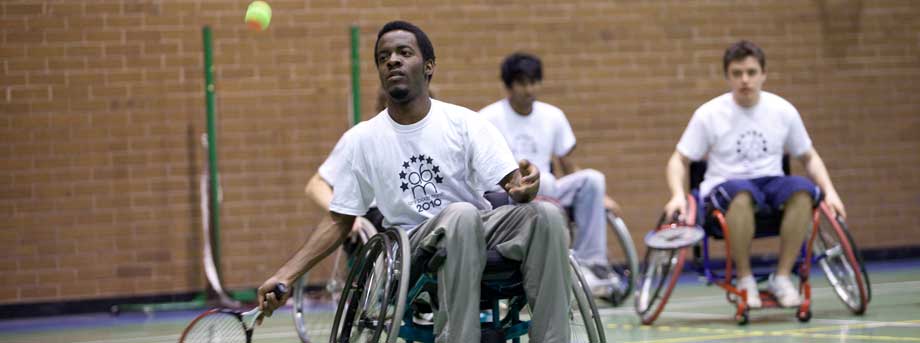
Inclusive sports are exactly that — accessible to everyone regardless of ability or fitness. And a new University sports club is encouraging everyone to have a go.
Fancy trying a new sport, but don’t see being competitive as the be all and end all? The University’s new Any-Body Club could be just the thing for you…
Open to staff, students and members of the local community, the Any-Body Club meets bi-monthly and introduces participants to inclusive fitness activities and sports.
Sessions have already been run on wheelchair tennis and badminton, with future sessions featuring coaching in goalball (a team sport designed for blind athletes) and kwik cricket.
The aim of the Any-Body Club is to run social sessions in a variety of different sports. It caters for disabled and nondisabled members and is free to attend. Each session lasts for two hours and takes place at either the University Park or Jubilee Sports Centres.
“The Any-Body Club is in its fi rst year, and so far we have had a great response, from both non-disabled and disabled participants,” said Hannah Webber, Disability Sports Officer at the University.
“We have some more great sessions planned throughout the academic year, including aqua fit, goalball and dance. So far the ABC has shown us that there is the demand for more organised social sports and we’re hoping to develop what we offer students, staff and the local community.”
For more information on the Any-Body Club, visit www.nottingham.ac.uk/sport/ anybodyclub
Tags: community, Department of Physical Recreation and Sport, Disability Sports Officer, Hannah Webber, inclusive sports, staff, student, The Any-Body Club
Posted in Features | Comments Off on Sport for Any-Body
Inside the mind of a soldier
November 1st, 2010
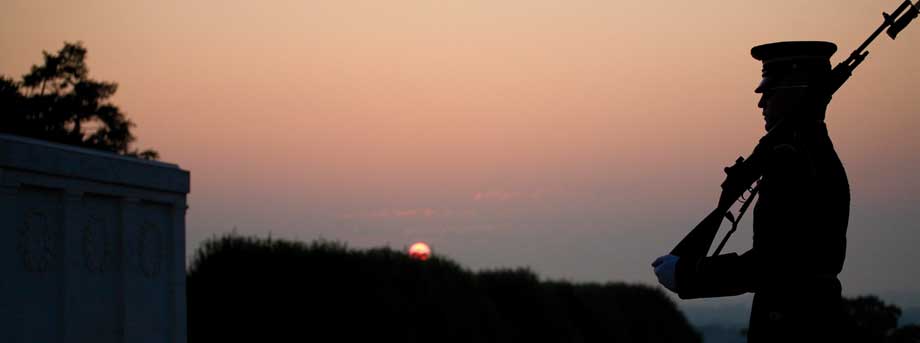
Post-Traumatic Stress Disorder alone does not explain the total psychological impact of war, according to a Nottingham academic.
International conflicts are now more the norm than the exception and it’s never been more important to understand the effects of war on soldiers, in order to help them when they return from active service.
Work by Associate Professor of Health Psychology Dr Nigel Hunt, suggests that there are environmental factors associated with Post-Traumatic Stress Disorder (PTSD) that are simply overlooked.
In his book Memory, War and Trauma he takes a wider look at the psychological impact of war, drawing on research and writings across a range of disciplines including literature, history and sociology.
The aim is to create a more detailed understanding of what war does to an individual’s mental state: “There is an association between what we mean by memory — looking back at the past from an individual perspective or looking back at the past from a societal perspective — and what we mean by history.
“If you look at what happens over a period of two to three generations; what happens to people’s memory of events turns into some sort of cultural memory, then turns into some kind of history.”
It’s this transition from personal memory to collective history that forms a keystone in Dr Hunt’s research.
In coming to terms with the trauma experienced by people in war zones, Dr Hunt’s research developed into the idea of narrative and how we make sense of our lives: “We have a natural storytelling ability,” he said. “We all make stories about what happens to us, we can’t help it; it’s like walking — you have to do it.”
The ability to construct narratives about our experiences is crucial not only to the affected soldiers, but also to society’s understanding of that experience.
Dr Hunt argues that PTSD isn’t enough to properly account for the full experience of trauma, not least because the trauma experienced by the soldier can manifest itself in ways that will affect those close to them, whether it be violence, depression or dependency on alcohol or drugs.
“An example of this lies in work being done by colleagues from Iraq who are asking whether we can talk about Post-Traumatic Stress Disorder applied to the people of Iraq, where the trauma is not ‘post’.”
Here, environment is everything. Dr Hunt argues that someone suffering PTSD in Britain, for example, will have a high perception of risk; that they may be attacked if they go out again, even though statistically they are unlikely to be attacked again. This, he argues, is an incorrect perception of risk.
In Iraq, where family members are killed in bomb blasts there is a similar perception of risk, but it’s entirely correct, as kidnappings and attacks are ongoing.
“The environment matters, it really matters.”
Tags: Dr Nigel Hunt, international conflict, Memory, post-traumatic stress disorder, School of Psychology, War and Trauma, war zones
Posted in Research | Comments Off on Inside the mind of a soldier
Entrepreneurial students show their worth in Los Angeles
November 1st, 2010

Students from The University of Nottingham Ningbo, China have scooped second place at the SIFE (Students in Free Enterprise) World Cup.
Thirty-one students from the 114-strong team were in Los Angeles to pit their entrepreneurial skills against some of the world’s brightest young business minds. They were beaten into second place by French University in Egypt (UFE), whose victory saw them become SIFE world champions for the second year.
Prof Chris O’Brien, who acted as the team’s mentor, said: “This is quite a remarkable achievement when you consider that well over 1,000 teams have taken part worldwide — our students have been marvellous ambassadors for The University of Nottingham Ningbo, China.
“Our students, both the presenting team and the very large number of supporters who came over to LA, have won the hearts of the 4,000 delegates with their sheer professionalism and great charm. They have all done UNNC proud.”
SIFE works with universities and business to encourage and support the next generation of entrepreneurs and business leaders. SIFE students develop their own community-based projects, using what they learn in the lecture theatre to solve real world problems. At the end of each year SIFE teams compete against each other, showcasing their projects to leading figures in business and education.
The winning team is crowned SIFE National Champion, and goes on to represent their country at the SIFE World Cup. The University of Nottingham Ningbo, China (UNNC) team had the honour of representing China after winning the national finals in June. They beat three regional fi nalists out of an original entry of 131 university teams from across China.
The students presented two of their nine social enterprise projects to the World Cup judges, Beevelop and The Ant River Ginseng Project. Beevelop is a venture which promotes honey sales for farmers. It has equipped beekeepers with the skills to raise wild bees — which are close to extinction. The Ant River Ginseng project was established to help extremely poor farmers in the north east of China, where the world’s best ginseng is grown.
Beevelop has introduced new bee husbandry through initiatives involving better design and location of beehives, disease protection, fi nancial literacy training and business partnership with a local wholesale honey company. The project also protects the endangered Chinese wild bee.
The ginseng project received international accreditation for the quality product, fresh ginseng. The team introduced a new technology using mushrooms which, when planted next to the ginseng root, promote growth and productivity as well as an extra income for the farmers. The most innovative aspect of this project was the initiation of a micro-fi nance fund providing an interest free loan to the neediest farmers.
The SIFE World Cup showcases the impact that SIFE teams are achieving around the world. The competition brings together more than 1,500 students, academic and business leaders from more than 40 different countries.
More information about the UNNC team’s work and the projects they have established can be found at www.sifeunnc.org or www.sife.org
Tags: Ningbo, Nottingham University Business School, SIFE, student achievement
Posted in Features | Comments Off on Entrepreneurial students show their worth in Los Angeles
Life through a lens
November 1st, 2010
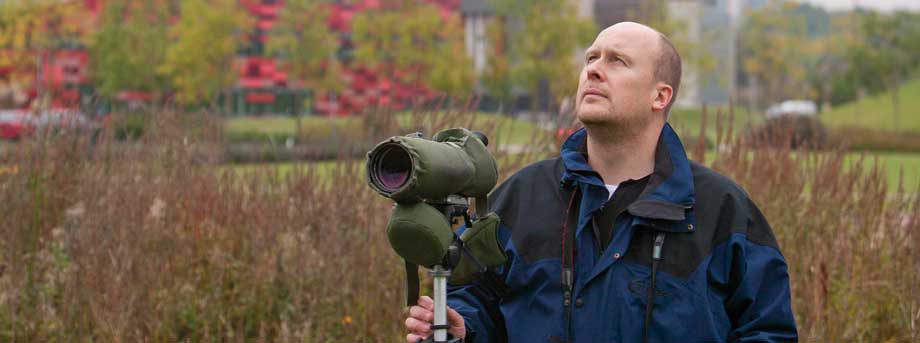
With a lifelong passion for birds and the environment, Dr Rob Lambert will burst onto our TV screens this autumn in a new four-part series for the BBC, Birds Britannia.
Dr Lambert’s diverse expertise includes environmental history, environmental geography, ecology and tourism and the environment. He lectures in the Business School and the School of History. But his abiding passion, since the age of nine, has been his love of birds.
Rob is among a host of experts and pundits featured in the series, which follows our very British relationship with birds. Over four weeks the BBC 4 series — which starts at 9pm on Monday 1 November — will look at how this relationship has shaped our society, culture and the people of Britain.
His TV appearances also include last month’s BBC Four programme When Britain Went Wild which looked at the environmental revolution in the 1960s and 70s. And there’s more on the way with a new landmark television series about the making of the Scottish landscape.
Tags: BBC4 Dr Rob Lambert, birds, ecology, environment, Nottingham University Business School, School of History, tourism
Posted in News | Comments Off on Life through a lens
A time to build
November 1st, 2010
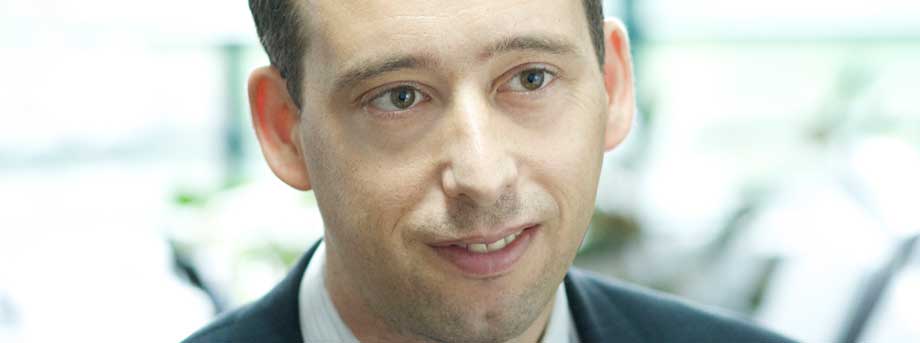
Carl Fey, Professor of International Business, is to be the new Dean of the Nottingham University Business School China. He takes over from Prof Chris O’Brien, who has retired after 42 years with the University.
Prof Fey, who has also been appointed as the new Dean of the Faculty of Social Sciences at The University of Nottingham Ningbo, China, is currently with the Stockholm School of Economics where he helped establish a branch campus in Russia.
His areas of expertise include foreign market entry, leadership, teamwork and organisational culture, change management and strategic innovation. Prof Fey has directed and taught on many different executive programs, including both company-specific training programs and teaching on MBA and EMBA programs.
“It is now time to build and move forward, particularly into the spheres of executive education and to push some additional focus on research,” he said. “I want to make sure that the world knows about all the great things that are happening here in the Business School at The University of Nottingham Ningbo, China.
“This is the only truly English-language university in China and it offers great opportunities for exchange students from around the world. We need to focus increasingly on teaching people how to think. A lot of what we teach at Nottingham helps companies to be more efficient and ensures that when our students take up a job they are productive from day one.”
The Nottingham University Business School is a leading centre for management education. The University’s Business School in Ningbo is home to nearly 3,000 undergraduate and postgraduate students. It provides a host of degree courses aimed at developing skills in management as well as in qualitative and quantitative analysis, critical thinking, information technology, team working and lifelong learning.
Prof Fey is one of the world’s leading experts on Russian management and organisation. His research focuses on international aspects of organisational culture and effectiveness, leadership, strategic human resource management, foreign market entry, and knowledge transfer. Much of his research focuses on how one needs to adapt management theory and practice for success in the transforming economies of Russia and China. He has travelled and worked extensively in both countries, and speaks English, Swedish, Russian, and German.
Tags: executive education, Ningbo, Nottingham University Business School China, Prof Carl Fey
Posted in Features | Comments Off on A time to build
Scenes from a University
November 1st, 2010
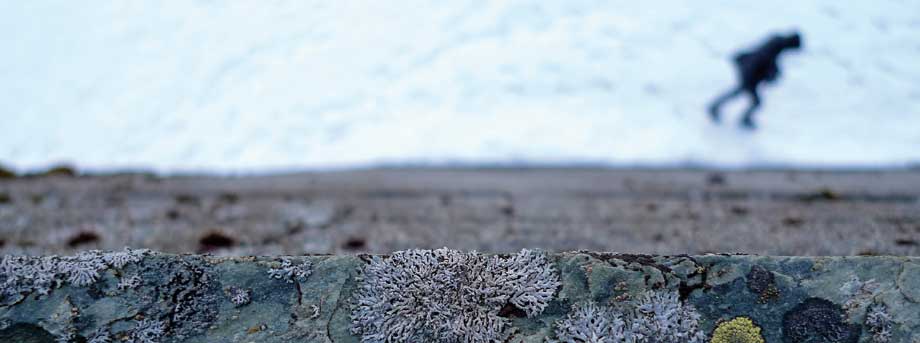
The University experience is so much more than what happens in the lecture theatre and the lab, as these stunning images show.
Taken by staff and students from across the University, these are the winner and runners-up of the University photo competition launched earlier this year. Entrants were asked to send in images summing up ‘my University experience’.
The range is different subjects covered by the entries was illuminating, with locations ranging from University Park to the Alps.
All entries can be seen at Flickr
For more information visit the website
Captions for slideshow
Tug of war
Emotion and effort captured at a sports event on Ningbo campus by Haibo Dong, who works in the Graduate School at UNNC.
Fjærland, Norway
Architecture student Matthew McKenna took this on a University study trip to Norway, surrounded by glacier-cut mountains.
Graduation
Medical student Muhammed Faisal Zulkifli captured his friend, Mohammad Asyraf, at his graduation.
The morning after
Alexander McBride Wilson, who studies Classical Civilisation and German, took this picture of his friends after a night out.
Summit
Geography graduate Matthew Bazire took this picture of his climbing partner Martin Trerise at the summit of the Matterhorn. “When I think about University I don’t immediately think of the campus and my degree, I think of the things that I’ve achieved because of studying at Nottingham,” he said.
Tags: experience, photo competition, staff, Student Communications, students
Posted in Features | Comments Off on Scenes from a University
Images of a revolution
November 1st, 2010
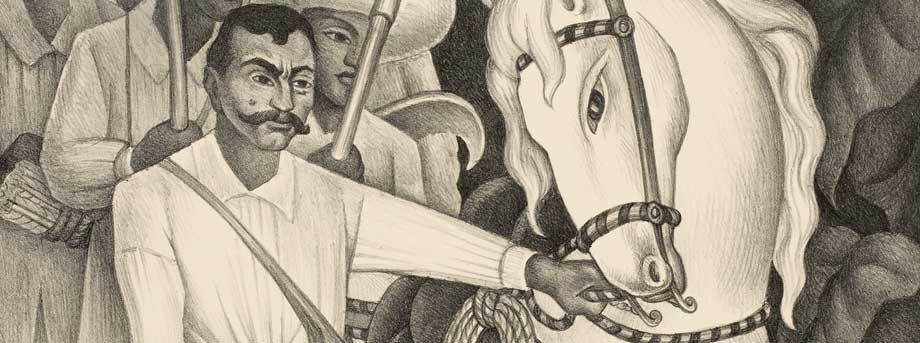
A new British Museum exhibition tells the story of an artistic movement inspired by the Mexican Revolution.
Telling the story of the socialist revolution which swept through Mexico in the early 20th century, these arresting prints are part of the Lakeside Arts Centre’s new exhibition – Revolution on Paper.
Following the revolution, a strong left-wing government emerged in Mexico. It saw art as a great vehicle for promoting the values of the revolution, and a pioneering programme of public murals and mass-produced prints emerged.
Previously exhibited at the British Museum and featuring prints from its collections, the exhibition will run at the Angear Visitors Centre from Saturday 20 November.
Some of the finest of the prints featured are by the three great men of Mexican art of the period – ‘los tres grandes – Diego Rivera, José Clemente Orozco and David Alfaro Siqueiros.
The range if material featured is fascinating – from single-sheet artists prints to illustrated books and large posters with designs in woodcut or lithography.
Visit www.lakesidearts.org.uk for details.
Tags: British Museum, Lakeside Arts Centre, Mexico, Revolution on Paper
Posted in News | Comments Off on Images of a revolution
Studying fetal hearts
November 1st, 2010
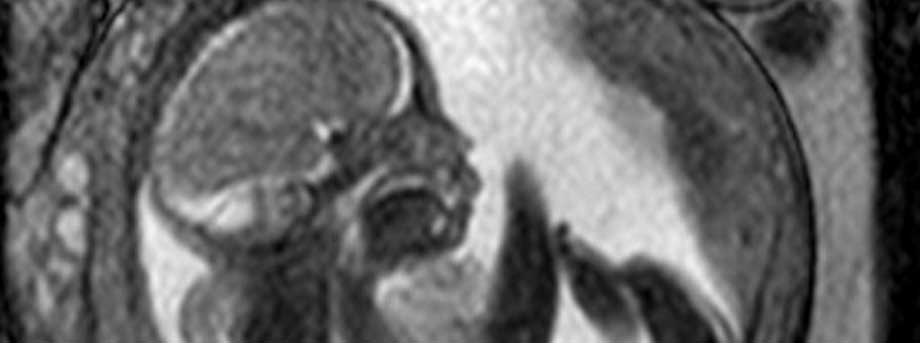
A study examining the development of fetal hearts and the placenta in pregnancy could lead to treatments to reduce the risk of complications in women with diabetes melluits.
Women with established diabetes are at fi ve times higher risk of sudden fetal death just before, during, or after labour than women without the condition.
Tragically, most deaths happen after the 32nd week of pregnancy — a stage at which, if delivered, the babies would otherwise have a very good chance of survival.
There is already evidence that the stillborn babies of diabetic women have larger hearts. Currently, there is no standard test for assessing fetal cardiac function.
This study examines how fetal hearts are working using 4D ultrasound imaging — from the amount of blood pumped through the organ to the size of the chambers of the heart — to determine a ‘normal range’ in fetal development.
By assessing these functions and comparing them to the normal range developed through this study, researchers hope to develop a tool that can predict the optimal time of delivery — either via induction or surgery — that would give the baby the greatest chance of survival.
The fetal heart study runs alongside another survey, which examines the functions of the placenta in pregnant women. The consistency of the blood flow is thought to influence fetal growth — another potential factor which affects fetal survival in diabetic women.
Magnetic Resonance Imaging (MRI) is being used to observe blood flow in the placenta and the baby throughout pregnancy. Researchers hope to determine whether there is a difference in placental profusion — the amount of blood fl ow — between healthy and diabetic pregnancies. The placenta is also examined post-delivery, using advanced molecular biology techniques.
Researchers in The University of Nottingham’s Brain and Body Centre and the Obstetrics and Gynaecology Division are hoping to scan 150 women undergoing ‘healthy’ — non-diabetic — pregnancies, to establish a ‘normal’ range of fetal heart size and placental profusion. Volunteers are scanned using 4D ultrasound and between 20 and 36 weeks of pregnancy. Twenty-four women will be recruited to the MRI and placental study, with scans taking place at 24 and 32 weeks.
George Bugg, Consultant in Feto-Maternal Medicine at the Queen’s Medical Centre, said: “Though it’s been observed that the hearts of fetuses in diabetic mothers can be larger than those in ‘normal’ pregnancies, a link has not yet been established between heart size, blood flow and stillbirth in these cases. By establishing a range of ‘healthy’ statistics in non-diabetic pregnancies, we can start to look at why so many diabetic pregnancies result in stillbirth, and at what we can do to prevent that.”
To volunteer for the studies you must be booked for delivery at Nottingham University Hospitals NHS Trust.
For more information or to sign up, contact Dr Ruta Deshpande at mgxrd2@exmail.nottingham.ac.uk
Tags: Brain and Body Centre, diabetes, fetal heart, Obstetrics and Gynaecology, pregnancy, research study, volunteers
Posted in Research | Comments Off on Studying fetal hearts