

Campus News
Tall Stories and Network of Stuff present Them With Frozen Tails
December 3rd, 2010
This year’s Christmas production at the Lakeside Arts Centre opens on Saturday 4 December and runs until Thursday 30 December – performance times vary. Co-commissioned by Brighton Dome and the Roundhouse, Them With Frozen Tails promises to be “a side-splitting utterly festive alternative to pantomime for all the family”. It features improvisation from audience suggestions which aims to entertain people of all ages. Recommended for age 5+, the show is at Djanogly Theatre, Lakeside Arts Centre, University Park. The show times are 12.30pm and 3pm (4 & 5, 11 & 12, 18 & 19, 23 & 24, 28-30 December); 10.30am and 1.30pm (7-10, 14- 17 & 21 December); and 6pm (22 December). All tickets are £7. Visit www.lakesidearts.org.uk or call the box office on 0115 846 7777 for more information.
Tags: Lakeside Arts Centre
Posted in events | Comments Off on Tall Stories and Network of Stuff present Them With Frozen Tails
Megan’s Olympic hope
December 3rd, 2010
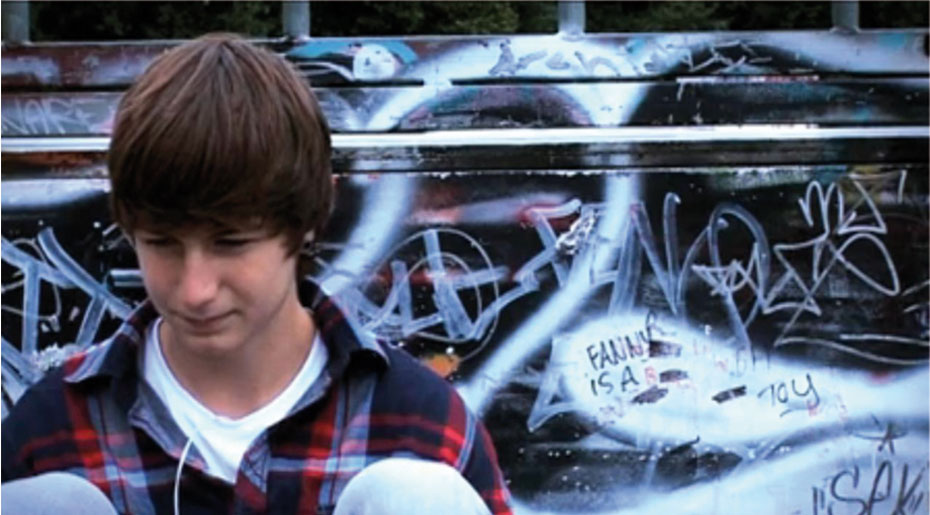 Nottingham psychology student Megan Salter has won her second prestigious film award this year.
Megan and Sara Harrak – her partner in Real Hark Productions – have scooped Film Nation: Shorts Film of the Month award with Hath Not a Child Ability.
The London 2012 Cultural Olympiad initiative gives 14 to 25-year-olds the chance to have their work screened at the London 2012 Olympic and Paralympic Games before an audience of millions.
Hath not a Child Ability challenges preconceptions about young people. The film – which can be seen at www. filmnation.org.uk – has been screened on the London 2012 Live Sites, a network of big screens across the UK, and has been long-listed for a national award in December. The winning films will be screened during the Games.
Megan said: “Film Nation: Shorts has offered such a phenomenal opportunity to young film-makers across the UK, and we are thrilled to have been selected as Film of the Month. We really hope that our film will reflect the values of the Olympic and Paralympic Games, such as determination, courage and inspiration, that people will want to get as involved in the Games as they can. Our involvement with Film Nation has made us extremely excited and supportive of London 2012, we hope that our film will affect others in the same way.”
Sebastian Coe, London 2012 Chair, said: “At London 2012 we hear stories about amazing achievements by young people every day and this film perfectly illustrates just that. The film itself is simple but really impactful, and I’m delighted Megan and Sara have been recognised by the Cultural Olympiad for this great short film.”
Earlier this year, Megan and Sara won the First Light Open Access Award, in association with BAFTA — part of the annual First Light Awards, which highlight the creative talents of young people across the UK. They made AWOL last summer in their home county of Essex. It won the award by public vote after being shortlisted by BAFTA members.
Megan said: “Psychology might be quite far removed from film-making, but the subject definitely helps with my acting. It gives you a real insight into how people think and behave when you’re trying to understand a new character.”
Film Nation: Shorts invites 14 to 25-year-olds to create short films that celebrate the values of the Olympic and Paralympic Games: respect, courage, excellence, friendship, equality, determination and inspiration.
The competition will run each year until 2012, showcasing the talents of the next generation of film-makers and giving them a chance to be right at the heart of the Games. Submissions for the 2011 competition are now open – visit www.filmnation.org.uk.
Tags: BAFTA, Film Nation: Shorts Film of the Month, First Light Open Access Award, London 2012 Cultural Olympiad, London 2012 Olympics, Megan Salter, Paralympics, psychology, Real Hark Productions
Posted in News | Comments Off on Megan’s Olympic hope
Life class
December 3rd, 2010
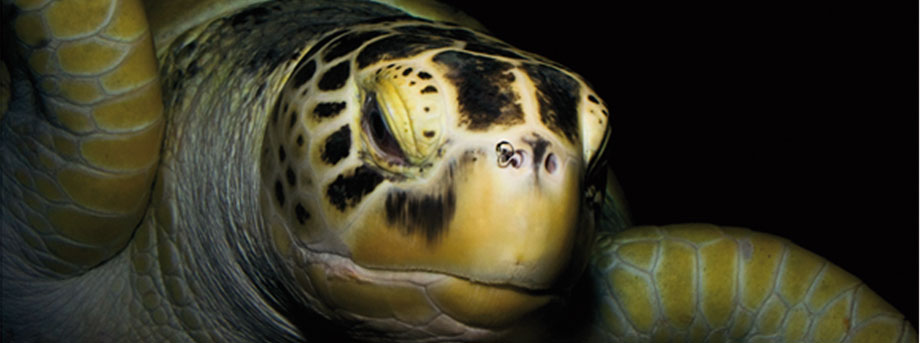
Highly specialised photography produced by students who have completed a unique Masters degree in Biological Photography and Imaging is on display for the first time.
As the one-year science-based course enters its 10th year, the exhibition celebrates the work of students who have gone on to careers in biological research, wildlife photography, medical imaging, film making and writing.
The exhibition, at the Lakeside Arts Centre on University Park, runs until Monday 29 November 2010. It is being held in recognition of the late Brian Case who founded the course 19 years ago as a module for undergraduate biology students. He went on to establish the MSc in Biological Photgraphy and Imaging with the help of teaching support specialist David McMahon.
The course, run by the School of Biology at The University of Nottingham, provides students with business management and web design skills. Today the course offers 16 hotly contested places to students with scientifi c backgrounds in genetics, biology, zoology, environmental sciences, biochemistry and biosciences.
Tags: Biological Photography and Imaging, Brian Case, David McMahon, Lakeside Arts Centre, School of Biology
Posted in Features | Comments Off on Life class
What next?
December 3rd, 2010

Nottingham students can now tap into the knowledge and experiences of their predecessors when planning their career.
The alumni career profile database – launched by the University’s Centre for Career Development (CCD) – offers students direct access to alumni’s professional information, as well as offering practical advice on how to build confidence and boost any opportunities in the job market.
Accessed via the University’s Online Careers System, students can browse through career profiles according to industry, subject or qualification level to see what opportunities could be available to them after they graduate.
More than 70 alumni are already sharing their profiles, showing their career path, how they developed their degree and their current job description. The aim is that by sharing their successes, they can help current students avoid potential pitfalls.
Project manager Roxana Cimpeanu believes that the database will be of huge benefit to students when used in combination with the expert advice, CV writing tips and job vacancy services offered by the Centre.
She explained: “This tool will provide a better understanding of the industries, job roles and opportunities available to students when they are making their own career decisions.
“From interview tips and employer research, to more general advice such as how to highlight their achievements, students will find an array of hints and tips that will ultimately build their confidence and equip them with the necessary tools to tackle job applications and interviews.”
Hints and tips already made include: ‘Get involved in a variety of activities at university to broaden the CV and make it stand out from the crowd. Don’t be afraid to try new things and get involved.’ (Project Manager, Accenture.)
Prepare. Know what the role entails, and what the context of the role in the organisation is. Anticipate. Think about what might be asked of you, and have examples of situations where you’ve needed to overcome obstacles ready to hand. Relax. It’s far easier to choose to employ someone you think will fit easily and well into a team environment. (Web Developer Team Leader, BBC.)
Create opportunities where you do not see them. Make use of expert academic staff and their networks. Get involved in activities outside of your programme of study and create your own networks. Always think of what your next step might be and what you need to do to get there. (PhD student, The University of Nottingham.)
Tags: alumni, Centre for Career Development, jobs, Roxana Cimpeanu
Posted in News | Comments Off on What next?
Winds of change on horizon
December 3rd, 2010
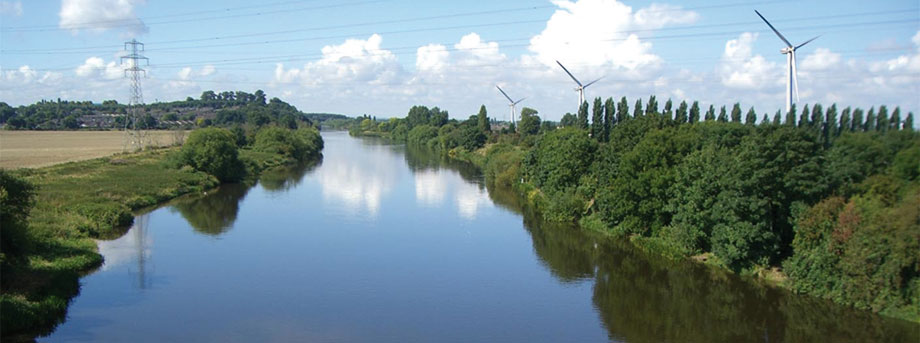
The University of Nottingham has announced plans for three wind turbines on its land adjacent to the River Trent near Clifton Bridge.
The turbines would be up to 125 metres high and would supply green electricity directly to the University Park campus. The power generated – enough for the domestic needs of around 5,000 houses – will meet a third of the electricity needs of University Park.
The turbines would reduce the University’s carbon emissions by 7,000 tonnes a year, around 40 per cent of the target reductions required by 2015.
Professor Alan Dodson, Pro-Vice-Chancellor for Infrastructure and Environment, said: “This proposal will help the University to play its part in reducing the carbon emissions that contribute to global warming.
“By generating a proportion of our electricity through renewable methods such as wind power, we can make a significant step towards our carbon reduction target, and make a contribution to the targets set for the city and the region.
“Success in reducing our carbon footprint will also have an impact on the amount of funding that we receive from the Higher Education Funding Council for England, thus helping to ensure that we can continue to pursue our agenda of excellence in education and world-leading research.”
The UK emits 560 million tonnes of carbon dioxide (CO2) – the key greenhouse gas culprit – every year, and the Government target is to cut this by 60 per cent by 2050.
Power stations burning coal and other fossil fuels to produce electricity are the largest contributor to carbon emissions, producing 170 million tonnes of CO2 each year.
The site – off Thane Road – was identified by the Carbon Trust as the most suitable for wind generation. A full planning application is due to be submitted in February 2011. Subject to approval, the turbines would be built in 2012, with construction expected to take around six months.
The University accepts that the turbines will be a prominent feature on the Nottingham skyline visible from a number of locations. It has offered presentations in city and Broxtowe council wards near the proposed site, and a public exhibition and consultation will be launched in the New Year before the formal planning application is made.
More details, including maps, frequently-asked questions, etc, are available at http://nottingham. ac.uk/renewableenergyproject/index.aspx.
Tags: carbon emissions, Carbon Trust, Co2, global warming, infrastructure and environment, Professor Alan Dodson, University Park, wind turbines
Posted in News | Comments Off on Winds of change on horizon
Click and save
December 3rd, 2010

The countdown has begun. Halloween is barely over before the major high street stores roll out their Christmas stock, reminding us all how little time we have left to fill those stockings.
With increasingly busy lives, many of us rely on internet shopping to take the strain out of the whole business – no queues, no crowds to battle through with heavy bags, no parking fees… and going online has an added bonus for staff across the University.
Last year, after a staff survey, the University teamed up with Motivano, a leading provider of voluntary benefits offering discounts at more than 400 high street stores, online retailers and local businesses.
Typical voucher savings include 4.5 per cent on Amazon, 8 per cent at Argos, HMV and Boots, ten per cent at Top Shop, Burtons and House of Fraser and 11 per cent at Debenhams. And you can save on the Christmas supermarket shop, with a 5 per cent discount at Asda and Sainsbury’s and up to 6 per cent at M&S.
You can also get a massive 25 per cent off an annual membership of The National Trust.
And staff can enjoy money off at local gyms, restaurants and bars, garages, sporting events and theatres, including 20 per cent off at Nottingham Playhouse – just in time for the panto,15 per cent off at 4550 Miles From Delhi, 10 per cent off tickets at Notts County and BOGOF tickets at Nottingham Rugby. The number of local organisations signing up is growing every day.
Visit www. motivano.co.uk/signin/uonstaffdiscounts and enter your username (username is UON and your payroll number, which can be found on payslips) and the password, which is ‘discounts’.
Click on ‘employee savings’ to see the full list of discounts. You can save on holidays, car hire, airport parking, theme park entry tickets, theatre breaks, home and garden, sports and fitness and much more all year long.
Register for regular updates by clicking on ‘my details’ and clicking on the ‘subscribe’ tab — tick ‘hot offers’ and enter your email address.
If you need help, call Motivano’s helpdesk on 0800 019 6666, 8.30am to 6pm, Monday to Friday, excluding bank holidays.
Jaspal Kaur, Director of Human Resources, said: “Rewarding staff is a key element of our HR strategy. Voluntary benefits, such as high street discounts, form part of an employee’s overall package, alongside pay, holidays and pensions. I would encourage staff to take advantage of the offers on the site and to contact us if there are any specific providers they would like us to approach to seek discount from so that staff can get the most out of the scheme.”
Send suggestions to hr-enquiries@nottingham.ac.uk.
Tags: Motivano, staff discounts, staff survey
Posted in News | Comments Off on Click and save
Lights, camera, interaction
December 3rd, 2010
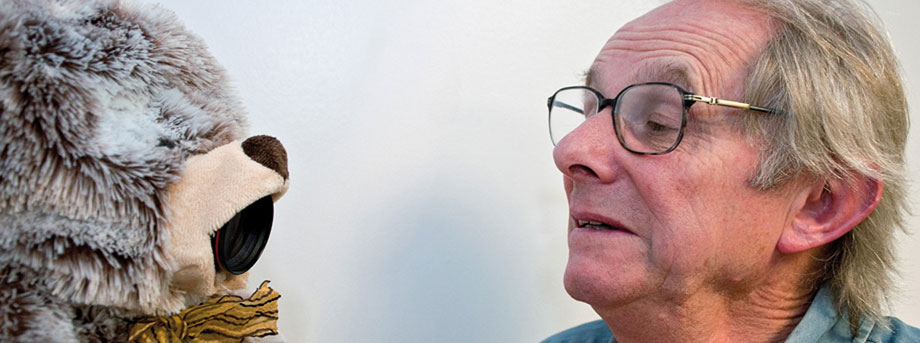
Film director Ken Loach has officially opened a new research lab which explores pioneering ways of improving communication between parents and children with hearing difficulties.
The Family Lab is part of the National Institute for Health Research (NIHR) Biomedical Research Unit in Hearing, a partnership between The University of Nottingham, Nottingham University Hospitals Trust and the Medical Research Council Institute for Hearing Research.
Based at Ropewalk House in Nottingham city centre, the Family Lab films interaction between parents and their children – using cameras hidden in teddy bears – and studies the footage for instances of successful communication. Sometimes just a single frame showing body language or facial expressions, this evidence is used to help parents to develop their skills and become more confident in their ability to communicate with their child.
Dr Deborah James, who is leading the research at the Family Lab, said: “For most parents, the diagnosis of deafness in their baby comes out of the blue and is very stressful — they worry about how to communicate with their baby.
“We are embarking on a major programme of work to explore the biological, psychological and social basis for this film-based intervention which parents find empowering. This unique intervention approach has caught the interest of Ken Loach, a major UK film director, who also uses film to help people reformulate their identity.”
Mr Loach said: “When a family finds out that a child can’t hear, it is traumatic. It can shatter the family and they really need support. We are very much aware of the need for a network of supporting professionals to carry a family through.
“This unit seems like a brilliant idea. When people put their imagination to a situation and have the skills and knowledge I think many things are possible.
“Film is a very careful observer of how people are. When you film someone having a conversation, listening or responding you see things in film that you don’t see as a casual observer and you can look at it again and build on those responses.”
The Biomedical Research Unit in Hearing, and its Family Lab, is working alongside the Trust’s Nottingham Cochlear Implant Centre (NCIC) at Ropewalk House and the Ear Foundation to carry out translational research in hearing.
Tags: Dr Deborah James, Family Lab, Ken Loach, Medical Research Council Institute for Hearing Research, National Institute for Health Research Biomedical Research Unit in Hearing, Nottingham University Hospitals Trust
Posted in Research | Comments Off on Lights, camera, interaction
Key to the secrets of the Universe
December 3rd, 2010

Astronomers have discovered a new way of locating a natural phenomenon that acts like a zoom lens and allows a view at galaxies in the distant and early universe.
These results are from the first data taken as part of the Herschel-ATLAS project, the largest imaging survey conducted so far with the European Space Agency’s Herschel Space Observatory.
The magnification provides key insights into how galaxies have changed over the history of the cosmos.
Dr Loretta Dunne, from the School of Physics and Astronomy at The University of Nottingham, is jointleader of the Herschel-ATLAS survey.
She said: “What we’ve seen so far is just the tip of the iceberg. Wide area surveys are essential for finding these rare events and since Herschel has only covered one 30th of the entire Herschel-ATLAS area so far, we expect to discover hundreds of lenses once we have all the data. Once found, we can probe the early universe on the same physical scales as we can in galaxies next door.”
Gravity can cause light to bend. The effect is extremely small, and it is only when light passes close to a massive object such as a galaxy containing hundreds of billions of stars that the results become noticeable. When light from a very distant object passes a galaxy much closer to us, its path can be bent in such a way that the image of the distant galaxy is magnified and distorted.
These alignments are called “gravitational lenses” and many have been discovered, mainly at visible and radio wavelengths. The alignment is crucial, requiring precise position of the lens — in this case a galaxy. This is very rare. Astronomers have to rely on chance alignments, which often involves sifting through large amounts of data.
Most methods of searching for gravitational lenses have a very poor success rate. Herschel looks at far-infrared light, which is emitted by the gas and dust from which stars form. Its panoramic imaging cameras have allowed astronomers to find these lenses by scanning the sky in far-infrared and sub-millimetre light.
Lead researcher Dr Mattia Negrello, of the Open University, said: “The big breakthrough is that we have discovered that many of the brightest sources are being magnified by lenses, which means we no longer have to rely on the rather inefficient methods of finding lenses which are used at visible and radio wavelengths.”
The Herschel-ATLAS images contain thousands of galaxies, most so far away that the light has taken billions of years to reach us. Dr Negrello’s team used optical telescopes on Earth for look at the positions of five bright objects. They found galaxies that would not normally be bright at the far-infrared wavelengths observed by Herschel.
They suspected that these galaxies might be gravitational lenses magnifying much more distant galaxies seen by Herschel. To find the true distances to the Herschel sources, the team looked for a tell-tale signature of molecular gas. Using radio and sub-millimetre telescopes on the ground, they showed that this signature implies the galaxies are being seen as they were when the Universe was 2–4 billion years old — less than a third of its current age.
The galaxies seen by the optical telescopes are much closer, each ideally positioned to create a gravitational lens. Dr Negrello said that “previous searches for magnified galaxies have targeted clusters of galaxies where the huge mass of the cluster makes the gravitational lensing effect unavoidable. Our results show that gravitational lensing is at work in not just a few, but in all of the distant and bright galaxies seen by Herschel.”
Prof Rob Ivison, of the Royal Observatory, Edinburgh, part of the team that created the images, said: “This relatively simple technique promises to unlock the secrets of how galaxies like our Milky Way formed and evolved. Not only does the lensing allow us to find them very efficiently, but it helps us peer within them to figure out how the individual pieces of the jigsaw came together, back in the mists of time”.
Prof Steve Eales, from Cardiff University, and the other leader of the survey, added: “Eighty per cent of the matter in the Universe is thought to be dark matter, which does not absorb, reflect or emit light and so can’t be seen directly with our telescopes. With the large number of gravitational lenses that we’ll get from our full survey, we’ll really be able to get to grips with this hidden Universe.” Visit: http://www.h-atlas.org.
Photo courtesy of Herschel-ATLAS.
Posted in Features | 1 Comment »
Research funding hits record level
December 3rd, 2010
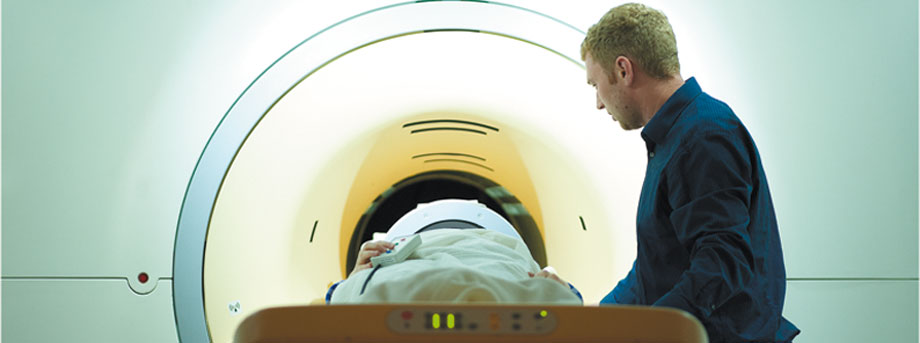 The international reputation of the University’s research has helped to push research funding at Nottingham to unprecedented levels.
The total of more than £150m received for the academic year 2009/10 represents a 7.2 per cent rise on the previous year — a resounding endorsement of the University’s reputation as a centre of research excellence.
There were significant increases in 2009-10 in the number of awards won from research councils, the EU and charities. There was also an increase in the value of awards received from the UK Government.
Over the year, there were 720 new funding awards, including an increase in the value of awards made to the Faculty of Law and Social Science – up from £5m in 2008/9 to £12m in 2009/10.
The Faculty saw an increase in the number of awards from 97 to 122. Awards to the Faculty of Science were up, from £38m to £42m in 2009/10. The Faculty of Arts also saw a 27 per cent increase in the number of research awards received — from 37 to 47.
Professor Bob Webb, Pro-Vice-Chancellor for Research, said: “This is a significant milestone for The University of Nottingham in terms of our research profile and the success of our world-class research teams across all five faculties. It continues to build on the excellent positive trajectory demonstrated in RAE 2008, demonstrating the dedication and commitment of our staff and the quality of our worldleading research.”
The University has a broad research portfolio but has also identified and badged 13 research priority groups, in which a concentration of expertise, collaboration and resources create significant critical mass.
Key research areas at Nottingham include energy, drug discovery, global food security, biomedical imaging, advanced manufacturing, integrating global society, operations in a digital world, and science, technology & society. Through these groups, Nottingham researchers will continue to make a major impact on global challenges.
More information is available on the University’s new research and knowledge transfer website at: http://www. nottingham.ac.uk/research/research.aspx.
Posted in Research | Comments Off on Research funding hits record level
Brand new look
December 3rd, 2010
 New brand guidelines for the University have been approved.
The guidelines cover a number of areas, including editorial style guide, tone of voice, logo, typography, colours, imagery and more.
Ten brand principles encapsulate what is distinctive about The University of Nottingham, and provide a guide for communications and marketing activity – from Excellence in All We Do to Academic Freedom and Curiosity and A Global Perspective.
A number of example designs are also provided, to show the new guidelines applied to a range of different materials. The guidelines can be found on the Communications & Marketing Workspace along with a range of design grids and templates for use by Schools and Departments who produce information locally.
These will continue to be developed and will be supported by training for those staff who use InDesign, which will roll out in the New Year.
Posted in News | Comments Off on Brand new look