

Campus News
Sam speaks out…
April 6th, 2011

A 14-year-old brain tumour survivor has told politicians how under-funding and new EU legislation are threatening the vital developments that saved his life.
Eighteen months ago, Sam White, from Newark, was given just an hour to live by doctors. After treatment at The University of Nottingham’s Children’s Brain Tumour Research Centre (CBTRC), Sam has defied both the experts and the odds. Although he still suffers from memory loss, Sam is back at school with extra support.
Sam met Gedling MP Vernon Coaker and East Midlands MEP Glenis Willmott when they visited the CBTRC at Nottingham University Hospital’s Queen’s Medical Centre (QMC).
After a tour of the research laboratories, the politicians were urged to support the All Party Parliamentary Group, which hosted the launch of a national manifesto on brain tumours last year.
Devised by the leading charities — Brain Tumour Research, Brain Tumour UK, International Brain Tumour Alliance and the Samantha Dickson Brain Tumour Trust — with whom CBTRC collaborates, the manifesto calls on the Government to work with them to ensure early diagnosis and treatment, best practice guidance for care and to increase Government investment in research.
CBTRC co-director David Walker, Professor of Paediatric Oncology, said: “March is Brain Cancer Awareness Month – the perfect time to be speaking to our local politicians and asking for their support in the campaign to address the inequalities which exist in Europe in treating and researching this life-threatening disease.
“Every year around 450 children are diagnosed with a brain tumour and it has overtaken leukaemia as the cancer which kills the highest number of young people. Brain tumours account for six per cent of all cancers yet receive less than one per cent of the national cancer research spending in the UK and we at the CBTRC are committed to redressing that balance.”
Compared to other parts of the world, research into children’s cancers and brain tumours is severely under resourced in Europe. The EU Clinical Trials Directive has created significant barriers to the initiation and conduct of clinical trials in children and has failed to deliver on speeding up the licensing of new drugs.
MEP Glenis Willmott said: “Funding for research into children’s brain tumours is of vital importance and without it we simply wouldn’t have excellent facilities like the CBTRC producing life-saving new therapies and advances in patient care.”
The laboratories are headed up by Richard Grundy, Professor of Paediatric Neuro Oncology and Cancer Biology, and have produced significant advances in diagnosis and treatment. This includes a better understanding of the genetics of rare types of brain tumours, why they may respond differently to treatment and offer varying prognoses for patients — work which was published in Nature and the Journal of Clinical Oncology.
Mr Coaker said: “Hearing that your child has cancer is every parent’s worst nightmare. Nottingham should be extremely proud that it is home to such a centre of excellence that is helping families through what is undoubtedly one of the most distressing experiences they will ever face.”
Sam’s mum, Pam, praised the staff at the CBTRC and Nottingham University Hospitals.
“If it wasn’t for the fact that we lived so close to these excellent facilities in Nottingham, Sam would not have stood a chance. Everyone has been fantastic — from the surgeons who operated on him that first night right down to the clinical psychologist who helped him overcome his fear of MRI scans.
“What has really made a terrific impact is having access to the latest drugs and treatments through clinical trials at the CBTRC, and for Sam, being treated with warmth and understanding, not just as a patient’”
Visit the CBTRC’s website: www.cbtrc.org.
Tags: Brain Cancer Awareness Month, Brain Tumour Research, Brain Tumour UK, Children’s Brain Tumour Research Centre (CBTRC), David Walker, Glenis Willmott, ichard Grundy, International Brain Tumour Alliance, Nature and the Journal of Clinical Oncology, Nottingham University Hospital, Professor of Paediatric Neuro Oncology and Cancer Biolog, Professor of Paediatric Oncology, Sam White, Samantha Dickson Brain Tumour Trust, Vernon Coaker
Posted in News | Comments Off on Sam speaks out…
Leading from the front…
April 6th, 2011
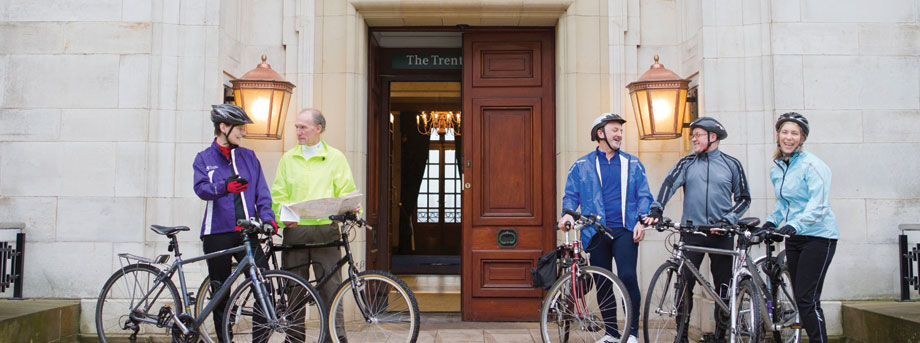
University of Nottingham Vice-Chancellor Professor David Greenaway is to launch the University of Nottingham’s Life Cycle – a sponsored bike ride from John O’Groats to Lands End.
He will lead a team of senior colleagues as they cycle more than 1,000 gruelling miles over 13 days to raise money for the Sue Ryder Care Centre for the Study of Supportive, Palliative and End of Life Care, based at The University of Nottingham.
The VC’s personal physical commitment is believed to be a first in UK Higher Education. It comes ahead of the University’s biggest fundraising campaign to date, which will be officially launched in October and will have health and well-being as one of its central themes.
The ride will feature stops in Edinburgh and Exeter for alumni events and will include a community fun ride around the University’s Sutton Bonington Campus. Friends, alumni and supporters of the University may have the chance to join a leg of the ride and to help with the fundraising effort.
Professor Greenaway said: “This idea is the best possible build-up to the launch for the University Campaign and at the same time sets myself and others a challenge. The Centre carries out important research in making the final months and years easier for people living with chronic and terminal illness and I am delighted to be supporting it.”
The ride will begin on 27 August. If you’d like to support the VC and his team, visit:
www.nottingham.ac.uk/lifecycle
for regular updates.
Tags: niversity of Nottingham’s Life Cycle, Palliative and End of Life Care, Professor David Greenaway, Sue Ryder Care Centre, Sue Ryder Care Centre for the Study of Supportive
Posted in Features | Comments Off on Leading from the front…
‘Oasis of productive peace’
April 6th, 2011
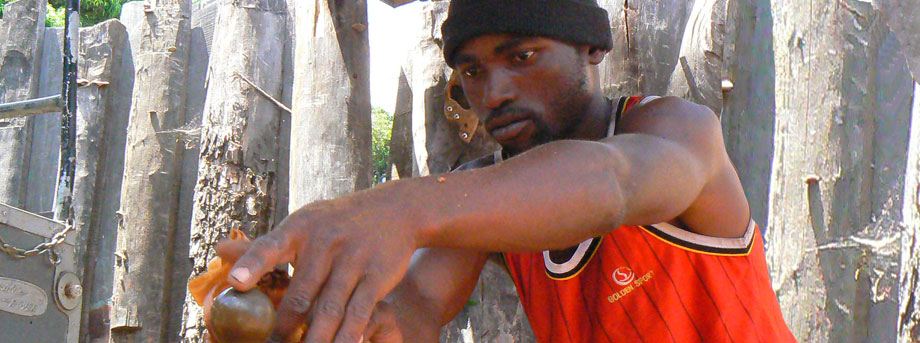
For almost 30 years, Nottingham students and the UK charity, Tools for Self Reliance, have helped some of the world’s poorest people work themselves out of poverty. But what’s in it for the volunteers?
Corinne Kirk, a Philosophy postgraduate, has been helping in the TFSR workshop for over a year now.
She said: “I got involved with TFSR because my degree subject (Philosophy) was interesting but almost totally abstract, I felt like I wasn’t really involved in the world, in fact it was the classic academic in an ivory tower problem. So, I decided to embrace my inner Rapunzel and escape the perils of the ivory tower by letting my hair down with some down to earth volunteer work!”
The University’s Student Volunteer Centre offered Corinne advice on the various opportunities open to her.
“I picked TFSR because it’s about as practical and anti-ivory tower as you can get without abandoning technology and going to live on a commune. Also, unlike some charities, with TFSR you know that everything you do and the time you give benefits people who really need it. The tools go to communities and people are trained to use them so they can make a living and lift themselves out of poverty.
“But finally, whenever you speak to anyone about the TFSR (which I did. I’m an academic, careful research is in my nature!) they start smiling. Seriously, they smile like they’re remembering a great time they had. I’m aware that I now do the same when people ask me about TFSR. I decided that any volunteering project which causes such an infectious joy had to be worth a try. This is probably my main reason for choosing TFSR, but I’m not sure it is a persuasive argument unless you experience the ‘smile factor’ personally.
“I turn up at 1.30 and then it’s suddenly 4.30 and I realise I’m grinning from ear to ear and I’ve spent hours in this little bubble of total peace and happiness; no deadline stress, no worries about what I’m going to write in my essay or how much reading I have to do. Somehow the rest of the world just drifts away somewhere and there is just you, the tools and the rest of the gang in this little oasis of totally productive peace. I guess TFSR doesn’t have this profound effect on everyone or we’d probably be a cult by now, but it definitely centres me and keeps me grounded for the week.”
“Being involved in TFSR is also great for your CV – it boosts your employability by providing concrete examples of how you have the qualities employers are looking for, such as teamwork, time-keeping, organisational skills, etc. And the vast range of experiences and interests of the students means each Wednesday session is like a micro lecture. And you get a guilt-free break from study!”
TFSR needs tools for woodworking, metal working, blacksmithing, building, shoe repairing and tailoring. To find out more about TFSR, visit www.tfsr.org/ and to find out about the University group, email volunteering@nottingham.ac.uk or phone (0115) 846 8750.
It will have a stall at the University’s May Fest 2011, on May 7 and 8 – visit http://tiny.cc/MF2011 for details. In the meantime, you can drop off tools at the SU office at each campus, and at reception at King’s Meadow Campus.
Tags: May Fest 2011, Student Volunteer Centre, Tools for Self Reliance
Posted in News | 1 Comment »
Taboo in workplace
April 6th, 2011
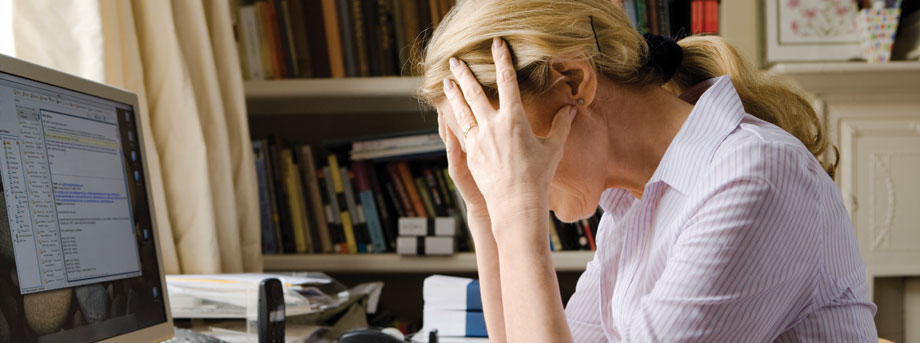
A study has found that the menopause is still a ‘taboo’ subject in many workplaces, presenting a major challenge for millions of women struggling with symptoms.
Many of the 900 women questioned said they had not been prepared for the menopause, and nearly half struggled to cope with symptoms. A similar number felt their performance had been affected, and nearly a fifth thought the menopause made managers and colleagues view them as less competent.
The menopause – part of the natural ageing process – occurs between the ages of 45 and 55, with 52 the UK average. Of the over-50s workers in the UK, 45% are women, or 3.5m.
Symptoms can last from four to eight years. Women said the symptoms which impacted on their work included tiredness, poor memory, feeling low and decreased confidence.
Professor Amanda Griffiths, of the University’s Institute of Work, Health and Organisations, conducted the research for the British Occupational Health Research Foundation. She said: “The menopause presents an occupational health issue for some women, and for a significant period of time.
“In many settings, there was very little awareness of the menopause as a potential occupational health issue – it was a ‘taboo’ topic. In such circumstances, women typically suffer in silence. Many of the participants in this research were embarrassed to disclose their problems or feared that their managers would be embarrassed if they raised the subject, particularly if those managers were younger than them or were male. Where women had taken time off work to deal with their symptoms, only half of them disclosed the real reason for absence.”
Four overarching issues emerged from the research as areas for possible improvements at work: greater awareness among managers, increased flexibility of working hours and arrangements, better access to informal and formal sources of support, improvements in temperature and ventilation.
Prof Griffiths added: “Organisations varied greatly in their willingness to be involved in this research. Whilst some immediately became engaged and saw its significance, others did not appear to consider this a topic worthy of serious consideration. Knowledge about the menopause was limited and there was often an apparent reluctance to probe a potentially sensitive area. However, it subsequently became clear when interviewing women that the vast majority were delighted that this hitherto ‘taboo’ matter was being scientifically explored, and that information and guidance might become available for future generations of women.”
The Trades Union Congress (TUC) has issued guidance on the menopause and work, informed by Prof Griffiths’ research.
General Secretary Brendan Barber said: “We welcome the research. Despite the increasingly large number of older women in employment, the menopause is rarely seen as a workplace issue. There is no excuse for the silence, embarrassment, confusion and inaction around the menopause – something which all women go through. The health of women in later years depends very much on their health when they are working through the menopause, and this report shows employers and unions can work together to do much more to protect them.”
Visit http://tiny.cc/z6q7i for a guide for managers.
Tags: British Occupational Health Research Foundation, Health and Organisations, Institute of Work, Professor Amanda Griffiths, Trades Union Congress (TUC)
Posted in Research | Comments Off on Taboo in workplace
Lifeline thrown to DH Lawrence centre
April 6th, 2011
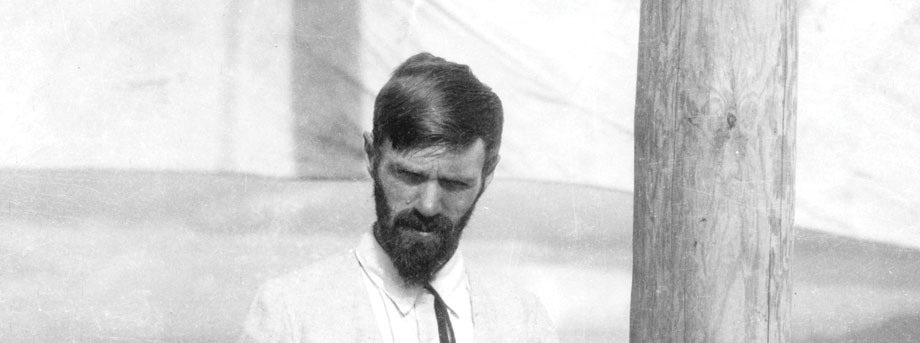
The University has offered £105,000 to help ensure the future of the DH Lawrence visitor centre.
The University is hoping to work with Broxtowe Borough Council in a long-term partnership to safeguard Durban House and end the uncertainty over its future.
Durban House – in Lawrence’s hometown of Eastwood, Nottinghamshire – attracts visitors from all over the world and has hosted the month-long DH Lawrence Festival for seven years. But its future has been in doubt for the last three years due to issues over funding.
As part of the proposal, the centre would support the University’s outreach activities with schools, to raise aspirations and increase access to university. Other joint opportunities include summer schools, creative writing links, short courses, lectures, events and exhibitions drawing on the University’s nationally designated DH Lawrence Collection and related archives.
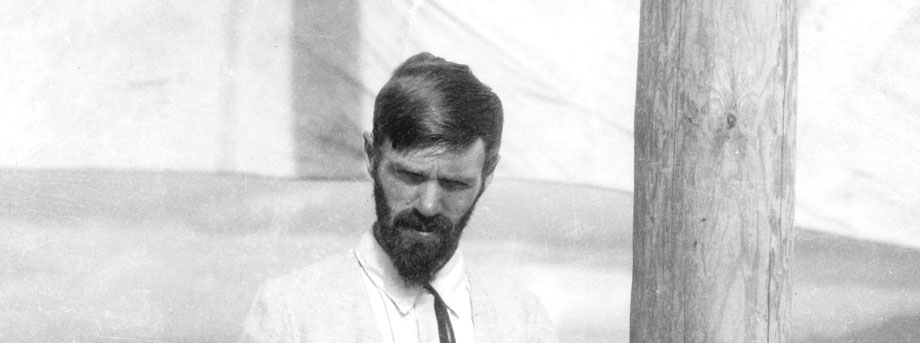
DH Lawrence (1885-1930) is the University’s most famous literary son, studying at the then University College Nottingham more than a century ago. The University’s collection of original Lawrence manuscripts, first editions, letters, photographs, biographical writings, paintings and other materials – some dating back to Lawrence’s time as a student from 1906 to 1908 – is one of the most extensive in the world.
Prof Karen Cox, Pro-Vice-Chancellor for Access and Community Relations, said: “We hope this will be the start of a long and fruitful partnership between the University and Broxtowe Borough Council. We are pleased to be able to support Durban House in this way and see numerous opportunities to share University resources and work with the local community in a mutually beneficial way.”
Under the proposal, the University will provide £105,000 over two years. Day-to-day running of the centre will remain with the council. The University would have a dedicated room for activities in widening participation, education, outreach and research. The move follows the University’s unsuccessful bid to the Arts and Humanities Research Council in 2009, for funding to secure the future of the centre.
Leader of the Council, Coun David Watts, and Portfolio Holder for Housing Leisure and Culture, Coun Milan Radulovic, said: “This is excellent news. A partnership with The University of Nottingham provides the ideal platform for the future of Durban House and will provide a superb opportunity for its development in the future.”
Tags: DH Lawrence, DH Lawrence Collection, Durban House, Pro-Vice-Chancellor for Access and Community Relations, Prof Karen Cox, University College Nottingham
Posted in News | Comments Off on Lifeline thrown to DH Lawrence centre
Spotlight
April 6th, 2011

Sex and religion: A nationwide study
Experts at the University, in collaboration with Nottingham Trent University, have spent two years investigating the attitudes and experiences of sex and religion among British 18 to 25-year-olds. The study, which involved nearly 700 people from six religions, highlighted challenges they face in reconciling their sexuality and their religion and the concerns they have about the stigmatisation of religion and the increasingly sexualised culture in British society. “Religion, Youth and Sexuality: a Multi-faith Exploration” received nearly £250,000 of funding from the Arts and Humanities Research Council and the Economic and Social Research Council.
Stop that fruit going mouldy
Millions of tons of soft fruit go to waste each year through mould developing. Scientists at Nottingham have joined forces with colleagues at Loughborough University and UK fruit growers Berryworld to use cold plasma technology to keep the mould at bay for longer. Cold plasma is already used in the medical world to clean bacteria from wounds and its potential use in the food sector was a chance discovery by food scientists and microbiologists.
Health Secretary announces £775m boost
Andrew Lansley, Secretary of State for Health, has announced £775m national funding for medical research during a visit to NIHR BRU (Nottingham Digestive Diseases Centre Biomedical Research Unit) at the Queen’s Medical Centre campus of Nottingham University Hospitals. Nottingham is the only UK city to have three BRUs, which aim to turn world-class research into treatments for patients. They are funded by a previous round of Government funding and are collaborations between the University and Nottingham University Hospitals NHS Trust (NUH).
Slalom success
Alice Spencer and Jacquelyn Shaw have won gold and bronze medals respectively in the women’s K1 event at the British Universities and Colleges Sport (BUCS) Slalom Championships 2011. Alice admits the competition between the two has aided her development. However, the two also teamed up with fellow student George Marshall at the BUCS event to secure a silver medal in the Slalom Mixed C2 race.
Steer clear of smoke
Pregnant women who breathe in the secondhand smoke of other people are at an increased risk of delivering stillborn babies or babies with defects, a study led by researchers at the University has found. The study, published in the April edition of the journal Pediatrics, found passive smoking increased the risk of stillbirth by 23% and was linked to a 13% increased risk of congenital birth defects. The findings underline the importance of discouraging men from smoking around their pregnant partners.
Nottingham to lead new £10m centre
The University of Nottingham is to lead a new £10m Centre for Innovative Manufacturing Working with leading companies in the aerospace, automotive and energy sectors, the centre will be a national leader for engineering research in the field of composite materials – a critical technology that will help the UK to develop a low-carbon economy. Funding over the next five years includes £4.9m from the Engineering and Physical Sciences Research Council (EPSRC), with a further £1.8m from industry partners: Lotus, Rolls-Royce, GKN, Airbus, Bentley, Caparo, Luxfer and Vestas. The centre will work with businesses on tackling major research challenges, with the aim of turning ideas into new products and processes ready for the marketplace. It has the backing of National Composites Centre, part of the High Value Manufacturing Technology and Innovation Centres (TICs), announced by the Government this month.
Tags: Airbus, Andrew Lansley, Arts and Humanities Research Council, Bentley, Berryworld, British Universities and Colleges Sport (BUCS), Caparo, congenital birth defects, Economic and Social Research Council, Engineering and Physical Sciences Research Council (EPSRC), GKN, High Value Manufacturing Technology and Innovation Centres, Lotus, Loughborough University, Luxfer, National Composites Centre, NIHR BRU (Nottingham Digestive Diseases Centre Biomedical Research Unit), passive smoking, Religion, Rolls-Royce, Secretary of State for Health, stillbirth, Vestas, Youth and Sexuality: a Multi-faith Exploration
Posted in media | Comments Off on Spotlight
Allergies study offers fresh hope
April 6th, 2011

A breakthrough by scientists at the University could provide hope for people who have had to choose between their health and their pet.
The team of immunologists led by Drs Ghaem-Maghami and Martinez-Pomares in the School of Molecular Medical Sciences, and funded by Asthma UK, has identified a cell component which plays a key role in triggering allergic responses to cat dander. The discovery could pave the way in developing allergy treatments and is good news for the millions of asthma sufferers whose condition is worsened by airborne allergens from cat dander or house dust mite. Cat dander consists of microscopic pieces of cat skin which become airborne.
Dr Amir Ghaem-Maghami said: “Many people with asthma are highly sensitive to airborne allergens such as cat dander or house dust mite. In fact, many studies have shown that up to 40% of children with asthma are allergic to cat allergens.”
Dr Elaine Vickers, Research Relations Manager at Asthma UK, says: “We are delighted to see the rapid progress that Dr Ghaem-Maghami and his colleagues are making. This is a great example of where Asthma UK’s research funding is leading to a better understanding of asthma which could ultimately benefit thousands of people with both asthma and allergies.”
If it believes itself to be under attack, the body’s immune system produces a molecule called IgE, which leads to release of chemicals (including histamine) by certain cells which together cause an inflammatory response and the classic symptoms of allergy. The Nottingham work, published in the Journal of Biological Chemistry, focused on the mannose receptor (MR), and the dendritic cells – among the first in the immune system to come into contact with allergens.
The team found that the MR binds to a range of allergens and plays an important role in the response to house dust mite allergens. They looked at the contribution of MR to allergy caused by a major cat allergen called Fel d 1, proving that MR is needed for the body to recognise Fel d 1 as a potential foreign invader and for the production of IgE against Fel d 1.
The discovery shows that MR plays a pivotal role not only in recognising allergens but also in provoking the body’s allergic response to them.
Tags: Asthma UK, Dr Ghaem-Maghami, Dr Martinez-Pomares, School of Molecular Medical Sciences
Posted in Research | Comments Off on Allergies study offers fresh hope
The magical mystery tour…
April 6th, 2011
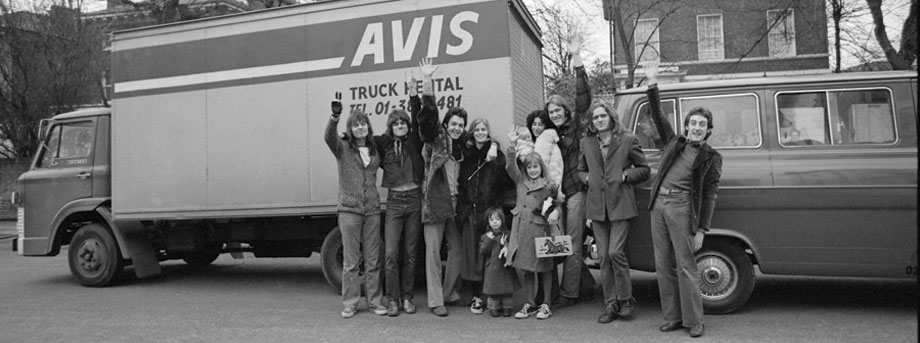
University students and staff were stunned when Paul McCartney and Wings rolled up on the doorstep. The impromptu debut gig – in the Portland Ballroom at midday on Wednesday 9 February 1972 – is etched on the minds of many, including the great man himself.
Why did you end up at Nottingham?
We decided we’d just go on the road with no plans; no hotels booked, no gigs booked a complete blank canvas. So we set off with the band, the family, the dogs, the babies – up the motorway. We headed north and saw a sign that said Ashby de la Zouch so we got off the motorway there and asked where the nearest uni was. This became the idea that the only place we could maybe find a captive audience would be somewhere like a uni, so we were directed to Nottingham Uni and that’s how we found it.
It was the first time we had tried that idea. I’m really glad we did. It’s a completely off-the-wall idea for someone who had been in The Beatles, to go and completely start from scratch again and, you know, looking back at it I was like, why did we do it? And it’s still like that, but it was great and it was a great memory. We had some laughs – you can imagine some of the hotels we managed to scrape into! We would literally get there about 7pm at night, and there wasn’t the greatest selection left by that time of night! But
it was really fun and great bonding experience for the band.
What do you remember about the gig?
I remember having 11 numbers to play and having to repeat a few, pretending they were special requests from the students.
What would you say to all those fans that packed in to watch the gig and still treasure the memories of that very special lunchtime?
It was really great they were there to share it with us – we were extremely thankful that anyone showed up for us. It’s a great memory so it’s nice they can share that very nice off-the-wall experience with us. It must have been good fun. I can imagine it would have been great if I’d been at uni and a band like us showed up. It must have also been nice to see Wings in their infancy! I think it was the first time we’d publicly played.
Have you still got the van?
The van is long since gone.
When do you plan on returning?
A good question and I’ll give it considerable thought.
Someone else who remembers the gig clearly is Elaine Woodhams (née Smith) was the Students’ Union social secretary at the time. She was in her final year studying Social Administration and was responsible – along with the committee – for booking the entertainment for the Portland Building.
“That night, I was in the bar when I was approached by a guy,” she remembers.
“He said ‘we’re with Paul McCartney’s new band, Wings, and we’re on the road looking for places to do impromptu gigs. Are you interested?’ First thing I thought was that someone was winding me up, but I said ‘of course we’re interested’.
“He said ‘if you’d like to come outside and meet the boss and talk about the details’. I followed him outside, there was a red minibus parked in front of the Portland Building. He knocked on the window and the door slid back and who should be sitting in the driving seat but Paul McCartney. My first impression was: wow! I’d actually thought that when I got outside the building I might be greeted by lots of people laughing or throwing buckets of cold water at me. Then I think I did the goldfish impression for a bit. Paul said: ‘My man tells me you’re up for it so let’s talk about the details. He said ‘what’s the chance of playing the next evening’ and I explained that I would have to get permission from the Registrar.”
McCartney told Elaine that the band would stay in Nottingham that night and to organise it and give him a ring. He wanted it to be low-key event, no publicity, just a blackboard up in the bar with the details.
“Word went round like wildfire, just from the blackboard notice in the bar’, said Elaine. “The fire limit on the ballroom was 800 and it was definitely packed.
“It was amazing,” she said.
Another alumni with memories of the gig is Trevor Morkham (BA Law, 1972).
He said: “I’ve dined out on the story ever since. The concert was fantastic, a real rockin’ event. Afterwards, as I was leaving the building, I noticed a van parked in front of the main steps. A familiar figure was sat in the driving seat so I took the opportunity to ask Paul for his autograph — he obligingly signed ‘Paul and Linda McCartney’ on a scrap of paper I managed to find in my pocket. I still have that autograph, locked away amongst my most prized possessions, a souvenir of a fantastic day that I will never forget.”
Graham Pearson (Chemical Engineering, 1972) said: “The audience was very attentive and far too sophisticated to be screaming and shouting. Because of this, Linda McCartney was less than generous. At one point, she asked us why we hadn’t brought our knitting.”
And Dr Brian Pearson (Metallurgy, 1974) remembers: “The Wings gig was different and special. Even in those days, long before mobile phones and the internet, word had got around the Halls that McCartney had been seen drinking in the Buttery on the evening of the 8th. By the time we got to lectures on the 9th, the rumour had turned into the reality that (the then unknown) Wings would be playing in the Ballroom. What do I recall of the gig? Well, most vividly, Linda playing keyboards and singing surrounded by an entourage of babies and young children…..Stella would have been there, I’m sure, but only just! I recall Denny Laine and Henry McCullough, who I’m sure had both played with Joe Cocker at one stage. I don’t recall the drummer, but I do remember his playing being sufficiently hard to turn a crash cymbal inside out! ”
You can read more memories of the Wings gig online at www.nottingham.ac.uk/alumniexchange and see guitarist Henry McCullough and Social Secretary Elaine Woodhams share their memories on YouTube at:
Wings take flight at the University
Tags: alumni, Sir Paul McCartney, Wings
Posted in Features | Comments Off on The magical mystery tour…
Sex in three cities…
April 6th, 2011
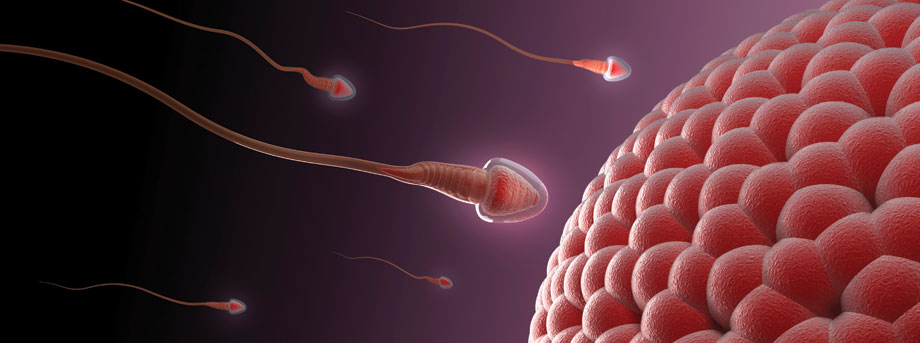
A world expert on reproduction and the role of environmental contaminants in birth defects and declining fertility has visited the School of Veterinary Medicine and Science, at Sutton Bonington, on his inaugural Sex in Three Cities tour of the UK.
This was the second lecture given by Lou Guillette, Professor of Obstetrics and Gynaecology at the Medical University of South Carolina, and the Centers of Economic Excellence (CoEE) Endowed Chair in Marine Genomics at the Hollings Marine Laboratory, USA.
Sponsored by The Society for Reproduction and Fertility Prof Guillette’s lecture, entitled ‘Penises, ovaries and environmental contaminants’ examined the role of environmental contaminants as inducers of birth defects in children and various wildlife species. He told an audience of academics, students and the public that even the very lowest concentrations of these chemicals can have profound effects on reproduction.
Dr Richard Lea, Associate Professor of Reproductive and Developmental Biology, said “Prof Guillette’s research in the field of reproductive and developmental biology is internationally recognised and he delivered a fascinating and entertaining lecture on this critically important topic.”
Prof Guillette’s research has drawn international attention. The baby developing in the womb is particularly sensitive to environmental contaminants, with effects often not seen until later in life – exposure has been linked to breast and testicular cancer, as well as reduced fertility.
As the distinguished Professor of Biology at the University of Florida for 25 years, Prof Guillette was an award-winning teacher of biology, embryology and reproductive biology; much of his early work focused on declining fertility in alligators.
Having published almost 300 papers and edited five books, Prof Guillette’s work has featured in the international media and various other scientific, news and education outlets. He has served as a science adviser to US and foreign agencies, testified in the US Congress and for various foreign administrations regarding the impacts of environmental contamination on human and ecosystem health, and served on National Academy of Science’s panels examining endocrine disrupting contaminants and health issues in the post-Hurricane Katrina environment.
Tags: Associate Professor of Reproductive and Developmental Biology, birth defects, Centers of Economic Excellence (CoEE) Endowed Chair in Marine Genomics at the Hollings Marine Laboratory, environmental contaminants, Lou Guillette, National Academy of Science, r Richard Lea, School of Veterinary Medicine and Science, Sex in Three Cities, The Society for Reproduction and Fertility
Posted in News | Comments Off on Sex in three cities…
Alistair shows his serious side
April 6th, 2011
Alistair McGowan – the man of many faces – is to star in David Mamet’s Oleanna at Lakeside. The powerful play tells the tale of a struggle for justice and power between a college professor and his female student. McGowan took time out of his busy rehearsal schedule to chat to us…
This a return to Nottingham for you, does that mean you like the city?
Yes, very much. Relatively speaking, I seem to have spent a lot of time here over the years and I’ve always had a good time in Nottingham. It has a lot to offer. A very attractive city centre, vibrant theatres, good comedy and music venues and lots of history. But the city is very confusing to the outsider in terms of the names of some its biggest landmarks: The Park is not a park, The Council House is not a council house, The Castle is not a castle. Language, it seems, is tied in knots – in Notts.
You recently appeared in The Mikado – are you a closet Gilbert and Sullivan fan?
I was at the Concert Hall at Christmas in a performance of The Mikado – which I also directed – and have subsequently appeared and directed in The Pirates of Penzance for the same producer, Raymond Gubbay. I have to say, I have come to the shows not really knowing anything about them but having seen various, largely amateur and school productions in the distant past, which left me cold. When I actually looked at the language, however, and the lyrics and the beauty of the music, I realised that they are mini-masterpieces!
How did that compare to Kafka’s Dick and Endgame, both of which you starred in in Nottingham a while ago now.
I really enjoyed being in both shows. The Playhouse was a great place to be and Endgame, especially, was such an amazing piece of work to be associated with. It says so much about life – mundanity, transience, the power struggles of relationships. I love Beckett’s writing. I had a fabulous on-stage relationship with the genial James Bolam and loved working with director, Martin Duncan. Sadly, the audiences never really came and those that did, on the whole, turned their noses up!
Were you familiar with Oleanna before being offered the part? What’s your character like?
I saw Oleanna in London when it was first produced there in 1993. It had a profound effect on me as a play. I remember talking and arguing about the issues in it with the friends I’d gone with for hours afterwards. The reaction it got from the audience was really special – they were aghast at what they were seeing being played out on stage – gasping with shock! You always hope as a writer and an actor that the work you are involved in will create debate – it rarely happens! I think Oleanna is a play which genuinely makes everyone think and feel deeply about a number of issues.
Are there any similarities between yourself and the Professor?
You always, I feel, have to find something to draw on in yourself when you are playing any character and, yes, I find I can associate with a lot of what John says. The tension of buying a house, for one thing! I also remember many of my old lecturers and professors at university (I went to Leeds) and have been drawing on my memories of them. I also genuinely feel that John wants to help Carol and is misinterpreted by someone from a different generation in which different rules apply. I taught/directed at my old drama school a few years ago and certainly felt then, the pleasure of ‘helping’, of passing on knowledge.
Does anyone ever come along to a play and think it must be a comedy because you’re in it?
I have no idea – probably. I hope, however, that I always bring ‘wit’ to a part. I think ‘wit’ is terribly under-rated!
Does the move into serious acting mean an end to your comedy or do you see them existing side by side?
This is probably the most serious play I’ve done, actually, but, no, I would never want to ‘give up’ on my comedy. I love doing stand-up and impressions. I feel very lucky to be able to be a part of so many aspects of ‘show-business’ and to go from singing light opera to doing a David Mamet play and then appearing on Final Score impersonating football managers old and new.
We don’t see much of you on TV these days – do you have anything in the pipeline? And will we see you popping up in Coronation Street at some point, like lots of other stars?
I play Piero de Medici in a new 13-part, children’s drama Young Leonardo which begins on BBC1 in April. It’s about the life of Leonardo da Vinci – his amazing inventions in particular – and it’s a lot of fun! It was really enjoyable playing a villain but we shot it in South Africa which meant I had to work really hard not to pick up the accent.
Who is the hardest person you’ve tried to impersonate?
There are plenty but I have to say, David Cameron and Nick Clegg are proving almost impossible.
And who is your favourite?
My favourite is always my newest which, at the moment, is the Liverpudlian comic John Bishop.
Oleanna runs from Friday 8 April to Saturday 23 April at Djanogly Theatre, Lakeside Arts Centre, University Park. Visit www.lakesidearts.org.uk for details.
Tags: Lakeside Arts Centre, Oleanna
Posted in Features | Comments Off on Alistair shows his serious side