

Campus News
Fine Art Degree Show
May 6th, 2011
The University’s School of Education’s 2011 BA (Hons) show
Date: Saturday 4 June to Sunday 12 June
Venue: Djanogly Art Gallery, Lakeside Arts Centre, University Park
Admission: Free
Posted in Exhibitions, What's On | Comments Off on Fine Art Degree Show
The Art of Mapping and the Culture of Cartography
May 6th, 2011
Professor Stephen Daniels
Date: Tuesday 24 May
Time: 1pm to 2pm
Venue: Djanogly Theatre, Lakeside Arts Centre, University Park
Admission: Free. Places are limited. Please book tickets on (0115) 846 7777
Posted in Public Lectures, What's On | Comments Off on The Art of Mapping and the Culture of Cartography
International Year of Chemistry: Astrochemistry: Spaced-out molecules
May 6th, 2011
By Peter Sarre
Date: Thursday 12 May
Time: 6pm to 7pm
Venue: Lecture Theatre X1, School of Chemistry
Admission: Free
Posted in Public Lectures, What's On | Comments Off on International Year of Chemistry: Astrochemistry: Spaced-out molecules
International Year of Chemistry: Clusters: Physics and Chemistry in a Finite World
May 6th, 2011
By Tony Stace
Date: Thursday 9 June
Time: 6pm to 7pm
Venue: Lecture Theatre X1, School of Chemistry
Admission: Free
Tags: International Year of Chemistry
Posted in Public Lectures, What's On | Comments Off on International Year of Chemistry: Clusters: Physics and Chemistry in a Finite World
NEAT
May 6th, 2011
Nottingham European Arts & Theatre Festival 2011 runs from 26 May to 12 June.
The festival sees the University’s Lakeside Arts Centre join forces with other major arts venues across the city to showcase a range of ground-breaking European theatre, music, performance, film and visual art for adults and children. Funded by Arts Council England, Nottingham City Council and the European Theatre Convention, the festival features The Hull Truck’s performance of DH Lawrence’s Lady Chatterley’s Lover and Gruppe 38 (Denmark)’s innovative Hans Christian, You Must Be An Angel. Nottingham’s Architects of Air bring Luminarium: Levity III to Highfields Park from Saturday 28 May to Sunday 5 June. Visitors are encouraged to wander freely inside the wonderful labyrinthine structure. Visit www.neatfestival.co.uk for more details.
Tags: DH Lawrence, Lakeside Arts Centre, luminarium
Posted in events | Comments Off on NEAT
May Fest 2011
May 6th, 2011
The University’s free community open day for the public, students, alumni, family and friends is on Saturday 7 May, from 11am to 5.30pm.
Whether it’s the fantastic Physics Buskers, thunder and lightning on demand, philosophical debates or a free bike check by a qualified bike mechanic – there’s something for everyone at the University’s third crowd-pulling open day.
Bringing together the public, students and staff – past, present and potential future, the event also includes flag-making workshops, brain games, job stalls and exhibitions at the University Park campus. And best of all – it’s all free. (Some alumni-only events may incur a small charge.) Visit www.nottingham.ac.uk/mayfest/index.aspx for details, http://tiny.cc/MayF11 to view the full programme or www.youtube.com/watch?v=K4D52AoUTwY for a taste of last year’s event.
Posted in events | Comments Off on May Fest 2011
Premier pays surprise visit
May 6th, 2011
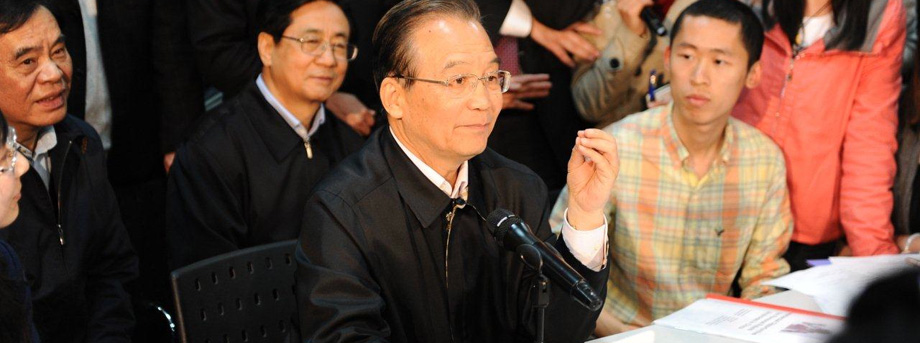
China’s Premier Wen Jiabao has paid a surprise visit to The University of Nottingham Ningbo, China (UNNC).
Premier Wen was welcomed by the University’s Provost and Chief Executive Officer, Professor Nick Miles. He spent two hours at the University, shaking hands with the crowds that greeted him, and then chatting with students about their research projects.
UNNC is a unique international university in China. It was the first Sino-foreign university to open in China in 2004, with the Chancellor of The University of Nottingham, Professor Yang Fujia, as its founding President. Professor Yang, the first Chinese academic elected to such a role in a British university, originally hails from Ningbo.
The University has just under 5,000 students, recruited from China’s first division – the tier of students with the highest grades – and other countries. All degree programmes are taught in English and students receive a UK-style education and UK degrees from The University of Nottingham.
China’s Premier told the students: “I am very happy to be here to see international students and Chinese students learning together and developing together. This is like an international family. The location is here, but the University has a world view, so students also have a global perspective. To international students, I would ask you to regard this as your home.”
Professor Miles said: “We are hugely honoured and very proud that Premier Wen decided to take some time out of his busy schedule to come and see us. This is important acknowledgement for us that we are contributing to educational change in China in a positive way. We are still a young University here in China and our graduates are already making an impact in the business world, science and research and their communities.”
“Our 100% employment rate among our graduates is testimony to the high calibre of students we attract here and also highlights that the education they receive here equips them to thrive in a challenging, globalised work environment,” said Professor Miles.
Vice-Chancellor Professor David Greenaway said: “We are delighted and honoured by the visit of Premier Wen, which is a testament to the huge achievements of UNNC and reflects the support we have had in China over a long period.
“The University offers a distinctive education, which is valued by students and employers alike. It also plays a leading research role in China, particularly in globalisation, business and the development of low-carbon technologies. We’re very pleased that Premier Wen had the opportunity to meet some of our students and see these achievements at first hand.”
Tags: China (UNNC), he University of Nottingham Ningbo, Professor Nick Miles, Professor Yang Fujia, Vice-Chancellor Professor David Greenaway, Wen Jiabao
Posted in News | Comments Off on Premier pays surprise visit
Building on past, looking to future
May 6th, 2011
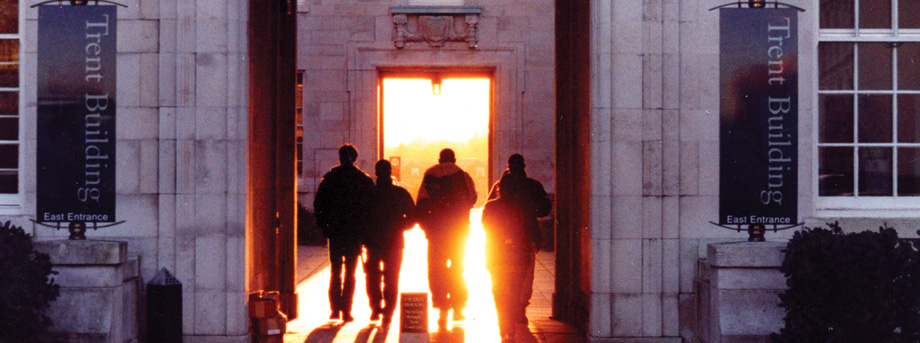
Little has changed in the oak-panelled Council Room in the Trent Building since it opened as part of Nottingham University College 83 years ago. But as the University has evolved – into a modern, international institution – so too has the Council, taking strength from the past to face the challenges to Higher Education that lie ahead.
Council is the University’s governing body, responsible for strategic planning, finances, buildings and staff. Members included senior managers and academics from the University and external members, such as alumni, leading business figures and student representatives who give their time voluntarily.
“The difficulty at the moment is that there are so many unknowns around government policy, the size and shape of future HE, modes of study: part time, full time, distance learners,” says Karen Cox, Professor in Cancer and Palliative Care, who joined the Council in August 2008 after being appointed Pro-Vice-Chancellor for Staffing and the Community.
“The challenge is for the Council to manage our resources – both human and material, while staying true to the University’s mission. We need to decide how to manage the institution in an uncertain world. We need to be pro-active and responsive.”
Prof Cox explains: “As a member your job is to think and act beyond your own particular role and department and to bring a degree of ‘objectivity’ to the table, to counter and balance your own experience and perspectives. To challenge and be challenged.
“We have collective responsibility. Sometimes discussions can get challenging but ultimately we need to come to conclusions. People have to feel they can air their views but ultimately that they can make a decision and feel they can move forward. That makes a successful governing body.”
The changes in funding and the new fees system are likely to have significant effect on the University, not all of them predictable, agrees Keith Hamill, Pro-Chancellor and Council President.
“Nottingham enters this situation with substantial strengths and the management, supported by the Council, has been preparing for these developments for the last few years – including an impressive improvement in cost efficiency, which the staff has implemented, and which means that the University enters this period in a stronger financial position with a better business model, ” says Mr Hamill.
The University has ambitious plans for growth and Council knows that the changes ahead will bring opportunities as well as threats. The student experience will continue to be an important issue and its competitive significance will grow.
But it’s not just about the changes, but how Nottingham deals with the changes that will help determine its future success, says Dame Elizabeth Fradd DBE.
Dame Elizabeth joined the Council in 2009 and is a member of Audit Committee and Nominations Committee. A nursing academic and consultant, she was in charge of children’s services at City Hospital and the Queen’s Medical Centre for 12 years and is involved in teaching at the School of Nursing, Midwifery and Physiotherapy.
“Universities are all about the expectations of young people and their families and the national skills requirements of the future,” she says.
“However, what dominates the current landscape is the financial situation: the coming fees and the cuts to teaching funding. It is not going to be just the decisions that the University makes, but portraying, managing and monitoring the outcomes of those decisions. The implications will ripple right across the University.
“Nottingham hasn’t needed to be overly concerned about its financial position in the past, particularly in comparison to other institutions, but it needs to be deeply concerned now because of the national picture.”
Dame Elizabeth, who has a visiting Professorship at Birmingham City University and Wolverhampton and also does some work at Keele and Coventry Universities, says she brings a freshness to the Council. “All boards need new people coming in to ask the ‘Why’ questions that are only possible when they’re new. Asking the simple questions due to one’s ignorance and lack of assuredness in a certain environment makes others think through their rationality for certain things again. “
“Council members are independent of the University, and therefore independent of the recommendations that University management are making. Not every recommendation goes through Council smoothly, nor should it. Council are there to challenge management to ensure that good decisions are being made. If everything were just nodded through, that would indicate that Council were uninterested and not doing their job. The strength of Council’s relationship with management here at Nottingham is that robust and rigorous challenge can be made to management recommendations, differences can be resolved, and as a result, sensible decisions are arrived at.”
Returning to the uncertainties ahead, she adds: “How do you maintain the calibre of the learning and research at Nottingham at the same time as widening the entry gate to potential students? Opportunity is important, but if the entry requirements for some students are relaxed, this may lead to a greater burden on teaching staff and will need to be carefully managed.
“The University is committed to raising the aspirations of young people in this area and encouraging them to go onto Higher Education, but there is no guarantee they will come to Nottingham. How do we ensure that the whole sector works fairly together so that equal efforts to widen participation benefits the whole sector, rather than the hard work of one or two institutions benefitting everyone else?
“Some decisions made in these uncertain times may well not work out. Nottingham will need to be prepared to re-examine the decisions that it has made and be flexible in its approach particularly until the future becomes clearer.”
Mr Hamill says: “I hope the Council will draw on the experience of the past that a confident emphasis on bold strategic development will achieve good returns even in difficult circumstances.
“Nottingham’s first Vice Chancellor, Bertram Hallward, said that the combination of high-calibre research, teaching by the same people as do the research and the personal development from learning, together with the levels of social contact and other activities mean that Higher Education tends to humanise. I know that is sometimes harder as the institutions have got so big but I do think it’s a worthwhile objective.”
Mr Hamill credits teamwork as the key. And on stepping down, he says: “The University is an outstanding institution to be associated with and it’s been a real pleasure to see it grow and become so successful. I benefitted enormously from my experiences as a student at Nottingham and it is good to have an opportunity to help give something back.”
Tags: Council, Dame Elizabeth Fradd, Karen Cox, Keith Hamill
Posted in Features | Comments Off on Building on past, looking to future
BNP is laid bare
May 6th, 2011

David Cameron was right to highlight public anxiety about immigration, says a leading expert on the far right, but insists it’s not all about jobs and houses.
Dr Matt Goodwin, author of a new book – The New British Fascism: Rise of the BNP – says the PM’s unveiling of plans to manage the issue ignored one of the most powerful drivers of support for parties like the BNP: a perception that immigration and rising diversity is threatening British culture, values and ways of life
Cabinet colleague Vince Cable hit out at Cameron after his comments, saying the PM had risked inflaming extremism. This debate has taken place alongside the election of a BNP Mayor in Padiham, the arrest of a BNP candidate after burning a copy of the Koran, and as the party was preparing to stand over 200 candidates at the local elections.
“On the one hand Cameron’s right,” says Dr Goodwin. “Of course there are economic concerns about immigration, and that is an issue for far-right-wing voters. But there is a more substantial cornerstone for the extremists and the PM missed it; Britons who vote for far-right parties or join them are also driven strongly by a sense that their wider group and community is facing a serious threat. Unless the Government addresses that directly, it’s missing the point.”
Dr Goodwin’s book is the first of its kind to really get into the mindset of the far right and its most dedicated followers. Dr Goodwin had unprecedented access to the BNP leadership and its members.
“There are an abundance of studies on the far right, looking at its voters, individual political parties and comparative studies,” says Dr Goodwin. “Alongside that there’s been a very high-profile contentious public debate over why these parties are recruiting record levels of support and what threat, if any, they pose to western liberal democracy? What there hasn’t been, however, are studies that get inside these parties, talk to their most committed followers and understand what drives their political behaviour.”
The book looks at how supporters are driven by a ‘potent combination’ of deep hostility toward immigration, and profound dissatisfaction with the mainstream parties. It also reveals how many feel they are fighting not for votes, but for their racial survival.
The Rt Hon David Blunkett MP said: “It is easy to dismiss such extreme views as an irrelevance in British politics…it is all too easy for fringe views to emerge in the mainstream. That is why this in-depth study is worthy of examination.”
“What this book gives readers,” adds Dr Goodwin, “is a far more nuanced, rich story about how and why the BNP has risen at this moment in British politics, what types of supporters it attracts, how it has sought to sell itself to ordinary citizens, and how it is working to sustain this support over time.”
The New British Fascism: Rise of the BNP was published by Routledge Politics on 5 May.
Tags: Dr Matt Goodwin, The New British Fascism: Rise of the BNP
Posted in News | Comments Off on BNP is laid bare
International focus on life’s work
May 6th, 2011
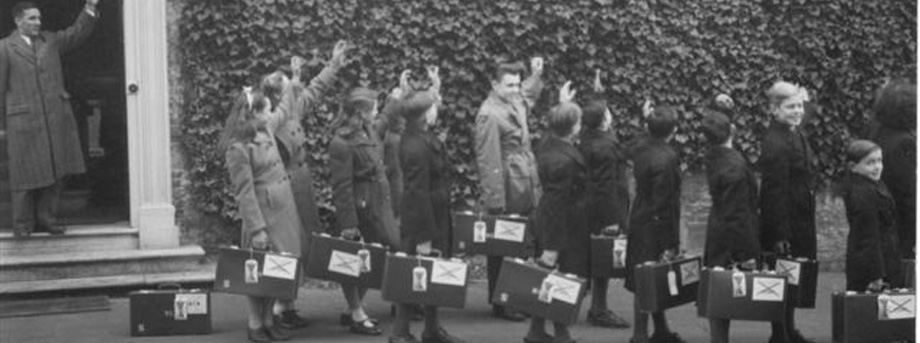
A new film tells the story of a Nottingham graduate and his wife and their 25-year campaign to uncover one of the biggest social scandals in recent history.
From 1945 to 1967, around 4,500 children in care in the UK were deported to Australia, Canada, Zimbabwe and New Zealand under the Child Migration Scheme. Many suffered harsh conditions, neglect and abuse.
Oranges and Sunshine, directed by Jim Loach, tells the story of social worker Margaret Humphreys CBE, who, with her husband Mervyn (Social Administration 1971), campaigned to uncover the human cost of migration and to establish rights of former child migrants.
The couple set up the city-based Child Migrants Trust in their son’s bedroom in 1987. The Trust has already facilitated the reunion of 1,200 former child migrants with their families. A major breakthrough came in the last two years, with public apologies from both UK and Australian governments and the setting up of a £6m Family Restoration Fund in the UK, which will help support a further 900 reunion visits over three years.
The film was made on location in the East Midlands, with the film crew using facilities at the King’s Meadow campus, formerly the home of Carlton TV.
“In the 1980s, Margaret was running a post-adoption support group and I acted as a consultant,” said Mervyn.
“A woman from Nottingham, who had been sent to Australia as a child migrant, wanted to find out about her background and got in touch because there was no other service. We were something of a pioneering group because we brought together all sides of the adopted triangle, parents, adopted people and birth parents.”
Two major features about their work appeared in the Observer, leading to more and more requests from former child migrants. And so the Trust was set up.
“Our clients had the worst possible start to life. It’s very difficult for anyone who’s had a normal childhood to imagine what these people went through — a child of four or five being sent to the other side of the world, being told they are an orphan, being brought up in large institutions in a pretty rough and ready way and then being left to fend for themselves.
“We’re very pleased with the film. We felt that the makers would treat the subject and our clients with due regard and respect and that’s certainly been the case. It’s a major achievement to get a feature film about our work but our primary concern is not us — we’re really interested in what light the film sheds on the issue.
“We’re interested in the issue being discussed, thinking through the implications and dilemmas of when children are separated from their parents, the enduring impact on both sides and what you can do to bring them together if possible.”
To find out more about the Trust, please visit www.childmigrantstrust.com. You can see publicity about the film at www.iconmovies.co.uk/orangesandsunshine.
Tags: Child Migrants Trust, Margaret Humphreys, Oranges and Sunshine
Posted in News | Comments Off on International focus on life’s work