

Campus News
A window on the world…
December 20th, 2011
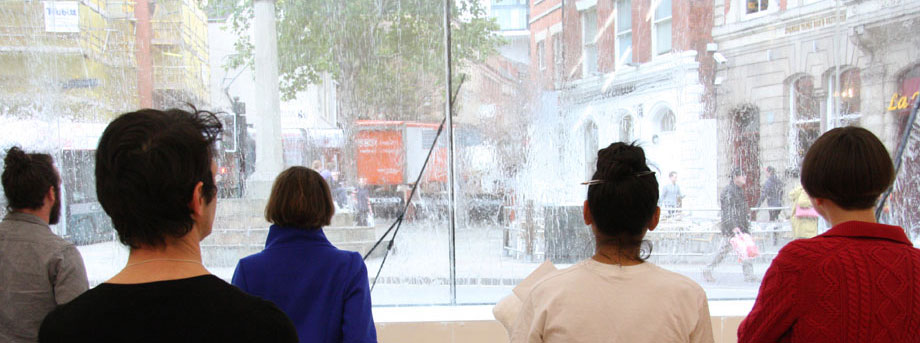
Students from the University have worked with the Nottingham Contemporary to create a spectacular exhibition of major new works by international artist Klaus Weber.
The free exhibition — If You Leave Me I’m Not Coming — includes a life-sized moving figure of a man running off the roof, a sun mirror, artificial rain and a tornado made from a humble vacuum cleaner.
Running Man will launch himself from the highest golden tower on the gallery’s roof, ten metres above the street. Like a cartoon character that runs off a cliff, he will be suspended in mid-air, legs pumping furiously.
The sculpture was made by a company in Berlin, while the Environmental Technology Centre at the University advised on the supporting structure.
Under the lead of project officer Gerald Busca, students at the Centre have also designed and created an artificial rain fountain that will recycle 250 litres of water through 12 metres of pipe. An electric pump fires “rain” at a nine-metre gallery window, which is then swept away by giant windscreen wipers. The wipers came from a specialist manufacturer who makes them for container ships and have turned the gallery into a giant vehicle, moving through the city streets, according to Weber
A heliostat — a device for concentrating the sun’s rays — has been installed on the gallery’s roof. The rays will be directed through a series of mirrors through a skylight into the gallery below where it will print a book during the exhibition.
Benson Lau, course director of MArch Environmental Design at the Department of Architecture and Built Environment at the University of Nottingham’s Faculty of Engineering, is technical adviser on this project, together with students Miguel Angel Juarez De Leon and Ming Wei Sun.
“Providing technical advice for the heliostat installation at Nottingham Contemporary is an unusual challenge for our students,” said Benson. “This is the first time we’ve worked with Nottingham Contemporary and our students are excited by the opportunity to apply their architecture design skills and environmental design knowledge in an art installation.”
The exhibition also has a 4.5-metre wind chime tuned to the “tritonic” scale, which was banned in the Middle Ages as it was believed to summon the devil, and is now commonly used in heavy metal music.
Alex Farquharson, director of Nottingham Contemporary, said: “We are very pleased to have a partnership with both of Nottingham’s universities, which is unique in the arts world. We work with them very closely on our programme of free public talks and discussions. For this exhibition, the staff and students at The University of Nottingham have helped us to realise very complicated international art works. We are very grateful to have benefited from their great expertise and enthusiasm.”
The University of Nottingham supports the Contemporary’s programme of talks, discussions and events that are free and open to the public.
The exhibition runs until 8 January 2012. For more details, visit: www.nottinghamcontemporary.org.
Tags: Benson Lau, Department of Architecture and Built Environment, MArch Environmental Design
Posted in Features | Comments Off on A window on the world…
Breakthrough on flooded crops
December 20th, 2011
Thousands of families lost their homes and crops last month as flood waters swept across Central America. In Thailand huge tracts of farmland were submerged as the country faced its worst flooding in 50 years. Across the globe agricultural production is at risk as catastrophic flooding becomes a world-wide problem.
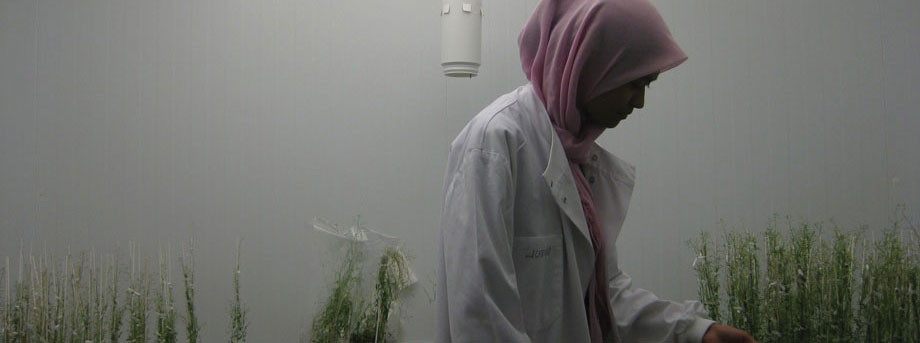
Prolonged flooding drastically reduces yields by cutting off the supply of oxygen crops need to survive. Now experts at The University of Nottingham, working in collaboration with the University of California, Riverside, have identified the molecular mechanism plants use to sense low oxygen levels. The discovery could lead, eventually, to the production of high-yielding, flood-tolerant crops, benefiting farmers, markets and consumers across the globe.
The mechanism controls key proteins in plants causing them to be unstable when oxygen levels are normal. When roots or shoots are flooded and oxygen levels drop these proteins become stable. The research has been published in the prestigious journal, Nature.
Michael Holdsworth, Professor of Crop Science in the School of Biosciences at Nottingham, said: “We have identified the mechanism through which reduced oxygen levels are sensed. The mechanism controls key regulatory proteins called transcription factors that can turn other genes on and off.
“It is the unusual structure of these proteins that destines them for destruction under normal oxygen levels, but when oxygen levels decline, they become stable. Their stability results in changes in gene expression and metabolism that enhance survival in the low oxygen conditions brought on by flooding. When the plants return to normal oxygen levels, the proteins are again degraded, providing a feedback control mechanism”.
As Pakistan, Bangladesh, Vietnam, Australia, the UK and America have all fallen victim to catastrophic flooding in recent years, tolerance of crops to partial or complete submergence is a key target for global food security. Starved of oxygen, crops cannot survive a flood for long periods of time, leading to drastic reductions in yields for farmers.
Prof Holdsworth’s work, in collaboration with Professor Julia Bailey-Serres, a geneticist and expert in plant responses to flooding at the University of California, Riverside, is just the beginning. The team expects that over the next decade scientists will be able to manipulate the protein turnover mechanism in a wide range of crops prone to damage by flooding.
Prof Bailey-Serres said: “At this time, we do not know for sure the level of conservation across plants of the turnover mechanism in response to flooding. We have quite a bit of assurance from our preliminary studies, however, that there is cross-species conservation. Our experiments on Arabidopsis show that manipulation of the pathway affects low oxygen stress tolerance. There is no reason why these results cannot be extrapolated to other plants and crops. Still, we have many research questions to answer on the turnover mechanism. What we plan to do next is to nail down this mechanism more clearly.”
Prof Holdsworth, an international expert in seed biology had the first hint of the discovery while investigating the regulation of gene expression during seed germination. He connected the mechanism of degradation of key regulatory proteins with changes in the expression of genes associated with low oxygen stress that Bailey-Serres has studied extensively.
He said: “The puzzle pieces fell quickly into place when the expertise of the two teams was combined.”
The work was carried out by Prof Holdsworth and his team in the School of Biosciences in collaboration with researchers at the University of California, Riverside in the US, Rothamsted Research in the UK and University Pierre and Marie Curie, France. It was funded by the UK Biotechnology and Biological Sciences Research Council (BBSRC), Malaysian government through MARA, the US Department of Agriculture National Institute of Food and Agriculture (USDA-NIFA), and the US National Science Foundation.
Posted in Research | Comments Off on Breakthrough on flooded crops
The great debate
December 20th, 2011
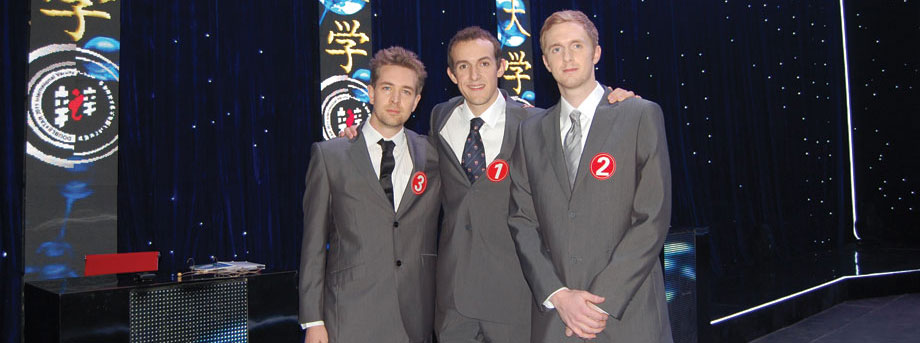
A team from The University of Nottingham has beaten students from Harvard at the 2011 International Varsity Debate organised by Central China Television.
Aired on the state TV channel to a potential audience of more than a billion people, the Nottingham team of Ricky Jeavons, Kenrick Davis and Peter McSweeney held their nerve to come out as winners in the debate asking: “When getting married, should your spouse love you more than you love them?”
Peter, an MA student in English/Chinese Interpretation and Translation, explained: “Although the debate subject may seem odd to us, it is a question often debated in China.
“Knowing how many people could be watching made the early exchanges extremely nerve-wracking, but we soon relaxed and enjoyed the experience. The competition was fantastic and gave us the opportunity to meet fellow Chinese language learners and native speakers from all over the world.”
For his performance during the debate, Peter was presented with the Best Debater title for the second year running. The University’s School of Contemporary Chinese Studies (SCCS) was also celebrating after its students — Ricky and Kenrick — followed in the footsteps of two of the School’s PhD students, who won second prize last November at the ninth International Varsity Debate.
Professor Shujie Yao, SCCS Head of School and director of Nottingham Confucius Institute, congratulated the students, adding: “The continuous success of SCCS students in the International Varsity Debates signifies the remarkable achievements of the School and demonstrates that SCCS can produce the best students in Chinese Studies.”
Sixteen teams took part in the four-day competition, in two groups. Eight teams competed as native Mandarin speakers and eight competed as non-native Mandarin speakers. Each team competed in one debate, with a best debater selected from each event.
The eight non-native Mandarin speaking teams included those from Harvard University, Princeton University, The University of Nottingham, The University of Sheffield, Moscow State University, The University of Melbourne, Tel Aviv University and The University of Heidelberg.
Posted in News | Comments Off on The great debate
Marking 400 years of the King James Bible
December 20th, 2011

The Bishop of Southwell and Nottingham was taking part in a series of free talks at The University of Nottingham’s Great Hall this month to commemorate 400 years of the King James Bible.
The Right Reverend Paul Butler’s talk – A Bible for Ordinary People – focused on why the King James version came about, what it was hoped it would achieve and some thoughts on the effect it actually had. This will lead on to further reflection on the Bible as a living book and its continued impact in the lives of ordinary people.
The Living Word Within the Printed Word was the title of a talk by The Revd Canon Professor Anthony Thiselton, Professor of Christian Theology in the Department of Theology and Religious Studies. Its focus was on whether we can hear God speak through the multiple styles and sources within the Bible, and is what the Bible achieves better explained as a quest of human aspiration, or as the living voice of God.
The King James Bible has had a profound impact on English language and culture, with many phrases still in use today. In A word in season: the King James Bible and English on Wednesday 16 November, Dr Paul Cavill, a lecturer in Old English in the Department of English, was exploring the King James Bible’s legacy and its relevance to the present and the future.
The talks were organised by the University Chaplaincy.
The King James Bible, or Authorised Version, is perhaps the best-known version of the Bible, and its poetic English has been treasured for centuries. Its importance to Christians, however, is due to it being the translation of the Bible in the language of the day, which became the dominant translation and which has had a deep effect on the development of British thought and culture
Though superseded by many other translations, the King James Bible has remained a masterpiece of literature for people of many faiths and even those of none. Events are being held across the UK to mark the 400th anniversary, including a service at Westminster Abbey on 16 November.
The Rt Revd Paul Butler is an alumnus of the University of Nottingham, (English and History 1977). He has worked with students and with Scripture Union. He maintains a passionate interest in world mission, and also acts as an “Advocate” for children and young people in church and society amongst the bishops of the Church of England
Revd Thiselton, a Fellow of the British Academy, is known internationally for his work on hermeneutics – the theory of the interpretation of scripture. His research interests include modern Christian theology, and the application of philosophy of language to biblical studies. He has had a number of biblical commentaries published.
Dr Cavill has researched the history of the English language and place names, early English Christianity and hagiography. An enduring interest is the interaction of Christian ideas with English culture and literature.
The King James Bible Trust has been established to celebrate the 400th anniversary. Visit: www.kingjamesbibletrust.org.
Tags: Department of Theology and Religious Studies, Dr Paul Cavill, King James Bible, The Revd Canon Professor Anthony Thiselton, The Right Reverend Paul Butler, University Chaplaincy
Posted in News | Comments Off on Marking 400 years of the King James Bible
Boeing to fund strategic research collaboration
December 20th, 2011
In desert ‘aircraft graveyards’, where retired planes often go when flight service ends, good parts are removed and sold and many materials are recycled. Increasingly popular strong, light carbon-fibre composites (or carbon-fibre reinforced plastics) were once too difficult to recycle, so went to landfill.
In the past decade, researchers at Nottingham led by Dr Steve Pickering have developed ways to recycle carbon-fibre composites. They have worked with Boeing since 2006. Now Boeing plans to invest $1,000,000 a year in a strategic research collaboration – an inclusive partnership in which Boeing will collaborate with Nottingham in all its composites recycling activities.
Sir Roger Bone, President of Boeing UK, launched this major collaborative investment in carbon-fibre recycling research involving Boeing Commercial Airplanes and The University of Nottingham’s Faculty of Engineering in Nottingham on 24 October.
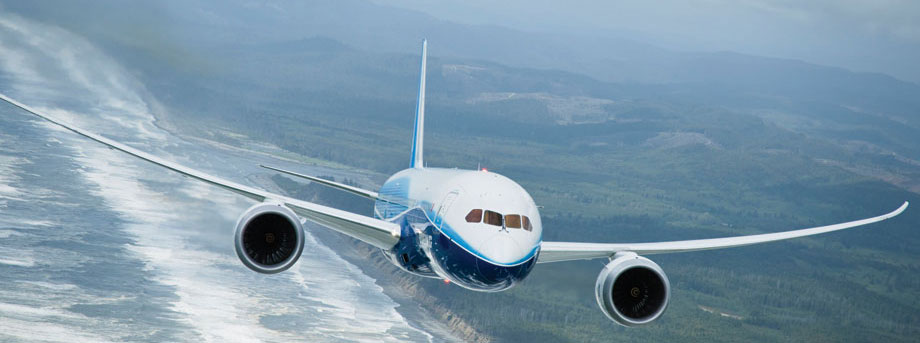
First introduced into military aircraft 30 years ago, carbon-fibre composites are stronger and lighter than any other commonly available material. This helps reduce fuel consumption and carbon emissions in aircraft, making modern passenger planes more efficient and cheaper to fly. Advanced composite materials comprise half the empty weight of Boeing’s new 787 Dreamliner.
“Boeing wants to be able to recycle composite materials from manufacturing operations to improve product sustainability and to develop more efficient ways of recycling aircraft retired from commercial service,” said Sir Roger.
“The ultimate aim is to insert recycled materials back into the manufacturing process, for instance, on the plane in non-structural sustainable interiors applications, or in the tooling we use for manufacture. This work helps us create environmental solutions throughout the lifecycle of Boeing products.”
“Aerospace is a priority research area for this University,” said Professor Andy Long, dean of the Faculty of Engineering, professor of Mechanics of Materials and director of the Institute for Aerospace Technology. “This recognises the sector’s potential for growth and our ability to deliver influential world-class research and knowledge transfer to address global issues and challenges.
“Our agreement formalises a long-term working commitment between the University and Boeing. We have been working together for over six years on mutual R&D activities in aircraft recycling as well as novel applications for power electronics. We share the aims of improving environmental performance of aircraft and using materials more sustainably.”
In the strategic collaboration on composites recycling, Boeing will provide annual funding of $1,000,000 for three years, but with the intention to continue with a rolling programme. The collaboration with Boeing will further develop: recycling processes, technology to process recycled fibre into new applications; and new products using recycled materials, in collaboration with other suppliers.
Six years ago, Boeing was a founding member of AFRA, the Aircraft Fleet Recycling Association, a non-profit standards-setting association for the aerospace industry. Nottingham joined two years later, and a significant part of this agreement will involve working with several other AFRA member companies on the very difficult challenge of aircraft interiors recycling.
“Through this work, Boeing and Nottingham intend to develop quality and performance standards for recycled aerospace carbon fibre,” said Bill Carberry, project manager of aircraft and composite recycling at Boeing and deputy director of AFRA.
“Our research at Nottingham has been developing recycling processes for carbon-fibre composites for over 10 years in projects funded by industry, UK Government and EU,” said Dr Pickering. “As well as recycling processes, we are creating applications to reuse recycled material.
“With Nottingham, Boeing is a partner in the ongoing Technology Strategy Board (TSB) funded project AFRECAR (Affordable Recycled CARbon fibre). With colleagues Professor Nick Warrior and Professor Ed Lester, and industrial collaborators, including Boeing, we are developing high-value applications for recycled carbon fibre along with new recycling processes.”
Posted in Research | Comments Off on Boeing to fund strategic research collaboration
Investing in the student experience
December 20th, 2011

A multi-million pound programme of expansion and improvements is set to cement The University of Nottingham’s status as one of the most popular destinations among UK students.
A raft of new teaching and learning buildings, a £2.5m revamp of café and food facilities and improvements to its halls of residences are designed to enhance the University experience for its 40,000 students and confirm Nottingham as an inspirational place to work and study
Sustainability runs through the heart of the developments, reinforcing the University’s green credentials and supporting its commitment to environmental excellence.
Pro-Vice-Chancellor for Environment and Infrastructure Professor Karen Cox said: “The University is committed to enhancing and sustaining its fantastic campuses and environment for the benefit of all our students staff and visitors and for future generations who will benefit from this on-going investment in our infrastructure and facilities.”
Among the new landmark developments and improvements are:
• A stunning new £7m Gateway Building at Sutton Bonington campus, incorporating straw bale construction from straw grown on campus and used within timber-framed units to provide low-carbon, highly-insulating cladding for the building. A gas-fired combined heat and power unit will provide more than 10 per cent of the power for the building.
• A £10m Engineering and Sciences Learning Centre (ESLC) on University Park offering a range of teaching rooms, a graduate centre and computer rooms over three floors. The contemporary horseshoe design includes low-carbon technologies, an atrium with an innovative roof made from ETFE (Ethylene TetrafluoroEthylene) — a transparent inflated membrane — and a feature lift.
• A £7m Mathematical Sciences undergraduate teaching and learning building on University Park. The environmentally-sustainable design features a ground source heat pump and a bio-diverse roof planted with local seeds. The build incorporates the new zinc-clad 400-seat Keighton Auditorium, which overhangs the local sandstone outcrop as part of its innovative design by the architects.
• An £8m Humanities building bringing together the departments of Archaeology, Art History, Classics, Philosophy and Theology. The building features ‘green’ heating and ventilation systems and includes a computer room and archaeology labs. The associated landscaping features a new external plaza and a Ha-Ha that enables nearby Lenton House to retain its uninterrupted views of the parkland campus.
• A home for the Centre for Advanced Studies and Graduate School housed in a £2.3m extension and refurbishment at Highfields House on University Park. The architects’ sympathetic design is in keeping with the Grade II listed former mansion house and the University has received special listed building planning consent for the improvements, which include renewable technologies and a cloister around a central courtyard.
• A £1.5m investment into improving pedestrian, cycle and vehicle routes on University Park, including widening roads to include new cycle lanes, improved and new footpath and cycle routes across campus, lay-by bus stops with electronic bus information and a new road lay-out to form a pedestrian zone in the central campus area.
• Improvements to halls of residences including the installing of two large solar roof panels on Derby and Lincoln Halls on University Park that will generate renewable electricity that will feed directly into the University’s grid-connected electricity distribution network and will save 60 tonnes of carbon every year.
• More than £0.5m refurbishment of the Lakeside Arts Centre that will provide expanded gallery space to accommodate larger and more diverse exhibitions — the first of which will be the prestigious exhibition of works by LS Lowry, which opens this month. The former Art History library has been refurbished and will be home to the University’s Museum, which features archaeological finds and artefacts dating back 250,000 years ago to the Palaeolithic period.
The University has also invested £2.5m into its food outlets on University Park to create an international flavour for students and staff. A new food court at Portland Building includes Man’s Gourmet, the University’s first collaboration with local business Man’s Group, the owner of Mr Man’s on the edge of Wollaton Park and the city centre Man’s Restaurant, and Item Seven, the brainchild of University of Nottingham Business School graduate and entrepreneur Olu Amodeni, which will offer a fusion of African and Caribbean foods to appeal to the University’s increasingly diverse international community.
Portland’s B floor has gained a New York style deli counter, serving kosher food. The Café@Trent has been doubled in size, overlooking the boating lake and making the most of the Trent Building’s original Art Deco architecture.
Café facilities have been improved at Coates and Telford buildings on University Park campus, a new café has been created at Cavendish Hall of Residence and improvements have been made to the Sports Juice Bar at the Sports Centre.
Posted in Features | Comments Off on Investing in the student experience
Why are you Proud to be Nottingham?
December 20th, 2011
Why are you Proud to be Nottingham?
From Nobel Prize winning lecturers to groundbreaking research, famous alumni and award winning campuses, there are plenty of reasons to be proud of The University of Nottingham.
Our staff and students continue to make extraordinary accomplishments every day. To highlight these achievements, large and small, the University has re-launched its Proud to be campaign.
The online campaign will keep readers up to date with successes of people across our schools and departments, while showing the positive changes the University is making to enhance the experience of those who work and study here.
For example, did you know The University of Nottingham was ranked 7th in the UK for both research power and student sport? That Karnival – our Students’ Union’s charitable organisation – raised over £1.4m for charity last year? Or that our scientists are developing a blood test for the early detection of cancer – a project which could save thousands of lives every year?
This is just a fraction of what’s being achieved at the University, and we are keen to find out what else is happening. Tell us about your achievements at: studentcommsoffice@nottingham.ac.uk.
We also want to hear why you are Proud to be Nottingham.
Third-year medic Adrian Delport says: “I’m proud to be at Nottingham because of the opportunity to experience a truly fantastic multifaceted education, one that I will treasure for the rest of my life.
“To be at a university that invests so much into valuing each individual student is a real privilege and I know a small smile will always play across my lips anytime anyone asks me ‘Where do you go to university?’”
For more information about the campaign, visit: www.nottingham.ac.uk/proud-to-be-nottingham
HealthyU Week 2011 will take place from 28 November to 2 December: To help our staff and students meet the potential we are so proud of, the University is to look to the old saying “healthy body, healthy mind”. HealthyU will offer advice on mental and sexual health, food, fitness, drink, drugs and the health services available to you. Two fairs, free sexual health screening and some exercise classes will also be on offer at University Park and Sutton Bonington. For more details, please visit: www.nottingham.ac.uk/healthyU.
Posted in News | Comments Off on Why are you Proud to be Nottingham?
Multi-million pound research centre
December 20th, 2011

A multi-million pound research facility for biofuels, brewing science and food and drink processing has been launched at The University of Nottingham.
Created to advance innovative and sustainable solutions for the benefit of industry, the Bioenergy and Brewing Science Building at Sutton Bonington features a state-of-the-art micro-brewery – small in comparison with SABMiller’s £2m pilot plant which is also housed in the building – but is the biggest research facility of its kind in the country.
The building will also be home to one of the six BBSRC Sustainable Bioenergy Centre research programmes, set up to develop sustainable bioenergy fuels from industrial and agricultural waste materials. The food processing facility, equipped with everything from a bakery to the latest analytical equipment, will support the food industry in its quest to develop products from conception to consumption.
The official opening of this distinctive building, partly funded by the European Regional Development Fund (ERDF), is one of the highlights in the launch of the University’s biggest ever fund-raising campaign. Impact: The Nottingham Campaign will raise £150m over the next five years to transform research, enrich the student experience and enable the University to make a greater contribution to the communities it serves.
Katherine Smart, Professor of Brewing Science, said: “The state-of-the-art facilities housed in the new Bioenergy and Brewing Science Building will provide an excellent foundation for the development of innovative technologies for the global and regional brewing, food and bioenergy sectors. This would not have been possible without significant investment from the ERDF, SABMiller, BBSRC and the University, for which I am very grateful.”
The Food and Biofuel Innovation Centre is housed within the building and is open to businesses across the East Midlands. In particular, small- and medium- sized enterprises are invited to use of the expertise, technology and facilities within the building to develop new products and improve their competitive edge.
Together with the Food and Drink iNnovation Network (iNET), scientists are working with a Nottinghamshire cheese maker to examine what gives blue cheeses their distinctive taste, texture and smell. And the Derbyshire Brewers’ Collective is hoping the University can find a way of tracking the thousands of beer casks that go missing every year.
The building was officially opened by SABMiller Chief Executive Graham Mackay. The opening included an address by the Vice-Chancellor, Professor David Greenaway, and a response from Andrew Morgan, head of the ERDF East Midlands Programme Delivery Team.
Professor David Greenaway said: “The research, development and demonstration which will be carried out within this new building have the potential to be transformational and far-reaching on a local, national and international level.”
Posted in Research | Comments Off on Multi-million pound research centre
Launch makes an Impact
December 20th, 2011

Powerful stories, world-changing research, celebrity debates, a celebration beer for a new micro-brewery, a Guinness World Record and live internet streaming across the globe…
Impact: The Nottingham Campaign was a week-long series of events attended by alumni, students, academics, friends of the University and leaders in the world of business and higher education.
More than 1,000 visitors were keen to experience the Campaign’s series of high-impact global projects, which will touch generations. Further Campaign launches are planned in Malaysia and China next year.
Each day was badged with one of the five Campaign themes: The Nottingham Experience, Health and Well-being, Nurturing Talent, Ingenuity and Sustainable Futures. Question Time-style debates featuring TV celebrities such as author and broadcaster Adam Hart-Davis, science presenter Maggie Philbin and Private Eye columnist and practising GP Dr Phil Hammond attracted crowds.
An oak tree was planted on Jubilee Campus by the Vice-Chancellor and the Lord Mayor of Nottingham, Councillor Michael Wildgust, to launch the Nurturing Talent theme and a time capsule was buried containing 200 messages from students, sixth-formers and researchers in Malaysia, China and the UK, saying where they see their talent taking them in 10 years.
Friday’s guests were treated to a sustainably sourced lunch created and overseen by Nottinghamshire’s only Michelin-starred Chef, Sat Bains, after the opening of the Bioenergy and Brewing Science Building at Sutton Bonington. And in a finale, the University Boat Club manned rowing machines for 24 hours to set a Guinness World Record for generating electricity using only human power, subject to validation.
To see more photos, visit: www.facebook.com/universityofnottinghamalumni
Explore further how we are making an impact, and how you can make yours at: http://tiny.cc/UoNImpact.
Posted in News | Comments Off on Launch makes an Impact
