

Campus News
Best in show
May 1st, 2014
The University’s School of Veterinary Medicine and Science has again out-performed the UK’s six other vet schools in the latest survey by the Association of Veterinary Students (AVS).
The survey, completed by 46% of the UK’s veterinary students, compares personal background, financial support and the quality of the degree course as well as welfare, widening participation and the role of the AVS. Nottingham respondents were more positive about every aspect of the course than all other universities.
Professor Gary England, Foundation Dean of the School of Veterinary Science and Medicine, said: “This is a fantastic achievement by all our staff and academics. We have helped to change the way veterinary medicine is taught in Britain and this survey shows that we have the support of our talented and hard-working students.”
Nick Wojciechowski, AVS President 2013, said: “The University of Nottingham is a newly designed and purpose built Veterinary School so clearly has some advantages over longer established institutions. However, it outperforms the other vet schools in every single comparison that is made. The establishing of a new vet school with such favourable feedback from students should provide other universities with an opportunity to review and learn from what they are offering.”
This is the second time the Veterinary School has appeared in the four yearly survey which represents the UK veterinary student population on issues that concern them. In 2008, the school was top in every category — even though the school had only been open for two years.
Tags: Association of Veterinary Students (AVS), Nick Wojciechowski, Professor Gary England, Vet School
Posted in Issue 77 | Comments Off on Best in show
New doctoral training centre
May 1st, 2014
The University is to partner Oxford University in a new £3.7m Biomedical Imaging Doctoral Training Centre.
Postgraduate training in a wide range of engineering and scientific fields is important to the UK’s economy. The Oxford-Nottingham Biomedical Imaging (ONBI) CDT brings together two of the UK’s world-leading research universities in an innovative programme of teaching and research in biomedical imaging.
The centre, funded by the Engineering and Physical Sciences Research Council (EPSRC) and the Medical Research Council (MRC), is one of 22 new Centres for Doctoral Training (CDTs) announced by the Chancellor of the Exchequer, George Osborne MP.
It will provide 55 doctoral students with a uniquely broad exposure to all aspects of biomedical imaging, from cellular microscopy to clinical radiology, and from hardware development to image analysis. Research projects will intentionally include complementary elements from different ends of this spectrum, encouraging students to cross-fertilise ideas across imaging scales and disciplines.
Penny Gowland, Professor of Physics in the School of Physics and Astronomy at Nottingham, said: “We are delighted to have been awarded EPSRC and MRC funding to establish a Centre for Doctoral Training in Biomedical Imaging, which will be run jointly with Oxford University. We are very proud of our history of training biomedical imaging scientists at Nottingham, based on our world leading expertise in this area. The award of this CDT will allow us to forge new links between groups working on a range of different imaging techniques in Nottingham and Oxford and to provide a world class, multidisciplinary training programme that will produce the future leaders in this important area of research.”
EPSRC and other research councils have been able to fund these new centres following a £106 million investment announced in the Budget, and by negotiating with universities, industrial partners and the Scottish Funding Council, to maximise the number of centres and the students they will be supporting.
Mr Osborne said: “A forward-looking, modern industrial strategy is part of our long-term economic plan to deliver security, jobs and growth to all parts of the UK. Our investment in Centres for Doctoral training will inspire the next generation of scientists and engineers, ensuring Britain leads the world in high-tech research and manufacturing.”
This latest Government investment in a further 1,100 students through an additional 22 Centres for Doctoral Training (CDTs), brings the total investment in CDTs to over £500m.
In addition, universities, industry and other charitable partners will be adding a further £70m to their already large contribution of £374m to support the training of tomorrow’s scientists and engineers.
Tags: £3.7m Biomedical Imaging Doctoral Training Centre, Centres for Doctoral Training (CDTs), EPSRC, Penny Gowland, Professor of Physics
Posted in News | Comments Off on New doctoral training centre
A tale of two bikes
May 1st, 2014
Potholes, punctures, wild dogs and heatstroke — staff cyclists are braving it all as they pedal the globe raising funds to help save children’s lives.
Environmental Manager Gavin Scott and former medical imaging scientist Daniel Rodriguez and his partner Lili, are embarking on their own rides in support of Life Cycle 4 and Children’s Brain Tumour Research at the University.
A veteran of previous University Life Cycles, both as rider and back-up team, Gavin is taking part in the gruelling endurance bike marathon, The Transcontinental Race from London to Istanbul. He is pedalling 2,300 miles across Europe in just a fortnight.
It’s a one-stage race in August with no support or back-up, no specified route and live GPS tracking to monitor riders’ progress and he has to carry all his essential equipment with him. Riders choose where, when, and if at all, to rest. “It’s going to be one big adventure and one big opportunity,” said Gavin.
Meanwhile, Daniel, pictured with his partner Lili, have already set off on their ambitious challenge cycling from the UK to Japan. It’s a year-long, self-supported and self-funded ride across Europe and Asia for Daniel who was inspired by his own work at the University’s Children’s Brain Tumour Centre.
“For the last three years I have been working as a researcher at Nottingham on a multicentre project to improve our understanding of child tumours through the analysis of magnetic resonance images. I have seen the high impact which these tumours have on children. It is going to be challenging to do so many hours in the saddle but we’re looking forward to highlights like the Pamir Highway which crosses through Turkmenistan, Uzbekistan, Tajikistan, and Kyrgyzstan in Central Asia.”
You can keep up with Daniel’s ride, called A Tale of Two Bikes, and regular updates here:
ataleoftwobikes.weebly.com and you can sponsor them here: www.justgiving.com/ataleoftwobikes
You can also support Gavin here:
www.justgiving.com/Gavin-Scott6
Tags: A Tale of Two Bikes, Children’s Brain Tumour Research, Gavin Scott, Life Cycle 4
Posted in Features | Comments Off on A tale of two bikes
Improving breast cancer prognosis
May 1st, 2014
Over 30 years ago, researchers at the University developed the globally recognised tool, Nottingham Prognostic Index (NPI), for use by clinicians to decide on the risk of breast cancer returning. Following the success of NPI, a new study has led to the development of an enhanced clinical test for breast cancer treatment, available to patients by 2016.
The Nottingham Prognostic Index Plus (NPI+) could significantly improve the way in which patients are treated by giving clinicians more detailed information about a patient’s breast cancer type and its likely behaviour, which will help them create a more personalised treatment plan. As breast cancer is now known to be a biologically complex disease and its various forms can have very different outcomes, the new test has been developed from the existing NPI and incorporates the measurement of 10 proteins (biomarkers) found in breast cancer cells.
The research, funded by the Medical Research Council, was led by Professor Ian Ellis in the University’s Division of Cancer and Stem Cells, in collaboration with colleagues at Nottingham University Hospitals NHS Trust and Nottingham Trent University’s John van Geest Cancer Research Centre.
Professor Ellis said: “Using a panel of 10 biomarkers and other clinical information, we are able to categorise women with breast cancer into one of seven treatment-specific classes based on their personal cancer biology. We believe the categorisation of women with breast cancer into more specific risk classes will deliver better targeting of relevant therapies, which will result in improved outcomes with reduced costs and less anxiety for the patient.
“In addition the ability to give survival prediction will be welcomed by concerned patients. Decisions can be made more quickly reducing waiting times and unnecessary consultation time.”
The NPI+ test was developed using over 1,000 breast cancer samples and was shown to predict both patient survival and patients at risk of treatment failure. This can help doctors to consider additional forms of treatment to improve survival.
Importantly, the technology required to measure protein biomarkers in tumour samples is already in place in most pathology laboratories across the UK, whereas newly developed genetic profiling tests need to be sent to specialist laboratories, which brings additional costs and time delays
Tags: Nottingham Prognostic Index Plus (NPI+), NPI, Professor Ian Ellis
Posted in Research | Comments Off on Improving breast cancer prognosis
Celebrating 10 years of Ningbo
May 1st, 2014
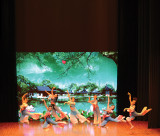
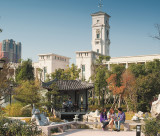
Celebrations are planned over the next year to mark ten years since The University of Nottingham Ningbo China (UNNC) opened its doors in the country.
An official launch event earlier this month, celebrated key milestones in its development since becoming the first Sino-foreign university in China.
Events planned throughout the year include receptions at the British Embassies in Beijing and London, and international conferences and a student summit at the UNNC campus.
April 2014 marks a decade since the ground-breaking ceremony took place for the construction of the University, while September 2004 saw the first preliminary year students arrive, studying mainly arts and social science subjects.
Professor Nick Miles, Provost at UNNC, said: “The events and activities planned over the year are intended not only to celebrate the key milestones in our history but to also celebrate the people that have contributed to what UNNC is today – from our students, our alumni and our past and present staff.
“Looking to the future, we want to develop and enhance the student community, to maintain excellence in the provision of teaching and learning and to deliver high-impact research to address global challenges as well as the city and region’s needs.”
When new legislation was passed in 2003 allowing Sino-foreign universities into China, Nottingham collaborated with Zhejiang Wanli Education Group, a key player in the education sector in China, to create a new campus.
From fewer than 300 predominately Chinese students when it opened, the UNNC now has more than 6,000 students from more than 60 countries worldwide, creating a truly international environment in which to study.
A new website: www.nottingham.edu.cn/en/tenyears/index.aspx showcases historic information about UNNC including a timeline, photographs of the development of the campus, and student and alumni achievements over the past ten years.
A campaign on social media channels, Sina Weibo and Twitter, will gather people’s memories of UNNC, using the hashtag #UNNCmemories
Ningbo milestones
2004: Construction begins at the Higher Education Park in Ningbo’s Yinzhou district. By September, the first 254 students arrive.
2005: On an official visit to China, former Prime Minister Tony Blair endorses UNNC in a broadcast for China Central Television (CCTV) from Beijing.
2006: The University’s 144-acre campus is officially opened.
Xi Jinping, now President of China, visits the University.
2008: The Centre for Sustainable Energy Technologies (CSET) is opened as China’s first carbon-neutral building. The first undergraduate graduation ceremony takes place and a license to accept PhD students by the Chinese Ministry of Education is approved.
2011: A new science and engineering building opens with teaching laboratories and seminar and lecture rooms.
2013: The Quality Assurance Agency for Higher Education finds that the University has achieved its goal of providing students with the ‘Nottingham experience’ in China. Professor Nick Miles, Provost of UNNC, receives an OBE in recognition of his work to further UK/China educational interests.
-
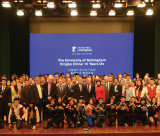
- 10 years in Ningbo
Posted in Features | Comments Off on Celebrating 10 years of Ningbo

January 14th, 2014
Wendy Houstoun’s A Pact with Pointlessness
Dance
Date: Tuesday 28 January
Time: 8pm
Venue: Djanogly Theatre, Lakeside
Arts Centre, University Park
Admission: £10s
Theo Clinkard
Adapted by Toby Hulse
Date: Monday 23 February
Time: 8pm
Venue: Djanogly Theatre, Lakeside
Arts Centre, University Park
Admission: £16, £14 concessions, £11 restricted view
Posted in Theatre and Dance, What's On | Comments Off on
January 14th, 2014
Xuefei Yang
Guitar
Guest appearance Ling Peng (erhu)
Date: Thursday 30 January
Time: 7.30pm
Venue: Djanogly Recital Hall, Lakeside
Arts Centre, University Park
Admission: £16, £14 concessions
The Fauré Quartet
Chamber
Date: Saturday 1 February
Time: 7.30pm
Venue: Djanogly Recital Hall, Lakeside
Arts Centre, University Park
Admission: £16, £14 concessions
Fournier Trio
Chamber
Date: Thursday 6 February
Time: 7.30pm
Venue: Djanogly Recital Hall, Lakeside
Arts Centre, University Park
Admission: £16, £14 concessions
Icebreaker Kraftwerk
Contemporary Music/Film
Date: Wednesday 12 February
Time: 8pm
Venue: Djanogly Theatre, Lakeside
Arts Centre, University Park
Admission: £17, £15 concessions,
£13 restricted view
Steven Osborne
Piano
Date: Thursday 13 February
Time: 7.30pm
Venue: Djanogly Recital Hall, Lakeside
Arts Centre, University Park
Admission: £18, £16 concessions
The Orlando Consort The Ambassadors
Early
Date: Saturday 22 February
Time: 7.30pm
Venue: Djanogly Recital Hall, Lakeside
Arts Centre, University Park
Admission: £16, £14 concessions
January 14th, 2014
Pop Art to Britart
Modern Masters from the David Ross Collection
Date: Until Sunday 9 February 2014
Venue: Djanogly Art Gallery, Lakeside Arts Centre, University Park.
Admission: free
Winter Whiteout
Craft showcase. A contemporary twist is given to classic jewellery in Isabelle Busnel’s range of magnetic silicone rubber brooches.
Date: Until Friday 31 January
Venue: Djanogly Art Gallery, Lakeside Arts Centre, University Park.
Admission: free
David Manley: Epidemic/Black North
Viral landscapes and Scandinavian Noir form the inspiration for a series of abstract paintings.
Date: Until Sunday 2 February
Venue: Djanogly Art Gallery, Lakeside Arts Centre, University Park.
Admission: free
Museum Of Archeology: Young Vision
New Eyes On Past Lives
Students from Woodborough Wood’s Foundation School compare life in the past with today.
Date: Until Wednesday 3 April
Venue: Angear Visitor Centre, Lakeside Arts Centre, University Park
Admission: Free
Landscapes of Space
Paintings and Prints by Tess Jaray
Date: Friday 21 February – Sunday 27 April
Venue: Djanogly Art Gallery, Lakeside Arts Centre, University Park
Admission: free
Posted in Exhibitions | Comments Off on