

Campus News
May 2nd, 2014
Behold the Man
Images of the dead Christ have inspired this body of work by Fay Mummery
When: Until Wednesday 14 May
Where: Wallner Gallery, DH Lawrence Pavillion, Lakeside Arts Centre
Admission: Free
Perfume and Savages
An exhibition of Jackie Berridge’s fantastical landscapes — home to hybrid creatures: part human, part animal
When: Until Sunday 20 July
Where: Angear Visitor Centre, Lakeside Arts Centre, University Park
Admission: Free
All Quiet in the Weston Gallery
The University’s Manuscripts and Special Collections exhibition on the centenary of the beginning of the First World War
When: Until Sunday 17 August
Where: Weston Gallery, Lakeside Arts Centre, University Park
Admission: Free
Hiding Out
Nottingham-born artist, Permindar Kaur, has created sculptural objects and installations that explore the territory of cultural identity, home and belonging
When: Until Sunday 15 June
Where: Djanogly Art Gallery, Lakeside Arts Centre, University Park
Admission: Free
Tags: All Quiet in the Weston Gallery, Behold the Man, Fay Mummery, First World War, Hiding Out, Jackie Berridge, Perfume and Savages, Permindar Kaur
Posted in Exhibitions, What's On | Comments Off on
May 2nd, 2014
War and diplomacy on Rome’s northern frontier
Archaeology NOW
When: Wednesday 14 May 1pm
Where: Djanogly Theatre, Lakeside Arts Centre, University Park
Admission: Free. Places are limited. Please book in advance on 0115 846 7777
Cigarettes, Soldiers, Sailors and the British Home Front: the war and the tobacco industry
Professor Chris Wrigley
When: Tuesday 20 May 1pm
Where: Djanogly Theatre, Lakeside Arts Centre, University Park
Admission: Free. Places are limited. Please book in advance on 0115 846 7777
Resisting the Cold War: India and the politics of superpower propaganda
Professor Eric Pullin
When: Wednesday 28 May 5pm
Where: Seminar room 1, Highfields House, University Park
Admission: Free
Tags: Cigarettes, Resisting the Cold War: India and the politics of superpower propaganda, Sailors and the British Home Front: the war and the tobacco industry, Soldiers, War and diplomacy on Rome's northern frontier
Posted in Public Lectures, What's On | Comments Off on
Events
May 2nd, 2014
May Fest 2014
Saturday 10 May, 11am to 5pm at various venues around University Park.
Admission is free.
The University’s annual open day for the community, staff, students and alumni returns. Promising free, interactive fun for all ages and all interests. If it’s sunny, bring a picnic, if not, don’t worry — there is plenty to do whatever the weather and a choice of cafes to grab a bite to eat. Come early to make the most of your day.
www.nottingham.ac.uk/mayfest
Nottingham Chinese Independent Film festival
Friday 16 May to Sunday 18 May.
Public event on Friday 16 May, 3pm to 5pm, Clive Granger Building A41and three days of film screenings at Broadway Cinema, Nottingham. A festival pass for all NCIFF screenings is £25.
Tickets for individual screenings are £5.
The NCIFF aims to showcase award-winning independent Chinese films produced in recent years and establish a critical dialogue between film curators, researchers, filmmakers and audience in and outside China.
It brings together films of different genres and topics, which unfold pictures of a fast-changing Chinese society.
www.nottingham.ac.uk/cfm/nciff
Tags: Chinese films, May Fest 2014, NCIFF, Nottingham Chinese Independent Film festival, University's annual open day
Posted in events | Comments Off on Events
Spotlight
May 2nd, 2014
Lifetime Achievement Award for University professor
The University’s Professor Jane Seymour, who has conducted groundbreaking research in to end of life care, has been recognised with a Lifetime Achievement Award at the International Journal of Palliative Nursing Awards.
The awards celebrate achievement and excellence in the work of nurses and other members of the multidisciplinary team in palliative care.
Professor Seymour joined the University in 2005 to establish and lead the Sue Ryder Centre for Palliative and End of Life Care Studies. In less than ten years she has developed a vibrant and lively research group. In addition, she was one of the key leaders of the National Cancer Research Institute’s Cancer Experiences Collaborative, focusing on improving care for older people.
Professor Seymour has been extremely influential in guiding end-of-life care policy development in the UK, for example by undertaking work with the former NHS End of Life Care Programme, Dying Matters, and the Commission for the Future of Hospice Care.
She has published an impressive number of books, academic and professional papers, and is widely known as a compelling conference speaker. Her leadership and achievements in palliative nursing are world-class.
Professor Seymour said: “I was greatly honoured to be given this award and accepted it on behalf of all the wonderful colleagues and students with whom I have worked over the years to try to improve palliative care and bring it to wider public and professional understanding.
“The University has been a fantastically supportive environment in which to develop Sue Ryder Care Centre, and I am deeply grateful for that support and for the generosity of the charitable family trust that has supported our work since 2005.”
University Council member appointed a Dame
Asha Khemka, the principal and chief executive of West Nottinghamshire College and member of Council at the University has been appointed as Dame Commander of the Order of the British Empire (DBE).
Dame Asha is the first Indian-born woman for 83 years to be awarded the DBE, which was in recognition of her services to education.
Dame Asha said: “I am rarely lost for words, yet I am finding it difficult to express how proud and honoured I feel. I have never set out to achieve titles and, as deeply humbling as this is, I will continue with exactly the same ambition and passion as I’ve always had. I will strive every day to prove that I am worthy of this honour.”
Dame Asha joined University Council in 2009 and is also a member of Finance Committee and Strategy and Planning Committee.
Research into horse colic uncovers a key cause
Research led by Dr Sarah Freeman, an Associate Professor at the University, shows a change in a horse’s living conditions could play a key role in the onset of colic, a leading cause of death.
The study found that after being moved from pasture to stabling, horses drank nearly twice their normal amount but their droppings were significantly less and much drier.
Identifying why impactions occur is important in developing measures to reduce the risk of this colic. It is not clear from existing research whether the underlying mechanism of impaction is dehydration of food, or an alteration in contractions of the gastrointestinal tract, or both.
Dr Freeman is leading a number of studies into equine colic. She is also finalising the outcomes of the nationwide colic survey.
Tags: Asha Khemka, Dr Sarah Freeman, horse colic, Lifetime Achievement Award, Professor Jane Seymour
Posted in media | Comments Off on Spotlight
Bulletin board
May 2nd, 2014
Head of the Department of Archaelogy promoted
Professor Mark Pearce, Head of the Department of Archaeology, has been promoted to a personal chair, with effect from next academic year.
Professor Pearce has been with the Department since 1995 and his promotion reflects his achievements over many years in research, teaching and administration at the University.
Entrepreneurship professor to help shape ideas
The Haydn Green Institute for Innovation and Entrepreneurship is further expanding its expertise thanks to the appointment of entrepreneurship expert Professor Dawn DeTienne.
Professor DeTienne is based at the University of Colorado and will be contributing to the Institute — which is part of Nottingham University Business School — through her role as visiting professor.
In this role, Prof DeTienne will help with undergraduate and postgraduate teaching, assist PhD students in developing their research, deliver seminar presentations to staff, students and the public and work with early career researchers to advise upon publication strategies.
Susan Marlow, Professor of Entrepreneurship at the Haydn Green Institute, said: “Dawn is recognised as leading researcher in the entrepreneurship field, she is a field editor of one of the leading US journals in the entrepreneurship field, is extensively published in US and European journals and has an extensive record of working collaboratively with early career researchers.”
The Conversation
Increasing numbers of University academics are writing for The Conversation, a website providing an independent source of news and views, sourced from the academic and research community and delivered direct to the public.
The 60 Nottingham articles published so far have had more than 175,000 readers, both on the Conversation website and where republished by other sources (more than 70% of articles are republished by other media). Colleagues contributing pieces in recent weeks include Phil Cowley, Katharine Adeney, Tuong-Thuy Vu and Adam Swain.
Working with journalists at The Conversation, academics are encouraged to engage with news and current affairs in real time, providing a reliable and valuable resource for both the public and other media. Articles are cross-promoted through University of Nottingham channels to increase audience reach.
If you would like more information about The Conversation, please contact tim.utton@nottingham.ac.uk.
Professor Sarah Dromgoole elected as a Fellow
Professor Sarah Dromgoole, Chair in Maritime Law at the University, has been elected as a Fellow of the Society of Antiquaries of London.
To qualify for election as a Fellow, a person needs to be ‘excelling in the knowledge of the antiquities and history of this and other nations’.
This election recognises Professor Dromgoole’s work relating to underwater cultural heritage.
Tags: Chair in Maritime Law at the University, Haydn Green Institute for Innovation and Entrepreneurship, Head of the Department of Archaeology, Professor Mark Pearce, Professor Sarah Dromgoole, The Conversation
Posted in Bulletin board | Comments Off on Bulletin board
By George!
May 2nd, 2014
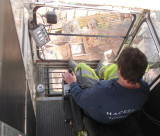
Dominating the skyline, the crane at the groundworks of the George Green Library expansion marks the latest landmark development to be undertaken by the University.
Work began on the £19m project in summer 2013 and is anticipated to be completed for the start of the academic year in September 2015. The redevelopment will involve the complete refurbishment and overhaul of the existing library, include a new facade around the new and exisiting buildings.
James Hale, Capital Projects Officer at the University, said: “The redevelopment of the existing library will enhance the student experience and respond to the current high demand for student study space. In order to minimise disruption, the project is running in two phases. Phase one involves the construction of the new extension with phase two rennovating the existing building to seamlessly join with the new structure.”
The completed library will have two entrances, a flexible café space and language laboratories as well as individual and group study rooms and study spaces. It will also have a BREEAM excellent rating which sets the standard for best practice in sustainable building design. Around 20% of the electricty will be sourced from photovoltaic panels added to the roof space.
To keep up-to-date with the project including any planned disruptions visit tiny.cc/UoNGGL.
You can follow all the progress through twitter @uoncapproj.



Tags: BREEAM excellent rating, George Green Library, James Hale
Posted in News | Comments Off on By George!
Holy smoke! Let’s stay safe together
May 1st, 2014
Nottingham has a long and well documented affinity with Batman — the village of Gotham gave its name to his home city in the early years and Wollaton Hall doubled for Wayne Manor in the latest Hollywood adaptation. Now, the University has called upon the caped crusader and the boy wonder Robin to help keep students safe in the city.
The University’s Off Campus Student Affairs team recently launched a new campaign aimed at keeping students safe on nights out in the city. The message behind the campaign is really simple: some things just go together — like Batman and Robin, fish and chips — and students should stick together with their friends when they’re out for the evening.
The campaign aims to remind young people about the importance of using licensed taxis, keeping their valuables safe and sticking to well-lit areas if walking late at night.
The ‘You go together’ launch event saw Batman and Robin (not to be confused with the University’s security team) handing out fish and chips to students in the common room at St Peter’s Court halls of residence. Nottinghamshire Police’s Neighbourhood Policing Team was also on hand with advice and branded torch keyrings, reminding students not to flash their valuables when out in the city.
Melanie Futer, Off Campus Student Affairs Manager, said: “We know that Nottingham is a safe city, which offers our students a lot of opportunities to enjoy an active and varied social life alongside their studies. The ‘You go together’ campaign is designed to make sure that students are aware of the simple actions they can take to ensure that they don’t make themselves vulnerable.
“We’re delighted to be working with the police, our security team and the Students’ Union to make sure these important messages reach as many students as possible during the course of the campaign.”
The campaign was developed with input from the Students’ Union welfare network — peer-elected students responsible for welfare and personal safety issues in halls of residence. There will be a series of events taking place at other halls and on-street evening promotions.
Tags: Batman and Robin, Melanie Futer, University’s Off Campus Student Affairs, You go together
Posted in News | Comments Off on Holy smoke! Let’s stay safe together
Baptism of fire for WW1 curator
May 1st, 2014
Stories from the First World War are being revealed for the first time at a University exhibition commemorating the centenary of the outbreak of the conflict.
All Quiet in the Weston Gallery, which opens at Lakeside next month, draws on material drawn from the University’s collections.
It is the first exhibition Hayley Cotterill, Assistant Archivist with Manuscripts and Special Collections, has curated for the University. She says a highlight had been uncovering the stories of local people behind the photographs, letters, postcards and diaries going on display.
One such story is that of William Lees, a Nottingham lace merchant based in the French town of Lille, who gives a rare written account of life for a British civilian under German occupation.
Another highlight for Hayley is the detective work she undertook to uncover the story behind a letter sent from the front line by a former Nottingham student who signs himself only as Bill and mentions his University pals and fellow servicemen Bob and George. Sadly, Bill’s obituary appeared shortly afterwards in a University magazine.
“Working on the exhibition has been brilliant,” she says. “It’s a chance to do in-depth research – normally we would have catalogued such a letter but we would never had had the time to find out about the lives of these three men or their stories. At the time these were ordinary men going off to their duty and now they get some recognition.”
Hayley is also responsible for organising a series of public talks at Lakeside, including an exploration by Professor Roger Woods of the German Department into how German autobiographical accounts of the war written in the Weimar years by nationalists, communists, pacifists and deserters reveal surprisingly similar mentalities. Professor Woods also gave advice on a diary written in a form of coded shorthand by Austrian soldier Bernard Steinitz, who was held in a Russian prisoner of war camp. After the First World War, Bernard and his family were classified as ‘non-Aryan’ by the Nazis and they later fled to England. Like much of the private material held in the archives, it was donated to the University for safekeeping.
In another of the lunchtime talks, Emeritus Professor Malcolm Jones of the Department of Russian and Slavonic Studies will add a personal insight into the story of the three Vince brothers, who all went off to war and survived. Professor Jones is a descendant of one of the brothers and he will look at the impact of the war on the Vince family – and why men continued to fight amid such appalling slaughter.
Hayley hopes that an exhibition based on such a landmark event as the centenary of the outbreak of the First World War will encourage more people to use the University’s archive, which has three million items going back to the 12th century.
“People are aware of the county records office and that they can use their archive, but may think our archive here at King’s Meadow Campus is only for the use of academics and students. We are open to absolutely everyone. The talks are for the public — again, it’s letting people know we are here to be used.”
She adds: “Sometimes you get so used to the job you’re doing and you forget – but you are actually holding something that was written in Russian prisoner of war camp, you’ve got letters sent back from the front line, and that soldier went on to die. It is amazing.
“These are not just pieces of paper. There are stories behind every letter and every photo. You can read about it in a book but to have an actual letter from the time and knowing what they are thinking brings it to life.”
All Quiet in the Weston Gallery: The First World War in The University of Nottingham’s Historic Collections is at the Weston Gallery, Lakeside Arts Centre, University Park, from Friday 9 May to Sunday 17 August.
Lunchtime talks take place at the Djanogly Theatre between 1pm and 2pm from Tuesday 20 May.
Admission is free but places are limited: please book with Lakeside Box Office on 0115 846 7777.
More on the exhibition: www.nottingham.ac.uk/mss
Tags: All Quiet in the Weston Gallery: The First World War, Hayley Cotterill, manuscripts and special collections, Weston Gallery
Posted in Features | 2 Comments »
Mastering the craft
May 1st, 2014
The University is tapping into our national appreciation of beer by introducing a new full-time Masters course in Brewing. The new course, MSc in Brewing Science and Practice, starts in September 2014 and will be based at the Sutton Bonington Campus, where extensive pilot brewing facilities were built in 2011.
The course will take graduate level scientists and train them for a career in the brewing industry. There will be a strong focus on teaching practical brewing skills, with the objective of developing technically competent and creative brewers who are able to innovate, problem solve and conduct scientifically robust trials
.
The science and engineering of brewing production will be studied at advanced level, providing in-depth technical knowledge and informed by the latest developments. The course will be taught by staff from the School of Biosciences with expertise in brewing and related sciences, together with invited contributions from specialist brewing practitioners.
Dr David Cook, Director of Brewing at the University, said: “You might say that the new course is being introduced due to popular demand. From experience of marketing our part-time Masters course in Brewing it became apparent that the duration and mode of delivery were suited to those already working in the industry.
Recent graduates wishing to pursue a career in brewing usually want to study on a full-time basis and to qualify for a Masters within one year. By recognising this gap in our offering, the concept of the new course was born.”
The new course will complement, and share some modules of study with, the internationally renowned MSc in Brewing Science. This three-year part-time program offers continuing professional development for brewers already employed in the industry and was introduced in 2006.
According to Professor Joanne Hort, SABMiller Chair in Sensory Science, Head of Brewing Science at Nottingham, there is growing recognition that the industry needs more highly skilled and talented brewers. She said: “There’s rarely been a better time to train for a career in brewing. Globally, beer volumes continue to rise, driven by strong growth in emerging markets. Even in mature markets, a resurgence in the craft brewing sector is fuelling increased demand for skilled and technically proficient brewers.”
Having moved to new purpose-built facilities in 2011, the brewing group at Nottingham host excellent pilot brewing facilities, including a micromaltings, 35 L Briggs-built brew-line and the 10 hL SABMiller Research Brewery.
The new programme starts with an introduction to the brewing process, its historical development and the range of beer styles which together comprise the modern beer market. It then proceeds to teach the practical, technical and engineering know-how required of a professional brewer in today’s industry. There is substantial emphasis on the development of practical brewing skills and the ability to brew beers, to specified style guidelines.
Tags: Director of Brewing at the University, Dr David Cook, Head of Brewing Science at Nottingham, MSc in Brewing Science and Practice, Professor Joanne Hort, SABMiller Chair in Sensory Science
Posted in Features, Uncategorized | Comments Off on Mastering the craft
Tamiflu® saved lives during flu pandemic
May 1st, 2014
An international study led by academics at Nottingham, has found that patients hospitalised worldwide with swine flu during the 2009-10 pandemic were more likely to survive if they were treated with Tamiflu® and other similar anti-viral drugs.
The research, published in The Lancet Respiratory Medicine, has shown that among adult patients infected with the H1N1 pandemic virus and subsequently admitted to hospital, a 25% reduction in the likelihood of death was seen if the patient had been treated with one of the anti-flu drugs known as neuraminidase inhibitors (NAIs) compared with no NAI treatment; by far the most commonly used drug was Tamiflu® (known to doctors as Oseltamivir).
The study used data from more than 29,000 patients in 78 centres worldwide hospitalised with H1N1 during the 2009-10 pandemic and analysed the effect of treatment with NAIs on the likelihood of dying from the disease. When data was analysed to look at early NAI treatment (within 48 hours of flu symptom onset) versus none, the risk of death was halved.
The results are the first to come out of the Post-Pandemic Review of Anti-Influenza Drug Effectiveness (PRIDE) study, jointly led by Professor Jonathan Van-Tam and Dr Puja Myles in the University’s Division of Epidemiology and Public Health.
Professor Van-Tam said: “There has been a lot of previous controversy about whether NAIs work in reducing serious complications and deaths due to influenza. Many countries stockpiled NAIs in readiness for a future pandemic. But it’s fair to say that when the 2009 pandemic actually started we did not know if these drugs would reduce deaths — governments around the world had simply made a best estimate that this would probably be so.
“What we have now done is taken worldwide data from the 2009 pandemic, and analysed these to take an impartial view about the return we actually got on the investment made by so many governments. We did our best to assemble and combine all the data we could identify from around the entire globe and to perform the cleanest analysis possible. In my view, these data suggest that NAIs are a likely to be important in the fight against both seasonal and pandemic influenza.”
Interestingly, however, the study showed that the success of Tamiflu® appeared to be largely confined to the treatment of adult patients. The results found no significant reduction in deaths in children hospitalised with swine flu.
Effectiveness of Neuraminidase Inhibitors in Reducing Mortality in Hospitalised Influenza A (H1N1) pdm09 Patients: An individual Participant Data Meta-Analysis, can be read at:
www.thelancet.com/journals/lanres/onlinefirst.
Tags: Anti-Influenza Drug Effectiveness (PRIDE) study, Oseltamivir, Professor Jonathan Van-Tam, Tamiflu®, The Lancet Respiratory Medicine
Posted in Research | Comments Off on Tamiflu® saved lives during flu pandemic