

Campus News
Making the move
September 2nd, 2010
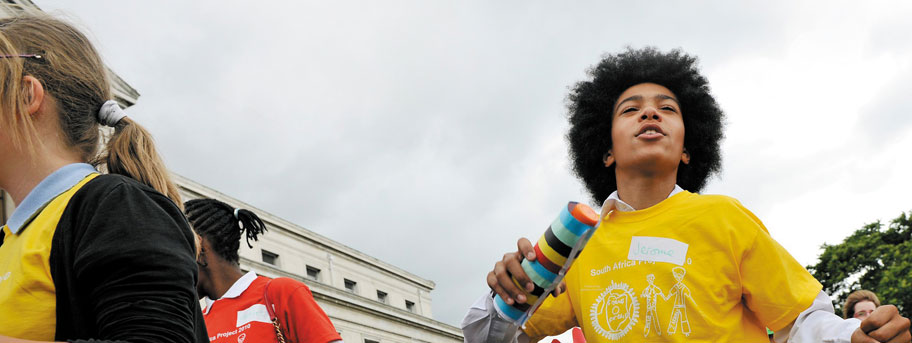
The first pupils to join the Nottingham University Samworth Academy (NUSA) enjoyed a transition day with a difference on University Park in July.
Their introduction to life at secondary school was a colourful one – inspired by South African traditions and the World Cup.
Pupils made masks and music while wearing t-shirts in the colours of the South African flag.
They’ll start life at their new school this month — the first intake in the new £24m building in Bilborough.
Find out how they got on in October’s Exchange.
Posted in Features | Comments Off on Making the move
Spotlight
September 2nd, 2010

Politics, fertility and the chemistry of football are some of the highlights of University media coverage over the summer.
Proceed with caution
A new technique to mature a woman’s eggs in the laboratory before fertility treatment should be used with caution, researchers say. It can be linked to larger babies and birth problems, a study by British and Swedish researchers suggests. They say more research is needed. Dr Peter Sjöblom, of The University of Nottingham’s NURTURE Unit, told The Daily Telegraph: “We need to be following IVM babies from the moment the eggs are matured in the laboratory through to their birth and into adulthood.”
Potential leaders come with baggage
The five candidates seeking to lead Britain’s Labour Party face a tough choice following May’s election loss: how closely to align themselves with the party’s just-completed 13-year run in power, The Wall Street Journal reports. Indeed, some of the contenders to succeed former Prime Minister Gordon Brown have drawn criticism for being seen as too disloyal to Mr Brown, while others have been seen as too loyal. “They all come with baggage,” said Steven Fielding, a professor of political history at The University of Nottingham.
Tribute to Ken Coates
The writer and activist for numerous left-wing causes Ken Coates has died aged 79. He was an inspirational figure within The University of Nottingham, The Independent reports. In 1956, he won a state scholarship to the University with an essay on Sean O’Casey and obtained a first-class degree in sociology in 1959. He then became a tutor in adult education, eventually becoming a professor. This led to 30 years as a teacher, researcher and writer on poverty, industrial relations and working-class history which influenced the outlook of many of his students.
Going for gold?
A British chemistry professor has calculated that if the World Cup trophy was really solid gold it would be too heavy for footballers to lift, BBC Online reports. Martyn Poliakoff of The University of Nottingham estimates that a solid gold trophy of its size would weigh at least 70kg. He concludes that the trophy, or at least part of it, must be hollow.
Students think global
Commuters heading to work on Friday 20 August — the day after A level results announcements sparked stories of a dash for scarce places at university — saw the Metro newspaper’s front page headline announcing that Nottingham was offering UK students university places in China and Malaysia.
The story was also covered in the Guardian, The Times, the Daily Telegraph and the Daily Mail, and Prof Christine Ennew, Pro-Vice-Chancellor (Internationalisation) was interviewed for an item on Friday’s Six O’Clock News, on BBC One.
VC advises on trade
There is “enormous scope” for cooperation between UK and Indian higher education provided it is done on the basis of “mutual respect and equality”. That was the message from David Willetts, the universities and science minister, who visited India as part of a large UK delegation led by Prime Minister David Cameron, the Times Higher Education reports. Meanwhile, Professor David Greenaway, Vice-Chancellor of The University of Nottingham, which has two Asian campuses, has been appointed to the government’s Asia Task Force, which advises on boosting trade with the region.
Posted in media | Comments Off on Spotlight
The HOUSE that Nottingham built – the story of the Solar Decathlon project
September 2nd, 2010
Summer 2009:
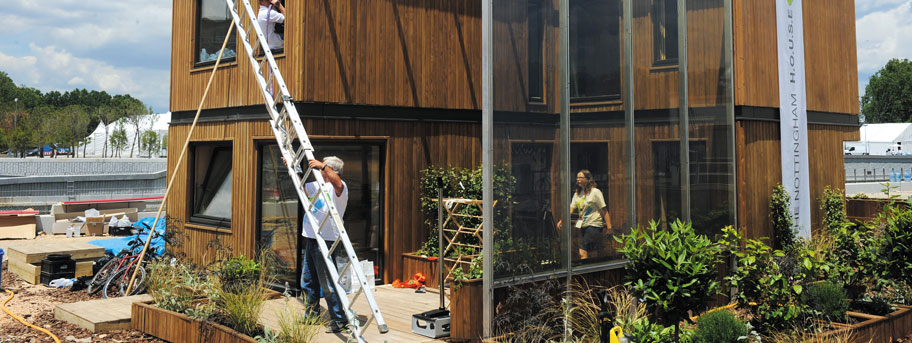
The idea — to build Europe’s most sustainable zero carbon, solar powered house. The house would be designed, constructed then transported to Spain for the very first Solar Decathlon Europe. Nottingham was to pit its expertise against 19 other universities from across the world.
October 2009:
Students in the Department of Architecture and the Built Environment produced a series of initial designs. The winning design for the Nottingham HOUSE was the result of months of work in the “zero carbon housing studio module.” The design was fully developed by the students over the summer and autumn months.
January 2010:
Construction work began. A team of 40 students worked on all aspects of the construction of the project.
March 2010:
The modular building was unveiled at Ecobuild, the world’s biggest exhibition for sustainable design, construction and the built environment — taking top prize in the inaugural Timber category at Ecobuild Awards.
May 2010:
Michelin Star chef, Sat Bains, held a masterclass to show off the students’ sustainable dinner party menu with dishes of green gazpacho and slow cooked rare breed pork belly.
June 2010:
In the worst June weather that Madrid had seen in 50 years the team battled torrential rain, thunder storms and floods to build their house and meet the competition deadline. They overcame adversity to come second in the ‘sustainability’ category. The judges said: “This is one of the few houses attempting to push boundaries of passive design.” Planning permission is being currently being sought to build the Nottingham HOUSE on Green Close — site of the Creative Energy Homes project on University Park.
Posted in Features | Comments Off on The HOUSE that Nottingham built – the story of the Solar Decathlon project
How the lion got its roar
September 2nd, 2010
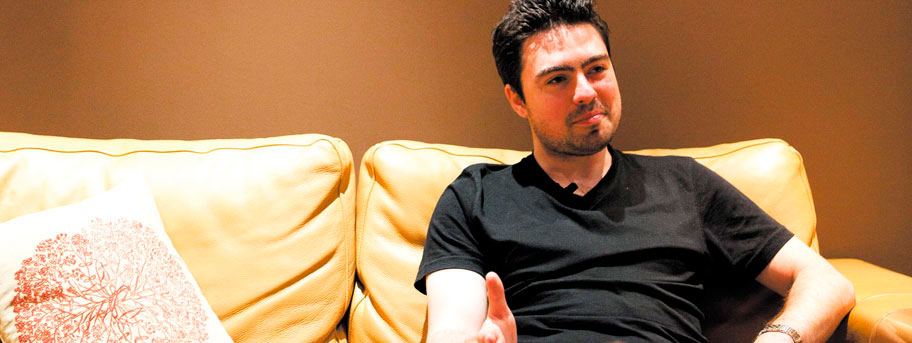
Just seven years after his graduation, a Zoology alumnus from the University is forging an award-winning career in the field of scientific documentaries.
This year Alex Tate won a television Bafta for the ground-breaking specialist factual series Inside Nature’s Giants. The series, which features dissections of some of the world’s biggest animals, is made by Windfall Films for Channel 4.
Alex, who was on the programme from its very inception, said: “Inside Nature’s Giants uses animals to tell modern day, factual, Just So stories. For instance, how did the elephant get its trunk? How did the lion get its roar? We wanted to show how animals work using a proper scientific approach and providing proper scientific answers.”
Alex Tate travelled the world after leaving Nottingham, before securing work experience with the BBC’s Natural History Unit in Bristol on the series Planet Earth. He moved to the Natural History Museum, setting up a small independent production company in his spare time. After completing a Masters in Science Media Production at Imperial College Alex, went to work for Windfall Films.
Alex said: “Cutting up animals is, on the face of it, a bit gory but it is what scientists do all the time. Although we knew we had an innovative idea we were genuinely worried that seeing pictures of huge animals on a slab would actually turn people off. We needed to convince viewers that what they were watching had been done respectfully with the intention of educating as well as to entertain.”
When asked for his advice for students struggling to find their dream job he said: “I have never followed other people. The way to succeed is perhaps to do things your own way — to break the mould. You are never going to become a master of what you want to do unless you train properly or have mentors to guide you. You also have got to show initiative and try and do things other people haven’t done — that will get you noticed. There are so many people looking for the same job you have got to try and do something different and stand out.”
Posted in Features | Comments Off on How the lion got its roar
On the road
September 2nd, 2010
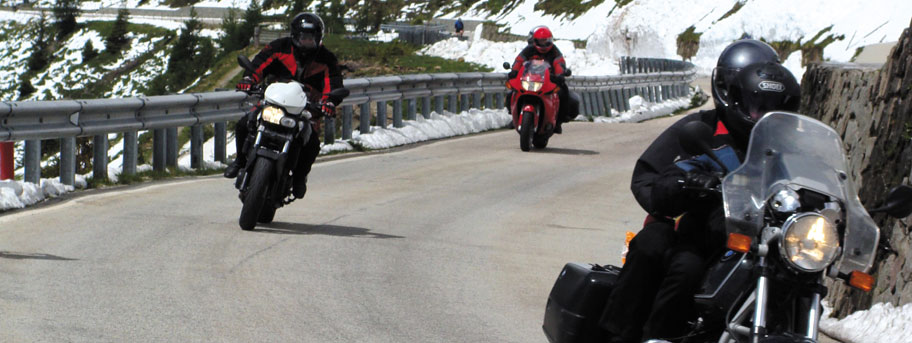
Are more experienced motorcyclists safer on the roads than those who are newly-qualified? And do advanced motoring qualifications make you a better rider?
This summer Dr Alex Stedmon conducted a 10-day research ride to Italy following 13 riders (and two pillion passengers) over 2,500 miles.
New research at the University could help answer these questions using a unique motorcycle simulator — the first of its kind in the world.
Funded by the Institute for Advanced Motorists (IAM), the research project will investigate different rider behaviours, including forward planning, hazard perception and levels of risk taking.
The simulator uses a Daytona 675 motorcycle — generously donated by Triumph Motorcycles Ltd — mounted on a custom rig which was designed and built at the University.
Dr Alex Stedmon, a lecturer in the Centre for Motorcycle Ergonomics and Rider Human Factors, is leading the project. He is working alongside Dr David Crundall from the School of Psychology.
“We’re extremely excited about being invited onto this research as it links into previous work in Psychology, but takes it forward in an exciting new way with the use of dedicated simulation trials,” said Dr Crundall.
“With different motorcyclists experiencing exactly the same riding scenarios and recording their individual responses, researchers can begin to look at differences in individual riding styles and how rider differences translate into behaviour on the road,” Dr Stedmon added.
Dr Stedmon is coupling this research with other data captured ‘on the road’. This summer he conducted a 10-day research ride to Italy following 13 riders (and two pillion passengers) over 2,500-miles through France, Switzerland, Lichtenstein, Italy, Austria and Germany. The riders rode different styles of motorcycle — ranging from small road and sports bikes to large capacity tourers.
“The research ride was a unique opportunity to capture approximately 130 rider days-worth of data in a very short period of time,” Dr Stedmon said. “It also has the added benefit and insight of being able to interpret observations ‘in the field’ on real roads as riders actually experienced them.”
Experiencing a range of road conditions, from Alpine hairpin bends to German autobahns, the group featured male and female riders of varying ages and experience levels all riding the same roads around Europe. Each day the physical and mental impact of the ride was measured using a number of ergonomic tools and methods with specific attention on whether the riders were leading the group, responsible for navigation; at the back of the pack, responsible for making sure no rider was left behind; or in the centre of the group.
Results are currently being collated and should be available in the autumn. This project has also been part-funded by the IAM.
Posted in Research | Comments Off on On the road
Child’s play – Summer Scientist Week 2010
September 2nd, 2010

More than 270 children took part in this year’s Summer Scientist Week at the University’s Jubilee campus.
The event gives researchers the opportunity to study childhood development in an environment that also gives the children room to play and learn.
One of the organisers, Dr Lucy Cragg said: “This year’s Summer Scientist Week was definitely the best so far, there was a good variety of studies run by researchers from across the University which the children really enjoyed. It’s great that it’s now becoming an unmissable event, not only for the researchers involved but also fomany of the families that take part.”
Posted in Features | Comments Off on Child’s play – Summer Scientist Week 2010
Bringing cultures together
September 2nd, 2010
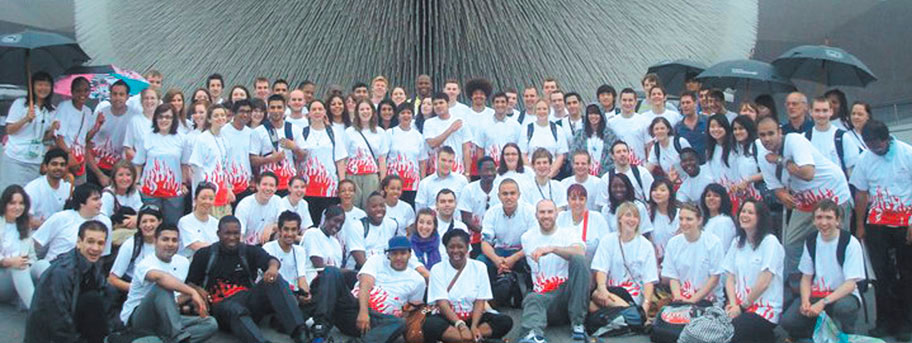
Economics graduate Toby Buist visited China this summer as part of a British Council initiative to introduce future leaders from Britain and China to each other’s countries and cultures. These are his thoughts on his return.
“Dengfeng, a small town in the Songshan mountain range is home to hundreds of kung fu schools and thousands of diligent pupils of the ancient art. The sight of them marching through the streets was inspirational.”
“This summer I was one of a lucky 100 UK future leaders to be selected to spend ten days in China learning more about Chinese culture and strengthening diplomatic ties between the two nations. The final delegation of four cohorts of young Britons travelling to China had the theme of ‘Environment and Healthy Living’.
“The programme was jam-packed, visiting three major cities and a couple of small towns. Whilst this restricted my inquisitive urges to head off the beaten track and dig deep into a less mainstream China, we saw some truly impressive sights. The itinerary included visits to the Shanghai Expo, Yuntai mountain, the Shaolin temple, the forbidden city and Tiananmen Square to name a few.
“My subgroup concentrated more on healthy living. As we passed through Shanghai at night one delegate retorted “Seeing all these lights makes me wonder if our energy saving efforts back home will make any difference”. We saw very little blue sky in our time in China due to the thick shroud of smog, so despite temperatures of up to 40 degrees, sun cream was never needed!
“Healthy living efforts seemed more muted in the vast metropolises of Shanghai and Beijing, with exercise seemingly limited to older generations practising early morning Tai Chi and dancing in the inner-city parks and at community centres. In Henan province we visited the original ‘Taijiquan’ (Tai Chi boxing) school, where the whole town, young and old seemed infatuated with the art. Dengfeng, a small town in the Songshan mountain range is home to hundreds of kung fu schools and thousands of diligent pupils of the ancient art. The sight of them marching through the streets was inspirational.
“My lasting impression of China is that, whilst it continues to grapple with problems such as poverty and environmental issues, it has certainly earned its dynamic reputation. The sheer scale of the Shanghai Expo exhibits what the Chinese are capable of. China is a wonderfully different and inspiring place and I will certainly be going back to discover more.”
Posted in Features | Comments Off on Bringing cultures together
Navigating a new landscape – social media
September 2nd, 2010

For the enthusiast, social media platforms are a way of broadening their horizons, making contact with like-minded people across the world and sharing information in a fast and targeted manner. For their opponents, the likes of Twitter, Facebook, Tumblr and the myriad other channels inhabiting the social media landscape are useless time-wasting devices that distract attention from essential tasks.
So who’s right? Like all tools, the value of social media lies in how you use it. The University uses different channels in various ways — how could you use the channels available to your advantage?
Think about your potential audience and the kind of information they will find useful. Who are you trying to communicate with — current students, potential students, colleagues, peers? Rather then thinking — “I want to tell them X, what’s the best way to do that?” — consider what your audience wants or needs. If you’re a lecturer, your students can access course notes and timetables through the portal, but they might value podcasts of lectures, a blog of your opinions on wider research in the field or a network of like-minded students at other institutions.
The University’s most successful explorations into social media reflect this thinking. Video journalist Brady Haran has worked with academics across the sciences, theology and modern languages in bringing their subjects to a wider audience.
Very wide, in the case of the Periodic Table of Videos (PTOV) — a website which hosts a video for each element of the periodic table. Participating academics from the School of Chemistry have had their videos viewed more than 9.25 million times via the project’s YouTube channel.
Instead of showcasing research and giving the videos a corporate, promotional feel, the PTOV team have concentrated on the basics of chemistry, how elements are constructed and how they react, and illustrated this in a visually engaging way — which usually involves blowing things up.
The strategy worked. The channel has thousands of fans, ranging from Nobel Prize winners to American schoolchildren.
The Election 2010 blog, a collaboration between the School of Politics and the Communications office, found its audience in those seeking wider academic comment around May’s General Election.
Journalists were a significant group in the blog’s audience, with activity around the project leading to 466 articles in the local, national and international media.
It also found favour with other bloggers and the general public, clocking up more than 90,000 views over the election period.
At the other end of the scale, Twitter can prove an excellent way of getting your news and views out to the wider audience. The 140-character limit on messages can be liberating rather than constricting. Academics @profbriancox (University of Manchester, Physics, @drpetra (lecturer in international health services and agony aunt) and @carriejenkins (University of Nottingham, philosophy) are all worth a follow. The most interesting (and most popular) academics concentrate less on blowing their own trumpet and more on sharing information that might be of interest to people like them.
For more information on how you could use social media productively, contact tara.decozar@nottingham.ac.uk
Posted in Features | 1 Comment »
The power behind words
September 2nd, 2010
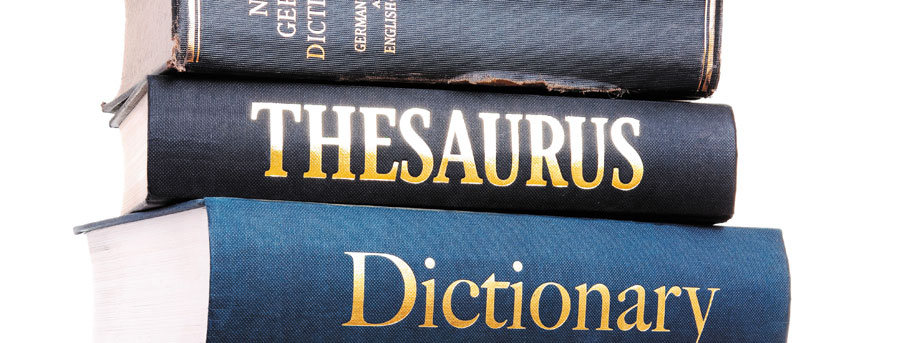
What’s the origin of the world ‘radio’? And why have foreign words like ‘guerrilla’ and ‘cuisine’ become so firmly entrenched in the English language?
A new video website project led by the School of Modern Languages and Cultures examines these words and more, reflecting the huge range of international research taking place in the department.
The videos have already covered words in Spanish, French, German and Serbo-Croat. Academics in the School choose a word, then feature in a short video explaining the meaning behind it. The project is steadily gaining followers on YouTube — with words such as ‘achtung’, ‘Nazi’ and ‘tsar’ proving the most popular so far.
The project follows on from the University’s other successful collaborations with video journalist Brady Haran, who has also developed the Periodic Table of Videos, featuring a video for every element; Sixty Symbols, which examines important symbols in physics and astronomy; and Bibledex, working with theologians to create a video for each of the 66 books of the Bible.
“English tends to be a magpie language which happily steals vocabulary from elsewhere, welcomes new arrivals but often redefines them over time,” said Prof Judith Still, Chair of French and Critical Theory and Head of School. “It can be fascinating to see that process of adaptation to British culture, but also to see the history of the words in their native context — for example, the special relationship of ‘aficionado’ to a passion for bull-fighting. Colleagues are given the opportunity to find their own words — relating to areas of their research which they want to communicate to a more varied audience than readers of academic journals.
“Research staff have been asked to think of a word used in English which originated in a foreign culture and closely relates to their current research, and then to talk about it. All the words will eventually form a huge crossword,” said Catherine Davies, Professor of Hispanic and Latin American Studies. “Within the School people are doing research on a wide range of topics relating to locations across the world — this project gives the public insight into our research specialisations.”
“The one thing we all have in common is our interest in words and language, whether in relation to literature, media, politics, society and thought. This led to the Words of the World concept.”
To view the videos, visit www.wordsoftheworld.co.uk or www.youtube.com/wordsoftheworld
Posted in News | Comments Off on The power behind words
Decky Does a Bronco
September 2nd, 2010
Date: Thursday 9 to Saturday 11 September
Time: 8pm
Venue: Highfields Park, seated
Admission: £12, £9 concessions
Posted in Theatre and Dance, What's On | Comments Off on Decky Does a Bronco