

Campus News
Turning cars into charity cash
September 28th, 2010
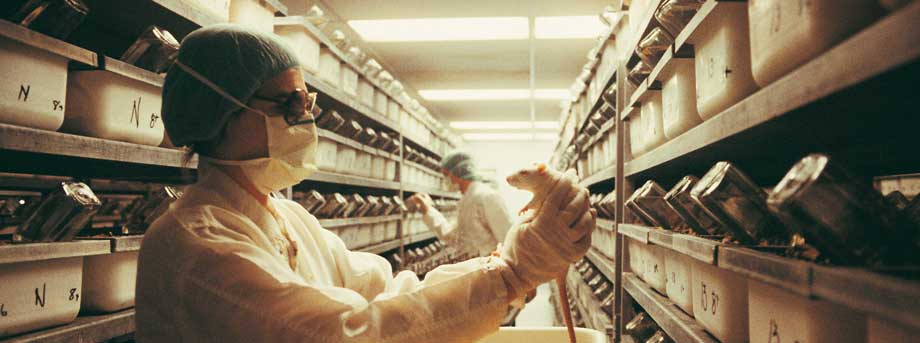
A charity which promotes and investigates the replacement of animals in medical research is looking at new ways to fund its work.
FRAME, the Fund for Replacement of Animals in Medical Experiments, has a laboratory in the School of Biomedical Sciences, which researches new methods to reduce and replace animals in labs. The FRAME Alternatives Laboratory (FAL), directed by Dr Andrew Bennet, is run as a collaboration — staffed by the University and funded by FRAME with additional income from research councils and other medical charities.
FRAME relies on grants and donations to fund its work — the FAL costs the charity more than £200,000 a year to fund. The charity has now teamed up with Giveacar Ltd, an independent car donation service, to raise money for its work.
Instead of scrapping their car, donors can give their vehicles to charity — turning scrap metal into cash for their chosen cause. Giveacar collect the car from the donor; recycle any suitable parts — reducing the impact on landfill; and pass on the scrap value to the charity, averaging around £100 per car.
FRAME Scientific Director Dr Nirmala Bhogal said: “It is important to provide a reliable income for the FAL to ensure the continuity of its groundbreaking work. The FAL is in the unique position of being able to use donated human tissue samples, from actual patients who have agreed to help, thanks to close associations with the Queen’s Medical Centre. Using human tissue to investigate human diseases means that the FAL’s work is much more relevant than animal-based experiments would be.”
FRAME advocates the ‘Three Rs’ model to combat current levels of animal use in laboratories — Refine, Reduce and Replace. Refinement of procedures so that the suffering of any animals necessarily used is minimised, reduction of the number of animals used to an unavoidable minimum, and ultimately replacement of animals altogether with validated alternative methods such as cell cultures and computer modelling.
Its long term aim is the complete replacement of animals in all medical testing but it recognises that goal cannot be achieved immediately. Meanwhile it supports efforts to reduce the numbers of animals involved and to refine testing methods so that suffering is minimised.
For more information on research funded by FRAME and donating to the charity, visit www.frame.org.uk
To find out more about donating your car, visit www.giveacar.co.uk
Tags: animal research, charity, FRAME, laboratory, School of Biomedical Sciences
Posted in News | Comments Off on Turning cars into charity cash
Friendship through sport slideshow
September 16th, 2010


Posted in slideshow | Comments Off on Friendship through sport slideshow
Issue 40 / September 2010
September 15th, 2010
Posted in Cover Story | Comments Off on Issue 40 / September 2010
First among equals
September 2nd, 2010
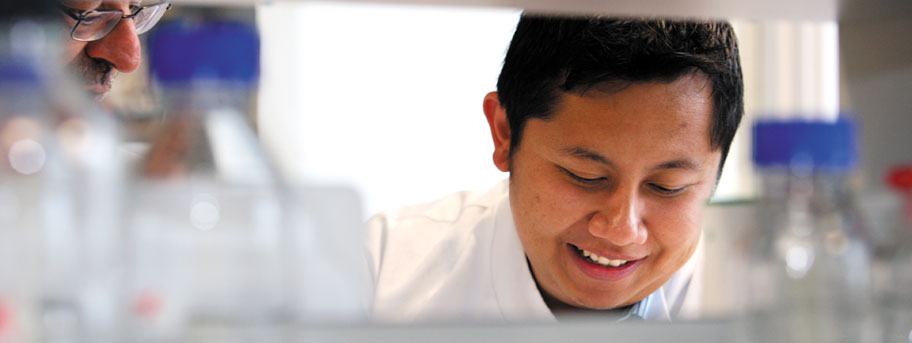
It started with a conversation between a lecturer and local villagers on Borneo about their indigenous fruits… Now Mohd Fadzelly Abu Bakar has received his doctorate from the School of Biomedical Sciences — the first student to graduate from the innovative Malaysia Nottingham Doctoral Programme (MNDP).
The MNDP was launched by the University and the Malaysian Government in July 2006. Fadzelly began his PhD studies in January 2007, researching the anti-cancer properties of the indigenous fruits of Sabah, on Borneo island, Malaysia.
While working as a lecturer at the Universiti Malaysia Sabah, Fadzelly spoke to villagers about the plants used locally to treat and prevent illness and disease. He decided to research the active elements of these for his PhD, one of the first to receive funding from the MNDP.
Fadzelly’s research has been so successful that it has resulted in three research papers and a book chapter. His work into one fruit in particular — the bambangan, or Mangifera pajang, a relative of the mango — is very promising. He intends to develop his results further as an independent academic and researcher. He returned to Malaysia at the end of July.
“I’ve really enjoyed researching my PhD in both the UK and Malaysia,” Fadzelly said. “New avenues of enquiry were suggested to me as part of the split site process, so it worked very well.
“I lived in Wollaton, Nottingham, from September 2008, and I found it easy to settle into the community. The support networks at the University are excellent, the Malaysian societies and families really welcomed me.”
Currently, there are 25 students conducting research on the programme. They were chosen from existing academic staff at the public universities in Malaysia and are being supported by scholarships awarded by the Malaysian Government.
“Fadzelly was highly motivated to make a success of this joint venture, and this, together with excellent support from his Malaysian supervisors, ensured a relatively straightforward supervisory role for me,” said Dr Jeff Fry, Fadzelly’s UK supervisor. “I was also fortunate in being able to enlist the support of Dr Kang Nee Ting at The University of Nottingham Malaysia Campus (UNMC) as my ‘local agent’ to assist Fadzelly in his time in Malaysia. The research fitted nicely with ongoing collaboration with colleagues at UNMC, and I am hopeful that the contacts made during Fadzelly’s PhD will enhance this ongoing research.”
Fadzelly also worked with Dr Fry’s co-supervisors — Dr Steven Burr in the UK and Professor Datin Dr Maryati Mohamed in Malaysia.
Posted in News | Comments Off on First among equals
Nottingham research leads to early cancer detection
September 2nd, 2010
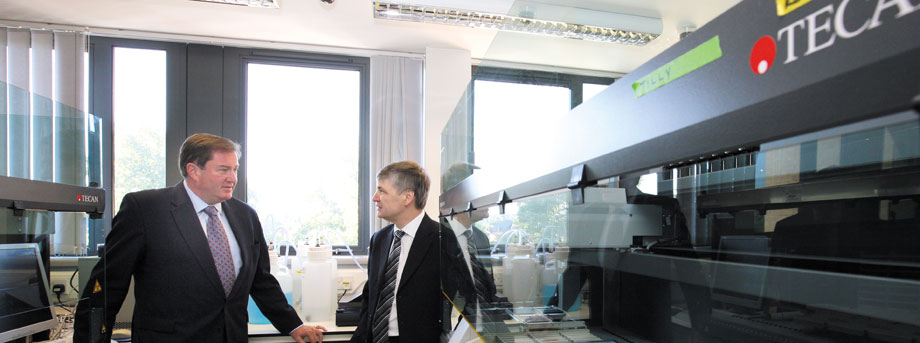
University spin-out company Oncimmune Ltd has developed a ground breaking blood test which aids the detection of cancer up to five years earlier than current testing methods.
Physicians will know the result of their patient’s test within one week of sending in a blood sample to Oncimmune. The company has developed a new technique which replicates the cancer proteins that trigger the body’s response to the disease, alongside robotic technology to measure this response. This new technology (immuno-biomarkers) provides a significant advance in how early a cancer may be detected and is likely to change the current paradigm of diagnosis and treatment for most solid cancers such as lung, breast, ovarian, colon and prostate.
Based on the early work of John Robertson, a world renowned breast cancer specialist and Professor of Surgery in the Faculty of Medicine and Health Sciences, Oncimmune has successfully transferred this science into a reproducible commercial test. The test for lung cancer, EarlyCDT-Lung™ was launched nationally in the USA in June. The UK launch is expected in early 2011.
Initial research results were derived using blood samples from patients with breast cancer and a group of high risk women attending for annual mammography — which Prof Robertson had prospectively collected in Nottingham.
The samples were used to identify blood signals in cancer patients, and in the samples of those who were later known to have developed cancer — sometimes years later.
When these samples were run retrospectively, Prof Robertson showed that the prototype assay test could have detected over half of these cancers up to four years before they were actually diagnosed. The work on lung cancer followed through a European Union grant which involved both the University and Oncimmune in collaboration with a number of European partners.
Prof Robertson said: “I am very pleased that the initial exciting research data that we produced in the laboratories at the University a number of years ago have been translated by Oncimmune to the first of many tests that will help us identify cancer early. The support of the University at all levels, including past and present Vice-Chancellors, Deans of the Faculty of Medicine and Heads of School along with the University’s Management Board has been essential.
“It has been a long and at times very hard road in creating a robust commercial test. Those involved have worked with exceptional diligence and tenacity and have given their unremitting support to achieve this.”
Oncimmune LTD was founded in 2003 to commercialise the technology developed in the laboratories of Prof Robertson. In 2006 the company set up a North American operation to validate and scale-up the test — trialling it on more than eight million assay “wells” from 80,000 patient samples.
The first early cancer detection test to launch has the potential to detect the early stages of lung cancer up to five years before a tumour appears. The target population for this test are high-risk individuals such as long-term smokers and ex-smokers between the ages of 40 and 75.
Additionally the test would be appropriate for people who have been exposed to other risk factors associated with the disease. For instance, environmental exposures such as radon, asbestos and extensive exposure to secondary smoke.
The University will establish a Centre of Excellence for Autoimmunity in Cancer (CEAC) with Prof Robertson as the Director of Research. The new centre will foster collaborative research to: speed up the delivery of an autoantibody blood test for different types of cancer for clinical use; encourage other research in the area of autoimmunity in cancer; and continue the search for support technologies that have the potential to enhance the medical prognosis following a positive test result.
Tags: test
Posted in Features | Comments Off on Nottingham research leads to early cancer detection
Friendship through sport
September 2nd, 2010
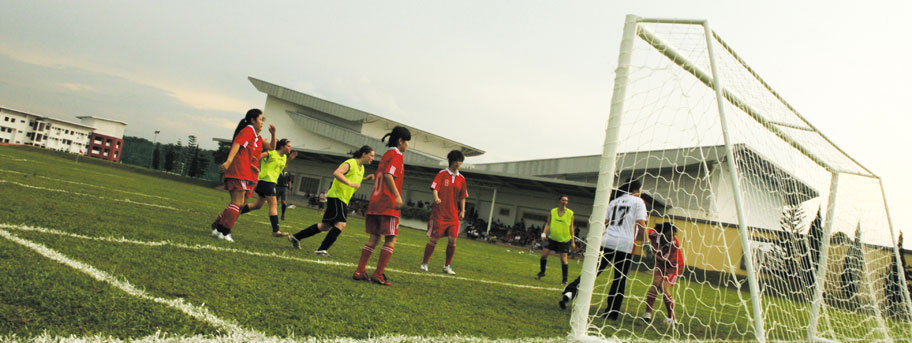
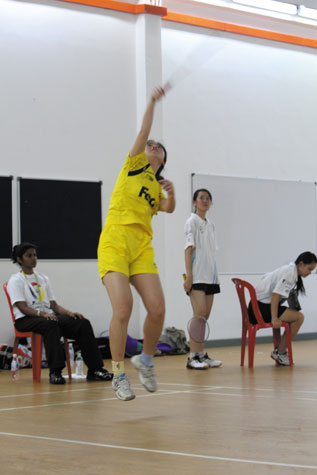
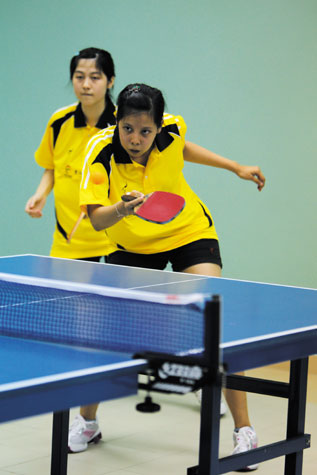
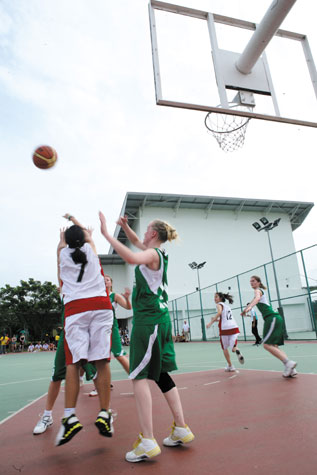
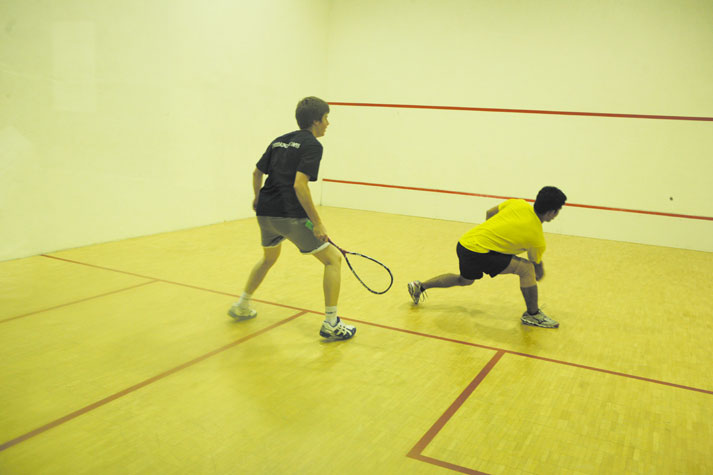
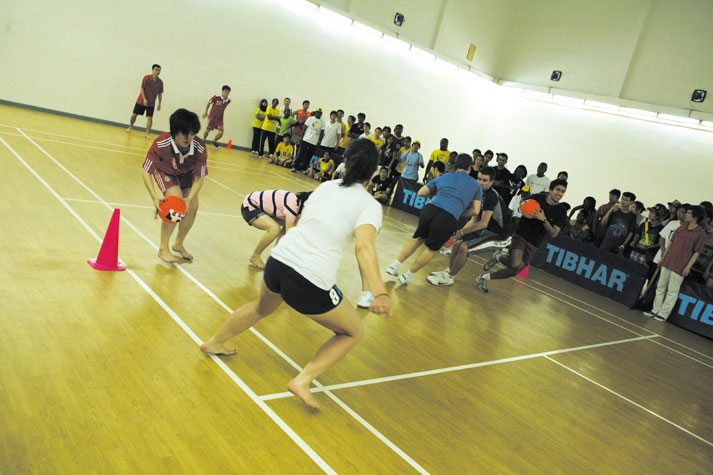
Following on from the successful inaugural Tri-Campus Games, held on University Park in June 2009, the tournament moved to Malaysia this summer.
The University of Nottingham Malaysia Campus (UNMC) proved the perfect hosts for the competition, which forms part of this year’s celebrations marking the tenth anniversary of the campus.
Teams of students from China and the UK joined their Malaysia-based counterparts for a week of competition and friendship – and the event didn’t disappoint.
Despite strong opposition from Team China and the hosts, Team UK fought hard to retain the Tri-Campus crown.
Competition in most sports was far tighter than at the founding games, with the smaller Malaysia and Ningbo campuses both winning matches against their UK opposition.
Men’s basketball saw a two-point victory for Team China over Team UK on day one, before Malaysia required two overtime sessions to defeat UK on penalty shots. Mens Football had to settle for a 1-1 draw with the strong African-based Team Malaysia, their 4-0 victory over China being enough to win overall on goal difference. Racquet & bat sports were all closely and well-contested.
Spirit of the Games awards were taken home by Andrew “Tiffin” Mitchell & for the multi-national Team UK volleyball team.
More then 180 student athletes took part in the event, which will be hosted at The University of Nottingham, Ningbo in 2011. And though the teams represented the UK, China and Malaysia, individual members hailed from more than 20 different nations.
Tags: football, sport, test
Posted in Features | Comments Off on Friendship through sport
Celebrating our 200,000th graduate
September 2nd, 2010
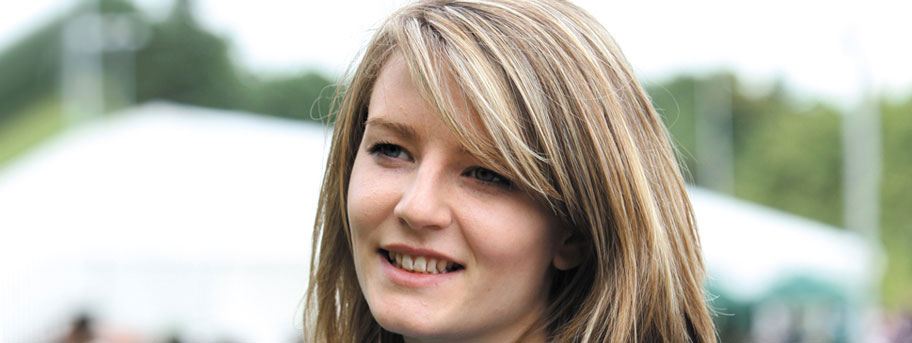
The 200,000th graduate of The University of Nottingham received her degree at Summer Graduation, at a ceremony presided over by Vice-Chancellor Prof David Greenaway.
Renai Emma Showler received her first class BSc Hons Mathematics with Engineering in July.
She enjoyed the campus aspect of University life, as well as the social benefits of living in a city like Nottingham.
“I chose maths and engineering as they were subjects I liked in school, and I thought it would be good for my career,” Renai said. “The staff were really supportive and I really enjoyed it. I’m looking forward to being part of University history.” Renai starts a placement with KPMG in October, working in audit and accounting.
Prof Greenaway said: “This is a special day in the University’s history. Renai is joining a community of alumni that stretch right back to the institution’s beginnings as University College Nottingham. I’m looking forward to welcoming the next 200,000!”
Renai joined an alumni community which spreads right across the globe, including Chinese Sportsperson of the Century Deng Yaping; author DH Lawrence; Dato Seri Najib Razak, the Prime Minister of Malaysia; and Golden Globe-nominated actress Ruth Wilson.
For more information on our alumni community, visit www.alumni.nottingham.ac.uk
Posted in News | Comments Off on Celebrating our 200,000th graduate
Living la vida local
September 2nd, 2010
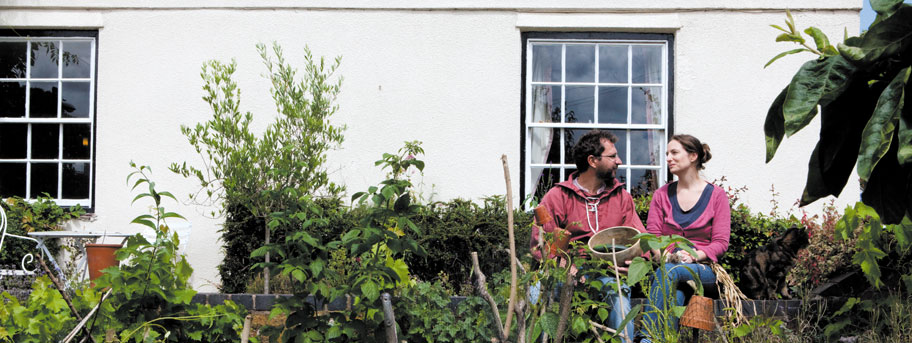
A lecturer from The University of Nottingham is spending September living off the land as part of a ‘living community’ study.
Dr Naomi Sykes in the Department of Archaeology will be joining her partner Dr Richard Jones, a lecturer from the University of Leicester, in spending this month living solely off produce sourced from within a 1.5 mile radius of their Nottinghamshire home.
As part of his work at the renowned Centre for English Local History at the University of Leicester, Dr Jones, a lecturer in Landscape History, is undertaking the project to examine the meaning of locality and community in the 21st century.
Both share an interest in the relationship that develops between people, their animals and crops, wild fauna and flora and the soil, which reflects Dr Sykes’ academic specialty in medieval and earlier food production and consumption.
Together they have designed an organic experiment that will be part of their normal daily life. Rather than spending months filling their stores, the couple have deliberately minimised their preparation; the results will thus be a realistic reflection on their lifestyle, rather than an artificial one.
Although the researchers plan to live off the land, unlike The Good Life Dr Jones stresses that the experiment is not designed to be an exercise in self-sufficiency or ‘back-to-basics’; the couple will not be dependent on themselves but on their local community for support, and will continue to use mains water and refrigeration.
Drs Jones and Sykes will conduct the experiment from their home in Upton, Nottinghamshire. The village has a population of approximately 400. Although they have their own chickens and cultivate a small vegetable patch, they will be largely at the mercy of this community for a month’s supply of food and drink. They anticipate buying milk at the farm gate and have discovered a local source of honey to replace sugar. They also intend to dabble in recipes for nettle tea, dandelion coffee and cider.
Dr Sykes added: “Food is an excellent medium through which to explore the ideas of locality and community both past and present because it has always been so important in the formation of individual and group identities. We all use food to say something about ourselves and we hope that in this experiment food might also offer perspectives on both the people and places we currently share our lives with and also those past communities we study as historians and archaeologists.”
Both Dr Jones and Dr Sykes will maintain all their usual commitments, heading into work every day with their locally-sourced packed lunch. In addition, Dr Jones plans to keep a blog for the duration of the project, whilst Dr Sykes hopes to attract the interest of a filmmaker.
Posted in News | Comments Off on Living la vida local
Solar Decathlon Tom Corbett
September 2nd, 2010
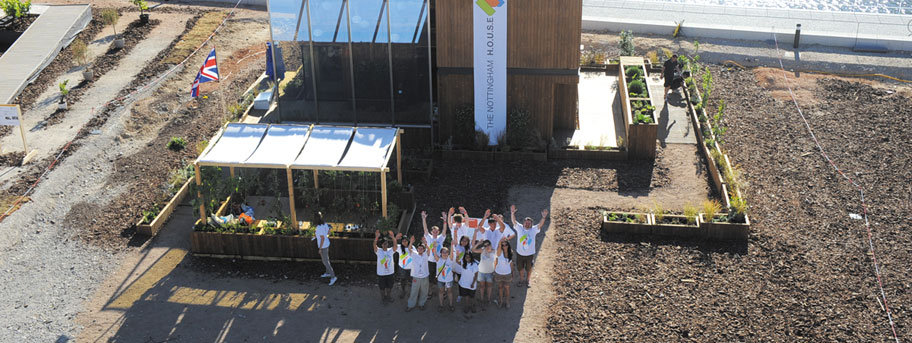
Architecture student Tom Corbett is half way through his six-year course in the Department of the Built Environment. He was part of the Solar Decathlon team.
“When I signed up for the Nottingham HOUSE team way back in October 2009, I did so in the knowledge that I was joining a chapter in the story of the project. The future promised construction, presentation and recognition — the ultimate goal being to celebrate the build for a month in the sun of Madrid, at the very first Solar Decathlon Europe competition. How little I knew…
“We learnt very quickly that the building site was a different world to the architectural studio. We learnt the need for the right resources, the rules for sharing those tools, and the power of delegation.
“The innovative design of the structure meant some tasks were alien to even the most experienced hands, so the first weeks of building were a little shaky. Inevitably there were some days we all left site frustrated, and more than a little dejected.
“Other days were perfect. Teams would naturally gather and synchronise almost poetically. Together we saw the stairs go in, the cladding fitted (then taken off, then fitted, then taken off…), the surfaces finished, and the cautious steps we’d taken on the first modules become giant leaps.
“I know my part in the story of the Nottingham HOUSE is over, but hopefully my legacy is left in the screws I drove into place and in the passion with which I spoke of the project. I know that I come away with endless experience in the world of construction — likely more than my peers will ever gain in their lifetimes as architects — not to mention in the arts of team organisation and public relations. Most importantly, I created not only a standing structure but unbreakable bonds with those that I did it with.”
“In nine months, some would choose to have a baby. I built a home.”
Posted in Features | Comments Off on Solar Decathlon Tom Corbett