

Campus News
Biting back
November 2nd, 2010
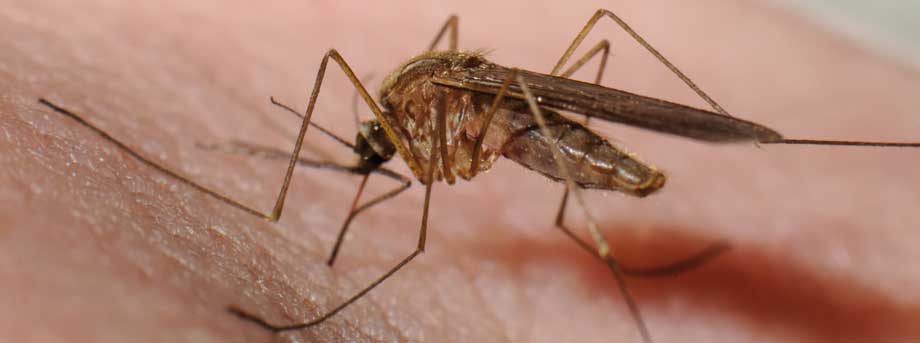
Malaria kills a million children each year. Research carried out at the University could help develop cheap and effective drugs to combat the disease.
Scientists have pinpointed the 72 molecular switches that control the three key stages in the life cycle of the malaria parasite — discovering that more than third of these switches can be disrupted in some way.
It marks a significant breakthrough in the search for cheap and effective vaccines and drugs to stop the transmission of a disease which kills up to a million children a year.
The research is funded by Wellcome Trust and the Medical Research Council (MRC) and is carried out at The University of Nottingham and the Wellcome Trust Sanger Institute.
Until now little has been known about the cellular processes involved in the development of this deadly disease. The research, published in the journal Cell Host & Microbe, involved the very first comprehensive functional analysis of protein kinases in any malaria parasite. It is also the largest gene knock-out study in Plasmodium berghei — a malaria parasite infecting rodents.
Dr Rita Tewari in the University’s School of Biology led the research. “Blocking parasite transmission is recognised as an important element in the global fight to control malaria,” she said. “Kinases are a family of proteins which contribute to the control of nearly all cellular processes and have already become major drug targets in the fight against cancer and other diseases.
“Now we have identified some key regulators that control the transmission of the malaria parasite. Work to develop drugs to eradicate this terrible disease can now focus on the best targets.
“This study shows how systematic functional studies not only increase our knowledge in understanding complexity of the malaria parasite development but also gives us the rational approach towards drug development.”
The life cycle of the malaria parasite is complex. Once the mosquito has feasted off infected blood, fertilisation takes place within the mosquito. The deadly parasites are then injected back into another host in large numbers when the mosquito bites again. Once inside its mammalian host the parasite first infects the liver where it replicates again. After 48 hours millions of parasites are released into the red bloods cells of its host where they attack in vast numbers overwhelming their host producing high fever and sickness.
Tags: Cell Host & Microbe, Dr Rita Tewari, Malaria, Medical Research Council, molecular switches, parasite, protein kinases, School of Biology, Wellcome Trust
Posted in Research | Comments Off on Biting back
“A pile of sweating jelly…”
November 2nd, 2010
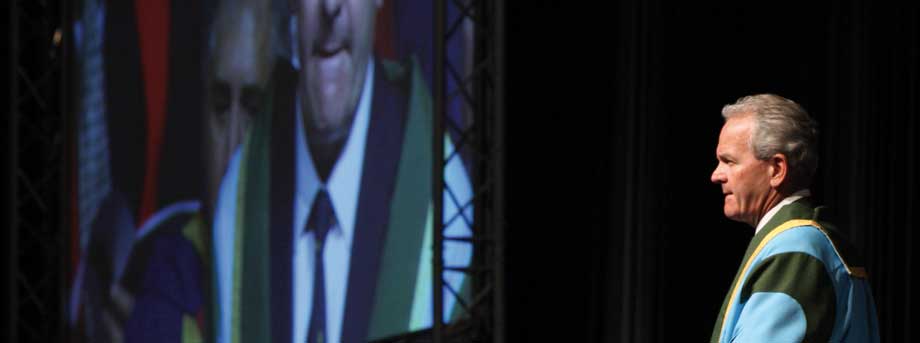
He’s been City Correspondent of The Sunday Telegraph, as well as City Editor, Assistant Editor and Sports Editor of The Sunday Times. He currently presents Jeff Randall Live, a business and politics show on Sky News. He’s also a columnist for The Daily Telegraph and former business editor at BBC News.
No wonder then that many of the questions addressed to alumnus Jeff Randall, the inaugural speaker at the newly-launched Students’ Union Forum, were on journalism. Students sought his opinions on the importance of the independence of student media and the best way to move from print to broadcast journalism.
He advocated radio as the best training ground for the latter. “On radio you need to combine great writing with the quality of projecting a voice and getting the cadences right,” he said.
“Also, you can look like a pile of sweating jelly and nobody can see you.”
Independent media are crucial to holding institutions to account — but they must be accurate and ready to stand by their story, he added. “All institutions should face scrutiny by the media,” he said, “Including the Students’ Union and the University. My view is good luck to the student journalists — if they find something wrong they should expose it.”
He also covered topics relating to his Nottingham degree — economics. The financial crisis, business, tax exiles and politics were broached, along with the recent Browne Review.
He was asked which politicians he admires – and which he doesn’t. Frank Field, MP for Birkenhead, was praised as: “A maverick — he ploughs his own furrow, you can never put him in a box.
”Politicians who aren’t genuine got short shrift, though he recognises that the current political climate isn’t kind to those who don’t toe the party line. Following a question from the floor, Jeff recognised China as a political and economic powerhouse whose infl uence would only grow in the future — with corresponding opportunities for UK graduates.
“If I was looking at starting university now I would come to Nottingham and do Economics with Chinese Studies,” he said. “And if I had the nous I would sign up for a Mandarin course. When I finished, banks and fi nancial institutions would be queuing up to give me a job.”
For more information on the The Students’ Union Forum visit www.su.nottingham.ac.uk or get in touch with Will Bickford Smith at sueducation@nottingham.ac.uk
Tags: economics, Jeff Randall, Students' Union
Posted in News | Comments Off on “A pile of sweating jelly…”
Sports success
November 2nd, 2010

Five past and present Nottingham students excelled at this year’s Commonwealth Games, as part of the England team which fi nished third at the tournament in Delhi.
Our swimmers, hockey players and cyclists overcame the heat, vociferous home support and the much publicised ‘Delhi belly’ infection to shine during two weeks of international competition.
Biochemistry student Jess Sylvester led the women’s 4x100m freestyle relay team to a silver medal in the pool.
Following her race, Jess said: “I was really pleased with the effort as it is the first time I’ve ever done the last leg. I enjoyed it but the Aussies were too far ahead by the time I swam, we were trying to push for gold but it was always going to be a tough race.”
Law graduate (2010) Katherine Wyld, who was due to be a part of the same team, was unfortunately unable to swim in the final due to the recurrence of a knee injury.
History student Nick Catlin and Industrial Economics graduate (2003) Rob Moore, guided the England team into the semi-finals of the men’s hockey competition, but were powerless to prevent their side from leaving India empty-handed.
The curse of the penalty shoot-out denied the team a place in the final, before costing them a bronze medal in the third versus fourth team playoff against New Zealand. The competition ended a successful season for the team, who also came fourth at the Hockey World Cup in March. Biology graduate Sharon Laws (1996) was celebrating as part of the cycling team, which helped Lizzie Armistead claim a silver medal in the women’s road race.
Following the Games, Director of the Department of Physical Recreation and Sport, Dan Tilley, was delighted with the achievements of the University’s athletes and believes that with continued investment Nottingham will be able to attract more high calibre athletes in the future.
He said: “The University does its utmost to provide a balanced environment which allows students to achieve both their academic and sporting potential, therefore it is great to see our students realising this. These athletes are fabulous role models and ambassadors for the University and will hopefully inspire others to aim for these lofty heights.”
Tags: alumni, Commonwealth Games, Department of Physical Recreation and Sport, hockey, Jess Sylvester, student, swimming
Posted in News | Comments Off on Sports success
Research on the front line
November 2nd, 2010
Ambitious plans by researchers at The University of Nottingham to use the latest sophisticated scientific techniques in the fight against healthcare-acquired infections are a step closer, thanks to a charity event which has raised more than £26,000.
Researchers at the University’s Centre for Healthcare Associated Infections (CHAI), the country’s leading research institute studying the spread of superbugs, plan to use the cash injection towards funding their programme of next generation genome sequencing.
The £26,500 will contribute to the centre’s ultimate fundraising goal of £1.4 million. The research will focus on the study of clinical strains that cause serious infections such as Methicillinresistant Staphylococcus Aureus (MRSA), Clostridium diffi cile and Pseudomonas aeruginosa, a gram-negative bacteria which is particularly dangerous to those with weak immune systems, such as babies and young children.
Prof Richard James, Director of CHAI, said: “This important research will examine the genetic differences between these different strains of superbug which will give us a greater insight into the mechanisms they use to multiply and attack the human body. It will be instrumental in helping us to develop rapid diagnostic tests for the detection of these evolving pathogens.
“The support of fundraising events such as this is vital in providing us with a cash lifeline to underpin research, at a time when the future of funding from central government is uncertain. Unlike other medical causes such as cancer, there is currently no national charity dedicated to raising money to fund research into these deadly bacteria.”
The gala dinner and charity auction held at the Royal Automobile Club on London’s Pall Mall saw exclusive lots going under the hammer in support of CHAI, including a pair of Debenture tickets for the opening day of Wimbledon 2011, the chance to tour the BBC studios and watch the national TV news air live and a haircut with celebrity stylist Trevor Sorbie.
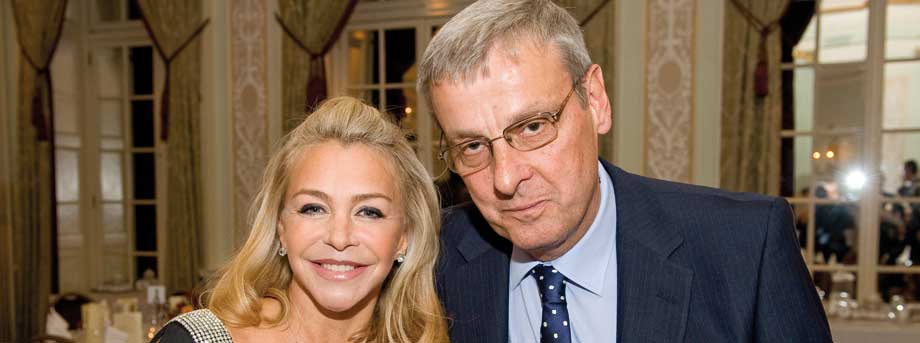
The event was attended by CHAI’s patron Leslie Ash, the actress who suffered irreversible health problems after contracting MSSA, a strain of MRSA, six years ago. Host for the evening was journalist and ITN newscaster Alastair Stewart who told the gathered supporters that his colleagues had come face-to-face many times with the sadness and tragedy caused by healthcareacquired infections.
“This is an enemy that does not stand still and does not rest on its deadly laurels, with a death toll of 37,000 killed in the last 10 years,” he added. “To extend the military metaphor further, bacteria have an enormous and rapid capacity for change to meet any challenge thrown at them. They’re wily enemies, expert and camoufl age, hyper-fast in responding to a changing tactical situation, exploiting every weakness immediately.
“And in this war, they’re often at least one jump ahead of their major enemy — us. Already they’ve extended their attack, out of the healthcare setting and into the community. But now they have an elite, special forces unit to deal with — CHAI.”
Donations can be made via the CHAI website at www.hcai.nottingham.ac.uk
Tags: Centre for Healthcare Associated Infections, Leslie Ash, MRSA, Prof Richard James
Posted in Research | Comments Off on Research on the front line
Paines Plough and Liverpool Everyman and Playhouse present Tiny Volcanoes
November 1st, 2010
Date: Friday 5 November
Time: 8pm
Venue: Djanogly Theatre, Lakeside
Arts Centre, University Park
Admission: £12, £9 concessions, £5
restricted view
Posted in Theatre and Dance, What's On | Comments Off on Paines Plough and Liverpool Everyman and Playhouse present Tiny Volcanoes
Little Angel Theatre Company presents Handa’s Surprise
November 1st, 2010
Date: Sunday 7 November
Time: 11.30am, 12.30pm, 2.30pm, 3.30pm
Venue: Djanogly Theatre,
Lakeside Arts Centre, University Park
Admission: all tickets £6
Posted in Theatre and Dance, What's On | Comments Off on Little Angel Theatre Company presents Handa’s Surprise
Dance4 presents Candoco Dance Company: Renditions
November 1st, 2010
Date: Tuesday 23 November
Time: 8pm
Venue: Djanogly Theatre,
Lakeside Arts Centre, University Park
Admission: £15, £12 concessions, £9
restricted view
Posted in Theatre and Dance, What's On | Comments Off on Dance4 presents Candoco Dance Company: Renditions
Icarus Theatre Collective and Harrogate Theatre present Hamlet: Prince of Denmark
November 1st, 2010
Date: Friday 26 and Saturday 27 November
Time: 8pm
Venue: Djanogly Theatre,
Lakeside Arts Centre, University Park
Admission: £15, £12 concessions,
£9 restricted view
Posted in Theatre and Dance, What's On | Comments Off on Icarus Theatre Collective and Harrogate Theatre present Hamlet: Prince of Denmark
Icebreaker
November 1st, 2010
Date: Wednesday 3 November
Time: 8pm
Venue: Djanogly Theatre, Lakeside Arts
Centre, University Park
Admission: £15, £12 concessions,
£9 restricted view
University Wind Orchestra and University Brass Ensemble
November 1st, 2010
Date: Sunday 14 November
Time: 7.30pm
Venue: Great Hall, Trent Building, University
Park
Admission: £8, £5 concessions,
£4 UoN student
Posted in Music, What's On | Comments Off on University Wind Orchestra and University Brass Ensemble