

Campus News
Safer doesn’t always mean slower
January 14th, 2011

New research has found that safer doesn’t always mean slower when it comes to motorcyclists.
The study, at the University’s Centre for Motorcycle Ergonomics & Rider Human Factors, found that formal advanced training can boost safety.
The preliminary findings have been published by the Institute of Advanced Motorists (IAM), which funded the research.
As of June 2010, 21 per cent of UK road fatalities were riders, despite motorbikes making up less than four per cent of vehicles. Car drivers typically cause two out of the three most common motorcycle accidents in the UK, but many are caused by riders themselves.
Researchers investigated attitudes, behaviours and skills to establish whether those with advanced training ride differently to novices or experienced riders without advanced training.
The simulator uses a Triumph Daytona 675 motorcycle mounted on a custom rig designed and built at the University. The ‘STI-SIM Drive’ simulation software put riders through identical scenarios to test hazard perception and behaviour.
Researchers found that experience alone does not make riders safer. Advanced riders used better road positioning to anticipate and respond to hazards, kept to speed limits, and made better progress through bends than riders without formal advanced training.
Dr Alex Stedmon, from the Human Factors research group, said: “This is one of the most in-depth studies of its kind. It’s been a fantastic opportunity for us in the Faculty of Engineering to work alongside colleagues in the School of Psychology focusing on high-impact research. It’s demonstrated clear differences between rider groups and potential benefits to advanced training above and beyond rider experience and basic training.
“While experience seems to help develop rider skills to an extent, advanced training appears to develop deeper levels of awareness, perception and responsibility. It also appears to make riders better urban riders and quicker, smoother and safer riders in rural settings.”
Dr David Crundall, from the School of Psychology, added: “This is real cutting-edge research and the hazard perception results, in particular, have shown that advanced riders were quicker to identify hazards and had a greater awareness on their responsibility to themselves and other road-users.”
Neil Greig, IAM Director of Policy and Research, said: “We were pleased to learn that advanced riders trained by us adopted the safest road position to deal with hazards while still managing to achieve the quickest time through bends. This research proves that the IAM’s advanced system of motorcycle training delivers real and sustainable benefits.”
Tags: Centre for Motorcycle Ergonomics & Rider Human Factors, Dr Alex Stedmon, Dr David Crundall, Human Factors research group, Institute of Advanced Motorists, School of Psychology
Posted in Research | Comments Off on Safer doesn’t always mean slower
Research is child’s play
January 14th, 2011
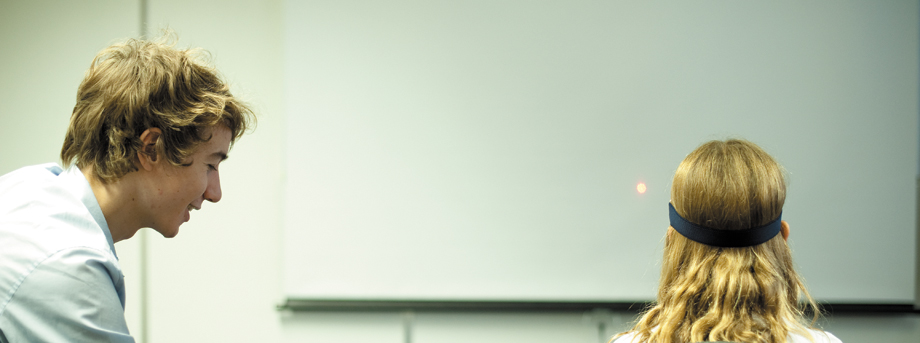
This year’s Summer Scientist Week again allowed researchers to discover more about how children develop and learn. Researchers and students from the Human Development and Learning Group in the School of Psychology and the Learning Sciences Research Institute (LSRI) worked with the local community.
The event has grown rapidly since its launch in 2007; many of this year’s families had either been before or came on the recommendation of a friend. The event was attended by 278 four to 11-year-olds and their parents.
Children took part in fun exercises, such as The Great Cake Switch, Millions of Marbles, Crack the Code and Imagine That. In Millions of Marbles, researchers investigated how four to six-year-olds understand numbers presented in different ways, for example, “FIVE”, “5” and “…..”. Children had to decide which of two characters had the most marbles, with quantities shown in different ways.
The data helped researchers understand how children connect digits to approximate quantities. In Imagine That, children learned the location of objects in a room with a central character.
Researchers assessed their memory for the locations and asked them to imagine the character turning to face the objects.
Researchers wanted to know whether children constructed a mental image of the room from their own perspective or from an imagined perspective of the central character. Responses indicated that children spontaneously slipped into the shoes of the character, which takes a huge step further in understanding imaged scenes and helps explain how children are very good at this.
A total of 91 families responded to a follow-up questionnaire, representing 140 of the children who attended, with 73 per cent rating the experience as “very positive” and 27 per cent “positive”; 100 per cent would recommend the event to a friend and 84 per cent said it had improved their understanding of psychology and research.
The organising committee was helped by three undergraduates on intern placements — one Nottingham student supported by the Alumni Annual Fund and two from Loughborough University by widening participation internships from the School of Psychology. This allowed researchers to collect additional background information about the children to complement the research data and provided the students with work experience and an insight into a research career.
The week was supported by a grant from the University’s Annual Funds, contributions from the School of Psychology, LSRI, MRC Institute of Hearing Research and Bayard Magazines. One eight-year-old said: “We really enjoyed it, all the activities no matter how long they were! I can’t wait for next year!”
Visit www.summerscientist.org for details.
Tags: Alumni Annual Fund, Human Development and Learning Group, Learning Sciences Research Institute (LSRI), LSRI, MRC Institute of Hearing Research, School of Psychology, Summer Scientist Week
Posted in Research | Comments Off on Research is child’s play
Election 2010 blog scoops award
January 14th, 2011
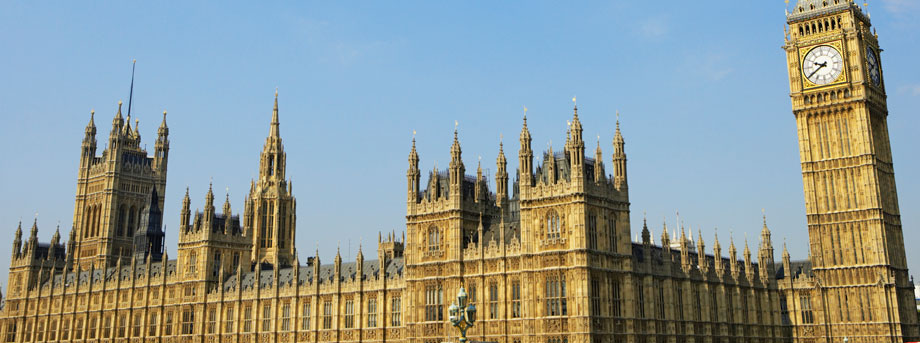
An influential Election 2010 blog created by experts from the School of Politics & International Relations and The University’s Communications Team has won the national Some Comms Award for Best Low Budget Campaign.
The social media campaign featured original expert opinion and analysis written by School of Politics’ academics and published online by Communications and Marketing.
At a cost of little more than £1,400, the campaign reached an estimated 46m people worldwide — coverage valued at over £4m.
The campaign aimed to promote the School of Politics and International Relations and its Centre for British Politics as a definitive source of expertise.
The blog won coverage from The Guardian, The Independent on Sunday, the BBC, Sky, Evening Standard, the Wall Street Journal and USA Today.
Articles swiftly moved from online into print and back again, multiplying as election fever escalated and inviting the roll-out of opinion, commentary and thought-leadership pieces.
The British Library has added the blog to its UK Web Archive for future research — demonstrating its clear influence alongside mainstream media coverage. As of May 23 it was — and still is — the No. 1 Google search result for “election 2010 blog”.
During the election, the term generated 106,000,000 results in 0.20 seconds. The blog was ‘highly commended’ in the category Most Innovative Use of New Media at the How-Do Public Services Communications Awards in November, shortlisted in two categories: Most Innovative use of New Media and Best Low Budget Campaign. It was also shortlisted for Best Use of Digital PR in the CIPR PRide Awards (Midlands) 2010.
See the blog at: http://electionblog2010.blogspot.com.
Tags: Best Low Budget Campaign, British Library, Centre for British Politics, CIPR PRide Awards, Communications, How-Do Public Services Communications Awards, School of Politics & International Relations, Some Comms Award, UK Web Archive
Posted in News | Comments Off on Election 2010 blog scoops award
Arise, Sir Peter
January 14th, 2011
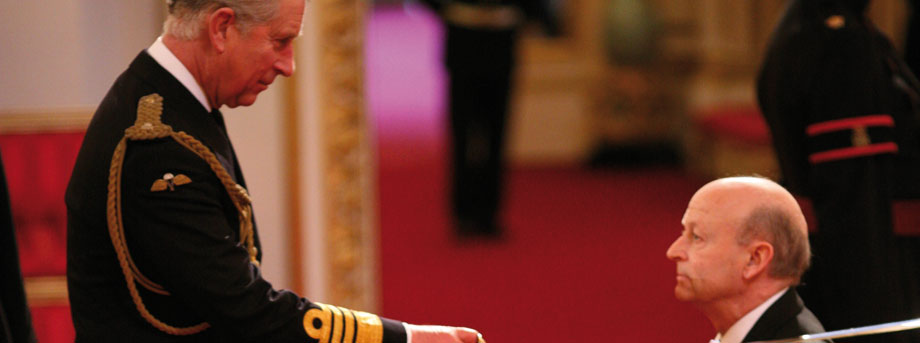
A leading University of Nottingham medical professor has received a knighthood.
Professor Sir Peter Rubin was honoured for his distinguished services to medicine both locally, as a practising NHS clinician and Boots Professor of Therapeutics at the University, and nationally, as Chairman of the regulatory body, the General Medical Council (GMC).
As Dean of the Faculty of Medicine between 1997 and 2003, Sir Peter was a pioneer of modern medical and veterinary education at Nottingham, leading the foundation of the Graduate Medical School at the Royal Derby Hospital and the School of Veterinary Medicine at the University’s Sutton Bonington campus.
He is a specialist in clinical pharmacology especially in the fields of high blood pressure and medical problems in pregnancy. Despite this high-profile role, setting standards for medical education and practice with the GMC, he still works as clinical academic at the University and as honorary consultant in Nottingham.
Prof Sir Peter Rubin said: “Receiving a knighthood is a wonderful honour. Over the years it has been tremendous to work with some wonderfully talented people, leading change in a variety of areas, both locally and nationally. But first and foremost I am a doctor and I have had the privilege of touching and changing lives.”
Prof Sir Peter Rubin has held other high-profile roles, including Board member of the Higher Education Funding Council for England.
As Chairman of the GMC Education Committee and of the Postgraduate Medical Education and Training Board, he has led major changes in medical education. He has also chaired Medical Research Council steering groups forging new treatments for the pregnancy disorder, pre-eclampsia.
Prof David Greenaway, Vice-Chancellor, said: “The investiture is a thrilling occasion for Peter and a proud one for the University. I know that colleagues will join me in wishing him the warmest congratulations. As well as practising medicine in the city and helping to lead the profession on the national stage, he continues to play a key role in training future generations of medical professionals. Peter’s contribution to The University of Nottingham and to medicine and public health more widely, has been outstanding over a period of more than 20 years.”
Tags: Faculty of Medicine, General Medical Council, Graduate Medical School, Postgraduate Medical Education and Training Board, Prof David Greeenaway, Professor of Therapeutics, Professor Sir Peter Rubin, School of Veterinary Medicine
Posted in News | Comments Off on Arise, Sir Peter
University hits £10m savings target
January 14th, 2011

The University’s three-year Savings & Efficiency (S&E) initiative has achieved its first-year savings target of £10m.
This success is in no small part down to all those who have submitted ideas, implemented efficiencies within their teams and departments and helped drive the initiative forward.
The University moves into the second year of the initiative in a strong financial position. As the Vice- Chancellor Professor David Greenaway explained in his recent statement, we are in a time of unprecedented uncertainty, navigating our way through the implications of the Browne Review on student contributions and the impact of the Coalition Government’s Comprehensive Spending Review. Maintaining a strong financial position is vital in steering the University through these times – particularly if it is to continue its investment in world-class teaching and research.
During years two and three, the University will seek to identify further ways to achieve its £17m and £25m saving targets. The foundations for this work are already in place, with a strong focus on procurementrelated activity.
In phase one of its project, the Procurement Working Group has delivered recommendations for future procurement strategy, identifying a potential £6.7m savings opportunity between 2010/11 and 2013/14.
Shaping and managing the project to deliver these potential savings will be a pivotal role for the Director of Procurement, who joins the University in the New Year. Work has started on a significant new ‘Lean’ initiative, examining University processes to remove inefficiency and waste, creating ways to do more with less. A pilot will allow the scheme to be evaluated before deciding whether further projects will be developed in academic and non-academic areas.
Meanwhile, The University is developing its S&E strategy for 2011/12.
“The S&E Task Force is hugely grateful for your participation and support of our projects and I hope that you will continue to embrace this work as enthusiastically as you have so far,” said Professor Saul Tendler, Pro-Vice-Chancellor for Teaching and Learning.
Further information, including presentations, policy and communications, can be found on the S&E workspace: http://workspace.nottingham.ac.uk.
Tags: Browne Review, Comprehensive Spending Review, Director of Procurement, Prof David Greeenaway, Prof Saul Tendler, savings and efficiency, Vice Chancellor
Posted in News | Comments Off on University hits £10m savings target
Chance to shape the future
January 14th, 2011

Students will have the chance to help shape the future of their University with the launch of this year’s National Student Survey (NSS) in early February.
NSS is a census of students in the final year of a course leading to undergraduate credits or qualifications. It is an opportunity to give your opinions on what you liked about your time at your institution as well as things that you felt could have been improved.
The quality of teaching, facilities and the student experience will all be considered, with the feedback influencing any future improvements that the University and individual Schools may decide to put in place.
Last year, Nottingham jumped 12 places up the NSS league table — from 42nd to 30th — and has its sights set firmly on a Top 20 position this year.
The University has joined forces with the Students’ Union to create the Proud To Be campaign, aimed at raising the profile of its achievements and improvements and encouraging more students to have their say on the University’s future.
Feedback from previous surveys has led to various changes, including: a requirement for exam feedback, a 28-day limit for the return of coursework, the creation of Student Services Centres at Jubilee and Sutton Bonington campuses and the launch of the Nottingham Advantage Award, an extra-curricular scheme aimed at improving students’ employability.
Pro-Vice-Chancellor for Teaching and Learning, Professor Saul Tendler, has stressed the importance of using the survey to help influence the future.
Prof Tendler said: “While the NSS informs the outside world of what we have achieved, it also gives us scope to evaluate what we are doing and to make alterations or improvements where they can be seen to enhance student learning.”
Each department is required to get at least 50 per cent (or a minimum of 23) of final-year undergraduates to complete the survey, and Schools have been asked to promote the survey in lectures and via other channels, to encourage their students to speak up. Each student will be contacted individually to encourage them to complete the survey, which is administered by Ipsos MORI, an independent market research agency.
The opportunity to get a clear picture of students’ expectations is likely to become even more important with the impending increase of tuition fees. Prof Tendler said it is essential that students see their views being heard, taken seriously and, where appropriate, acted upon.
“The University has always aspired to provide excellence in education, and in so doing, meet the expectations of our students whatever course they are studying, background they are from or indeed whatever their fees status,” said Prof Tendler.
“Potentially moving to a world of increased tuition fees should not alter that fundamental principle although perhaps what might change is the need to articulate our vision even more clearly to our students, both current and potential.”
The NSS results will be fed back to individual Schools at the beginning of the next academic year.
Tags: National Student Survey, NSS, Prof Saul Tendler, Proud To Be
Posted in News | Comments Off on Chance to shape the future
Students smash £1.4m barrier
January 14th, 2011

Students at The University of Nottingham have raised a record-breaking £1.4m for charity this year.
Last year, Karnival — the Students’ Union fundraising organisation — became the fi rst in the UK to smash the £1m barrier.
This year’s figure was announced at the Karnival Snowflake Ball in December. Student challenges raised more than £630,000 for Childreach International, with challenges including a Great Wall of China trek and an ascent of Mount Kilimanjaro.
Traditional fundraising activities, such as rag raids, 7-Legged, Mr & Miss Nottingham and The Snowflake Ball also boosted the total, with the proceeds of those events going to local and national charities, including the Poppy Appeal (£85,000), Breast Cancer Campaign (£50,000), The Meningitis Trust (£31,000), and Link Community Development (£52,000).
Karnival Director Sam O’Flaherty paid tribute to the hard work and dedication of the Karni committee and reps, and all those who donated time or money.
He said: “Karnival’s total shows that students at Nottingham are more philanthropic, hard-working and outgoing than students at any other university in the country. “What other university has students that collected £50,796 for the Poppy Appeal in one day after waking up at 5am after a torrid night’s sleep on a school gym floor? What other university has over 200 students that climbed up Mount Kilimanjaro this summer to raise almost £400,000 for children in developing countries? None.
“No other university has students like those at Nottingham and it is because of these students that Karnival has cemented its title as the ‘largest student-run RAG organisation in Europe’.”
Tags: Karnival, Sam O'Flaherty, Students' Union
Posted in News | Comments Off on Students smash £1.4m barrier
Jason’s resolution pays off
January 14th, 2011

Ex-submariner Jason Tomlinson left school without any qualifications — and is now facing the challenges of undergraduate life as a mature student at The University of Nottingham.
His determination to succeed has just been rewarded with a highly sought-after Helena Kennedy Foundation Award worth £1,500.
“The importance of the bursary is beyond measure,” said Jason, who served in the Royal Navy as an electrical marine engineer on board HMS Resolution, a Polaris submarine.
“Starting university can be extremely overwhelming. This bursary not only helps out financially but re-affirms the belief that all the effort is worthwhile.”
Jason’s award is funded by The University of Nottingham and was presented to him at the House of Lords by human rights lawyer and President of the Foundation, Baroness Helena Kennedy, QC.
Baroness Kennedy said: “This award recognises Jason’s huge achievement in reaching university against the odds. Each student who receives an award has been selected because they are special and have shown real talent and determination.”
Jason, who’s married with two children and lives in Derbyshire, is in his first year of a BSc (Hons) Biochemistry degree. He left school at 16 and joined the Royal Navy before going on to work in several factories.
“I watched my IQ drop by the second,” he said. “Finally, at the age of 36, I decided to get off my backside and change my situation. I took redundancy and started an Access course at Chesterfield College. With a lot of effort and some luck, two years later I find myself at The University of Nottingham.”
Dr Penelope Griffin, Head of Widening Participation at The University of Nottingham, said “I’m delighted that Jason has received this award in recognition of his achievements. Returning to education after a long gap is difficult, and all the more so while balancing studies with family responsibilities. Jason’s success in gaining a place on this very competitive course is remarkable.”
The Helena Kennedy Foundation works with colleges and universities to support access to higher education through bursaries, mentoring and work placements.
The University of Nottingham has an active outreach programme to encourage young people and mature learners to progress to university, which reaches more than 22,000 learners annually. Last year the University provided more than £6m in bursaries to low-income students.
Tags: biochemistry, Dr Penelope Griffin, Outreach Programme, The Helena Kennedy Foundation, Widening Participation
Posted in Features | Comments Off on Jason’s resolution pays off
GB honour for Thomas
January 14th, 2011

Student Thomas Green is to represent Great Britain at the IPC World Athletics Championships 2011 in New Zealand.
Thomas is a F32 Club Thrower and is already ranked in the World F32 Top 10 — despite only taking up the sport in 2005. Clubs — similar to a weighted baseball bat — are designed for those who are unable to throw a javelin.
He came an impressive fourth in the Paralympic World Cup in Manchester in March, losing out only to the Beijing gold, silver and bronze medallists.
And with a personal best of 28.88 metres set this summer, Thomas is confident of a strong performance in the championships in Christchurch, which run from 21 to 30 January.
He said: “It was a huge shock when I got the call from my performance manager to confi rm my selection. I’ve thrown for Great Britain three times now, and the thrill of being selected doesn’t diminish, but being selected for a major championship is something else. I am relishing the chance to get experience on such a stage.”
Thomas, who has cerebral palsy, is making good use of the University’s indoor sports facilities, with his dad and coach, Ken.
“The University has been very supportive of me and my athletics commitments. The staff at the Sports Centre are very keen to assist me in any way they can, and I’ll no doubt take advantage of the Any-Buddy Scheme as I continue training. This is all helped by the University’s very positive attitude towards disabled sport.”
Sports Disability Officer Hannah Webber said: “Thomas is an outstanding disabled athlete and definitely a star of the future. As a University we are proud to be supporting him through the Sports Bursary Scheme and by facilitating some of his training.
“As well as adapting to life away from home, Thomas has started to really develop and flourish as an athlete and a student, achieving personal bests on the field and in the ‘classroom’. He is a great sporting ambassador for the University and we wish him luck in his first world championships. Go Thomas!”
Thomas, who’s in his second year of a Mathematics degree, will be writing a blog in the run-up to the championships. Visit http://tiny.cc/33qrz.
Tags: Any-Buddy Scheme, Hannah Webber, IPC World Athletics, paralympic, Thomas Green
Posted in News | 1 Comment »
The long and winding road…
January 2nd, 2011
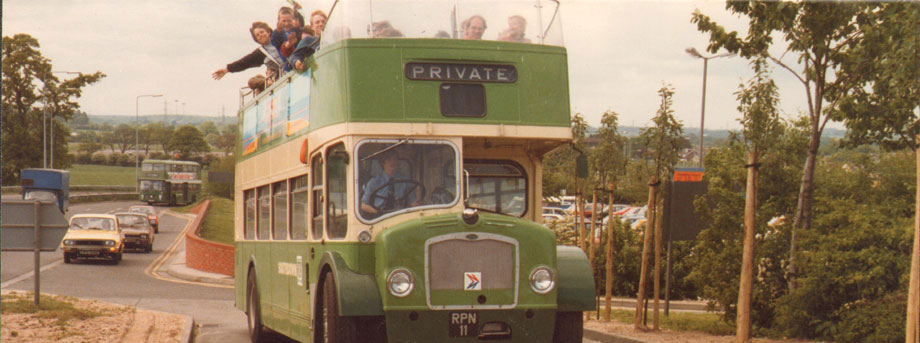
The road which has taken Dr Susan Townsend from a council estate to published academic may not have followed the most traditional route but it’s been an eventful journey.
Dr Townsend’s stops along the way have seen her career choices overcoming gender stereotypes during stints as a physical training instructor (PTI) for the Women’s Royal Navy Service and as one of the first female bus drivers in the south of England.
Now, her research at Nottingham has brought her full circle, marrying her interest in transport with her academic area of expertise for a study comparing the cultural and environmental impact of car ownership on the cities of Birmingham and of Nagoya in Japan.
“I’ve been obsessed with driving ever since I first passed my test at the age of 18,” said Sue. “The idea of the open road really appealed to me; being cooped up indoors all day was my worst nightmare.”
But her 20-year road trip from a Wolverhampton council estate to the leafy University Park campus almost stalled before it started. After failing her 11-plus, Sue went to the local secondary modern. She left in 1972 with three A-levels (a C and two Es) and settled for a safe but dull office job in local government. Her career could have taken a different path. “I stuck it out for two years, but I was bored out of my skull!” she said.
When the opportunity arose to join the Wrens — Women’s Royal Navy Service (WRNS) — as an education assistant, she seized it. It coincided with a time of huge transformation for the service. Radical developments led to the formation of the Physical Training Branch in 1977. Sue was among the first cohort of women to train to become a Physical Training Instructor. She specialised in the martial arts — judo, aikido and okinawan karate, a very traditional form of the sport which jumpstarted an enduring passion for Japanese philosophy and culture.
After four happy years, it would have been easy for Sue to sign up for a further period of service; the top brass made no secret of the fact that they believed her officer material. But the open road still called and Sue set about working towards another longstanding ambition — to become a long-distance lorry driver. She was advised to start with buses and began training for a PSV licence at the wheel of a 1940s’ Leyland PD2 bus, with frog-eye lamps. Pre power-steering, controlling such a vehicle demanded peak physical fitness. And, as one of the first woman bus driver-conductors in the south of England, with Southdown Motor Services, Sue and her female colleagues didn’t always receive the warmest of welcomes.
Sue said: “It was one of the few jobs in the 1970s that offered equal pay for women — a man’s wage. But it was hard work. We would start anywhere between 4am and 4pm. Although most of the fleet had semi-automatic gears, only around half had power steering and some were still ‘leg and lever’ with heavy clutches and gearsticks.
“There was still a lot of resistance to female drivers. Some inspectors would give us the heaviest, coldest buses to drive but in those days you didn’t shout about discrimination. It became a point of pride and all of us girls had a secret pact that we would never complain because it was so important for us to prove ourselves.
“The passengers were generally supportive. I only had one occasion where a man told me that I was taking the bread out of the mouths of another man’s family. The female passengers on board soon put him in his place! It was a driving force because in those circumstances you have no choice but to do the job and do it well.
“We did turn heads I used to get people stopping on a zebra crossing stunned to see a woman behind the wheel, and one colleague actually saw a motorist drive into a bridge because they were so busy staring.”
The late 80s brought privatisation to the service and new horizons for Sue. She went back into education, achieving a first in BA (hons) History and Literature from Staffordshire Polytechnic before taking a diploma in Japanese language and spending a year in Kobe.
She returned to England to do a PhD in Japanese history at Sheffield University. After years of working in a man’s world, a prestigious post-doctoral fellowship from the British Academy took her to the women-only New Hall College (now Murray Edwards) in Cambridge. She came to Nottingham in 1999 as a lecturer, while continuing her studies into leading Japanese thinkers.
But it’s her latest project which has enabled her to reconnect with her roots; a three-year partnership with Prof Simon Gunn at Leicester University, funded with more than £150,000 from the Leverhulme Trust, to compare how the car has helped shape the modern ‘motor’ cities of Birmingham and Nagoya (in Japan).
Sue said: “Both are regional capitals: Nagoya is in the Chukyo area which literally translates as The Midlands and both were reconstructed after the Second World War around the car, with pedestrians being mostly sidelined. Birmingham became notorious for its Inner Ring Road including the Queensway and was home to Austin and British Leyland. Nagoya is unique in having two 100 metre-wide boulevards criss-crossing its centre, and is the home of Toyota.
“There has been a lot of study around Toyota, Honda and Nissan, all the great car manufacturers, but virtually nothing on the coming of the automobile and car ownership. It’s a huge consumer item which has changed our lives and the cities that we live in, both in terms of the physical aspects of the city such as suburbanisation and our leisure pursuits. We will also be looking at what it has done to us as people and the way in which the car has affected our view of the urban and natural environment.
“Essentially, the project is about something which really resonates with me on a personal as well as academic level: how does our view of the world change when seen through a car windscreen?”
Posted in Features | Comments Off on The long and winding road…