

Campus News
It’s amazing
September 2nd, 2011
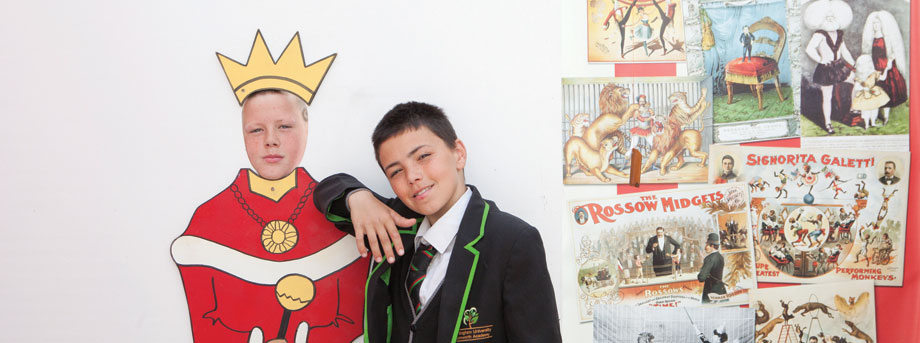
It’s about as far from a traditional classroom as you can get — a giant maze-like structure that fashions itself on a curious hybrid of fairground ride, carnival sideshow, encyclopaedia and art installation.
But Nottingham University Samworth Academy (NUSA) in Bilborough, Nottingham, used this quirky ‘learning environment’ to harness the curiosity and wonder of its pupils to boost their literacy levels.
NUSA’s Agent of Wonder and project leader Matthew McFall described it as “an intricate puzzle box but on a giant scale.”
He added: “We wanted something that would help the pupils to improve their literacy but not in a really obvious or boring way. Literacy is not just about reading and writing, it’s about the world which harnessing those skills can open up to you. We wanted to bring a flavour of that world into the maze in a concept that would excite and inspire the pupils.”
The walls of the 16ft by 32ft maze featured an array of the weird and wonderful covering the broad spectrum of the curriculum. However, instead of being divided into subjects, each panel featured a display on a broad topic, such as communication, which looked at the use of heraldry through history, codes, shorthand, hieroglyphics and early languages.
The maze was divided into areas including the Realm of Science, the multi-mirrored Infinity Room and the Transformation Suite in which pupils used a UV light lamp to reveal hidden words. The Wishing Tree offered pupils time for reflection, while a life-size rendering of a lion allowed young artists to learn about form and perspective.
And, recognising that the most popular part of many a child’s attraction is the gift shop, pupils built up credits in the maze which they exchanged for items from the shop, such as small puzzles and activity sheets.
The concept of the maze began last year when NUSA put in a bid for funding through the Creative Partnerships programme, an initiative which aims to bring creative workers such as artists, architects and scientists together with schools to inspire pupils and promote learning.
NUSA’s Wonder Room — a modern cabinet of curiosities which gives pupils access to obscure artefacts and objects to explore the world around them — was the inspiration of the maze. Pupils contributed words such as ‘drama’, ‘jokes’, ‘beauty’, ‘darkness’ and ‘illusions’ to help shape the maze. Artists took part in a maze Factor-style day, presenting their vision for the project. Designer Florian Kremb, storyteller Kat Quatermass, installation artist Graham Elstone, graphic designer Ruth Disney and scenic artist Tom Cleaver won over staff and pupils.
NUSA’s science teacher Danny Collison, technician Steve Amos and classroom assistant Shelley Hawley, a former theatre sets designer, also worked on the project.
The maze — which was in an area known as The Street — can be disassembled and reassembled as needed. Display panels are secured with Velcro fastenings, so they can be updated as the pupils’ interests and learning evolves.
Richard Clark, chief executive of The Mighty Creatives, said, “It has been a delight and an inspiration to work with Nottingham University Samworth Academy. Through this Creative Partnerships project, a maze, a classroom, an installation and museum have all combined to make an extraordinary learning space — one of infinite possibility. The project is proof that when children and adults work together using their imaginations, learning becomes hugely memorable and exciting for all. Congratulations to everyone involved in the creation of a masterpiece.”
NUSA is one of the UK’s first academies to have direct sponsorship from a university, in partnership with businessman and philanthropist Sir David Samworth. The £24m state-of-the-art building, on the site of the former William Sharp School in Bilborough, was opened last year by Olympic gold-medal winner Dame Kelly Holmes.
Tags: Matthew McFall, Nottingham University Samworth Academy (NUSA), NUSA
Posted in Features | Comments Off on It’s amazing
Fringe benefits…
September 2nd, 2011
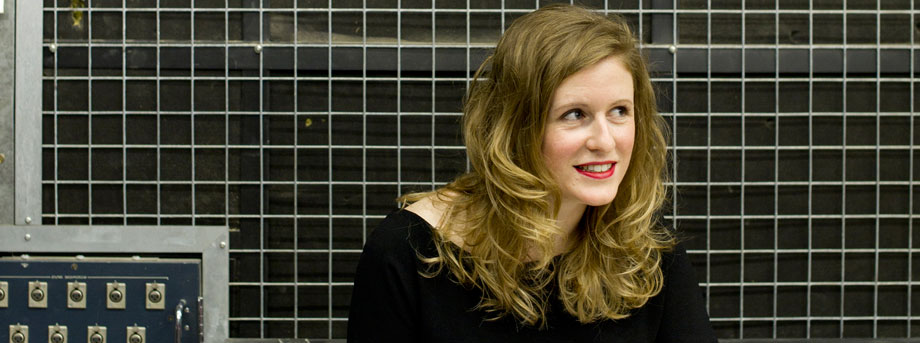
How long does a fledgling writer need to draft an outline for a play worthy of the world’s biggest arts festival?
University copywriter Jane Upton scribbled the opening lines of her monologue in just 30 minutes at the end of a two-day play-writing workshop.
Fast-forward a year and Jane’s hard-hitting play, Bones, has just gone down a storm at the Edinburgh Fringe, as well as bagging the cover of the Fest magazine, which said:
“Bones, Jane Upton’s hard-hitting Nottingham-set drama, has proved to be one of the Fringe’s most prescient plays on modern Britain.”
Other reviews included:
“The play is often harrowing but while Upton doesn’t altogether avoid cliché, her writing is accomplished in the way it uses detail, in the way it takes such uncomfortable material and opens it up, finds new paths through it.” (Exeunt)
“Jane Upton’s taut, compelling monologue is a harrowing but sympathetic portrait of a damaged young man.” (Stage Edinburgh)
“Bones is ultimately an intense, unsettling and very rewarding piece.” (Edinburgh Festival Guide)
“Bones is about a 19-year-old lad who’s trying to work out how he fits in the world,” explains Jane. “He’s had a horrible life and is at a crucial crossroads in his life. He has to make a decision that could change things for him and his mum forever. Bones is about why he acts the way he does and where he ends up as a result.”
The monologue came at the end of the two-day writing workshop, run by director Esther Richardson and local playwright Amanda Whittington.
“I love theatre — the intimacy of it,” says Jane, who graduated from the University of Derby with an English and creative writing degree before studying journalism at Nottingham Trent University.
“The way you leave everything behind when you go into that dark space and let the actors tell you a story. I wanted to be the one telling the story.
“I feel like I’ve got hundreds of stories inside of me and I want people to hear them. But I hadn’t really studied the craft of play writing and I wanted to learn some tools of the trade. I wanted to know how to take these ideas in my head and put them onto an empty page.”
Jane’s hastily scribbled opening lines gripped Richardson, the founding artistic director of Nottingham-based Theatre Writing Partnership, artistic associate at Soho Theatre and former assistant dramaturg at the Royal Shakespeare Company.
She phoned Jane and offered to work with her on developing her one-act play. Jane, from Long Eaton, said: “She immediately knew exactly what I was trying to say. She made me believe in my writing. I’ve loved working with her.”
Richardson suggested a relatively unknown local actor for the part, Joe Doherty, who she’d worked with before on Wasteland, written by Nottingham alumna Laura Lomas and inspired by the Tony Martin farm shooting case.
Doherty’s first acting role had been alongside Robert Carlyle in Summer three years ago. Despite having no acting experience, he landed the role after friends persuaded him to go along to an open audition.
His performance in Bones is intimate, raw and compelling
“It can be uncomfortable watching,” admits Jane. “But he’s just so right for the part. He brings it alive.” The play is (“very loosely!”) based on a boy Jane used to see occasionally at a nearby school.
“He was a really angry little boy, always shouting and fighting and getting into trouble. At school he was a loner with no friends. And then his mum would collect him from the school gates with his baby sister and he used to walk away with her, calm, and it was like that’s where he belonged, like he was at peace.
“I used to wonder what had happened to make him so angry. He’s never really left my head. I wondered what his life had turned out like, whether he ever lost that anger.”
Once the play had taken shape, Derby-based theatre company Fifth Word (www.fifthword.co.uk) were keen to produce the piece and its premiere — directed by Richardson — which was at the Guildhall Theatre in Derby in September 2010.
So how did Jane feel to finally be the storymaker?
“I was excited and incredibly nervous when I sat in the theatre for that first performance. Lots of people I knew were there and when the lights went down I felt sick.
“But then Joe started delivering the lines in this incredibly rhythmic way and I lost myself in it. You could hear a pin drop. There was just this real sense that the audience was completely with him and wanted to know his story.
“Bones makes people think about how they judge people. I was interested to see how the audience’s perception of him changed as the play unfolds.
“He’s the hoodie on your street corner that you cross the road to avoid, or the angry boy on the bus that you try not to make eye contact with. Bones is about looking beyond those first impressions and challenging our preconceptions.”
“At the beginning of the play, the character is angry and violent and considering one of the worst crimes possible. But as the play unfolds, I think there are moments when your heart breaks for him and you start to understand why he is the way he is.
“It doesn’t offer any answers or solutions but the whole time I was writing it I was thinking ‘how could I change the way I act towards people like this? Is it too late to do anything when they get to this stage? How can we help people like him so they don’t have to get to that point?”
Jane was inspired to write after being introduced to the work of acclaimed playwright Mark Ravenhill when she was doing her A-levels.
“Our English teacher read some of his work to us and I was really blown away — at the time, I didn’t know theatre could be like that.”
A friend sent a copy of Bones to Ravenhill. And after reading the 45-minute play, Ravenhill said: “Jane Upton is a name to look out for.”
“I was amazed when I got the email from Mark Ravenhill,” she says. “He is an inspiration so it was really special. I’m so grateful that my friend sent him the script.”
So what next? Jane, who also works with 1623 (“a fantastic Derby-based theatre company that specialises in Shakespeare’s work”) and sings in a group called Songs with Jane, is considering developing the play. A second act could focus on the character’s mother, or see him 10 years later, reflecting on his decision.
And as for that little, angry boy in the playground all those years ago?
“I have no idea what happened to him. I didn’t even know him. He’s such a hazy memory now, it’s like he’s in the shadows, a silhouette, almost like a figment of my imagination. And yet he made such a lasting impact on me. And he’s never really gone away.”
For a glimpse of the play, visit: http://tiny.cc/JaneUpton
Tags: Bones, Edinburgh Festival, Jane Upton
Posted in Features | Comments Off on Fringe benefits…
Jack’s playing it by ear…
September 2nd, 2011
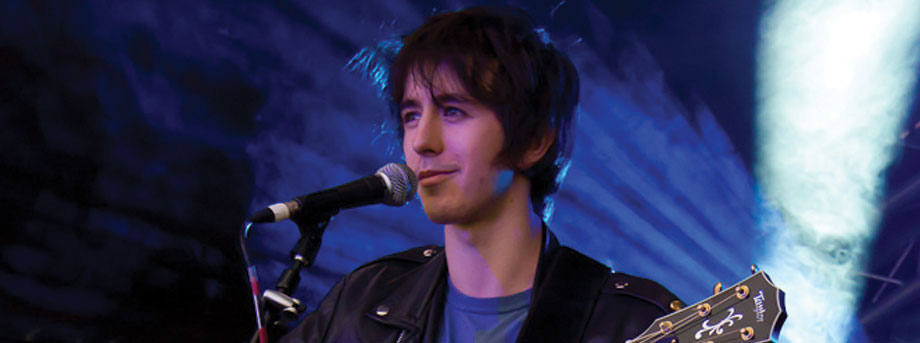
You’ve crossed the stage, degree in hand. Your face slowly begins to relax after an afternoon of beaming at cameras and proud parents. And, as you’re wondering where to store your graduation robe the nagging question at the back of your mind returns…now what?
For some it’s a new job, internship or travel, but for others — like English graduate Jack Peachey — it’s a journey into the unknown, a commitment to a musical career, most parent’s worst nightmare.
But as far as song-writing and performing go, Jack has made it easier on himself, already amassing support and accolades. As Gallery 47, Jack has made swift progress in the music business; performing at major music festivals like T-in the Park in Scotland and Splendour in Nottingham, appearing on the BBC and releasing his first album, Fate is the Law.
It’s looking good for Gallery 47, but glamorous it isn’t…yet: “Last year, I remember being booked to play a big gig out in the country somewhere,” says Jack.
“The offer came after a show at Sounds on the Downs on University Park, so I took down the address and didn’t really think about it. When I showed up, it turned out I was playing to 2,000 screaming Girl Guides — this was much unexpected and fairly terrifying, but still a very unique experience.”
This year has seen Jack in action at festivals around the country. “My best moment on stage has to be the gig on the BBC Introducing Stage at T in the Park in Scotland. Everyone was so friendly, and afterwards we got to sit star-struck in a backstage area with a number of big Radio 1 DJs.”
Jack got his first guitar at 13 and after getting the basics down, developed his unique finger-picking technique.
“I’ve never been one for grades or music exams, but I worked hard during my three years at university to develop my guitar and vocal style,” (while working hard on his degree of course!)
Jack follows in the footsteps of Nottingham graduates like Swound! and Popes of Chillitown, who are fast becoming established acts on the national gig circuit.
As for the future, Jack is playing it by ear: “I’ve long since given up on making strict plans, mostly because so many things seem to be out of my hands. This isn’t necessarily a bad thing, as it was only when I stopped worrying about success and focused more on writing and recording that everything began to fall into place.
“So, this year I’m going to drink a lot of tea and carry on playing live as much as possible. When I have the money, I’ll set up studio again in an audio-treated city apartment.
“I keep having to remind myself that we don’t live in 1973, and that maybe it’s not as easy these days to do an exclusively acoustic record like Pink Moon. Still, it’s exactly that type of thing which I want to work on.”
Jack is modest and unassuming; he’ll tell you he’s looking for a job. But anyone who has heard him play will tell you he already has one, he’s had it for years.
Find out more and support Gallery 47 at: www.gallery47official.com
Tags: Gallery 47, Jack Peachey, Popes of Chillitown, Swound!
Posted in News | Comments Off on Jack’s playing it by ear…
Bolly on campus
September 2nd, 2011
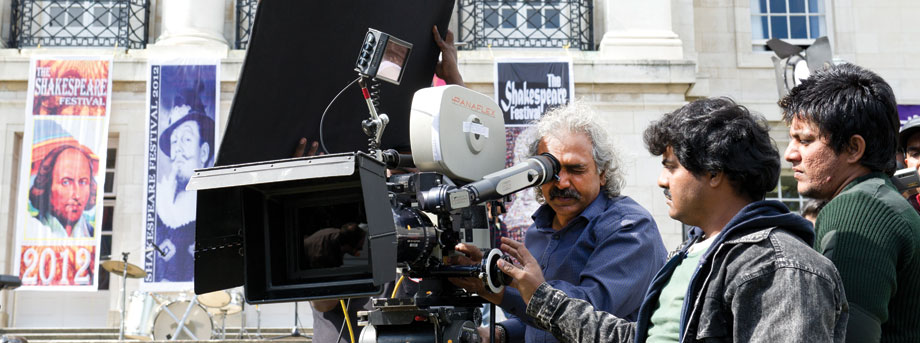
A spectacular, time-travelling Bollywood movie has been filmed at the University, with the historic buildings of University Park and the ultra-modern Jubilee campus as its backdrop.
The working title of the film is Teri Meri Kahani and it’s directed by the renowned Kunal Kholi.
It’s the story of a young couple who embark on a journey of eternal love through different lives which start in contemporary London and Nottingham, go back in time to 1910 Punjab and forward to 1960s’ Bombay.
Bollywood superstars Priyanka Chopra and Shahid Kapoor play the lead roles, Krish and Radha, who find themselves destined to be together no matter what the era, location or circumstances of their varied lives.
Filming has also taken place in India, London and Stratford-upon-Avon. The University scenes saw open-air dance sequences involving 100 dancers, as well as scenes in lecture theatres, cafes, Hallward Library and halls of residence.
Krish is working as a waiter to support his studies at the world-renowned Nottingham University Business School. He bumps into Radha just as his girlfriend is dumping him over the phone.
Cyrus Patel, UK line producer, said: “It’s been a wonderful opportunity to film at one of the most prestigious and picturesque universities in the UK. The staff have been brilliant to work with and have ensured our shoot has run smoothly from start to finish.
“The actors, directors, producers and crew have had a great experience filming here and I would recommend this as a very cinematic location.”
Chris Jagger, chief estates and facilities officer at the University, said: “Helping a Bollywood cast and crew deliver a large-scale movie like this has been something out of the ordinary, but also a very enjoyable and rewarding challenge for the University’s dedicated conference office team.
“They have done a tremendous job juggling the required filming logistics, people movements and updated daily schedules around both University Park and Jubilee Campus with the minimum of disruption or inconvenience to normal university campus activity.
I am sure that everyone involved will be eagerly awaiting seeing the finished result.’’
The film will be released in India in spring, ahead of a worldwide distribution. For a video of the filming at Nottingham, visit: http://tiny.cc/UoNBolly
Tags: Bollywood
Posted in News | Comments Off on Bolly on campus
Norway killings ‘will be turning point’
September 2nd, 2011
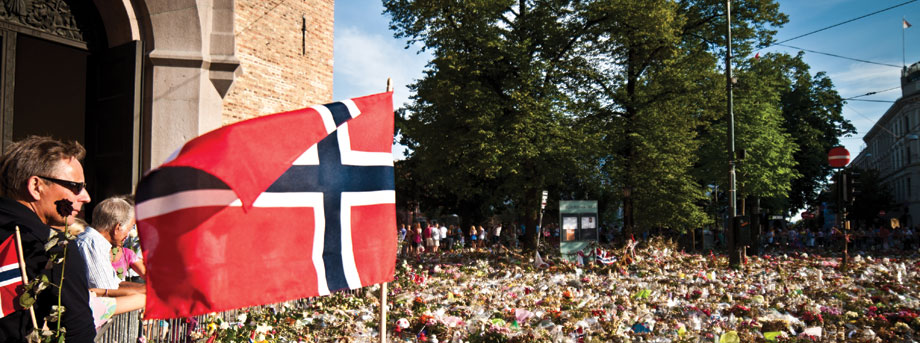
The killing of nearly 100 people in Norway by Anders Behring Breivik will prove to be a watershed moment in how we approach, and seek to understand, far-right groups and their ideology, according to a leading expert in far-right politics.
Dr Matthew Goodwin argues that the challenge from right-wing extremism and anti-Muslim sentiment has been dismissed as irrelevant for too long.
The conventional wisdom about far-right politics and lone wolves has been challenged. While many groups are disorganised, fragmented and ideologically incoherent, it only takes one committed activist to slip through the net. Timothy McVeigh set the blueprint, killing 168 people in what was the worst atrocity on post-war American soil until 9/11. David Copeland killed three people in London and injured over 120 in an attack on Bengali and homosexual communities.
In his blog, Dr Goodwin writes: “Britain has seen a significant number of ‘lone wolf’ cases in recent years. You might have heard of David Copeland, but what about Paul Sargent, Robert Cottage, Martin Cross, Tony Lecomber, Terence Gavan, Mark Bulman, Martyn Gilleard, David Tovey and Ian and Nicky Davison? These names were highlighted in a recent report on actual and potential lone-wolf activity in Britain.
“As a basic first step, we should collect data on far-right violence across European countries to assess the scale of the challenge. At the moment we simply have no real idea about how many would-be Breiviks are out there.
“While activists like Breivik act in isolation, they represent a set of ideas that are shared by many. If the internet posts left by Breivik are indeed his, then they reveal an obsession with issues that are of concern to many within what we might term the broader right-wing subculture: a preoccupation with the effects of multiculturalism; the perceived cultural (not only economic) threat posed by immigration and Muslim communities; criticism of a lack of effective responses to these threats from established main parties; and strong emphasis on the need to take radical and urgent action.”
“It is important not to examine lone wolves in isolation. Most voters in Europe go out of their way to distance themselves from violence, but large numbers also express concern over the same issues that are raised by lone wolves. They are certainly not all lone wolves, or would-be wolves. But there is clearly a wider pool of potential recruits should the main parties not respond to their grievances.
“To some extent, it is perhaps helpful to think of lone wolves as being located at the tip of a triangle. Further down, below the likes of Breivik and McVeigh, are active members of anti-immigrant and anti-Muslim parties, then citizens who vote for these parties, then a broader mass of citizens who are sceptical of immigration and rising ethno-cultural diversity. Many of these voters and citizens reject violence, but they are concerned over these issues and elites need to address their concerns more effectively than they have been doing. We also need far more research on what ‘trips’ some citizens from expressing their concern via the ballot box into open violence.”
Dr Goodwin’s blog is at: www.matthewjgoodwin.com
Tags: Dr Matthew Goodwin, far-right, www.matthewjgoodwin.com
Posted in News | Comments Off on Norway killings ‘will be turning point’
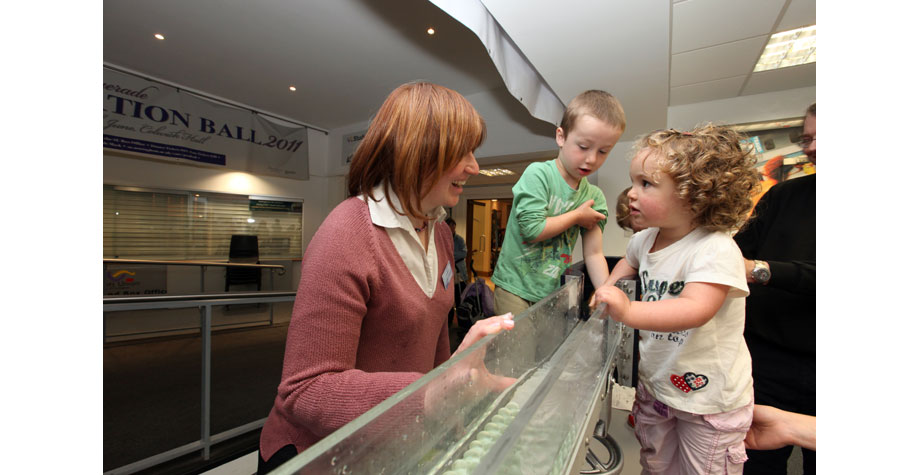
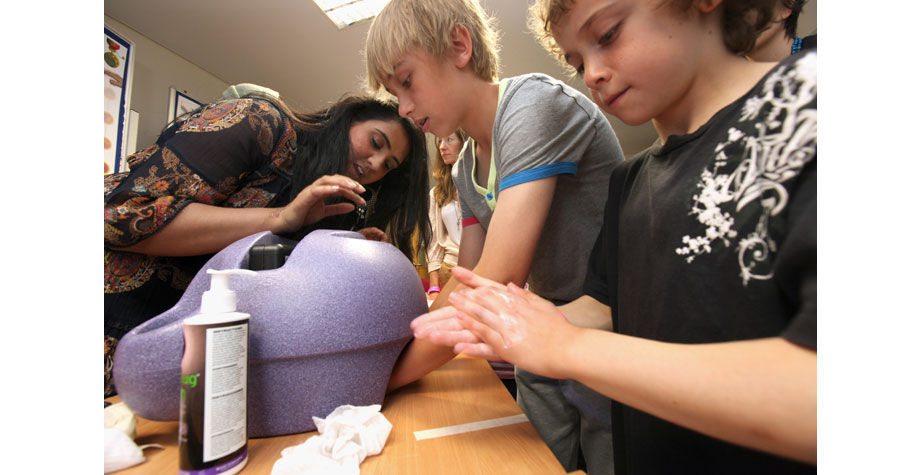
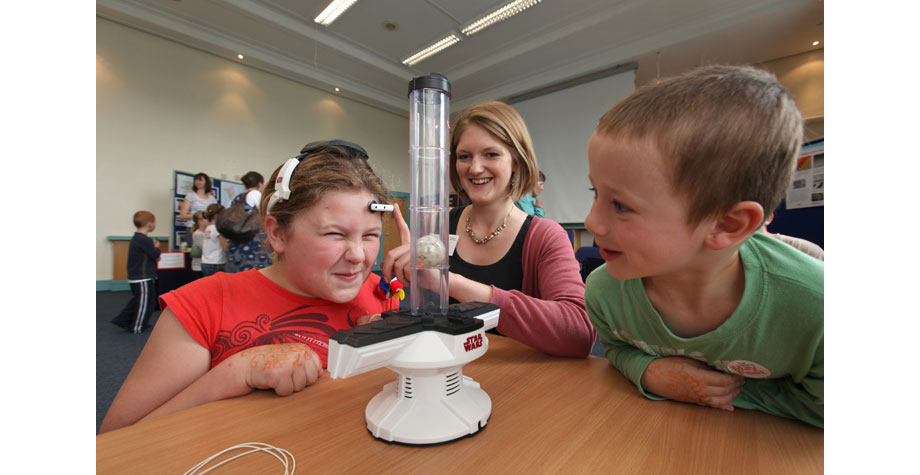
May Fest 2011 in pictures
July 5th, 2011
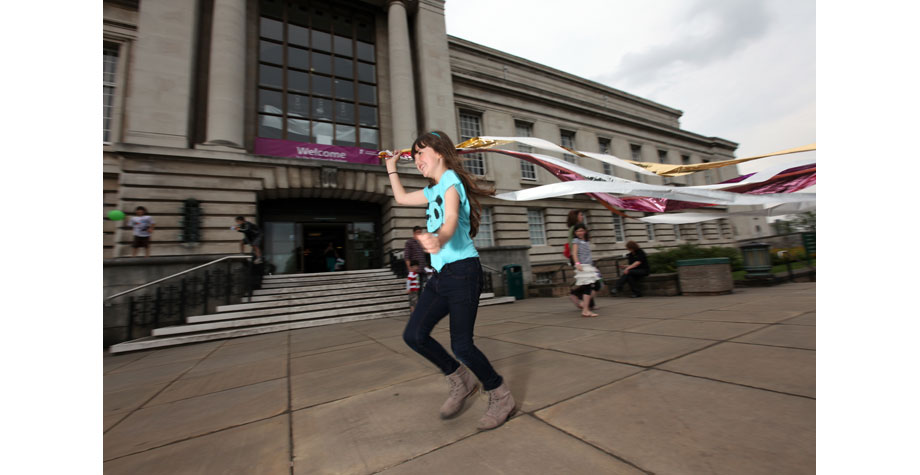
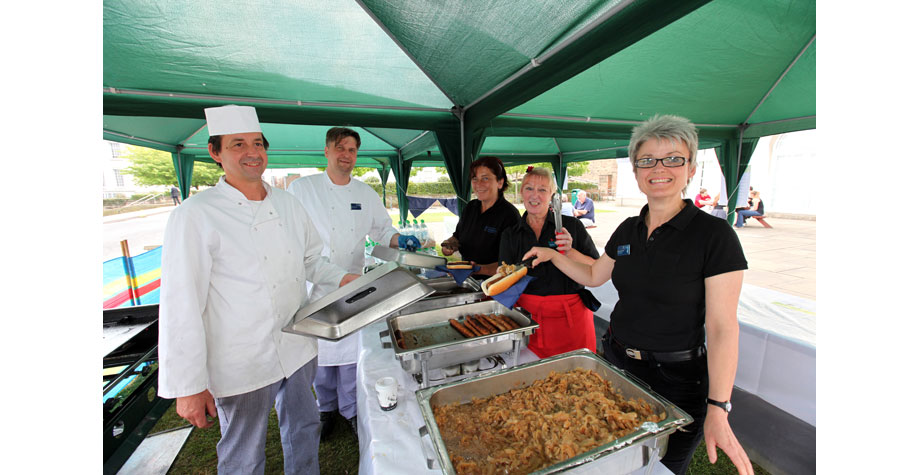
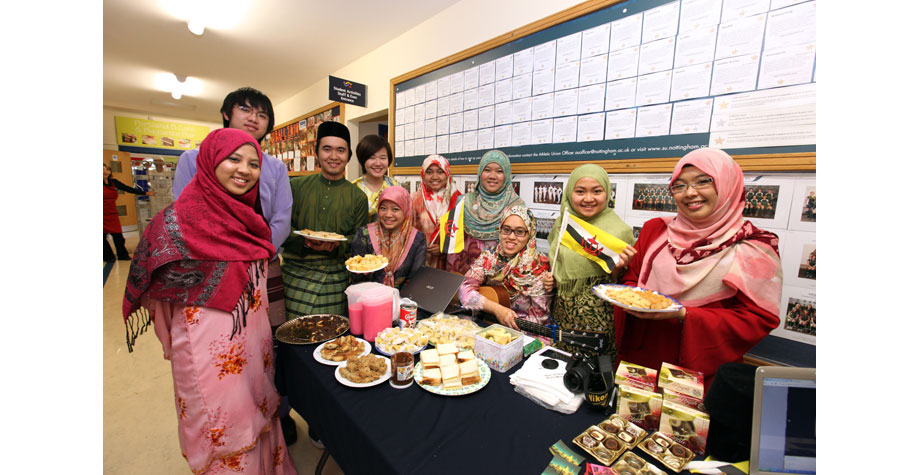
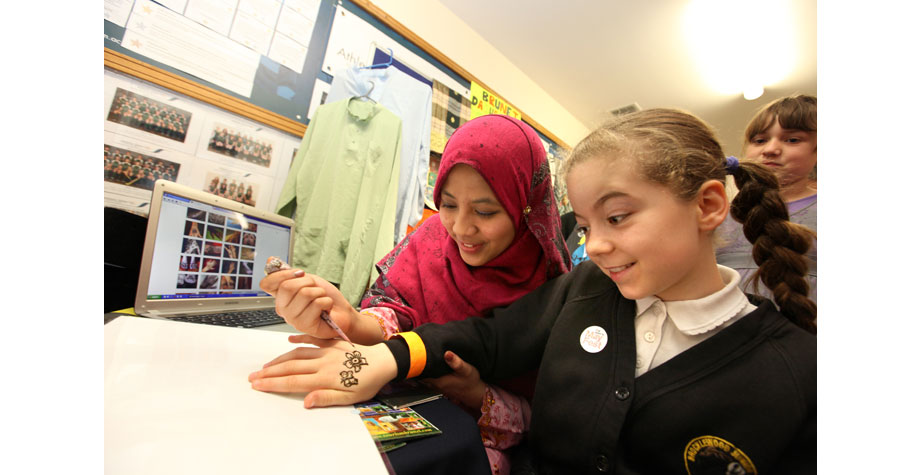


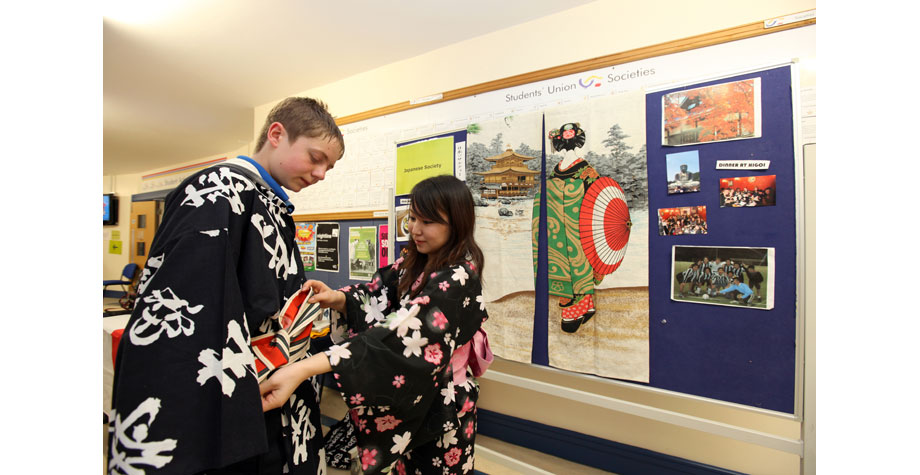
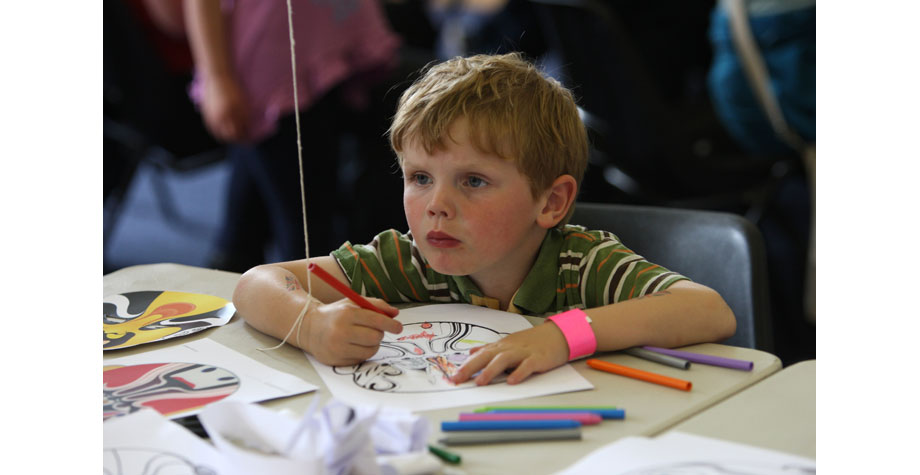
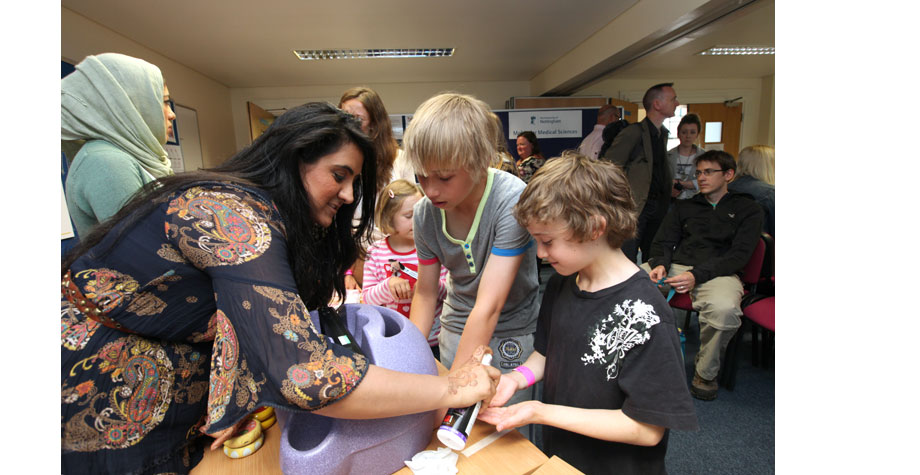
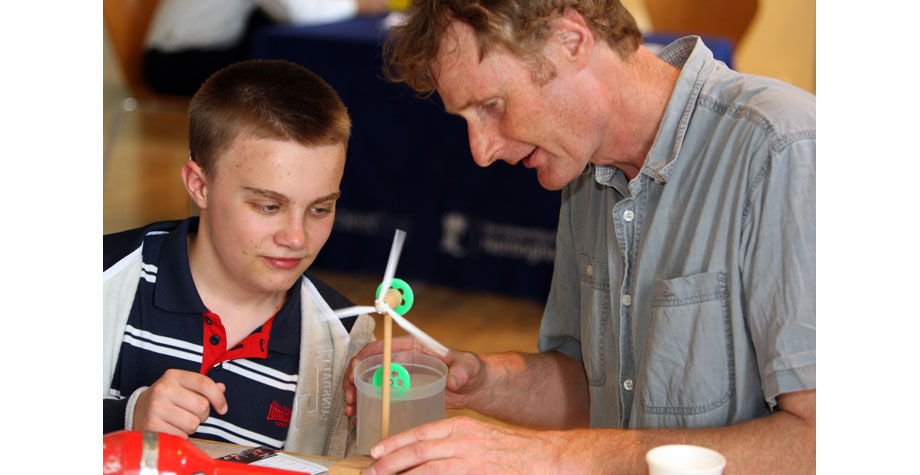
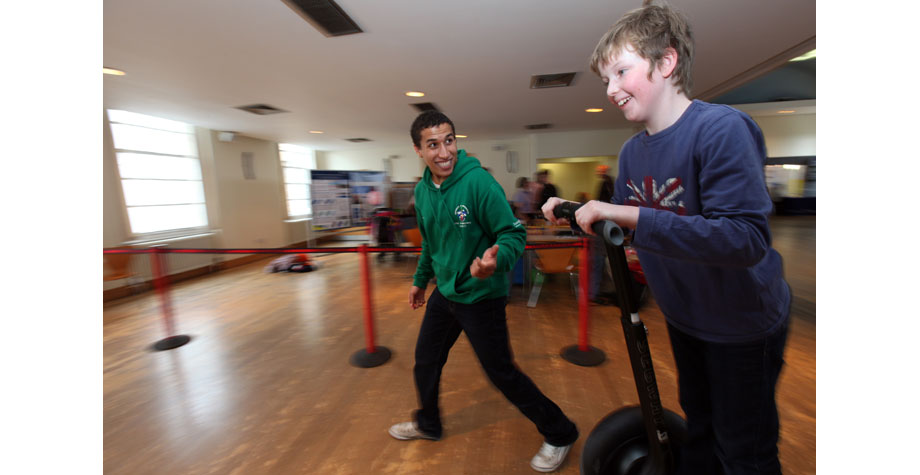
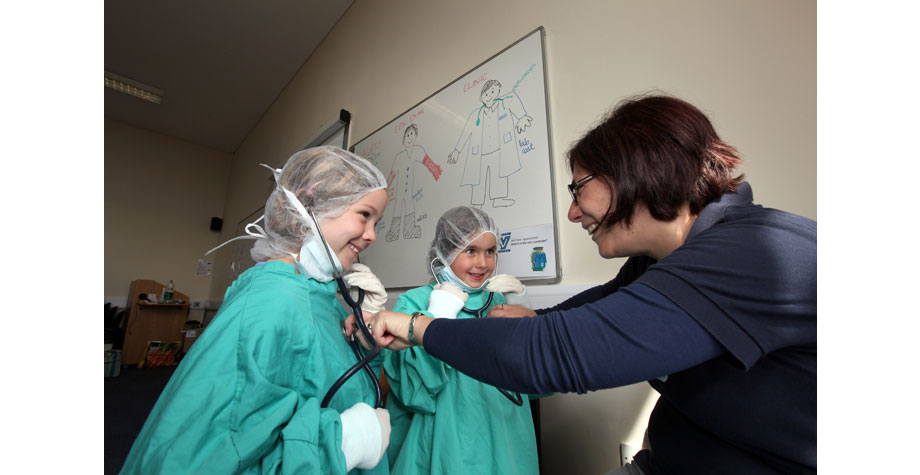
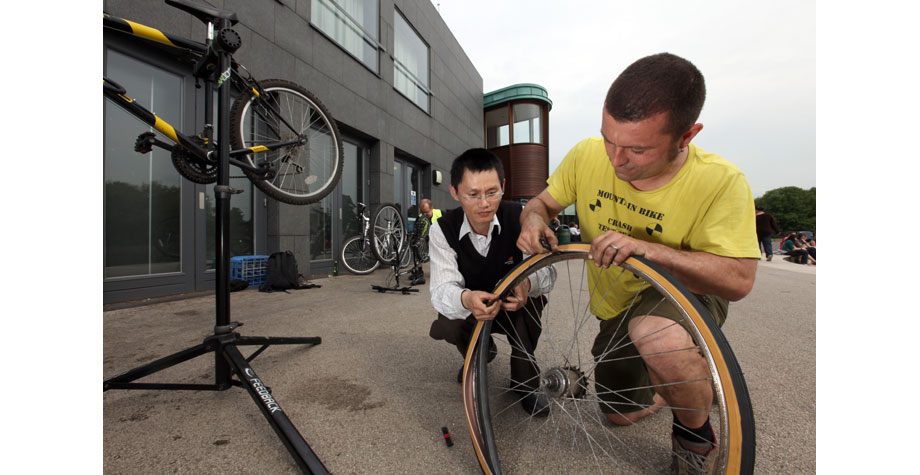
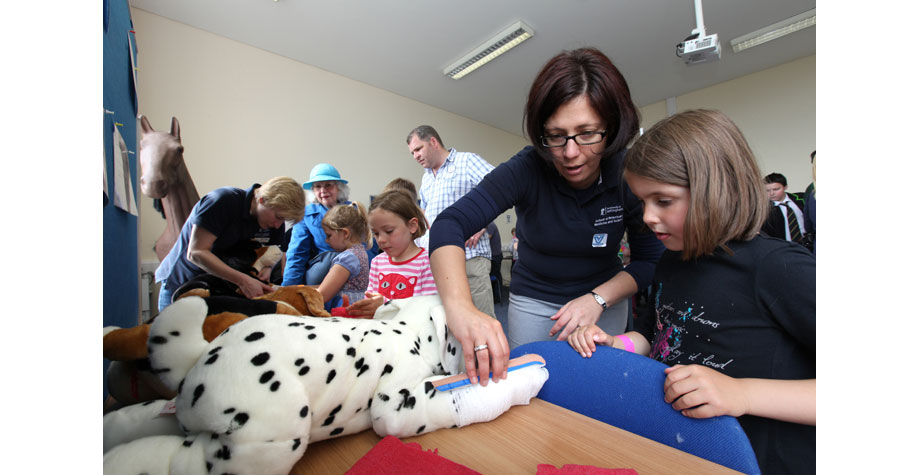

Tags: May Fest 2011
Posted in slideshow | Comments Off on May Fest 2011 in pictures

Gallery Art Group Showcase
June 2nd, 2011
Members of Lakeside’s Gallery Art Group present their summer exhibition
Date: Saturday 2 July to Thursday 14 July
Venue: Djanogly Art Gallery, Lakeside Arts Centre, University Park
Admission: Free
Posted in Exhibitions, What's On | Comments Off on Gallery Art Group Showcase
Maps and War
June 2nd, 2011
Professor Mike Heffernan
Date: Wednesday 29 June
Time: 1pm to 2pm
Venue: Djanogly Theatre, Lakeside Arts Centre, University Park
Admission: Free
Posted in Exhibitions, What's On | Comments Off on Maps and War
One Little Word
June 2nd, 2011
Suitable for ages 3-6 years
Date: Saturday 4 June and Sunday 5 June
Time: 1.30pm & 3pm
Venue: Performing arts workshop space
Admission: £6
Posted in Theatre and Dance, What's On | Comments Off on One Little Word