

Campus News
Spotlight
October 19th, 2011

World-leading work on tsunami impact
Software has been developed to help protect vulnerable coastal communities from the impact of tsunamis. The mathematical model can predict the flow induced by the tsunami as it hits land. It can predict the run-up and flooding as the tsunami hits the coast and should inform the future design and location of buildings and structures in tsunami prone areas. Professor Nicholas Dodd, from the Coastal Dynamics and Engineering Group (CoDEG) in the Infrastructure and Geomatics Division of the Faculty of Engineering, said: “This software, and indeed the work we’ve been doing generally on swash type motions, is world leading. For the first time we have reasonable confidence that we can accurately predict the morphological impact of a tsunami from a given a sediment transport description, as well as the inundation.”
Smart approach to changing attitudes?
An academic at the University believes that providing information about saved carbon emissions through new ‘smart meters’ could be more effective in persuading consumers to changing their behaviour than by demonstrating savings on their bills alone. Dr Alexa Spence, an academic in the School of Psychology and a research fellow at the Horizon Digital Economy Research hub, is an expert in public perceptions of climate change and energy issues. She spoke at the two-day international conference Energy and People: Futures, Complexity and Challenges, jointly hosted by the UK Energy Research Centre (UKERC) and the Environmental Change Institute at Oxford University last month. Smart meters can remotely communicate with energy companies to provide accurate meter readings without the need for someone to come and physically read the meter.
Nottingham School is best in the business
Nottingham University Business School remains the UK’s leading provider for MBAs which offer future business leaders a valuable insight into wider corporate social responsibility, according to a prestigious international survey.
It is the fourth time the school has retained the top national spot in the Beyond Grey Pinstripes ranking, an independent biennial survey of the world’s Top 100 MBAs focused on social and environmental impact conducted by The Aspen Institute in the US.
In the 2011 survey, Nottingham also outstrips all other UK business schools — and comes in at 23 globally — in the research element of the ranking, which judges faculties on the quality of its research output incorporating social, ethical and environmental business issues.
Alumnus picks up prestigious award
A tech start-up founded by a Nottingham University Business School alumnus and entrepreneur has a bright future ahead, according to judges at a prestigious regional business awards.
Aware Monitoring, one of the UK’s fastest-growing website performance monitoring companies, picked up the Most Promising New Business accolade at the recent Derbyshire and Nottinghamshire Chamber of Commerce Best Business Awards 2011.
The company, set up by Nottingham graduate Nick Barker and co-founder Simon Oxley, was recognised for its innovative service, providing businesses with real-time updates on the content load time, availability and optimisation of their website.
Reality check
Scientists and industrialists brought their latest ideas to the University for the Joint Virtual Reality Conference (JVRC) 2011.
The international conference, where industry meets science, featured live demonstrations in virtual reality (VR), augmented reality (AR), mixed reality (MR) and 3D user interfaces (3DUI).
It was hosted by the Human Factors Research Group (HFRG) and the Mixed Reality Lab, which includes internationally recognised groups such as the Virtual Reality Applications Research Team Institute for Occupational Ergonomics and the Centre for Rail Human Factors. Projects included using VR to help children with autism to collaborate with each other, designing technologies for the elderly and people with limited capabilities, and how VR/AR/MR can address the decline of manufacturing industries in Europe.
Posted in Issue 51, media | 1 Comment »
Impact: The Nottingham Campaign
October 19th, 2011
From Monday 17 October to Friday 21 October, you can attend any of the thematic launches taking place. There will also be a series of showcase talks and lectures open to staff, students and the public.
Impact: The Nottingham Campaign is the largest fundraising campaign in The University of Nottingham’s history and will raise £150 million over the next five years. The Campaign will be the catalyst for establishing an even more diverse student body, providing a richer student experience, transforming research programmes and making an even greater contribution to the global communities we serve. We’ve already raised £50m. There will be many opportunities to get involved during launch week, with a series of showcase events and public lectures open to staff, students and the public. Further updates will be available on the portals and Message of the Day; you can email: Impactcampaign@nottingham.ac.uk or visit: www.nottingham.ac.uk/impactcampaign.
Tags: Impact: The Nottingham Campaign
Posted in News | Comments Off on Impact: The Nottingham Campaign
Lustre
October 19th, 2011
Saturday 5 and Sunday 6 November, DH Lawrence Pavilion and Djanogly Art Gallery, Lakeside Arts Centre. Open from 10am to 5pm. Weekend admission: £5, pensioners £4, under-16s free.
Lustre is one of the UK’s highest quality craft events. Over the weekend, 55 contemporary craft-makers will be selling everything from fine jewellery, bags and hats to vases and tableware. Each craft-maker has been selected by a panel of experts for the quality and unique aspect of their work, and they will be on hand to chat to you about what inspired their work and what techniques they used. Lustre also gives you a sneak preview of some of the most cutting-edge work that is coming out of the region’s universities. Make a point of seeking out their work in the Young Meteors Gallery.
Nottingham to lead new Sino-UK research centre
October 19th, 2011

A pioneering new centre will train the researchers of the future and strengthen links between the UK and China.
The University of Nottingham, UK and its pioneering campus, The University of Nottingham Ningbo China, are to open an International Doctoral Innovation Centre (IDIC) spanning both countries, to train 100 of the brightest young PhD researchers over the next six years. They will become future leaders in the fields of energy and digital technologies, helping to develop innovative solutions that will address major global challenges.
A formal agreement marking the founding of the IDIC was signed last month at a major event at the Ningbo Exhibition Centre chaired by the Mayor of Ningbo.
The £17m IDIC will cross national boundaries, with the four-year PhD course divided between the UK and China. Postgraduate training will be combined with exposure to industry and entrepreneurship on an international scale. It will establish long-term co-operation between leading UK and Chinese universities and industry, and provide a substantive platform for developing collaborative research and knowledge transfer activities between the two nations.
The initiative draws on the University’s experience of running doctoral training centres in Nottingham, including two funded by the Engineering and Physical Sciences Research Council (EPSRC). The Chinese Ministry of Science and Technology (MoST) and Ningbo Municipal Government have also played a key role in bringing the project to fruition.
Professor Bob Webb, Pro-Vice-Chancellor for Research at the University, said: “The IDIC is a new model of international cooperation that will provide a framework to integrate innovation-led research and doctoral training. Through this model we will develop novel energy and digital technologies for the 21st century and find ways to accelerate how these technologies are exploited for the benefit of the global community.
“The centre will develop a portfolio of innovation-led research projects. It will recruit a cohort of 100 students selected for their potential to collaborate across disciplines, generate creative solutions and work with commercial and research partners to apply these solutions within an international context.”
Professor Hai-Sui Yu, Pro-Vice-Chancellor for International Campuses, said: “The IDIC is a great exemplar of how our international campuses can serve as a powerful platform to forge strategic research and knowledge transfer partnerships by working closely with regional and national agencies.
“An intensive doctoral training program at The University of Nottingham in the UK will develop the students’ research capabilities and provide them with entrepreneurial skills to realise the benefits of a portfolio of innovative research projects that will be carried out at The University of Nottingham Ningbo China.”
As well as realising the full potential of Nottingham’s pioneering campuses in Asia, this groundbreaking initiative will serve as a model for other disciplines and will ensure the development of the research and innovation leaders of the future.
Tags: Engineering and Physical Sciences Research Council (EPSRC), International Doctoral Innovation Centre (IDIC), Ningbo Municipal Government, Pro-Vice-Chancellor for International Campuses, Pro-Vice-Chancellor for Research, Professor Bob Webb, Professor Hai-Sui Yu, The Chinese Ministry of Science and Technology (MoST)
Posted in News | Comments Off on Nottingham to lead new Sino-UK research centre
Worrying legacy of Britain’s riots
October 19th, 2011

The real damage of the riots that gripped Britain earlier this year has not yet been properly considered, say University of Nottingham experts.
Despite debates on the causes of the riots, there has been little talk of their legacy. A new study — led by Drs Matthew Goodwin, Mark Pickup and Eline de Rooij — shows an increase in the number of Britons that feel their security and their wider society and culture is threatened.
“The study uncovered many significant areas of concern,” said Dr Goodwin. “Chief among them is that those who felt after the riots that their security was under greater threat, were more likely to express hostile attitudes toward Muslims.
“Those who felt afterwards that wider British society and culture were under greater threat were more likely to express hostility toward Muslims and also black and East European communities. So, while the riots were not associated in the public mindset with particular minority groups, they have nonetheless potentially increased prejudice in British society. This is a troublesome effect.”
The study — funded by the University’s Integrating Global Society group (a research priority area) — is the first systematic investigation of how the riots have influenced public attitudes.
Dr Pickup said: “We put a survey into the field two weeks before the riots. The events around the country have given us the chance to see how attitudes have changed”
The perception of threat is an important aspect. As the study demonstrates, the feeling of threat feeds prejudice towards other groups.
Dr Goodwin added: “Feelings of ‘threat’ are especially important, as they have been shown to have powerful effects on public attitudes toward issues such as immigration and diversity, and also on voting behaviour.
“If people feel more threatened then they are more likely to express prejudice toward other groups, favour more restrictive policies on issues such as immigration, and support extremist parties.”
The study’s broad findings show public perceptions of individual economic threat did not increase after the riots, and neither did collective economic threat.
Rather, people were more likely to feel that their safety was threatened; they were more fearful of increasing violence and vandalism in their neighbourhood. They were also more likely to feel that wider British culture and society was under threat.
Feelings of security threat increased by ten per cent and feelings of cultural threat increased by five per cent. These were ‘statistically significant’ effects.
“It is rare that we are able to observe and measure the effects of a significant real-world event, such as the riots,” says Dr Pickup. “But the findings …reveal how threats to security and culture, whatever the source, reduce tolerance in our society.”
The study is based on the Academic Omnibus Project run by YouGov and draws on two (online) surveys of a nationally representative sample of 1,000 citizens in the first survey (11-18 July) and 2,000 citizens in the second (17-18 August). The surveys included a battery of questions about individuals’ social and economic profile, their attitudes toward minority groups and voting intention. These questions allowed them to probe the extent to which citizens feel threatened, and prejudiced toward minority groups.
The study was led by Dr Mark Pickup and Dr Matthew Goodwin from the School of Politics and International Relations at The University of Nottingham, and Dr Eline de Rooij from Nuffield College at the University of Oxford. It was funded by the Integrating Global Society group at The University of Nottingham, with generous logistical assistance from YouGov-Cambridge.
Tags: Academic Omnibus Project, Dr Eline de Rooij, Dr Mark Pickup, Dr Matthew Goodwin, Integrating Global Society, School of Politics and International Relations, YouGov-Cambridge
Posted in Research | Comments Off on Worrying legacy of Britain’s riots
Long-running strikes and the ‘boiling frog’ effect
October 19th, 2011

New research has added more gloom to the threat of strikes by showing how the emotional strain of protracted negotiations can lock rivals on a path to mutual destruction.
According to experiments by experts at The University of Nottingham, the human psychological factors associated with “long-winded, escalating bargaining” increase the chance of disaster for both sides.
Behavioural economists from Nottingham University Business School reached the conclusion after devising a series of tests based on the game of ‘chicken’.
Their findings come as union and Government officials continue talks to prevent massive industrial action by public sector workers sparking an ‘autumn of discontent’.
Study co-author Dr Swee-Hoon Chuah said: “Most people know ‘chicken’ as a game in which two cars speed towards each other until one driver swerves or both crash. Similar scenarios have long been used in experimental economics to explore people’s strategic behaviour in real situations — for example, superpower or industrial relations.
“But the ‘chicken’ game captures only the final stage of the brinkmanship and escalation that have gone before, which is why we developed an ‘escalation’ game.
“We wanted to see what happens when the risk level and the difference in outcomes between a player who relents and a player who doesn’t are gradually increased.”
The study, carried out by the school’s International Centre for Behavioural Business Research, involved hundreds of volunteers. Subjects were put into pairs and asked to play either the ‘chicken’ game or the ‘escalation’ game, with the winners paid small cash amounts reflecting their performance.
Volunteers had to choose A to back down or B to carry on — with the pay-off gap between winner and loser increasing as the game continued.
Researchers also devised two versions of each game; one featuring near-instant decisions, the other allowing players to plan strategies before being paired up.
The aim of the different approaches was to examine the respective influences of psychological/emotional factors and risk attitudes on how players made their decisions.
In the simple single-round ‘chicken’ game, 37 per cent of volunteers chose B and ‘crashed’ — compared to 79 per cent who reached the final stage of the four-round ‘escalation’ game.
In other words, despite the final pay-offs being identical in each scenario, players who went the distance in a drawn-out stand-off were more than twice as likely to crash.
Dr Chuah, a lecturer in economics, said: “Our findings have implications for reducing disastrous outcomes in real bargaining scenarios, such as industrial disputes.
“First and foremost, our results suggest that long-winded, escalating bargaining processes may trigger psychological phenomena such as ‘frog-boiling’.
“This concept is based on the premise that a frog placed in cold water that is gradually heated will fail to recognise the danger and so be slowly boiled alive. By contrast, the theory goes, the frog would immediately perceive the danger and jump to safety if it were placed in water that is already hot enough to harm it.
“For us ‘frog-boiling’ is when decision-makers continuously adjust to a series of small changes that if revealed together at once would provoke a significant reaction. Thus players who repeatedly chose B in our ‘escalation’ game may have become gradually accustomed to the greater level of risk involved in successive stages.
“Similarly, those involved in drawn-out negotiations may fail to recognise how serious the situation is becoming and the potentially dire consequences for all concerned.”
Britain faces the biggest outbreak of industrial action since the 1926 General Strike after unions representing public sector workers served notice of ballots over pension reforms. Announcing their decisions at the TUC conference, Unison, Unite and the GMB called for strikes to be coordinated in a bid to maximise pressure on the Government.
Plans are being drawn up for a mass strike day followed by more sustained action in tactical and “smart” strikes that unions warn could continue until next summer.
Prime Minister David Cameron has called for “open and constructive dialogue”, but union officials have dismissed talks with the coalition as a “farce”.
Dr Chuah, an affiliate of the Nottingham School of Economics’ Centre for Decision Research and Experimental Economics, said the study underlined the need for a “fresh pair of eyes” in slow-moving negotiations with no apparent prospect of a breakthrough.
She said: “It goes right down to the individuals at the heart of the stand-off. After a while they believe people will think less of them if they’re seen to waver. In that regard another possible explanation for our results is that familiarity really does breed contempt, which in turn reduces the likelihood of a positive outcome.
“By contrast, a third party doesn’t have to justify or prove anything. They recognise the situation for what it is and see beyond that mutual refusal to back down.”
Tags: autumn of discontent, Dr Swee-Hoon Chuah, economics, International Centre for Behavioural Business Research, Nottingham School of Economics’ Centre for Decision Research and Experimental Economics, Nottingham University Business School
Posted in Research | Comments Off on Long-running strikes and the ‘boiling frog’ effect
Scientists learn to better read our minds
October 19th, 2011
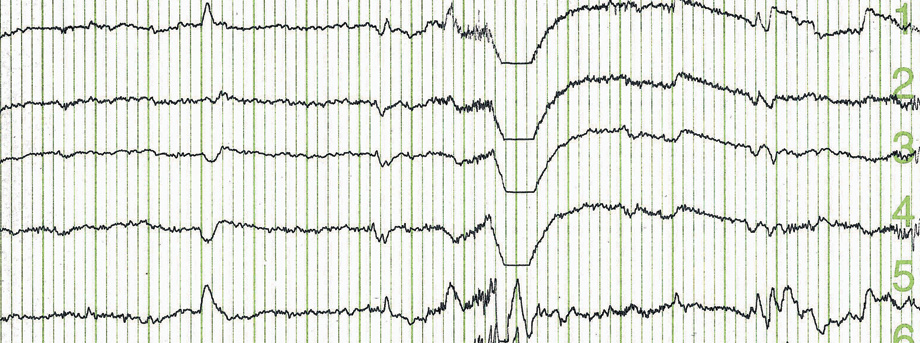
A new technique which lets scientists ‘see’ our brain waves at work could revolutionise our understanding of the human body’s most complex organ and help transform the lives of people suffering from schizophrenia and ADHD.
Although, scientifically, the brain is the most studied organ in our body, we know relatively little about it. That could all change as a result of this research led by Dr Matt Brookes in the Sir Peter Mansfield Magnetic Resonance Centre at the University and published in the prestigious journal Proceedings of the National Academy of Sciences (PNAS) of the United States.
Using a neuroimaging technique called magnetoencephalography (MEG), which measures the brain’s electrical signals, and mathematical techniques, scientists have found a non-invasive way to harness the dynamic nature of brain signals to probe the subtle electrical processes associated with brain activity.
They are working with the School of Psychiatry to apply these methods to patients with schizophrenia and ADHD. Dr Brookes, a Leverhulme Trust Early Career Fellow, who led the research, said: “We hope these techniques will allow a novel, simple and non-invasive means to identify the network dysfunction associated with these two debilitating conditions.”
“If we are to go on to achieve a full understanding of brain networks and their role, an understanding of the electrical processes is critical. MEG does this non-invasively, via assessment of the magnetic fields induced outside the head by electrical currents in the brain.”
Neuroscience has been revolutionised by the introduction of ‘functional neuroimaging’, a collective term for a number of techniques that allow us to ‘see’ the brain at work. One research area uses neuroimaging to measure brain activity in distributed processing ‘networks’ — the communication between separate brain regions. Accurate communication across the brain is integral to the way in which we function: perturbed communication is indicative of disease.
To date, most studies have used functional MRI (fMRI), which is based on magnetic resonance imaging and detects changes in blood flow brought about by brain activity. However, the blood flow response is an indirect consequence of electrical function in brain cells and it is this electrical function scientists want to study as it is the driving force behind communication in the brain.
With MEG, Dr Brookes and his team at Nottingham, in collaboration with the Oxford Centre for Human Brain Activity and the Oxford Centre for Functional MRI of the Brain at the University of Oxford together with The Wellcome Trust Centre for Neuroimaging at University College London (UCL) have shown that electrical activity in the brain underlies the network connections previously observed in fMRI studies.
Dr Brookes said: “Our method of investigating electrical brain signals is completely harmless to the subject and it offers exciting possibilities to probe the electrophysiological pathology that underlies neuropathological conditions.”
The work was funded by the Leverhulme Trust, the Wellcome Trust and The University of Nottingham.
Tags: ADHD, Dr Matt Brookes, Leverhulme Trust, magnetoencephalography (MEG), MRI, Oxford Centre for Functional MRI of the Brain, Oxford Centre for Human Brain Activity, Proceedings of the National Academy of Sciences (PNAS) of the United States, schizophrenia, School of Psychiatry, Sir Peter Mansfield Magnetic Resonance Centre, The Wellcome Trust Centre for Neuroimaging
Posted in Research | Comments Off on Scientists learn to better read our minds
Confessions of a politics lecturer…
October 19th, 2011
Eight years ago, a teenage politics A level student from Hull, called Jason Whiley, got into an argument with his father.
Jason’s dad had discovered a picture of Enoch Powell on a pogo stick, and claimed that today’s politicians weren’t as interesting any more. Jason bet him that he was wrong, and wrote to lots of today’s politicians to ask whether they’d done anything similar.
His letter was very specific, wanting to know if, at any point, any of them had been on:
A skateboard
Roller skates and/or blades
A Space Hopper
A go-kart
A death slide
A non-motorised scooter
A BMX bike, or:
(and, covering all bases) any other locomotive child’s toy
He got more than 80 replies, including 27 Cabinet Ministers, four Prime Ministers, three Chancellors of the Exchequer and two European Commissioners. Many of them answered at length, and even provided pictures.
Margaret Thatcher had tried roller-skating and a scooter, while John Prescott claimed to have “roller-skated, ridden a BMX and used a Space Hopper!”
Neil Kinnock, who was then a European Commissioner, replied that although he hadn’t done any of the listed activities, he had enjoyed driving British Army tanks in Germany between 1985 and 1991, adding: ‘There is nothing (underlined!) more pleasurable than a multi-ton space hopper travelling over rough country at 60mph’.
Having got such a great response, Jason stuck the letters and photos up on a now defunct website — entitled StatesmanorSkatesman.com — which the media loved. One week in August 2003 saw the website featured in the Guardian three times, as well as in The Mirror, The Daily Mail, and the BBC News. There were also enquiries from The Times Education Supplement, The Telegraph, The Face, Yahoo, and even The BBC Politics Show.
It also featured in, amongst others, the Melbourne Herald Sun and the Stuttgarter Zeitung. The Spectator website made it its website of the week, describing it as ‘something approaching genius’. “Occasionally,” as the Times Education Supplement noted, “a pupil comes along who has just a bit more spark than average”.
Quite so. Because although all the politicians’ letters were genuine, Jason was not.
He was the creation of me and two friends, born out of an extended night in the pub. But unlike most normal nights in the pub, where you wake up with a hazy memory of some stupid idea, I woke up the next morning with a list of children’s toys in my pocket.
I recently outed Jason, as part of a Radio 4 lecture, and part of the purpose of that lecture was apology. Because while most people hold to the view that MPs are a bunch of lazy shysters only busy when fiddling their expenses, I know just how busy most of them are, responding to real enquiries from constituents without having to deal with fictitious ones from imaginary teenagers.
Yet what was surprising was just how many did reply. In response to what was a deliberately borderline illiterate letter and a frankly moronic query (as several of the respondents patiently pointed out, it was not immediately obvious that the best way to judge the quality of our politicians was to see whether they’d been on a skateboard…), all of these busy people found the time to trawl their memories, dig up photos and reply.
In a lot of the feedback at the time, there was amazement at how many politicians had taken the time to reply, along with suspicion from those overseas that had it been in their country, no one would have bothered. Here’s some of the comments: “Wow, politicians are people too”; “This makes politicians almost human”; “Restores one’s faith in politicians”; and “It was amazing how ‘normal’ and friendly the replies were.”
And following a couple of years in which the British political class have got (and, to a large part, deserved) a terrible press, some of this is worth celebrating just at a human level: the reason the replies seem to have come from normal friendly people was because they did come from normal friendly people.
As one of Jason’s respondents noted: “Politicians of yesterday were always more interesting than politicians of today.” Although he added: “soon we will be politicians of yesterday!”
This is hardly a new complaint: there are always too few quality politicians; they are never brave enough; they were always better 20 or 30 years ago.
I recently published a book on the 2010 election, the latest in a series that dates back more than 60 years. If you look at the very first volume, that of 1945, you’ll find complaints then about the quality of politicians — which it noted dated back at least 15 years — and that in the era of Attlee, Bevan, Churchill. There’s not much new in today’s complaints, and we’d all be better off recognising that.
Politicians and Pogosticks was broadcast on Radio 4 on 25 and 29 May, as part of the Four Thought series.
Tags: Jason Whiley, Philip Cowley, Politicians and Pogosticks, Professor of Parliamentary Government, School of Politics, StatesmanorSkatesman.com
Posted in Features | Comments Off on Confessions of a politics lecturer…
Unexpected find sheds new light on historic town
October 19th, 2011

They came expecting to find Romans but what they discovered could revolutionise our understanding of the historic cathedral town of Southwell in Nottinghamshire.
A team of archaeologists from the University think they may have discovered the remains of an Anglo-Saxon defensive enclosure and planned town. For the first time they believe they have the evidence which links the well-documented Roman settlement at Southwell to the later medieval Minster site.
This summer, a small army of academics and students got permission to dig for Romans at the bottom of people’s gardens. The two-week dig also involved a detailed archaeological building survey of the country’s most complete workhouse. Built in 1824 and now owned by the National Trust, Southwell Workhouse was the prototype for all future union workhouses and it is the most complete one of its kind to survive.
In their search to find out more about Southwell’s Roman settlement and how the town evolved over the centuries, the archaeologists discovered what they believe is an ancient Burh — an Anglo-Saxon enclosure around the historic core of the cathedral town.
The remains of ancient banks and ditches still survive today, but a test pit near one of these banks revealed a ditch which contained small fragments of pottery that have got the archaeologists determined to come back and find out more.
Dr Naomi Sykes, a lecturer in Zooarchaeology, who led the two-week dig said: “We excavated all manner of finds from this ditch, including modern-day pottery. In the same area we found bits of Roman motaria – ancient Roman pottery kitchen vessels. But further down in the earlier deposits we discovered fragments of medieval pottery.
“This exciting find ties the Roman site to the later Medieval Minster site and suggests that there was settlement activity and buildings around that period.”
Dr Chris King, a lecturer in archaeology, said: “We’ve only had a short time to dig and it has left us with many more questions that need answering.
“The people of Southwell have laid their gardens open for students to come and dig large holes in them but they are very excited about our discoveries and we are already making plans to return next summer to continue the work.”
The team was returning to Southwell Workhouse on the weekend of 1 and 2 October to dig another series of test pits with the help of the Southwell Community Archaeology Group. The aim this time is to help piece together the history of the workhouse and hopefully tell them more about the history of Southwell itself.
Dr King said: “Southwell Workhouse is a site of national importance and we hope that archaeology can shed new light on life in the workhouse as well as the earlier history of the town.”
Tags: archaeology, Dr Chris King, Dr Naomi Sykes, Southwell, Southwell Community Archaeology Group, Southwell Workhouse, Zooarchaeology
Posted in Features | Comments Off on Unexpected find sheds new light on historic town
Lung disease: Scientists make genetic breakthrough
October 19th, 2011

Scientists at the University have been involved in the discovery of 16 new sections of the genetic code that relate to lung health, opening up the possibility for better prevention as well as treatment for lung diseases.
An international consortium of 175 scientists from 126 centres in Europe, the USA and Australia identified genetic variants associated with the lung, shedding new light on the molecular basis of lung diseases, such as Chronic Obstructive Pulmonary Disease (COPD).
Researchers say these new pathways — definitely linked to lung function for the first time — could be targeted by drugs.
The pioneering research was led by Professor Martin Tobin, from the University of Leicester, Professor Ian Hall, from The University of Nottingham, and Dr Stephanie London, from the US National Institute of Environmental Health Sciences.
It involved a study of 2.5 million genetic variants in 48,201 people across the world. A smaller number of variants were then studied in a further 46,411 people. The research, published in Nature Genetics, was part-funded by the East Midlands Healthcare and Bioscience iNet (which is part-financed by the European Regional Development Fund), the UK Medical Research Council and the Wellcome Trust.
The study build on earlier research by the authors, bringing the total number of genetic variants associated with lung function to 26. The authors also showed, in research published in the American Journal of Respiratory and Critical Care Medicine, that variants which predict lung function also predict COPD.
Professor Ian Hall, Dean of Nottingham’s Medical School and Professor in Molecular Medicine, said: “We now need to take the knowledge gained from this study to do two things: firstly to learn more about the function of genes which contribute to the risk of developing lung diseases such as COPD, and secondly to try to develop strategies to use genetic information to improve the clinical care provided to individual patients.”
Professor Martin Tobin, Professor of Genetic Epidemiology and Public Health & MRC Senior Clinical Fellow at Leicester, said: “COPD — a progressive disease that makes it hard for people to breathe — affects around one in 10 adults above the age of 40 and is fourth most-common cause of death worldwide.
“Smoking is the most important risk for developing COPD. Smokers are not all equally likely to develop COPD and differences in susceptibility occur due to the genetic variants people carry.
“For the first time we understand what so many of these genetic variants are, including the underlying mechanisms that they point to. We now need to prioritise research to better understand these disease mechanisms and inform improved patient care.
“These discoveries could provide the key to new therapies for lung diseases such as COPD. It is too early to say whether this information would be of use as a screening test to predict the development of COPD. Stopping smoking is the best way to prevent COPD.”
Tags: American Journal of Respiratory and Critical Care Medicine, Bioscience iNet, Chronic Obstructive Pulmonary Disease, COPD, Dr Stephanie London, East Midlands Healthcare, European Regional Development Fund, genetic code, Medical School, Molecular Medicine, MRC Senior Clinical Fellow, Nature Genetics, Professor Ian Hall, Professor Martin Tobin, Professor of Genetic Epidemiology and Public Health, UK Medical Research Council, US National Institute of Environmental Health Sciences, Wellcome Trust
Posted in Research | 1 Comment »