

Campus News
Mothers and Midwives: A history of maternity in the East Midlands: Infant Welfare
January 3rd, 2012
Dr Denise Amos
Date: Wednesday 18 January
Time: 1pm to 2pm
Venue: Djanogly Theatre, Lakeside Arts Centre, University Park
Admission: Free
Posted in Public Lectures, What's On | Comments Off on Mothers and Midwives: A history of maternity in the East Midlands: Infant Welfare

Cancer screening: On course to cut deaths
December 22nd, 2011
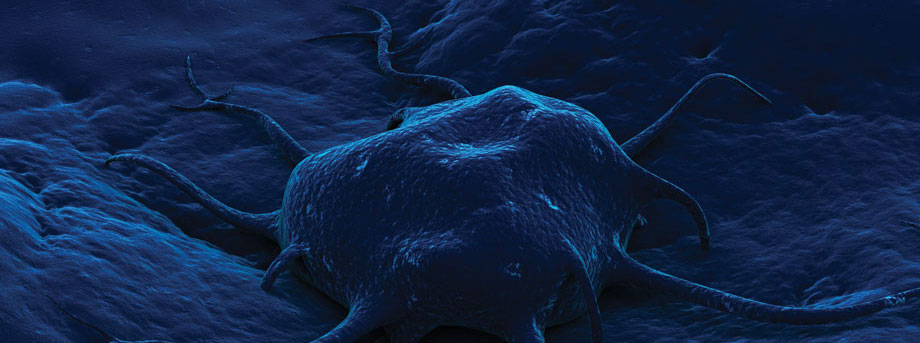
The Bowel Cancer Screening Programme in England is on course to cut bowel cancer deaths by 16%, according to a University of Nottingham-led study of the first 1m test results.
But the survey suggests that better screening techniques should be developed because bowel cancers on the right side of the body were less likely to be picked up than those on the left.
Bowel cancer kills 16,000 people every year in the UK and is second only to lung cancer as the leading cause of cancer death in the UK and Europe. Survival from the disease is still only around 50% and is significantly lower than in other comparable countries.
The findings of the report are based on an examination of the first 1m faecal occult blood tests returned by patients who took part in the first round of bowel cancer screening in England. The screening programme for people between the ages of 60 and 69 started in 2006. It involves three tests every two years and has since been extended to those over 70.
The analysis of the screening programme has just been published in the journal Gut. It shows that a higher than expected proportion of cancers detected were on the left side of the bowel.
Prof Richard Logan, from the University’s Division of Epidemiology, who led the study, said: “It’s not yet fully understood why cancers on the right-hand side were not showing up during screening. It’s possible that they grow faster, and progress to causing symptoms more rapidly and so be diagnosed conventionally, or that they were less likely to bleed and so trigger a positive screening test result.”
Prof Logan believes the current test should be replaced by the more efficient and more sensitive faecal immunochemical test. He said: “It will cost money to introduce it, and that money is not currently there.”
By October 2008 around 2m people had been invited to take part in the screening programme and around half had accepted; 2.5% of men and 1.5% of women (21,106 people) had an abnormal test result and 17,518 people were investigated further. Most underwent colonoscopy. Men were more likely to have bowel cancer and its precursor (higher-risk adenomas), than women. These were found in around one in eight (11.6%) and around four out of 10 (43%) men, respectively, compared with just under eight per cent and 29%, respectively, of the women. Seven out of 10 cancers (71%) picked up by the screen were early stage disease, and as expected, right sided cancer was more common in women than in men. But left-sided cancers were considerably more common than expected, based on figures drawn from cancer registries. These indicated that around two-thirds of bowel cancers (66%) picked up by the programme would be left-sided and around one in four (24%) would be right-sided. Instead, more than three out of four (77%) cancers detected by screening were left-sided, compared with 14% of right-sided.
Research suggests that right-sided cancers are more aggressive and less likely to be picked up by screening. The report concludes that different screening strategies may be required for right-sided bowel cancer.
Posted in Research | Comments Off on Cancer screening: On course to cut deaths
High-profile visit to Ningbo
December 22nd, 2011

China’s Deputy Minister of Education visited The University of Nottingham Ningbo China (UNNC) in another sign that the pioneering University has impressed the country’s leaders at the highest levels.
The Deputy Minister, Du Yubo, said UNNC had set an example for other Sino-foreign universities to follow – and urged it to continue leading the way.
UNNC has welcomed several important visitors this year, including Premier Wen Jiabao in April.
The University opened its doors in 2004 in eastern China’s prosperous Zhejiang province, as the first Sino-foreign collaborative university with full approval of the authorities. All degree programmes are taught in English and all graduates are awarded British degrees from The University of Nottingham UK.
All Chinese students have been employed or accepted for postgraduate studies at top international universities within six months of graduating, according to statistics filed with the government. UNNC’s success has paved the way for the establishment of other Sino-foreign universities in China, which has embarked on an ambitious programme to overhaul its education system.
Mr Du, the second most powerful politician in education with overall responsibility for Higher Education in China, said that he expects the internationalisation of China’s HE institutes to become a trend, adding that the University has set a stellar example for other Sino-foreign universities. He had heard many good comments about UNNC in Chinese education circles and that the national Ministry of Education would continue to support it.
Mr Du encouraged the University to keep developing its strengths, in particular placing students at the centre of all its plans. He also said the University should continue to raise the high standards of international education through innovation and lead the way for Sino-foreign universities within the legal framework.
Mr Du congratulated the two partners – The University of Nottingham and Zhejiang Wanli Education Group – for achieving such success in a relatively short time. He encouraged the University to develop long-term strategic plans in order to keep leading the way.
“It is important to keep and develop your unique features as a competitive advantage and keep developing high quality talented graduates to cater for local demand,” said Mr Du.
Professor Nick Miles, Provost and CEO of UNNC, gave Mr Du a comprehensive briefing on the University’s future plans, which include developing science and engineering specialism to help address national research requirements and knowledge transfer.
“Within the next few years our plan is to grow,” he said, pointing out that the University now has more than 5,000 students and more than 400 staff members from more than 40 countries around the world.
Prof Miles said the ultimate test of the University’s success is the value employers placed on hiring UNNC graduates. The kind of employers who want our graduates are international companies looking for skills sets that would help them as they stretch into the world, he said.
“This is the external world measuring our graduates, so it is a very important point,” said Prof Miles.
UNNC students are also making valuable contributions to communities. Each year about 1,500 students volunteer in schools and other settings. They are also making their mark in international university competitions, Prof Miles told Mr Du. A group of Students In Free Enterprise won the national trophy in a challenging social entrepreneurship competition that entailed designing sustainable income creation projects for disadvantaged last year. This weekend, December 10-11, students will compete in the regional finals of the China Daily/21st Century Cup National English Speaking Competition, to be held this year at UNNC, said Professor Miles.
Madame Xu Yafen, head of the Zhejiang Wanli Education Group, gave Mr Du an overview of how the first Sino-foreign university came into being.
“The key point is that almost all the Chinese universities are teacher-centred and students just listen to what is taught and have to memorise.
“We realised the need to bring in some new educational ideas and systems. It required bold thinking to start a Sino-foreign university,” said Madame Xu, who played a key role in the launch of UNNC.
Posted in Features | Comments Off on High-profile visit to Ningbo
Museum gets a new home
December 22nd, 2011

The University of Nottingham’s award-winning museum has moved into a purpose-built building.
The museum — named Nottinghamshire Heritage Museum of the Year in 2010 — is now conveniently based in the Rotunda at the Lakeside Arts Centre, near Lakeside Theatre, the revamped Djanogly Art Gallery and Gallery café, the boating lake and the children’s play area.
The museum contains artefacts dating back 250, 000 years to the Palaeolithic period. The majority of objects are from the East Midlands and show everyday life in the region over this long period of time. It is open to the public and along with displays of local archaeological material contains objects from Italy, Egypt and Cyprus. The exhibits include Palaeolithic hand axes, Bronze Age swords, Roman glass, Saxon jewellery and medieval tiles.
The Museum was opened in 1933 to house a major collection of artefacts donated to the University from a large excavation on the site of the Roman settlement, Margidunum, on the Fosse Way at Bingham in Nottinghamshire. The finds from the excavation include pottery, foodstuffs, bone gaming counters, surgical instruments and jewellery.
Museum Keeper Clare Pickersgill said: “I am so happy that we have moved to a new home as it allows us to be easily accessible to everyone, especially as the museum is now open seven days a week. The move is the first stage of the new museum development. We’re planning a new permanent exhibition that will include collections from around the region not currently on display as well as bringing in objects from the British Museum.”
The museum runs an extensive education and community programme with schools, colleges and community groups and plays a major part in a number of national initiatives, including the successful and popular BBC Hands on Prehistory Day and the Festival of British Archaeology.
A mobile exhibition: In Search of Margidunum – a museum in a trunk – has been created. It is based on artefacts found at the Roman settlement of Margidunum, which was centred on what is now the A46 roundabout near Bingham. It is taken into local schools and community groups by University students, allowing pupils to explore how ordinary Romans lived their lives — from the clothes and hairstyles they wore to the coins they used to do their shopping.
The University of Nottingham Museum is based at University Park, via South entrance off University Boulevard. It is open to the public from 11am to 5pm, Monday to Saturday and noon till 4pm, Sunday. Admission is free. Visit: www.nottingham.ac.uk/museum for more information.
Tags: Museum, Museum Keeper Clare Pickersgill
Posted in News | 2 Comments »
Family firms ‘are more resilient’
December 22nd, 2011

Family businesses have been more resilient in meeting the economic challenges created by the current recession, a study has shown.
A report by academics from the universities of Nottingham and Leeds, on behalf of the Institute for Family Business Research Foundation, has revealed that private family firms are consistently less likely to go out of business — either through insolvency or dissolution — than their non-family counterparts.
The research found that medium-sized family firms in particular appear to be most insulated against failure. In 2009, of the 16,479 businesses which became insolvent, just 292 of those that went bust were medium-sized family firms. Similarly, non-insolvency related dissolution rates for the same year showed that just 8.59% of medium family business failed compared to 9.85% of non-family firms that ceased trading.
The UK report on family businesses has been produced by Dr Louise Scholes, Professor Mike Wright and Dr Hannah Noke at Nottingham University Business School in collaboration with Professor Nick Wilson and Dr Ali Altanar of the Credit Management Research Centre at Leeds University Business School. It examines the industrial and geographical background of family firms and their governance and performance.
Dr Scholes said: “Our analysis indicates that although family firms may be smaller than non-family firms and perhaps do not grow to the same extent, they are more able to withstand recession, and perhaps this is their most important feature.”
The report shows that family businesses account for just under one-third (28%) of all private companies in the UK, with a turnover of more than £5m, and tend to be focused more in agriculture and fishing, manufacture of food and drink, textiles, wood and metal products, retail and car and motorbike maintenance and repair.
Family firms tend to have older directors than non-family firms and appear to offer greater opportunity for more senior positions for women — a higher percentage of family firms (44%) have female directors than non-family firms (32%).
Grant Gordon, IFB Director General, said: “This is important research and it highlights the enduring strengths of the family business sector. Family business can be defined by its commitment to long-term stewardship and entrepreneurship and these qualities can give a competitive advantage particularly during tough economic times.
“The findings in this report also show that the family business sector is ahead of non-family business when it comes to appointing female directors.”
A copy of the report UK Family Businesses: Industrial and Geographical Context, Governance and Performance is available from: louise.scholes@nottingham.ac.uk.
Tags: Dr Ali Altanar of the Credit Management Research Centre, Nottingham University Business School
Posted in Research | Comments Off on Family firms ‘are more resilient’
A decade of success
December 22nd, 2011
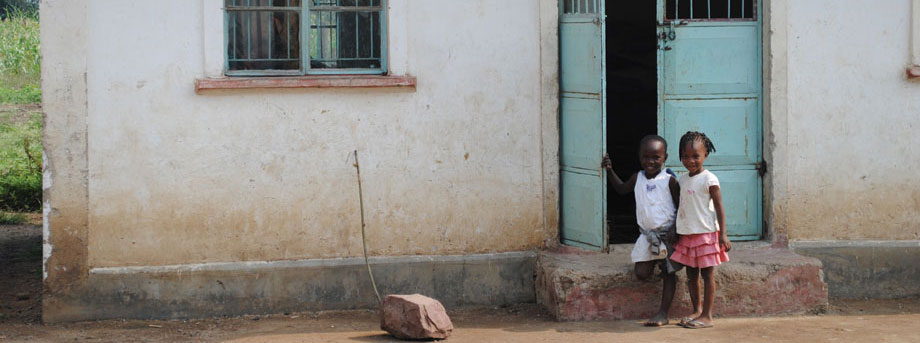
Ten years after they were inspired to help some of the world’s most vulnerable children, three medical students have returned to Nottingham to celebrate their success and highlight future challenges.
Dr Dan Magnus, Dr Beccy Lesley and Owain Evans set up KOP in 2001 to support orphans and vulnerable children in Kenya.
Since then, with the help of student volunteers from 17 UK Universities, KOP has been involved in establishing a hospital, a health clinic, a primary and secondary school, two community/feeding centres and a support and rehabilitation centre for street children.
To mark its 10th anniversary, the charity returned to where it all began for a conference for all those that have been involved in its success and for those volunteers due to visit Kenya in 2012.
Dr Magnus, who was recently voted BMJ Junior Doctor of the Year, explained: “KOP started because three medical students wanted to give something back and were very aware of the HIV epidemic and levels of child poverty that were persisting in Africa. I’m not sure that we could have dared to dream it would be so successful when we talked about the first project in the Medical School coffee bar.
“Since then almost 1,000 students have volunteered in numerous projects, helping to improve health and education for vulnerable children. However, just as important is the experience they get from seeing the effect of the widespread poverty and disease that exists. Not only will this help them in their own career but will also encourage them to be advocates for change, in whatever career path they take.”
The KOP conference was held at the University’s Medical School, and included keynote speakers including John Mcluskey and Eunice Ndirangu, from the University, as well as a representative from Karnival, the student fundraising society. The day was rounded off with a charity ball.
Fourth-year medical student James Williams was one of 36 Nottingham students who visited Kenya in the summer of 2010 to help at projects including: HOVIC, a centre for street children; Kochogo, a rural feeding centre; and Alendu Primary School on the outskirts of Kisumu.
He said the experience had been one of the best in his life and urged fellow students to accompany him when he returns to Kenya next year.
James said: “The trip certainly broadened my horizons, took me to an area of the world that I might otherwise never have visited and gave me a better appreciation of different cultures – something which will definitely help me in my future career. It was incredible to see all of the money I had raised being used to improve people’s lives and the chance to get involved with children at HOVIC is an experience I will not forget.
“After a fantastic ten years I think even more exciting prospects lie ahead!”
More photos are available at the online version of Exchange at: https://exchange.nottingham.ac.uk/.
KOP is supported by Cascade. Donations from the University’s community of alumni, students, parents and staff have created Cascade (formerly the Annual Fund) to support transformative student projects. Judged by a panel of leading alumni donors, the fund awards up to £25,000 to projects that will enrich the lives of our students and people across the world. To find out more, please visit: http://tiny.cc/UoNcascade.
To find out more about KOP, please visit: www.kopafrica.org/.
Posted in Features | Comments Off on A decade of success
A cracking good show!
December 22nd, 2011

The University of Nottingham has been recognised as a Good Egg in the Compassion in World Farming’s 2011 Good Farm Animal Welfare Awards.
The Good Egg Awards celebrate companies who use only cage-free eggs or egg products.
Since 2006 it has been the policy of the University to buy only free-range eggs. Every year 200,000 of them are used across its catering outlets.
Karen Knight, Commercial Business Manager in the University’s Commercial Services Department, said: “Both students and conference organisers alike recognise the importance of obtaining food from ethically-sound suppliers. With more than 20 catering outlets across the University we are delighted to receive the Good Egg award and feel that it is a true recognition of the University’s commitment to ongoing responsible food sourcing.”
Compassion in World Farming’s Good Farm Animal Welfare Awards recognise companies that are committed to implementing substantial changes and for making progress in their sourcing of meat, eggs and dairy products.
The University was among some 40 hospitals, educational centres and local councils to be presented with one of their augural Public Procurement Awards for helping to improve the welfare of millions of farm animals. More than 265m hens, chickens, pigs and dairy cows and calves are set to benefit each year as a result of winners’ policies.
Launched in 2007, Compassion in World Farming’s Food Business Team has pioneered a unique partnership approach — working with the European food industry to encourage and reward commitment, transparency, performance and innovation in the field of animal welfare.
Katy Read, Head of Food Business at Compassion in World Farming, said: “It is so great to see the public sector’s catering departments taking animal welfare into consideration when sourcing their meat and egg produce. Higher welfare produce isn’t just the responsibility of the large corporations, but something that can be achieved at all levels. Well done to all our award winners — keep up the good work.”
Tags: Compassion in World Farming
Posted in News | Comments Off on A cracking good show!
Parents urged to have say on findings
December 22nd, 2011

A website has been launched to help raise awareness of work being done in the region to tackle childhood obesity and to seek the views of parents and healthcare professionals.
It follows a study investigating the prevention of childhood obesity, led by researchers at The University of Nottingham. One-quarter of babies gain weight faster than they should during the first four months of life; this has been linked to a greater risk of them developing childhood obesity.
Sarah Redsell, Principal Research Fellow in the School of Nursing and Midwifery and a registered health visitor, said: “We’re keen to hear parents’ opinions about whether or not healthcare professionals should be trying to prevent childhood obesity by identifying babies who may be at risk.”
The Early Prediction and Prevention of Obesity during Childhood (EPPOC) research project explored local parents’ and healthcare professionals’ views about identifying under-ones who are at risk of being obese in childhood and what could be done to address the problem.
The research team ran focus groups across Nottinghamshire and Lincolnshire, speaking to 38 parents about their babies’ size, growth and feeding. Some parents had concerns over whether breast milk was sufficient and were confused over when to start weaning; some believed chubbier babies were more desirable; some believed that crying almost always indicated hunger and did not consider alternative explanations. Parents also seemed uncertain about whether and how healthcare professionals should act on the early signs that babies could be at risk of becoming obese.
The focus groups highlighted that parents may need extra advice about the physiology of breast feeding, how to differentiate between different cries and the timing of weaning. Parents also asked for guidance on healthy foods and how keep their babies active. (A full copy of this paper is at: www.biomedcentral.com/1471-2458/10/711/)
The research team surveyed 116 professionals, including GPs, practice nurses, health visitors and nursery and community nurses. They found that GPs were asked for feeding advice less than health visitors and nursery nurses despite knowing more about the risks of obesity. Conversely, health visitors and nursery nurses were more confident about giving such advice but were less knowledgeable about the health risks of obesity. Interviews with 12 GPs and six practice nurses found that they believed advising parents on feeding and obesity prevention was health visitors’ work. GPs said that no formal training was available to help them advise parents. They considered their relationship with parents a high priority and were unsure about intervening with those whose babies might be at risk of becoming obese as children.
The survey and interviews highlighted the need for healthcare professionals to be more knowledgeable about the early signs of childhood obesity and that advice to parents needs to be more consistent. (A full copy of this paper is at: www.biomedcentral.com/1471-2296/12/54)
The research team included academics from the Universities of Nottingham and Lincoln, a clinician from Nottingham University Hospitals NHS Trust and a health visitor from Nottingham CityCare Partnership.
Parents are invited to provide comments at: www.nottingham.ac.uk/nmpresearch/eppoc/home.aspx.
Posted in Research | Comments Off on Parents urged to have say on findings
University’s Lowry show draws in record numbers
December 22nd, 2011

A series of rarely seen works of art have attracted a record-breaking 10,663 visitors to a prestigious Lowry exhibition at the University’s Djanogly Art Gallery.
In just four weeks, the exclusive exhibition – featuring works from private collections on public display together for the first time – has broken Lakeside Arts Centre’s box office records.
Vice-Chancellor Professor David Greenaway said: “The number of visitors to Lakeside is a demonstration of the national importance of this unique retrospective of Lowry’s work. We are honoured to be able to host such a landmark exhibition at the University.”
The free exhibition focuses on Lowry’s work from the 1920s to the mid 1950s, and features a large number of drawings, many of which have never been exhibited as a collection before.
Lowry famously sketched on whatever was at hand, smudging and rubbing at his pencil lines to add depth. The exhibition features drawings ranging from the most cursory of sketches on the back of an envelope to fully realised studies for later paintings. Towards the end of his life, Lowry largely stopped painting, but continued drawing.
“We’re absolutely thrilled with the response to this unique Lowry exhibition which includes over 90 beautiful drawings and paintings which have never before been seen in one exhibition,” said Shona Powell, Lakeside Director. “Many visitors have said they’ll come more than once, and since we’re open 27 – 31 December, noon to 4pm, there’s a terrific opportunity for people who have already enjoyed the show to return with family or friends who are in Nottingham for Christmas celebrations.”
The previous best-attended exhibition was The American Scene Prints: From Hopper to Pollock in 2010, which attracted 9,807 visitors in seven weeks.
Exhibition curator Neil Walker added: “The Lowry exhibition has been incredibly popular so far and we’re sure that this will continue until February. The success so far is testament to the quality of this exhibition, which we are so privileged to have here in Nottingham.”
The exhibition has also attracted school parties from across the county. Lakeside’s associate artists offer workshops. Other schools have had guided tours or self-led tours using Lakeside’s Art Investigator packs.
Learning Officer (Galleries) Ruth Lewis-Jones, who is also working with some creative writing MA students on a pilot Lowry Literacy project involving primary school children, said: “We are getting really booked up – the exhibition is just really popular.”
The exhibition has been organised in association with London’s Crane Kalman Gallery, and includes a loan of important works from The Lowry in Salford. It is generously supported by Sir Harry and Lady Djanogly and The Lowry Estate.It runs until Sunday 5 February.
Lakeside: Cultural Impact is a key project within the University’s new appeal, Impact: The Nottingham Campaign. Visit: http://tiny.cc/UoNImpact.
Tags: Lowry
Posted in News | Comments Off on University’s Lowry show draws in record numbers