

Campus News
Shortcuts costly
April 16th, 2012

Shortcuts in the design of payment schemes to persuade farmers to undertake conservation works could be putting the potential environmental benefits at risk, a study involving researchers at The University of Nottingham has found.
Farmers in the EU and US receive billions of dollars/pounds in government subsidies. Increasingly, these payments are justified on the basis that they provide financial incentives to farmers to improve the environment through their activities.
An international team of researchers led by experts from Nottingham examined how the design of subsidy schemes influenced the conservation benefits provided by these programmes. Researchers combined economic surveys of farms with studies of how different species responded to farm management actions.
Dr Paul Wilson, Director of the University’s Rural Business Research Unit, said: “Environmental schemes designed to correct for market failures and provide public goods from land-use have been a feature of EU payments to farmers over recent decades. Many such schemes are designed with administrative ease in mind as much as achieving broad environmental outcomes. However, designing more targeted schemes is the most efficient use of public funds.”
The EU and member states spend on average the equivalent of USD $7.2bn a year on payments to farmers that are designed to safeguard environmental benefits. The largest subsidy scheme of this type in the US, the Conservation Reserve Program, spends $1.7bn a year to purchase such benefits on agricultural land.
The researchers found that all manner of shortcuts common in scheme design undermined environmental performance. Between 49% and 100% of the promised conservation gain was lost. Comparing alternatives allowed researchers to identify which simplified policies were most problematic.
“The need for different payments, in different areas, to achieve different environmental outcomes lies at the heart of better designed agri-environmental policy,” added Dr Wilson.
The study involved researchers at the universities of Tennessee, Stirling, Copenhagen, Nottingham and Exeter and the Joint Research Institute of the European Commission’s Institute for Prospective Technological Studies. It was funded by the UK Research Councils’ Rural Economy and Land Use Programme, a collaboration between the Economic and Social Research Council (ESRC), the Natural Environment Research Council (NERC) and the Biotechnology and Biological Sciences Research Council (BBSRC), with additional funding from Defra and the Scottish Government.
Tags: Conservation Reserve Program, Director of the University’s Rural Business Research Unit, Dr Paul Wilson, Economic and Social Research Council (ESRC), Joint Research Institute of the European Commission’s Institute for Prospective Technological Studies, the Biotechnology and Biological Sciences Research Council (BBSRC), the Natural Environment Research Council (NERC), UK Research Councils’ Rural Economy and Land Use Programme
Posted in Issue 56, Research | Comments Off on Shortcuts costly
Vital new insight into early days of embryos
April 16th, 2012

Pioneering work by a leading University of Nottingham scientist has helped reveal a vital process in the development of the early mammalian embryo.
A team led by Professor of Tissue Engineering, Kevin Shakesheff, has created a unique soft polymer bowl which mimics the mammalian uterus. This allows embryos, for the first time, to be grown outside of a mother’s body, using a mouse model, for long enough to observe in real time growth during a crucial stage between the fourth and eighth days.
Prof Shakesheff said: “We have been able to give our research colleagues a previously unseen view of the incredible behaviour of cells at this vital stage of an embryo’s development. We hope this work will unlock further secrets which could improve medical treatments that require tissues to regenerate and also open up more opportunities to improve IVF. We hope to develop more technologies which will allow developmental biologists to understand how our tissue forms.”
In the past it has only been possible to culture a fertilised egg for four days. Scientists’ knowledge of events at a cellular level after four days, when, to survive, the blastocyst has to implant into the womb, has been limited.
Now, thanks to the University’s work, scientists at Cambridge University have been able to observe and record aspects of embryo development after four days.
This breakthrough is part of a major research effort at Nottingham to learn how the development of the embryo can teach us how to repair the adult body. The work is led by Prof Shakesheff, in collaboration with scientists led by Prof Magdalena Zernicka-Goetz at Cambridge University, with prestigious funding from European Research Council.
Prof Shakesheff added: “With weeks of the embryo forming all of the major tissues and organs are formed and starting to function. If we could harness this remarkable ability of the human body to self-form then we could design new medical treatments that cure diseases that are currently untreatable.”
Tags: Cambridge University, European Research Council, Kevin Shakesheff, Prof Magdalena Zernicka-Goetz, Professor of Tissue Engineering
Posted in Issue 56, Research | Comments Off on Vital new insight into early days of embryos
VC to lead review
April 16th, 2012

Vice-Chancellor Professor David Greenaway is to lead a major independent review that will shape the way doctors are trained in the UK.
Prof Greenaway will oversee the Independent Review of the Shape of Medical Training, a year-long evaluation of UK postgraduate medical education and training which aims to ensure the next generation of doctors is equipped to meet the changing needs of patients, society and health services.
Jointly sponsored by the Academy of Medical Royal Colleges, the General Medical Council, Medical Education England, the Medical Schools Council, NHS Education Scotland, NHS Wales and the Northern Ireland Department of Health, Social Services and Public Safety, the review will consider:
• the balance between specialisation and generalism
• the implications for community-delivered healthcare training
• balancing workforce demands with training needs of trainees
• how to create flexible training models which can respond to changing needs of both patients and healthcare service.
Prof Greenaway said: “I am delighted to accept this post. The challenge of ensuring that we provide the right education for doctors in training cannot be underestimated. Changing expectations from patients and advances in technology mean we must undertake a review of training now to ensure we continue to produce high quality doctors for patients in the future.”
The Shape of Medical Training Independent Review has been asked to produce a final report with recommendations by June 2013 to the Sponsoring Board, which is overseeing the review. It is expected that the recommendations will put in place a structure for postgraduate medical education in the UK for at least the next 10 to 15 years.
Christine Outram, managing director of Medical Education England, said: “Patient expectations and the future health needs of a population that is living longer will require a more flexible system that can provide care within different environments and in different ways. We are delighted that Professor Greenaway has accepted the role of Chair of the Shape of Medical Training Review and we look forward to working with him.”
Niall Dickson, GMC chief executive, said: “This review has the potential to make a real difference.
“It is a once-in-a-generation opportunity to shape the structure, approach and content of postgraduate education in the UK and make sure that doctors trained here are among the best in the world, delivering cutting-edge, high-quality care for patients. We are delighted that Prof Greenaway has agreed to chair the review — he brings experience, objectivity and rigour to this new and important role.”
Tags: Academy of Medical Royal Colleges, Independent Review of the Shape of Medical Training, Medical Education England, NHS Education Scotland, NHS Wales, Northern Ireland Department of Health, Social Services and Public Safety, the General Medical Council, the Medical Schools Council, Vice-Chancellor Professor David Greenaway
Posted in Issue 56, News | Comments Off on VC to lead review
Unlocking potential
April 16th, 2012
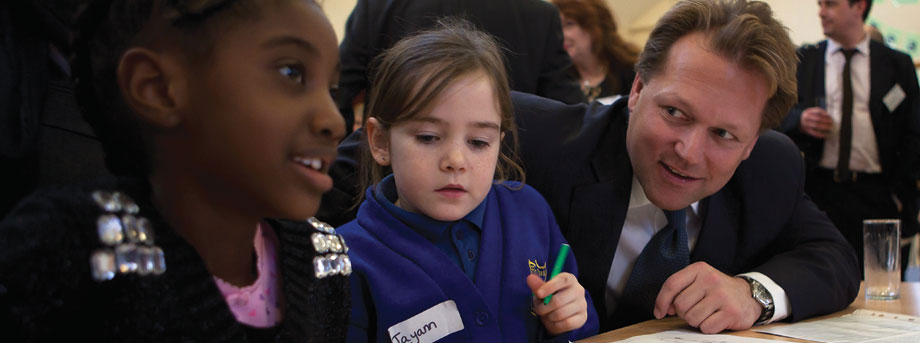
An ambitious new programme will help some of the most deprived young people in the East Midlands to reach university.
Nottingham Potential represents a major investment in the future of the primary and secondary-age school pupils – a multimillion pound commitment to help break down the barriers to higher education.
Delivered by the University in partnership with charity IntoUniversity, Nottingham Potential will create community-based learning centres to support pupils aged 7-18 years, including one-to-one support with homework, literacy and numeracy, coursework, exams, GCSE options and A-levels, careers advice and university applications.
Nottingham Potential has been made possible by a £2.1m donation from the David Ross Foundation, a national charity which has a breadth of experience in working with schools and with initiatives that aim to increase young people’s aspirations. Its chairman, David Ross is an alumnus and is the co-founder of the Carphone Warehouse.
The donation enhances the University’s own substantial financial commitment and is the biggest single gift the University has ever received from one of its graduates.
Pupils attended the launch of IntoUniversity Nottingham West, the first learning centre and based at The Hope Centre, Broxtowe, on 27 February.
The programme builds on the University’s successful work over the past decade within disadvantaged communities, and aims to provide earlier, broader interventions for young people to raise attainment and encourage progression to university. It will increase outreach significantly.
Professor Sarah O’Hara, Pro-Vice-Chancellor for Access and Community Relations, said: “Despite changes in funding and fee structures for the higher education sector, the University is clear about the direction and commitment needed to improve access for those who aspire, and have the ability, to pursue higher education.
“Nottingham Potential represents a step-change in our work with young people in Nottinghamshire. Working in partnership with major donors, such as the David Ross Foundation, we can ensure that philanthropic donations support some of the most deprived young people in the region, identifying and supporting their talent and providing a pathway to success. This is an opportunity to transform lives, to transform the region and, through a pioneering partnership approach, to become a beacon of best practice – a model that can inform policy to benefit those beyond our region.”
Mr Ross said: “The David Ross Foundation’s partnerships with schools in deprived areas has shown us that in order to raise young people’s aspirations then the earlier we start, the better. Our focus is on working with children at an early age to show them that a university education is a door very much open to them.
“Talent and ability is abundant in these schools, and in many different fields – academic, artistic, sporting and many more. However, without the right kind of encouragement and support young people may not appreciate the opportunities that they can seize.
“Given what we have learned through our partnerships with schools, working with a leading university was the obvious next step for the Foundation. Nottingham Potential is a hugely exciting, ambitious and, above all, important programme and one that I believe is genuinely pioneering.”
The University has launched Nottingham Potential alongside a significant increase in bursaries for low-income students. Together these developments represent a doubling of the University’s investment in widening participation, from £8m to £16m a year by 2015-16. Nottingham Potential forms one project within the Nurturing Talent theme of Impact: The Nottingham Campaign, the University’s biggest ever fundraising campaign. Mr Ross is co-chair of the Campaign Board.
Visit: www.nottingham.ac.uk/NottinghamPotential.
Tags: Carphone Warehouse, David Ross Foundation, Impact: The Nottingham Campaign, IntoUniversity, Nottingham Potential, Nurturing Talent, Pro-Vice-Chancellor for Access and Community Relations, Professor Sarah O’Hara
Posted in Features, Issue 56 | Comments Off on Unlocking potential
Isobel aims high…
March 20th, 2012
University of Nottingham student and international high-jumper Isobel Pooley has her sights set on a place at London 2012 after taking gold at the BUCS Indoor Athletics Championships in Sheffield.
Success at her first university championships comes just weeks after the Biosciences student set a new personal best of 1.88 metres – a mark just 4cm short of the British Olympic team’s provisional qualification mark.
Isobel said: “I’m over the moon to have won the Championships. There were some great contenders for the title so I am delighted to have been able to pull out a good performance when it really mattered and to have done the University proud!
“With the Olympic qualification standards as they are I could earn a place on the team with only a 4cm improvement on my personal best, and I have four months to achieve this. Selection takes place in early July, with the Olympic Trials in late June, so for me it’s just a case of training hard and hoping that the rewards will come in time for London.”
The University’s sports department, which is aiming to be The Academic University of Choice for talented sports-people, provided Isobel with a bursary to help her balance her academic and sporting commitments.
Nigel Maygothling, Assistant Director of Sport, said: “Our University has a proud tradition of supporting academic students in pursuit of Olympic glory and we will continue to support Isobel in every way possible towards London 2012 and the Road to Rio for 2016.
“Isobel is still very young in high-jumping terms so the future is clearly bright and we’re looking forward to her competing for us again in the BUCS Outdoors event in the Olympic Stadium this June — hopefully only a warm-up event for her to compete there again later in the year.”
Isobel added: “Without sounding boastful or cocky I am confident that I will break the British Record (1.95m) one day. My success so far has been remarkable and I’m still very young in high-jump terms — jumpers are at their prime in their late 20s so I have plenty of years left in the game!
“Obviously my height is an advantage, something I inherited from my Dad — he’s 6ft 10in and I’m 6ft 3in, and I know that I have the drive and the commitment to go all the way.”
Posted in News | Comments Off on Isobel aims high…
Gallery
February 15th, 2012
-
- Action-packed show

-

- Fascinated

-

- Welcoming in the Year of the Dragon

-

- A colourful stage show

-

- Taking to the stage

-

- Enjoying the fireworks

Posted in Gallery | Comments Off on Gallery

The Ragged Trousered Philanthropists
February 15th, 2012
Date: Thursday 8 and Friday 9 March
Time: 8pm
Venue: Djanogly Theatre,
Lakeside Arts Centre, University Park
Admission: £15, £12 concessions,
£9 restricted view
Posted in Theatre and Dance, What's On | Comments Off on The Ragged Trousered Philanthropists
Underneath the Floorboards
February 15th, 2012
Date: Sunday 11 February
Time: 1.30pm and 3.30pm
Venue: Djanogly Theatre,
Lakeside Arts Centre, University Park
Admission: £6 all tickets
Posted in Theatre and Dance, What's On | Comments Off on Underneath the Floorboards
Tributes to Janet
February 15th, 2012

Academic colleagues and representatives from the world of ballooning have been paying tribute to Dr Janet Folkes, who has died after a long battle with cancer.
Janet, an expert in the field of lasers and high powered water-jetting, was also recognised across the globe for her record-breaking achievements in hot air and gas ballooning. Dr Folkes also piloted the University’s hot-air balloon at events across the world.
Professor Paul Shayler, Head of the Department of Mechanical, Materials and Manufacturing Engineering, said: “Janet has been a wonderful colleague, a high flyer in her academic achievements as well as her record-breaking ballooning adventures. She was a highly respected teacher and an outstanding researcher who excelled at finding industrial applications of her research. She was exciting and rewarding to work with; always vitally interested and interesting. She leaves us an enormously impressive legacy of achievements and many fond memories to remember her by.”
Colleagues in the Faculty of Engineering have described Janet as elegant, brave and adventurous — a great friend who will be sadly missed. Her enthusiasm to pass on her expertise is also recognised.
Many comments have been posted on the Periodic Tables BlogSpot, where Janet was a regular contributor. Brady Haran – the University’s film maker in residence – who made a series of films with Janet, said: “Janet was a brilliant woman, genuine and brilliantly understated. We have been left with many great memories.”
In April 2010, with co-pilot and Nottingham alumna Dr Ann Webb, Janet was presented with the British Balloon and Airship Club’s Charles Green Salver for exceptional achievement. The pair broke the female duration world record while competing in the 2009 Coupe Aeronautique Gordon Bennett. Janet established more than 50 world records. She won the 10th America’s Challenge gas balloon race in 2005 with her co-pilot Bill Arras. They flew nearly 1,500 miles from New Mexico to Canada in 46 hours and 14 minutes, giving her the British General distance and duration records by a large margin.
In an interview with the BBC, as she prepared for the 2010 Gordon Bennett gas balloon race, Janet talked about the chemotherapy she was having to keep her breast cancer in remission. She said: “You should make the most of what you’ve got… if you can go and fly that puts your worries in perspective. Just to be able to get in the air and stay in the air — it’s just amazing. You see the sunrise, you see the sunset, you just see the world from a different perspective up there.”
Janet was recognised last year as one of Nottingham’s 100 women of substance. She was made a Freeman of the City of London in 2008. As a result of her work for the Nissan Motor Company she holds two Japanese patents on the hardening of titanium. Although Janet travelled all over the world, she returned regularly to Burton Joyce to spend time with family and friends. A website has been set up for people to post tributes to Janet: http://ourmemoryof.com/janetfolkes.
Tags: 100 women of substance, Department of Mechanical, Dr Ann Webb, Dr Janet Folkes, Faculty of Engineering, Materials and Manufacturing Engineering
Posted in News | Comments Off on Tributes to Janet