

Campus News
The changing face of British politics
April 16th, 2012
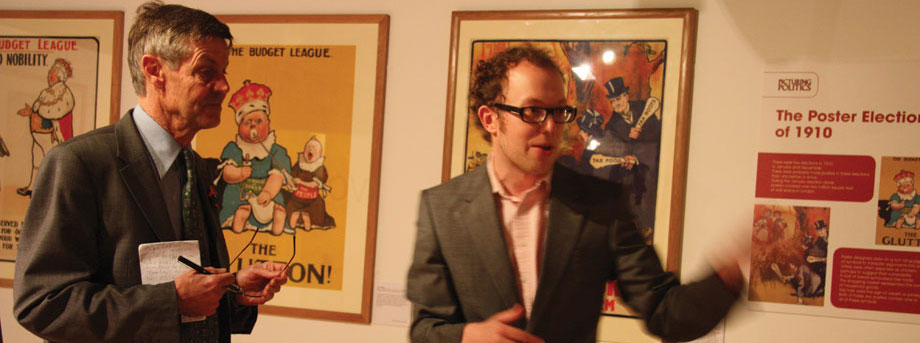
A prestigious exhibition at the People’s History Museum in Manchester being curated by a politics student has attracted more than 26,000 visitors so far.
Picturing Politics: Exploring the Political Poster in Britain is curated by Chris Burgess, a third-year PhD student. He is researching the history of the British election poster as part of an ongoing collaboration between the People’s History Museum and The University of Nottingham and is funded by the Arts and Humanities Research Council.
Chris’s research — which looks at the changing face of election posters produced in Britain during the 20th Century — allows the exhibition to illustrate for the first time how some of these significant posters developed from the original concept of the party leader to the final image.
With more than 60 iconic examples of political posters, the exhibition — which runs until June 2012 — will explore the development of the poster and examine one of the key aspects of our democracy: how the way parties communicate with people has evolved over the years.
The popularity and prevalence of digital technology didn’t stop all the main political parties using posters to state their views on the NHS, unemployment, the economy, etc, during the 2010 General Election.
But digital technology allowed the general public to register their dissent with more than just a can of spray paint. While graffiti-covered billboards were a common sight during the election campaign, many people digitally manipulated the official posters to reflect their own stance and, in some cases, ridicule politicians. These doctored posters went viral via social networking sites, such as Facebook and Twitter, and, for many, became the definitive images of the 2010 election.
Opened by political commentator Matthew Parris, an MP from 1979 to 1986 before entering journalism, the exhibition displays the process of design, from initial idea, through preliminary artwork, to the final poster.
Thematic displays show how the treatment of some subjects has changed dramatically, for example, the depiction of women, while other subjects remain constant, such as representations of the party leader.
Visitors to the exhibition are encouraged to make up slogans and create their own posters.
Chris has featured on Radio 4 and has written a blog about his involvement in the exhibition: http://picturingpolitics.wordpress.com
He said: “My work on the exhibition has been very different from most academic work. Academics are more used to writing 10,000-word articles, whereas I’ve had about 100 words to comment on each poster.
“Some people say the poster is dead and political parties will stop producing them if they can be vandalised so easily but they have evolved and they still show how British politics uses them to create a link between images and words, it’s interaction with the public.”
Katy Archer, museum director, said: “The People’s History Museum is very proud to be able to show Picturing Politics. The exhibition is a fantastic collaboration between the museum and the University and Chris’s research has given us a valuable insight into our political poster collection.
“The exhibition is visually very strong and accessible for all our audiences and we are sure it will continue to be extremely popular.”
Credits: Chris Burgess/Matthew Parris image courtesy of People’s History Museum.
Tags: Arts and Humanities Research Council, Chris Burgess, Matthew Parris, People’s History Museum, Picturing Politics: Exploring the Political Poster in Britain
Posted in Features, Issue 57 | Comments Off on The changing face of British politics
Paying the price for poor grasp of finances
April 16th, 2012

Consumers with poor financial skills pay over the odds for loans and are eight times more likely to use expensive credit such as payday loans, new research has revealed.
The research from The University of Nottingham on the UK consumer market shows that consumers who have a poorer understanding of key financial concepts such as interest rates and credit terms pay nine percentage points more for loans than those with better numerical skills.
Professor Richard Disney and Dr John Gathergood, of the School of Economics, analysed sample data of 3,000 consumers surveyed by the market research organisation YouGov.
Dr Gathergood said: “Survey results show that poor understanding of loan terms such as APRs is associated with more use of high-cost credit. There is a clear cost of ignorance in the consumer credit market.”
The researchers measured consumers’ understanding using a series of questions about the cost of everyday credit products. For example, one question was:
‘‘Sarah owes £1,000 on her credit card and the interest rate she is charged is 20% per year compounded annually. If she didn’t pay anything off, at this interest rate, how many years would it take for the amount she owes to double?’’ Less than five years / Between five and 10 years / More than 10 years / Do not know.”
Among consumers with outstanding debts, only 52% answered correctly (less than five years), 36% chose a wrong answer and 12% said they did not know. Their answers to a series of questions were analysed alongside information about their outstanding debts and the characteristics of those consumers.
The research found that those with poor understanding of financial terms and concepts were typically aware of their lack of understanding. When asked to evaluate their own understanding of financial terms and calculations, consumers who performed poorly on the questions were more likely to state they were unsure about how to interpret financial information. Yet these consumers also stated they were less likely to read the financial pages in the media in order to improve their understanding.
The UK consumer credit market is the second largest in the world, with approximately £200bn of credit held by UK consumers. National Numeracy recently released results that showed that low financial numeracy imposed economic costs on the economy. The Nottingham research shows that poor financial numeracy imposes direct costs to consumers.
It comes as the Department for Business Innovation and Skills Select Committee published the results of its inquiry into debt in the UK. Dr Gathergood testified before the Committee as an expert witness and argued that consumer misunderstanding of credit products was among the causes of debt problems in the population.
Tags: debt, Dr John Gathergood, Professor Richard Disney, School of Economics
Posted in Issue 57, Research | Comments Off on Paying the price for poor grasp of finances
A year of success
April 16th, 2012
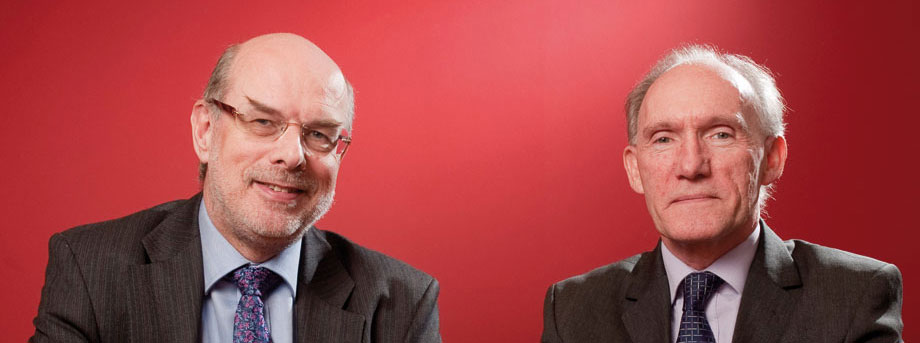
Against a backdrop of the most challenging time in UK higher education for a generation, a landmark collaboration agreement between the universities of Nottingham and Birmingham is celebrating a successful first year.
This innovative partnership builds on the complementary strengths of the two universities and has enabled the institutions to secure multi-million pound research income, explore new international markets, and develop research collaborations.
The two universities were awarded several million pounds by the Medical Research Council (MRC) and Arthritis Research UK to explore ways to reduce the pain and disability caused by ageing. They are also working on a number of high-profile collaborations in areas such as liver and gastro-intestinal research.
From the outset, a key focus for the two universities was exploring emerging markets and they have made significant in-roads into Brazil. This includes a £480,000 fund for research projects between the Universities of Birmingham and/or Nottingham and Brazilian institutions in São Paulo State, and a scheme with the Brazilian funding council which will see 20 PhD scholarships for Brazilian students across the two universities. Brazil has also seen the first joint appointment of a new in-country officer.
A number of other joint projects, which aim to enhance collaborative working and share best practice among the universities’ professional and administrative teams at are also being developed.
Professor David Greenaway, Nottingham’s Vice-Chancellor, said: “The framework for collaboration between our two universities has focused and expanded some pre-existing links and provided a foundation for new ones. Our partnership has recognised each other’s strengths and used them to leverage and exploit new opportunities, whilst maintaining our distinct identities.
“We are demonstrating the benefit of collaboration in these challenging times for UK higher education, whether this is with each other or with other institutions and partners, both nationally and internationally.”
Professor David Eastwood, Vice-Chancellor of the University of Birmingham, said: “A key challenge facing all UK universities is to enhance services and facilities to students and staff in a more constrained funding environment. Our landmark collaboration has already enabled us to strengthen our research and teaching, share and develop innovations, and diversify income streams. Our strong partnership is delivering strategic advantages and enables us to collaborate in areas where it is mutually beneficial, while we continue to work closely with other leading institutions.”
The universities share characteristics of scale, history, outstanding research, high-quality student experience and international engagement. These latest activities have built on existing collaborations, including involvement in the Midlands Physics Alliance, the Manufacturing Technology Centre, and the Midlands Energy Consortium. The universities are also formal partners in two large Research Council-supported Doctoral Training Centres, one in the area of Efficient Fossil Energy Technology, the other in the applications of Hydrogen and Fuel Cells.
Tags: applications of Hydrogen and Fuel Cells, Arthritis Research UK, Efficient Fossil Energy Technology, Medical Research Council (MRC), Midlands Physics Alliance, the Manufacturing Technology Centre, the Midlands Energy Consortium, University of Birmingham
Posted in Issue 57, News | Comments Off on A year of success
Spotlight
April 16th, 2012
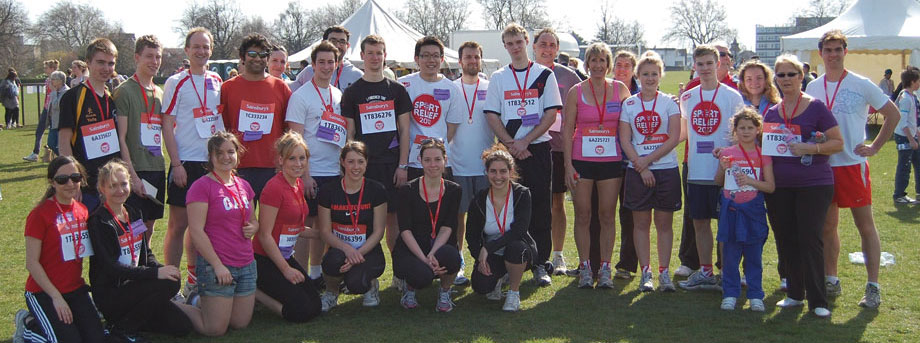
School of Economics grand total
Sport Relief 2012 was a big event for the School of Economics. What started as a rather rash “Why don’t we both take part in the run?” type conversation (possibly after a glass of wine) between the UG admissions officer and her Economics professor husband, escalated into something a bit more substantial.
On Friday 23 March, about 8 or 9 of the best bakers in the School put on a massive cake sale in the School, drawing customers from across the university and raising £247.
And on Sunday 25 March, around 35 undergrads, postgrads, academic and admin staff took part in a one-mile, three-mile or six-mile run along Nottingham’s Embankment. The weekend raised a spectacular £1,157. Well done to all who took part and thank you to all those who supported the effort.
Visit strengthens links with Ethiopia
The University’s links with Ethiopia have been strengthened by a high-level visit, led by His Excellency Berhanu Kebede, Ambassador of the Federal Democratic Republic of Ethiopia.
The Ethiopian Ministry of Education and the University reached an agreement on providing for the development of higher education in Ethiopia through jointly-funded scholarships, by the provision of joint Ethiopian Ministry of Education and University of Nottingham Developing Solutions Scholarships. Five full tuition scholarships will be provided for young Ethiopian academics over the next five years, under the University’s Developing Solutions programme. The scholarships are targeted at outstanding researchers who will undertake research programmes in areas that will help to advance the development of their own country.
Clinical trial into tinnitus test
A clinical trial is to test whether a pocket-sized device that uses sound simulation to reboot faulty ‘wiring’ in the brain could cure people with the debilitating hearing disorder tinnitus.
The CR® neuromodulation device delivers specific sequences of sounds to disrupt the pattern of neurons firing in the brain. It is believed that conditions such as hearing loss can cause neurons in the brain to fire simultaneously instead of in a random pattern which can cause an overload and lead to a ringing or buzzing in the ear, the classic symptom of tinnitus.
The study is being led by the National Biomedical Research Unit in Hearing (NBRUH) which is funded by the National Institute for Health Research (NIHR), a partnership bringing together expertise from researchers at The University of Nottingham and the Medical Research Council Institute of Hearing with leading clinicians from Nottingham University Hospitals NHS Trust.
New centre of excellence opens
A new research centre at The University of Nottingham will develop the next generation of electrical machines for transportation, energy and industry.
The Cummins Innovation Centre in Electrical Machines is a centre of excellence to develop world-leading research that will help with renewable energy generation, electric vehicles and other technologies.
The Faculty of Engineering has a long history of working with Cummins Generator Technologies, the largest electrical machines manufacturer in the UK, on projects including electromagnetic and thermal modelling of generators, high speed machines for turbochargers and other high-performance applications. Cummins has established an Innovation Centre at the University with projected funding of around £2m over the next five years. The Centre is also being supported through a prestigious Royal Academy of Engineering senior research fellowship.
Tags: Ambassador of the Federal Democratic Republic of Ethiopia, CR® neuromodulation, Cummins Generator Technologies, Developing Solutions, His Excellency Berhanu Kebede, Medical Research Council Institute of Hearing, National Biomedical Research Unit in Hearing (NBRUH), National Institute for Health Research (NIHR), Royal Academy of Engineering, School of Economics, Sport Relief 2012, The Cummins Innovation Centre in Electrical Machines, The Ethiopian Ministry of Education, The Faculty of Engineering, tinnitus
Posted in Issue 57, media | Comments Off on Spotlight
Jump in… and Wheee!
April 16th, 2012

A new Luminarium will have its world premiere at The University of Nottingham.
Wheee! — Lakeside’s International Children’s Theatre and Dance Festival — will premiere the EXXOPOLIS to help celebrate Architects of Air’s 20th anniversary.
The Luminarium is always a massive hit with adults and children alike, and Lakeside has commissioned alumni Alex Patterson to compose a piece for a choir to be performed in the Luminarium during the festival
Now in its 7th year, Wheee! (which runs 2 to 10 June), the line-up promises fantastic family entertainment and hands-on activities and workshops.
Spanish dance and theatre company Aracaladanza will perform Nubes (Clouds) at Lakeside on June 2; Canadian company Bunk Puppets will perform Swamp Juice from 3 June – a mix of fiendishly clever shadow puppetry with a 3D finale; Scottish theatre company Catherine Wheels will bring White to Lakeside on 6 June; and Crying Out Loud presents Kindur (Icelandic for sheep) by TPO Company on 10 June, an interactive show using stunning digital imagery.
The Incredible Book Eating Boy is based on the award-winning book by popular children’s author Oliver Jeffers. The enchanting five-minute show is about Henry who realises that the more books he eats, the smarter he becomes! Perhaps, the smallest and maybe the shortest theatre experience with puppetry, music and projection, it takes place in a booth big enough for one child and an adult.
The success of Wheee! has inspired the creation of Jump In, a regional children’s theatre and dance event featuring all the companies from Wheee! at venues across the East Midlands.
Lakeside director and co-founder of Jump In, Shona Powell, said: “We’re incredibly excited to be welcoming six incredible companies to Lakeside as well as our internationally touring, home-grown Architects of Air.
“The shows are suitable for a range of ages. The performances are lively, vibrant and will amaze all from two to ninety-two. Great theatre for children is undoubtedly fabulous theatre for adults, and we’ve got a clutch of absolute gems lined up”
She added: “Since 2005, dance venue Déda in Derby, the Spark Children’s Arts Festival in Leicester and Lakeside Arts Centre in Nottingham have worked together to bring high quality international children’s theatre and dance to the region.
“But this year, for the first time, thanks to funding support from Legacy Trust UK through Igniting Ambition, and Arts Council England through Grants for the Arts, nine organisations across the East Midlands have collaborated to form Jump In, an East Midlands-wide festival for children and families which is part of the Cultural Olympiad.”
Tickets for Lakeside Arts Centre are available from: www.lakesidearts.org.uk or call the box office: 0115 8467777.
Tags: Alex Patterson, Architects of Air, Arts Council England, Cultural Olympiad, EXXOPOLIS, Grants for the Arts, Igniting Ambition, Jump In, Lakeside’s International Children’s Theatre and Dance Festival, Legacy Trust UK, luminarium, Spark Children’s Arts Festival, Wheee!
Posted in Features, Issue 57 | Comments Off on Jump in… and Wheee!
Pallets pavilion
April 16th, 2012

Architecture students from The University of Nottingham have come up with a creative and sustainable way of helping us shelter from the elements.
The team of second year students from the Department of Architecture and Built Environment have designed a pavilion built from shipping pallets for this year’s Ecobuild exhibition — the world’s biggest event for sustainable design, construction and the built environment.
The design is a combination of two Nottingham pallet designs chosen by Ecobuild. Over the Christmas holidays the 14 students combined aspects of both to create ‘A Fleeting Retreat’ — a space where visitors can relax, away from the hustle and bustle of everyday life.
Guillermo Guzman Dumont, Project Director, said: “The design creatively demonstrates the issues and responsibilities architecture students have in helping to develop the built environment in a sensitive and sustainable way. It also highlights an exciting and innovative way to demonstrate an alternative to disposing of pallets to landfill.”
The structure is designed to create a sanctuary between buildings and places using reusable construction material and demonstrates how shipping pallets can be reused in a unique and elegant way.
The students wanted the pavilion to emphasise the immutable relationship between man and his environment.
Jessica Wallis, a second year architecture student, said: “We explored organic form through the shape of dry leaves, particularly in the way they enclose space by delicately sitting on the ground. The Retreat provides a scenically enhanced shelter for students moving between buildings.”
The project is a partnership with Scott ELM, a division of the Scott Group. Michael Noble, Managing Director of Scott ELM, said: “The partnership between the Nottingham architects and Scott Group, highlights an exciting and innovative way to demonstrate an alternative to disposing of pallets to landfill. The project raises awareness that pallets have inherent value as a timber product, by dismantling it the energy of construction is lost which is bad for the carbon footprint.”
You can find the students on Facebook and on Twitter @fleetingretreat.
Tags: A Fleeting Retreat, Department of Architecture and Built Environment, Ecobuild, Guillermo Guzman Dumont, Scott ELM
Posted in Issue 57, News | 2 Comments »
I studied Law, and got a drama society 3rd…
April 16th, 2012
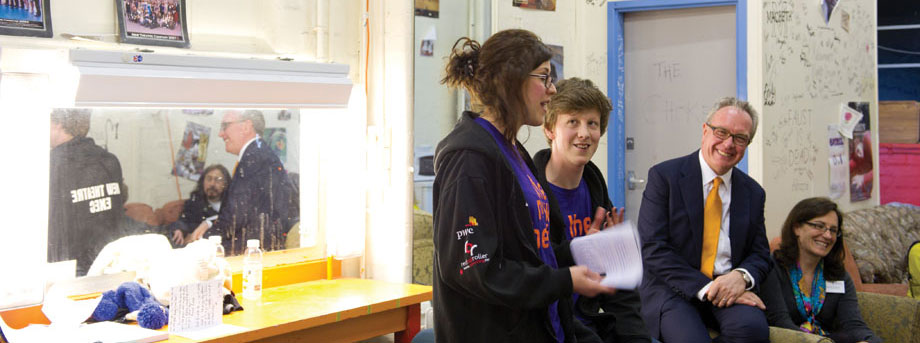
Matthew Bannister had a nostalgic trip down memory lane when he returned to the University to open the new Humanities Building, one of the most environmentally sustainable buildings in the East Midlands and part of the University’s £90m new-build programme.
Recalling a time when Lakeside was a place where discos were held, and the many nights he spent in the Buttery Bar, Matthew said: “The campus feels exciting and vibrant, with such a lot going on. I found that when I was here all those years ago but it’s even more so now, and it’s much more international.”
Matthew, who graduated in 1978, has fond memories of his time at Nottingham.
And he attributes his highly successful broadcasting career to the experience and skills he picked up as he devoted much of his time to putting on productions at Nottingham’s award-winning New Theatre.
“The University of Nottingham gave me the springboard for my career,” said Matthew. “I studied Law but ended up with a drama society 3rd, as they called it.
“I loved radio as a child but didn’t think I could work in it. I spent so much time in the New Theatre, I thought theatre would be my career. I got a place in Cardiff to study theatre. A friend was working at Radio Nottingham so I applied there for a job to fund my course. In the same week that I was offered a £983 a year grant, I was offered a £3,000 a year wage.
“It was magical for me to get a letter from the BBC saying they wanted me to work for them. On BBC letter-headed paper. I’d grown up listening to the BBC.
“The foundations were laid at Nottingham and the New Theatre. Directing is all about managing creative people and developing a project. It’s trying to get talented people to work as a team, allowing them to do their best and somewhere on the list of priorities is bringing the production in on budget and making sure people come to see it.
“That experience gave me the skills that were crucial in my later career – trying to bring together a team of disparate people, making relationships work…all those lessons started here at New Theatre; same skills, just a bigger platform.
“The only thing I regret is not doing better at law.”
Matthew held a Q&A session with students, chaired by Danny Barry, democracy and communications officer for the University’s Students’ Union.
He acknowledged that today’s students were competing in an increasingly tough global job market.
“I’m pretty sure it’s more difficult to get a job because of increased competition. It’s about how you make yourself stand out. I suspect one needs to be very determined and show real commitment to it in some form. To get a job you have to have lived and breathed it, demonstrated your passion for it. Build your CV towards that career. It used to be an old boys’ network but not any more. That level of commitment is what you look for when you’re recruiting these days.”
Matthew clearly enjoyed revisiting New Theatre, meeting current students and hearing all about its development plans.
Later in the day, Matthew gave an illustrated talk entitled: “A very personal history of British radio: from my dad’s crystal set to my new iPad” to a packed audience, with anecdotes of his time at Radio 1 including tales of Chris Evans skateboarding through the corridors of power. In his pants.
But is there still a place for radio within the ever-growing landscape of social media?
“Getting young people to experience radio has always been more difficult than getting older people to do it, because young people have lives,” he said.
“A radio station that’s not communicating on Twitter, Facebook and all the new social media channels just wouldn’t survive now. It has to join the other media. It used to be that people in radio in London beamed you stuff and you were jolly grateful. People expect a 3D relationship with radio now, where they can get involved as much or as little as they want.
“Radio is very solitary; it’s live and of the moment in a way that perhaps other media are not. Radio definitely has a future. The same strength that allowed it to survive lots of other revolutions will allow it to survive.
It adapts.”
Tags: Humanities Building, Matthew Bannister, New Theatre
Posted in Features, Issue 57 | Comments Off on I studied Law, and got a drama society 3rd…
Blood test for cancer is trialled by NHS Scotland
April 16th, 2012

The NHS in Scotland is to conduct a major screening trial for lung cancer using a new blood test developed by Oncimmune Ltd, a University of Nottingham spinout company. It will be the first time the blood test has been used outside the US.
EarlyCDT-Lung, which has been available in America for two years, detects cancer at its earliest stages and could save a significant number of lives and reduce the care costs for this high-risk population.
Funded by NHS Scotland, The Centre of Excellence for Autoimmunity in Cancer (CEAC) at The University of Nottingham and Oncimmune Ltd, the randomised prospective trial is to ascertain the cost–effectiveness of EarlyCDT-Lung and will include 10,000 high-risk smokers. Screening will start before the end of the year and the first results are expected before the end of 2014.
Currently just nine per cent of lung cancer patients in the UK are still alive five years after diagnosis.
The blood test is based on pioneering research into the body’s immune response to cancer carried out over the last 15 years by Professor John Robertson, Director of CEAC and Chief Scientific Officer of Oncimmune Ltd.
Prof Robertson said: “The test is highly reproducible and will, I believe, lead to significant improvement in prognosis for a substantial number of lung cancer sufferers. The significant amount of performance validation work that we carried out before the test was launched in the US has led to the test performing commercially as expected. A randomised screening trial of this nature will help validate its use as a screening tool.
“We are working hard on bringing the next test for the early detection of breast cancer to the market within a year. We are also working on a number of similar tests for prostate, colon and ovarian cancer — a blood test to aid detection of all tumour cancers (70% of all cancer) is still the overriding objective of our work.”
Sir Harry Burns, Chief Medical Officer for Scotland, said: “The earlier a cancer is diagnosed the greater the chance it can be treated successfully, and currently 85% of patients with lung cancer remain undiagnosed until the disease has reached an advanced stage.
“This pilot project is part of our Detect Cancer Early programme, which aims to increase the early detection of cancer by 25%. By testing those at greatest risk of developing lung cancer, and diagnosing it at its earliest possible stage, we stand a better chance of being able to treat the cancer successfully. This means patients can be treated when their general health is better and when less aggressive treatment may be required than if the cancer had spread.”
Professor David Greenaway, Vice-Chancellor of The University of Nottingham, said: “The ground-breaking research carried out by Professor Robertson and his team and the innovative techniques developed by Oncimmune have combined to produce a viable and cost-effective blood test for cancer which has the potential to save many lives. This is truly translational research of which we can be proud. With the fund of knowledge and expertise brought together under CEAC hopefully it won’t be long before other cancers can also be identified at a stage where more lives can be saved.”
Tags: Chief Scientific Officer of Oncimmune Ltd, Director of CEAC, EarlyCDT-Lung, lung cancer, Oncimmune Ltd, Professor John Robertson, The Centre of Excellence for Autoimmunity in Cancer (CEAC)
Posted in Issue 57, Research | 1 Comment »
Conflict ‘inevitable’: far right supporters
April 16th, 2012

Far right supporters in the UK believe violent conflict between different religious, racial and ethnic groups is largely inevitable, according to a new survey on political extremism.
From Voting to Violence? Far Right Extremism in Britain examines the beliefs of those identifying themselves as members of the British National Party, the English Defence League or the UK Independence Party. Examining a YouGov survey of 2,152 people, Dr Matthew Goodwin, of the University of Nottingham’s School of Politics and International Relations, and the University of Salford’s Professor Jocelyn Evans found evidence that large numbers of BNP and UKIP supporters endorse the view that violence between different ethnic, racial and religious groups in Britain is largely inevitable, with much stronger agreement amongst the BNP group.
“It is current and former BNP members who are the most likely to think that violence may be needed to protect their group, and that inter-group violence is largely inevitable,” said Dr Goodwin. “In contrast, while significant numbers of supporters on the periphery of the extreme right adopt similar views, they are noticeably less extreme in their views than those who are at the core.”
The study also examined responses to questions on Islam and immigration, finding that large majorities of BNP and UKIP supporters were absolutely convinced that Islam poses a serious danger to the West.
“Both groups express high levels of anxiety over Islam and its religious institutions,” added Dr Goodwin. “Both BNP and UKIP supporters would feel bothered by the presence of a mosque in their local community, but to a much higher degree among the BNP supporters.
“BNP supporters in our sample are overwhelmingly concerned about immigration and Muslims, almost to the exclusion of all other issues. Both BNP and UKIP supporters are considerably dissatisfied with the way democracy is functioning in Britain, and again BNP supporters are the least satisfied.”
The authors stress that the report is exploratory rather than a definitive assessment of far right views. Their intention is that this will lead to far bigger research project analysing the beliefs held by far right extremists.
“We want to examine whether these views, taken from a relatively small sample, are specific to the far right in Britain,” said Dr Goodwin. “This would include a much larger national population and serve to strengthen the evidence base we have, which is currently weak compared to that on religious extremism.”
Tags: British National Party, Dr Matthew Goodwin, English Defence League, extremism, From Voting to Violence? Far Right Extremism in Britain, Professor Jocelyn Evans, School of Politics and International Relations, UK Independence Party, University of Salford
Posted in Issue 57, Research | Comments Off on Conflict ‘inevitable’: far right supporters
Help us inspire city’s children
April 16th, 2012
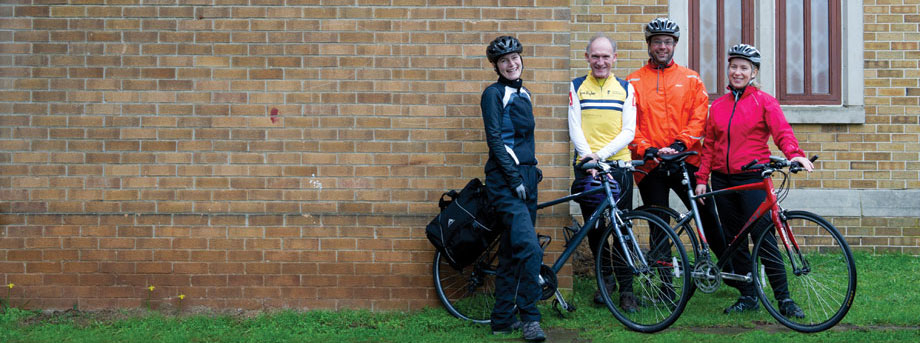
Spurred on by the success of last year’s Life Cycle, the Vice-Chancellor Professor David Greenaway is getting back in the saddle to raise funds for Impact: The Nottingham Campaign.
The Vice-Chancellor and his team rode from John O’Groats to Land’s End, raising nearly £230,000 for the University’s Sue Ryder Care Centre for the Study of Supportive, Palliative and End of Life Care.
This year — in Life Cycle 2 —the team will be cycling more than 1,100 miles from Cape Wrath, Scotland, to Dover in aid of Nottingham Potential, part of the Campaign’s Nurturing Talent theme.
The Vice-Chancellor, who turned 60 in March, recognises the challenge that lies ahead of him.
Professor Greenaway said: “Last year was an amazing experience. Despite being pushed well beyond our comfort zones, the journey surpassed our expectations in a number of ways. The amount we raised for research on palliative and end of life care was way beyond our initial target, eventually reaching almost £230,000, and the fantastic support we received throughout was both outstanding and humbling.
“However, a new goal is now in our sight. Raising the aspirations of students from disadvantaged backgrounds and supporting them financially to achieve their ambitions is something I feel passionately about. It is a cause which will provide a real inspiration to get back in the saddle for an even tougher challenge, and the motivation to succeed.”
With each mile they cover, the Vice-Chancellor and his team hope to close the gap between social inequalities by providing the means to further and higher education. The University invests £6 million in bursaries and scholarships each year to ensure that those with the ability and ambition to achieve academic excellence are not deterred by their financial situation. Your support for scholarships, bursaries and outreach will have a genuine impact on creating opportunity. Together we can help these students achieve excellence.
Professor Greenaway was raised in Shettleston in the east end of Glasgow, until his father relocated to Nottingham to work at Ratcliffe-on-Soar Power Station. Professor Greenaway was encouraged by teachers to do A levels and went on to study at Liverpool Polytechnic and The University of Liverpool, becoming the first in his family to receive a higher education.
Experienced cyclists can join the VC and his team for the leg into Nottingham on Sunday 2 September, and there will be a family-friendly, mostly off-road, circular ride starting and ending at University Park. All riders can take part in the celebrations at University Park. For those who prefer to keep their feet on the ground, there will also be a community stroll around Highfields Lake, to be enjoyed at any pace.
Social inequality pervades many areas of life but one area in which we can try to close the gap is in access to further and higher education. Your gift will give young people the opportunity to excel academically and benefit from an enriching student experience.
“I’ve led Nottingham’s Widening Participation team for over 10 years and this is the most ambitious project I’ve seen,” said Penelope Griffin, Head of Widening Participation. “As soon as I heard the ride was in aid of Nottingham Potential I knew I wanted to take part.”
More information and details of how to donate can be found at: www.nottingham.ac.uk/lifecycle.
Find out more about Nottingham Potential at: http://tiny.cc/UoNPotential.
Posted in Issue 57, News | Comments Off on Help us inspire city’s children