

Campus News
2015 Midlands Newton Summit – register now
October 27th, 2015
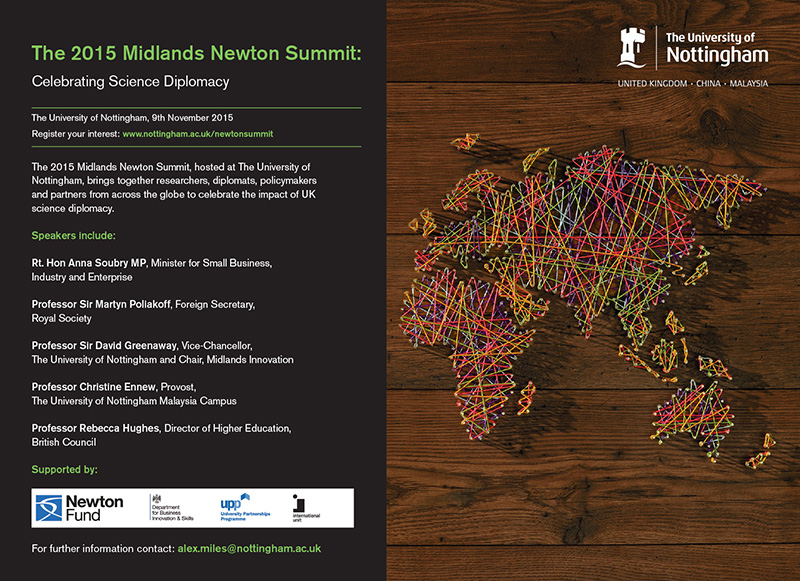
Monday 9 November
National College Learning and Conference Centre, Jubilee Campus
The 2015 Midlands Newton Summit aims to bring together internationally-acclaimed researchers and policy makers to speak about why the Newton Fund is in place and why internationalisation and working with researchers from across the world is critical for the career of a researcher.
The Newton Fund is worth £75 million per year until 2019 and focuses on supporting student and researcher fellowships, mobility schemes and funding for joint research centres. Researchers at all career stages are eligible for funding.
The day will feature a broad range of excellent speakers, surgery sessions and an opportunities for researchers to find out how to identify collaborators, build research relationships and successfully bid for funding.
Hear from speakers including:
- Rt. Hon Anna Soubry MP, Minister for Small Business, Industry and Enterprise
- Professor Sir Martyn Poliakoff, Foreign Secretary, Royal Society
- Professor Sir David Greenaway, Vice-Chancellor, University of Nottingham and Chair, Midlands Innovation
- Professor Christine Ennew, Provost, University of Nottingham Malaysia Campus
- Professor Dame Helen Wallace, Former Foreign Secretary and International Vice-President of the British Academy
Find out more and book a place today on the conference website.
Tags: Anna Soubry, Christine Ennew, David Greenaway, Department for Business Innovation and Skills, International Unit, Martyn Poliakoff, Midlands Newton Summit, Newton Fund, research, Royal Society, summit, University Partnerships Programme
Posted in News, Opportunities, Side news story | Comments Off on 2015 Midlands Newton Summit – register now
University Challenge trials
October 27th, 2015
Have you got what it takes to represent The University of Nottingham on BBC2’s University Challenge in 2016?
This year, the first heat for selection is an online quiz – take part before Thursday 29 October for your chance to appear on the programme.
Tryouts are open to every current student who meets the following criteria:
- has not previously appeared on the televised version of University Challenge
- is enrolled at The University of Nottingham and their final award in respect of their course will not be communicated before May 2016
Good luck!
Image: contestants from the 2015 UoN University Challenge team
Tags: competition, quiz, Students' Union, team, television, University Challenge
Posted in News, Opportunities | Comments Off on University Challenge trials
Nottingham is England’s Home of Sport
October 27th, 2015
Last week Nottingham was announced as England’s official Home of Sport.
The announcement came on the back of a national campaign run by the tourism board VisitEngland, and saw Nottingham beat the likes of Yorkshire, London and Manchester to the title. The decision was made on the back of an open national vote, and Nottingham secured 38% of the overall vote, reinforcing the popularity of the decision.
The University of Nottingham has always played an integral part within the city’s rich sporting tapestry. To find out what being England’s Home of Sport means to both the city and the University, visit our UoN Sport blog.

Tags: city, competition, Home of Sport, Nottingham, sport, VisitEngland, vote
Posted in Environment, News | Comments Off on Nottingham is England’s Home of Sport
Turning the Trent Building #UNBlue
October 26th, 2015
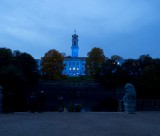
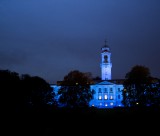
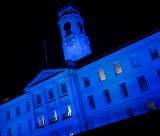
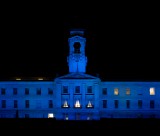
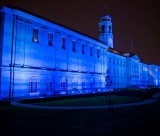
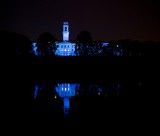
The University of Nottingham’s Trent Building turned blue over the weekend to celebrate the UN’s 70th anniversary.
The move was part of the global ‘Turn the world #UNBlue’ campaign which saw more than 200 iconic monuments, buildings, statues, bridges and other landmarks in more than 60 countries lit up in blue to promote the UN’s message of peace, development and human rights.
On Saturday 24 October, world famous landmarks from Australia’s Sydney Opera House and the Great Pyramids of Giza in Egypt to the statue of Christ the Redeemer in Rio de Janeiro and the Empire State Building in New York, all took part.
Dr Paul Greatrix, Registrar at the University, said: “The United Nations has been a beacon of hope in the world for 70 years and has been dedicated to addressing the biggest challenges faced by humanity. It seems appropriate that the University look to support, mark and recognise the achievements of the UN and honour the dedication of all those who have contributed to the UN’s work over this time.
“Education is key to international co-operation and understanding and, as a global university, we recognise this and the UN’s work in this area and are therefore pleased to be joining all of those marking this important anniversary.”
The University’s involvement in the campaign was initiated by students from the University’s United Nations Society. Eleanor Bennett, Public Relations and Outreach Officer for the society, was eager to mark the occasion and raise awareness of the UN’s mission.
The second year History and Contemporary Chinese Studies student said: “In light of the worst refugee crisis since World War Two, never has there been a more important time to support and value the work of the United Nations. The current crisis brings to mind the time in which the UN was formed. The UN was created in 1945, when people were devastated by the war, but not without hope of a new and better world – and it was on this hope that the UN was built.
“70 years on the UN now protects 1,000 world heritage sites, feeds 104 million people annually, is responsible for the eradication of smallpox and has decreased deaths due to AIDS from 2.3 million in 2005 to 1.6 million in 2012 – these are just some of their many achievements. This is not to say that the United Nations is perfect – as well as successes there have been failures – but there are a great many reasons to celebrate and support the UN on 24th of October 2015.”
Tags: anniversary, Eleanor Bennett, Trent Building, UN, UNBlue, United Nations, United Nations Society
Posted in Announcements, News, Side news story | Comments Off on Turning the Trent Building #UNBlue
Access a share of £500m innovation funding
October 23rd, 2015
Are you aware that Research Funding Councils and government bodies provide co-funding to Innovate UK, the government’s agency for managing Innovation funding?
£500m per annum of funding is available from Innovate UK to enable universities to work collaboratively with business partners. Apart from the obvious benefits of funding, the projects also act as an ideal basis for creating Impact Case studies for future REF exercises.
These slides from a recent workshop, provide a background and summary of the available opportunities. If you would like to know more about innovation funding, or would like to arrange a workshop for your School or Faculty, please contact ejaz.qureshi@nottingham.ac.uk
Tags: business, Business Engagement and Innovation Services, funding, Innovate UK, Innovation, money, Research Funding Council
Posted in News, Opportunities | Comments Off on Access a share of £500m innovation funding
Harold B. Mattingly, 1923–2015
October 21st, 2015
A former academic staff member of the Department of Classics at The University of Nottingham, Harold Mattingly, died on 23 August 2015, at the age of 92. He was first Lecturer in Ancient History 1950-1965, then Reader in Ancient History from 1965-1969, when he left to take up the post of Professor of Ancient History at the University of Leeds.
The international impact of his research is reflected in his obituary in The Guardian. His achievements, especially in the field of Greek Epigraphy, will be celebrated at a conference at the University of Cambridge on Saturday 31 October, timed to coincide with a memorial meeting in his honour later that day.
Harold was born in Finchley in 1923 and educated at Saffron Walden and the Leys School, Cambridge. After wartime service in the Friends Ambulance Unit and demolition work, he took a double first in the Classics Tripos at Gonville and Caius (1946-1948). He subsequently went on to hold a Craven Scholarship (1948-1950), writing a thesis on the Roman Imperial Senate. His subsequent research came to focus on Classical Greece and the Roman Republic and on numismatic and epigraphic problems. His favourite canvas was the academic article, with more than 160 of them produced in multiple typewritten drafts – he never took to word processors or computers. There are three published volumes of collected essays. His father, also named Harold, was another famous ancient historian and numismatist and, though initially in his shadow, the younger Harold soon established his own international reputation. The middle initial B. of the younger Harold (and sometimes the date of publication) is the best way to tell them apart.
Harold’s major scholarly contributions centred on long-running controversies, in which the recurrent pattern was that he adopted a minority view against the prevailing orthodoxy, maintaining his position across decades and in the face of sustained and sometimes harshly expressed and dismissive judgements from senior academics. Unfortunately for his opponents, he had an annoying habit of eventually being proved right. The initial groundwork for his major academic battles was laid down during his Nottingham years. The most important of these debates centred on the dating of a key series of inscriptions relating to Athenian imperialism. The chronology of the shift in Athenian policy towards her allies, becoming increasingly harsh and imperialistic, depended on the dating of a change in letter form from the three- to four-barred sigma used in public inscriptions in the mid to late 5th century BC. Harold’s contention was that the shift in Athenian imperialism fitted best with a date after 425 BC, when Athens was embroiled in the Peloponnesian War, rather than the pre-445 BC period (where orthodoxy placed them). The debate turned on whether a dated text with the more archaic form of three-barred sigma could be found after 445 BC, and Harold’s claim from the 1960s onwards that an inscription recording an alliance between Athens and Egesta should be dated to 418 BC was eventually shown to be correct by the use of photo enhancement and laser imaging in the late 1980s.
In contrast to his reputation as an obstinate and obdurate opponent in these debates, Harold was in fact an extraordinary mild mannered and courteous man, known as a conscientious teacher and encourager of students. Several letters to the family have independently described him as the nicest man the correspondent ever encountered in academia. Professor Stephen Hodkinson of the Department of Classics at Nottingham remembers him in the following terms: “He was enormously generous and helpful to me as a young university lecturer. He was a man whose modesty and humility masked immense intellectual acumen and courage.” Even in retirement he could remember the names of practically every student he had taught in his Nottingham years and was still in regular contact with several of them.
Harold enjoyed a very happy 55-year marriage to the artist Erica, with some of their best years being those in Nottingham. Although she later became a notable potter, during the Nottingham years she was best known as a designer, working on book jackets, posters (we have a substantial collection advertising the annual Wortley Hall plays – of which more below) as well as working on early displays in the University museum. In the mid-1950s they made their home in Wortley Hall Close on the edge of the campus combining starting their family with being part of the Wortley Hall community. With such enigmatic characters as Harry Lucas and ‘Uncle’ Bob Waterhouse as wardens, they and a number of other families in Wortley Hall Close remained lifelong friends. Harold’s contributions to student life as a Wortley tutor included the occasional loan of a stuffed giraffe’s neck and head known as Geraldine (normally her nose was used for storing the hosepipe in the family garage) for various student events. On one such occasion Geraldine was being driven to a party; this necessitated being held in a vertical position in a tiny open top car and caused a bus, going up the Derby Road, to veer dramatically to one side as the upper deck passengers rushed across to the University side, to see what appeared to be a giraffe going at full gallop on the other side of a hedge.
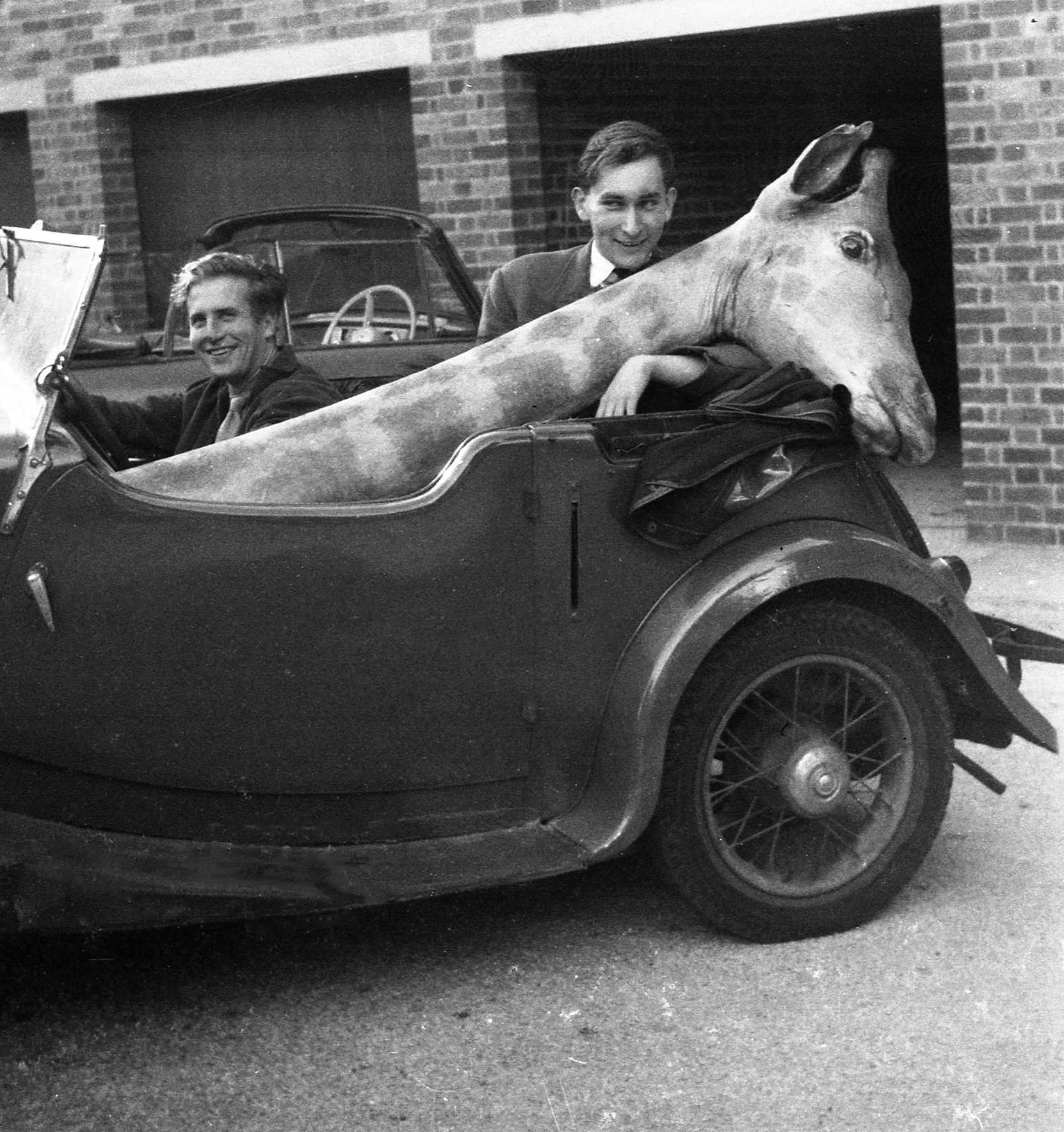
Geraldine off to a student party, c. 1960
These were days of great change and development for the University – when Harold first walked to his office from Wortley Hall across open fields, there were still farm animals on the loose, including obstreperous geese that chased him home on more than one occasion. In a relaxed age of parenting, their children, Jo, David and Liz, were largely allowed the run of the campus, earning the epithet of ‘the free range Mattinglys’. Harold was often sent out at twilight with the family dog, Sam, to call them home.
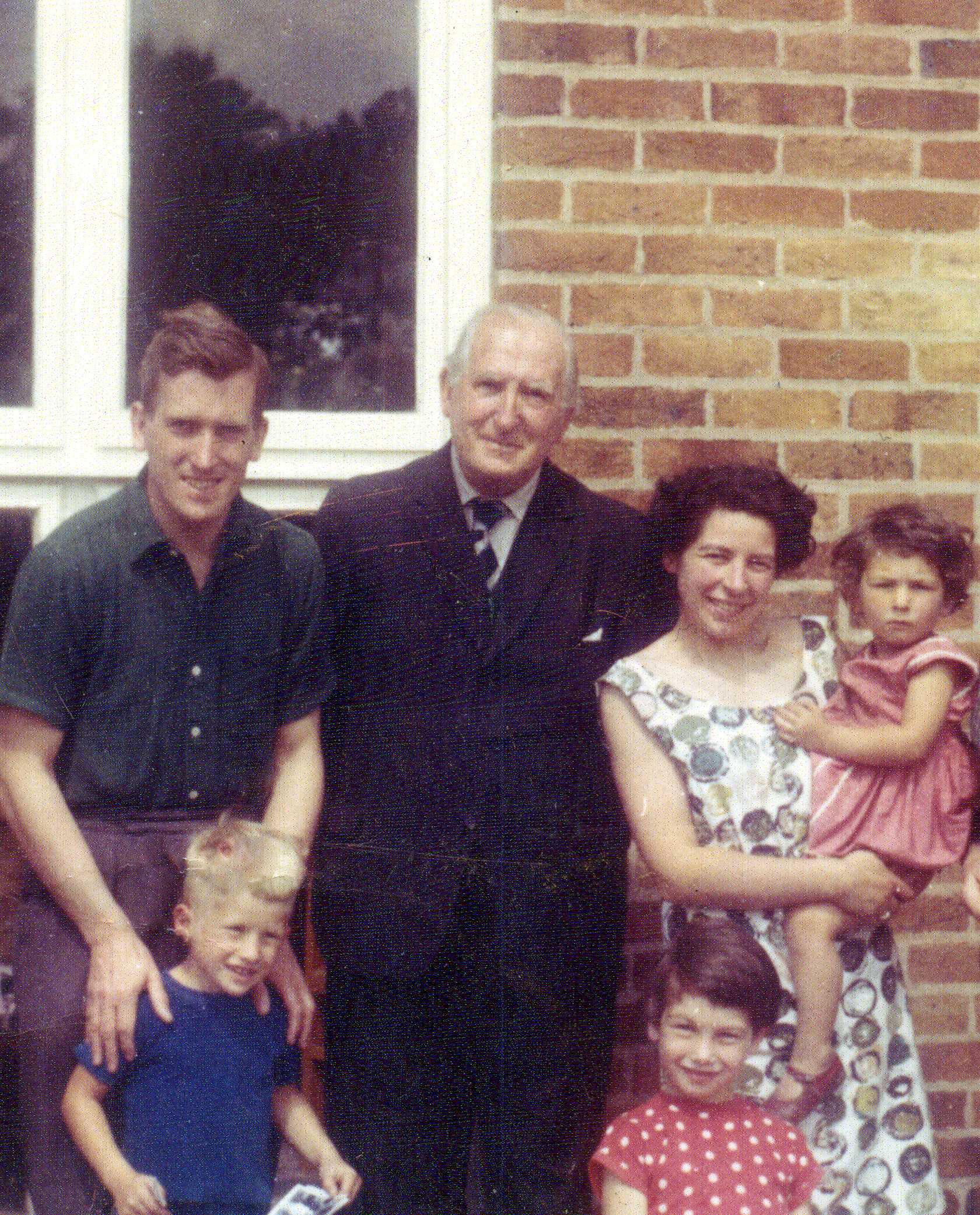
Harold and Erica, Harold senior and the ‘free range Mattinglys’, Wortley Hall Close c.1962.
Visiting children at birthday parties enjoyed treasure hunts taking in Wortley landmarks such as the flagpole, dove cot, summer house, perched on top of ‘the jungle’ and the hedgehog pens. The highlight would be Harold’s conjuring show and although his sleight of hand became less subtle with age, the sight of the soft white fluffy (glove puppet) rabbit was magical and continued to entertain his five grandchildren in later years.
Bonfire nights brought the whole Wortley community together, building a huge bonfire in the field behind the Close, always with a guy on top, though in a pre health and safety era the firework storage and lighting by Harold and other academics was somewhat haphazard, though thankfully uneventful. The Cripps fete was an annually awaited treat, particularly the bowling for a pig, as Liz loved pigs! Harold and Erica must have breathed a sigh of relief when their children came second by the proverbial pig’s whisker one year. It has to be said that by this time all the surrounding farms had long gone and the houses in the close had very small tidy gardens!
Harold was also closely involved with the development of Nottingham Playhouse and his theatrical interests extended to co-producing the annual Wortley Hall plays. Most memorable was the Teahouse of the August Moon, when he made the classic error of allowing roles for his children and a bad tempered billy goat, who did not take kindly to being kept in a neighbour’s garage for the duration and charged the door every morning when Harold was sent in to feed it!
His wide range of other activities included art, politics, concerts, punting, Quakerism, human rights charities, conjuring, football and cricket. He loved cricket above all games and was an enthusiastic fielder for the university staff team, though he accumulated few runs and never took a wicket. He attended Test Matches for nearly 80 years and was a great talker of the finer points of the game.
Harold and Erica settled in Cambridge after his retirement from Leeds in 1987 – he continuing to research and write and she to pot. He was a fixture in the Classics Faculty library in Cambridge up to his 90th birthday and received a copy of his final publication just days before he died. Erica’s death in 2008 affected Harold greatly, but he managed to maintain his independence and extraordinary sense of humour with live-in carers and family support at weekends. Having served as President of the Royal Numismatic Society from 1999-2004, he was still making adventurous forays to its meetings in London as late as 2013, often with logistical support from his grandchildren. Despite increasing infirmity, he also continued to be an indomitable foreign traveller with trips in his last years to Greece, Rome, St Petersburg and Burgundy. A short book of his memories of travels in Greece was produced with illustrations by his daughter Jo, who had accompanied him on his last trips. As well as his children and their spouses Alex, Jenny and Bill, Harold loved the company of his five grandchildren, Rebecca, Susanna, Louisa, Douglas and Isabelle.
Tags: Department of classics, Harold Mattingly, history, obituary, staff, Stephen Hodkinson
Posted in News, People, Side news story | Comments Off on Harold B. Mattingly, 1923–2015
Internal communications staff survey – thank you for taking part
October 21st, 2015
A huge thank you to all who took part in our staff internal communications survey.
The survey was closed earlier this month and we have entered all participants into a prize draw for the chance to win one of four £50 Amazon vouchers. Winners will be notified by email this week.
Your input really is appreciated, and we have collected very useful feedback from this survey. We are currently in the process of putting together a report using these responses, with the aim to improve our channels and develop future content to meet your needs.
Tags: internal communications, money, prize, staff, survey
Posted in Announcements, News | Comments Off on Internal communications staff survey – thank you for taking part
Cyclists – brighten up, be safe and be seen!
October 15th, 2015
The University is once again launching a Brighten Up campaign to encourage staff and students to be safe and be seen when cycling in the autumn and winter months.
The campaign aims to remind University students and staff to ‘Brighten Up’ while cycling – before daylight hours are reduced on Sunday 25 October. A series of events, funded by the University, will be held across our campuses next week:
Monday 19 October 12-2pm – Medical School Foyer, Queen’s Medical Centre
Tuesday 20 October 12-2pm – Portland Atrium, University Park
Wednesday 21 October 12-2pm – The Barn, Sutton Bonington
Thursday 22 October 12-2pm – King’s Meadow Campus restaurant
Friday 23 October 12-2pm – Exchange Building, Jubilee Campus
University staff and RideWise instructors will be available to give advice on lighting, high-visibility clothing and cycling in the damp and dark. Staff and students attending will be able to collect hi-visibility equipment and free lights provided by the University, Nottinghamshire Police and members of the Sustainable Travel Collective (the Big Wheel and RideWise).
For similar advice, watch Ridewise’s safe winter cycling video or take a look at our Brighten Up page.
Tags: cycling, health, sustainability, transport, travel, Ucycle
Posted in Environment, News | Comments Off on Cyclists – brighten up, be safe and be seen!