

Campus News
Lowry
January 31st, 2012
Wednesday 16 November to Sunday 5 February 2012 at Djanogly Art Gallery, Lakeside Arts Centre, University Park. The gallery is open 11am-5pm, Monday to Saturday, and noon-4pm, Sundays and bank holidays. Admission is free.
This exhibition – which has had more than 25,000 visitors so far, focuses on Lowry’s work from the 1920s to the immediate post-war period, and celebrates 130 years of excellence at the University. Supported by Sir Harry and Lady Djanogly and organised in association with the Crane Kalman Gallery, London, it includes a substantial body of works generously loaned by The Lowry Collection, Salford. With special thanks to Carol Ann Lowry and the Estate of L S Lowry.
The Cripples ©The Lowry Collection, Salford. Reproduced with kind permission.
Posted in events | Comments Off on Lowry
Excuse me, but haven’t we met before?
January 31st, 2012
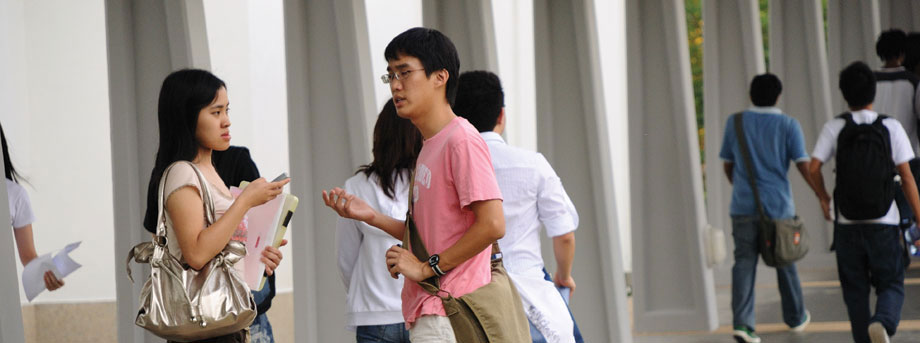
Are you someone who recognises everyone you’ve ever met? Or maybe you struggle, even with familiar faces? It is already known that we are better at recognising faces from our own race but researchers have only recently questioned how we assimilate the information we use to recognise people.
New research by The University of Nottingham Malaysia Campus (UNMC) has shown that the Malaysian Chinese have adapted their facial recognition techniques to cope with living in a multicultural environment.
The study ‘You Look Familiar: How Malaysian Chinese Recognise Faces’ was led by Chrystalle B.Y. Tan, a PhD student at UNMC. The results have been published online in the prestigious scientific journal PloS One, the first PhD student publication for the School of Psychology in Malaysia. Chrystalle Tan said: “Our research has shown that Malaysian Chinese adopt a unique looking pattern which differed from both Westerners and Mainland Chinese, possibly due to the multicultural nature of the country.”
The ability to recognise different faces may have social and evolutionary advantages. There is evidence that the brain has a specialised module dedicated to face processing. Previous research by Glasgow University showed that Asians from mainland China use more holistic recognition techniques than Westerners: Chinese focus on the nose area; Westerners focus on a triangular area between the eyes and mouth; British-born Chinese use both techniques fixating predominantly around either the eyes and mouth, or the nose.
Chrystalle said: “The traditional view is that people recognise faces by looking in turn at each eye and then the mouth. This previous research showed us that some Asian groups actually focus on the centre of the face, in the nose area. While Westerners are learning what each separate part of the face looks like, a strategy that could be useful in populations where hair and eye colour vary dramatically, mainland Chinese use a more global strategy, using information about how the features are arranged. Meanwhile, British-born Chinese use a mixture of both techniques, suggesting an increased familiarity with other-race faces which enhances their recognition abilities.”
The study investigated whether exposure and familiarity with other cultures affects our recognition accuracy and eye-movement strategies.The team used specialist eye-tracking technology and recruited 22 Malaysian Chinese student volunteers from UNMC. The results showed that Malaysian Chinese used a unique mixed strategy by focusing on the eyes and nose.
The study was supervised by Dr Ian Stephen, an expert on face processing, and Dr Elizabeth Sheppard, an expert in eye tracking. Dr Stephen said: “We think that people learn how to recognise faces from the faces that they encounter. Although Malaysia is an East Asian country its ethnic composition is highly diverse. The intermediate looking strategy that Malaysian Chinese use allows them to recognise Western faces just as well as Asians.”
Tags: School of Psychology, UNMC
Posted in Research | Comments Off on Excuse me, but haven’t we met before?
The greenest campus on earth
January 31st, 2012
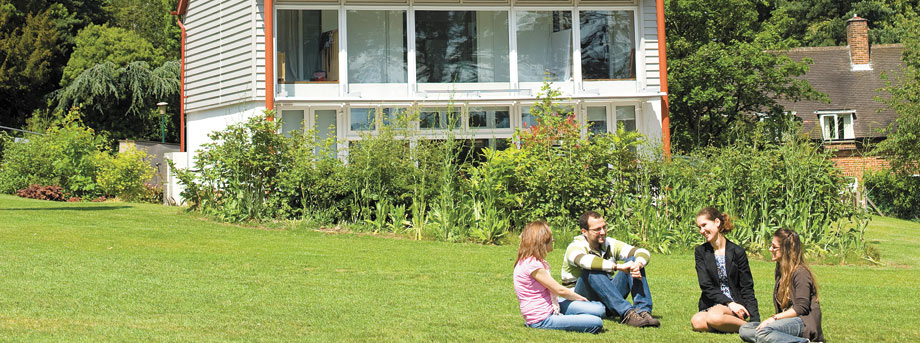
The University of Nottingham is the most environmentally friendly campus on the planet, according to a new league table of sustainable universities.
The University is first in a new international ranking that judges institutions according to their energy management programmes, sustainability-related teaching and research, waste and water management, percentage of green space on campus and the application of eco-sustainability policies and efforts.
The Greenmetric of World Universities 2011, produced by the University of Indonesia, covers 42 countries.
Nottingham’s aim is to become a sector-leading green university in all its activities, and the past year has seen staff and students working hard on a range of initiatives to reduce its carbon footprint.
These include the maintenance of its award-winning parkland campuses incorporating green gardening practices, the use of innovative architecture and sustainable design in building new facilities, reducing the environmental impact of IT use and introducing sustainable procurement practices into contracts with
a growing number of major suppliers.
The University launched an environmental strategy in 2010, managed by an Environmental Steering Group, which outlines its aims in achieving excellence in sustainability and has been underpinned by the introduction of initiatives supporting its green agenda.
Professor Karen Cox, Pro-Vice-Chancellor for Environment and Infrastructure, said: “Last year Nottingham was ranked no.2 in the Greenmetric league table, so it’s very pleasing that our continuing work has been recognised with a move up into the top position.
“Campus-wide efforts on sustainability have yielded our first-ever reduction in carbon emissions — a cut of over 1,100 tonnes of carbon dioxide on the previous year. Taken against a background of increasing student numbers, new infrastructure on campus and an extremely harsh winter, this is a considerable achievement.
“I’d like to offer my congratulations to all those staff and students who have worked hard to contribute to our success in this area.”
With 330 acres of rolling parkland, beautiful period buildings and a large lake, University Park is considered to be one of the most attractive campuses in the country. In 2011, it was awarded a Green Flag Award for the ninth year running. Nottingham was the first university to win a Green Flag for its parks and gardens.
Across all its campuses, the University is currently investing £90m in teaching and learning facilities, with new buildings opening in 2011 in maths, engineering, humanities, veterinary and biosciences, and a revamp of campus cafes and food facilities. New and refurbished building designs meet the highest environmental criteria, and a range of renewable energy systems have been deployed in existing and new buildings.
A sustainable transport strategy is in place, with new cycle infrastructure, car-parking charges, availability of inter-campus hopper buses and a cycle hire scheme.
The University has submitted plans for three wind turbines on land near the River Trent, near Clifton Bridge in Nottingham, which, if approved, would supply green electricity to its University Park campus. The turbines, which would meet one-third of the electricity needs of the campus, would reduce the University’s carbon emissions by 7,000 tonnes per year, equating to 40% of the target reductions required by 2015.
The UI GreenMetric World University Ranking was launched by the University of Indonesia in 2010 to provide an online survey highlighting the activities and policies of universities in relation to sustainability and green campus issues. This year the survey attracted submissions from more than 170 universities. Ranked second and third this year are Northwestern University and the University of Connecticut, both in the USA.
More information on Impact: The Nottingham Campaign is available at: http://tiny.cc/UoNImpact.
Tags: carbon footprint, environmental strategy, Greenmetric of World Universities 2011, sustainable
Posted in News | Comments Off on The greenest campus on earth
Leading the revolution
January 31st, 2012
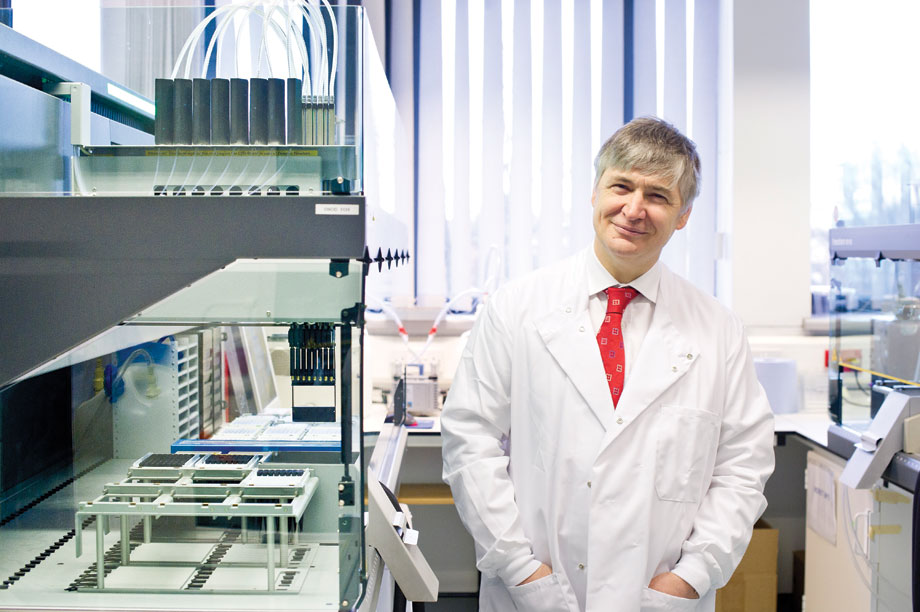
The world’s first centre of excellence specialising in pioneering research into the early detection of cancer was being officially launched at the University’s School of Graduate Entry Medicine on 26 January.
The Centre of Excellence for Autoimmunity in Cancer (CEAC) will lead pioneering research into the early detection and management of cancer and push forward the introduction of a blood test which can pick up the first signs of cancer as much as five years before patients present with any symptoms.
CEAC’s Cancer: Early Detection project will bring together a multi-disciplinary team of experts to lead to a better understanding of the molecular pathways that cancers exploit as they develop and spread.
Prof Peter Boyle, an internationally recognised cancer prevention advocate, president and founder of the privately funded International Prevention Research Institute and the former Director of the International Agency for Research on Cancer, was attending the launch.
Director of CEAC John Robertson, a world-renowned breast cancer specialist and Professor of Surgery in the Faculty of Medicine and Health Sciences, said: “Using the body’s immune response to cancer we are already able detect the formation of lung cancer long before it is detectable with a CT scan. This centre will bring together leading experts from around the world so we can revolutionise our understanding of how cancers develop and help us establish new, more effective and more patient acceptable screening tests.”
Prof Robertson’s work has led to the introduction of the world’s first autoantibody blood test for lung cancer, EarlyCDT-Lung. Available in America, the test is proving to be a reliable indicator of cancer months before a scan would pick it up. It is hoped to launch the test in the UK this year.
Prof Robertson said: “It can take months even years for a cancer to develop. During this period the immune system may recognise different proteins at different stages and make auto antibodies to fight off the invader. Mapping these changes to the immune system is clinically important. However, the ability to measure these cancer-specific auto antibodies in a reproducible and reliable manner has eluded the scientific community until now. We can do this for lung cancer and CEAC, through its Cancer: Early Detection project, is a significant step towards early diagnosis for all forms of solid cancers. If we can achieve that we can start treatment before the disease spreads and help save millions of lives.”
The University spin-out company Oncimmune Ltd has transferred this science into a reproducible commercial test. CEAC has secured exclusive access to this for academic research.
Cancer: Early Detection is a flagship project within the University’s Impact: The Nottingham Campaign, which aims to raise £150m to change lives, tackle global issues and shape the future. Visit: http://tiny.cc/UoNImpact-earlydetection.
Tags: Cancer, CEAC, Centre of Excellence for Autoimmunity in Cancer, EarlyCDT-Lung, Faculty of Medicine and Health Sciences, Impact: The Nottingham Campaign, International Agency for Research on Cancer, John Robertson, Oncimmune Ltd
Posted in Research | Comments Off on Leading the revolution
Royal visit marks 25 years of work
January 31st, 2012
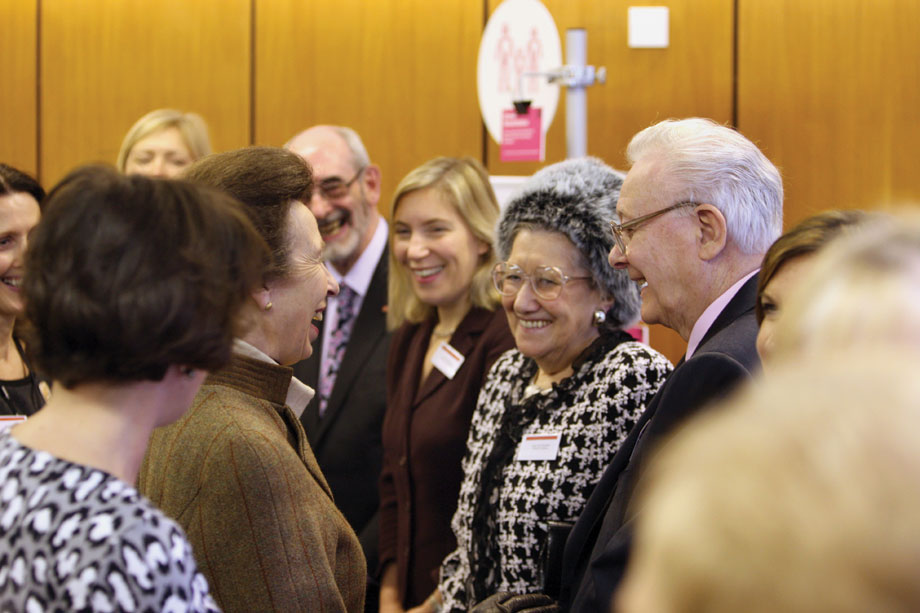
HRH The Princess Royal has helped celebrate 25 years of Nottingham occupational therapy research
The Princess Royal met academics, clinicians and research patients during her visit to the University’s Medical School to celebrate the 25th anniversary year of occupational therapy research through its Division of Rehabilitation and Ageing.
She was invited in her capacity as patron of the College of Occupational Therapists, which has provided around £100,000 in funding to the University’s research over the last three years. The College is the professional body for occupational therapists and support workers and the voice of cccupational therapy in the UK. It champions the unique and vital work of occupational therapy staff, promoting value, excellence and innovation across the profession.
Dr Pip Logan, Associate Professor in Community Rehabilitation and Chair of the College of Occupational Therapists’ specialists’ section on Neurological Practice, said: “We are really pleased and excited to be able to welcome The Princess Royal to the University to celebrate 25 years of occupational therapy research. Our research is aimed at improving the quality of life for people with long-term medical conditions while avoiding unnecessary hospital admissions and our results influence clinical care in the UK and abroad. The first UK Doctorate of Occupational Therapy graduated from The University of Nottingham and we are the largest group of clinical research active occupational therapists in the UK.”
During her visit, The Princess Royal discussed the numerous rehabilitation research projects being conducted by the University, in partnership with NHS colleagues, and spoke to patients participating in clinical trials.
Among the projects she heard about were:
The history of the University’s long-running research into rehabilitation for stroke patients, including the establishment of the Nottingham Stroke Research Consumer Group, a unique partnership between stroke survivors and academics. The research is headed up by Professor Marion Walker MBE, an occupational therapist and Fellow of the College of Occupational Therapists, and supported by stroke survivor Ossie Newell, who has worked tirelessly for better stroke care, service provision and research.
The Princess Royal heard how stroke rehabilitation was recognised by the University through its Impact Campaign, which aims to raise £150 million in philanthropic support across five strategic themes over the next five years.
The Getting Out of the House study, led by Dr Pip Logan, occupational therapist and Associate Professor in Community Rehabilitation, and funded by the National Institute for Health Research (NIHR), which aims to help stroke sufferers regain their confidence and examine whether a new way of offering rehabilitation therapy could help patients to leave their homes more often. The study has recruitied more than 560 patients from across the UK and will look at whether providing stroke patients with a targeted rehabilitation approach and goal-based outdoor mobility programme could be physically and emotionally beneficial.
The Assistive Devices research team, led by occupational therapist, chartered psychologist and Associate Professor in Rehabilitation at the University, Dr Lorraine Pinnington, which assesses the most effective and cost-efficient rehabilitation devices, which can improve patients’ confidence and ability to take part in social situations, so boosting their independence.
Stroke rehabilitation research funded by the Collaboration for Leadership in Applied Health Research and Care (CLAHRC), led by Professor Avril Drummond, occupational therapist and Professor in Rehabilitation Research. Among its current research projects is a study looking at whether commercial virtual reality gaming systems such as the Nintendo Wii can be used for upper limb rehabilitation.
Hospital-based occupational therapy research through Nottingham University Hospitals NHS Trust’s Medical and Mental Health Unit on Ward B47 at its Queen’s Medical Centre campus, led by Occupational Therapist Louise Howe and Rowan Harwood, Professor of Geriatric Medicine. The unit has introduced a person-centred approach to improve healthcare for patients suffering from dementia by offering specialist training to nurses and therapists and offering specialist facilities for patients.
Falls prevention for older adults research through Nottingham County Health partnership and Nottingham CityCare Partnership led by community-based occupational therapist Kate Robertson. This team has introduced a rehabilitation programme that shows people how to prevent falls. The programme can be completed by carers, care home staff or relatives, and includes exercises, advice about diet and dehydration, removing hazards, and what to do if someone does fall.
Find out more about the University’s Impact Campaign and how you can support stroke rehabilitation research at: http://tiny.cc/UonImpactstroke.
Tags: Collaboration for Leadership in Applied Health Research and Care (CLAHRC), College of Occupational Therapists, Community Rehabilitation, Dr Lorraine Pinnington, Dr Pip Logan, Getting Out of the House, HRH The Princess Royal, National Institute for Health Research (NIHR), Nottingham Stroke Research Consumer Group, occupational therapy research, Rowan Harwood
Posted in Features | Comments Off on Royal visit marks 25 years of work
Success in business ‘is learned’
January 31st, 2012

Can you learn to be an entrepreneur? A new in-depth study offers an insight into how top business players teach themselves to become successful.
Research by The University of Nottingham Ningbo China’s (UNNC) business school focused on developing a model of entrepreneurial learning, based on 12 successful Hong Kong entrepreneurs. Most had built businesses from scratch into organisations with at least 500 employees. At least one-third had more than 1,500 people working for them and one had 5,000 employees. One entrepreneur is head of a company that recently listed on Hong Kong’s stock exchange.
The research, conducted by entrepreneurship and business education specialist Dr Thomas Wing Yan Man, lends weight to theories that entrepreneurs do learn to become entrepreneurs and are continually working on improving their entrepreneurial prowess through an active process of learning and reflection.
“Learning is a key characteristic of a successful entrepreneur. They are highly motivated in seeking learning opportunities. They learn selectively and purposely and they learn in depth,” said Dr Man.
“Successful entrepreneurs involved in our research actively participate in training courses and look for management practices and ideas from others and from text books. They analyse how to apply certain management theories in their own businesses,” said Dr Man, Associate Professor of Entrepreneurship and Innovation. “First-hand experience is critical in the learning process.
“They participate in daily management and acquire hands-on experience about the business operations, rather than taking an investor’s perspective,” said Dr Man, head of the Master of Science in Entrepreneurship programme.
“Entrepreneurs were continuously improving their business activities by actively learning from their past actions as well as competitors.”
Top Chinese entrepreneurs also listened to customers and staff, including those who have left the business. The average age of those included in the study was 45; about a third were women and most were graduates. Hong Kong was chosen because entrepreneurs there are seen as better educated with higher expectations for growth.
Dr Man said his research objective was to develop an empirically based model of entrepreneurial learning focusing on learning behaviours. He identified six main patterns of learning common to Chinese entrepreneurs: they actively seek learning opportunities; they learn selectively and purposely; they learn in depth; they learn continuously; they improve and reflect on their experiences; and they transfer their learning outcomes to current practices.
The practical implications of Dr Man’s findings include that training for entrepreneurs should be situated at work or within simulated contexts that provide them with opportunities to apply their new knowledge.
Tags: Dr Thomas Wing Yan Man, The University of Nottingham Ningbo China’s (UNNC) business school
Posted in Research | Comments Off on Success in business ‘is learned’
Big-name line-up
January 31st, 2012
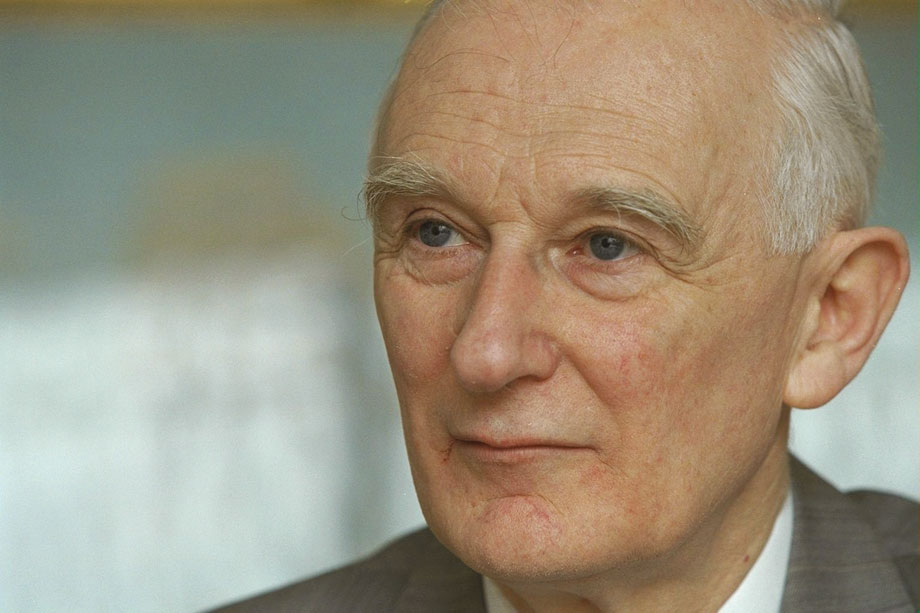
Minister of State for Universities and Science, the Rt Hon David Willetts MP will return to the 3rd Annual Dearing Higher Education Conference in February to deliver the plenary address to delegates from around the world.
The 2012 event will focus on The Business Growth Benefits of Higher Education. Speakers include John Cridland CBE, Director-General of the Confederation of British Industry (CBI), Professor Iain Gray, Chief Executive of the Technology Strategy Board (TSB), and university and business leaders.
Hosted by the University at the East Midlands Conference Centre, the conference has become an established forum for debate on the future of universities and higher education.
It will field top speakers from business and public sector organisations, including the Amanda Nevill, Director of the British Film Institute (BFI); President of Boeing UK, Sir Roger Bone; Executive Vice-President of Manufacturing Engineering at Rolls-Royce, Dr Hamid Mughal; and Charlotte Hogg, Head of Retail Distribution and Intermediaries at Santander.
Professor Glyn Davis, Vice-Chancellor and Principal of the University of Melbourne, will open the Conference by delivering the first annual Universitas 21 Lecture. Professor Rod Coombs, Deputy President and Deputy Vice-Chancellor of the University of Manchester; Nick Watkins, Managing Partner of White Cloud Capital; and Neil Davidson, Chairman of Nottingham spin-out Eminate, will all share experiences of how universities and businesses work collaboratively and support trade.
Delegates will explore four broad subjects: supporting strategies for growth, international perspectives, strength in partnerships and innovation.
The University hosts the Annual Dearing Higher Education Conference each year in memory of Lord Dearing, who died in 2009. As Sir Ron Dearing, he left an indelible mark on higher education with his transformative 1997 report Higher Education in the Learning Society. He was Nottingham’s Chancellor from 1993 to 2000 and held a series of major appointments in higher education, as chairman of the Universities Funding Council and its successor the Higher Education Funding Council for England.
“The University of Nottingham was privileged to have Lord Dearing serve as our fifth Chancellor for seven years,” said Professor David Greenaway, Vice-Chancellor. “During his term of office he oversaw a major expansion of the University’s student numbers, the opening of the Jubilee Campus and establishment of The University of Nottingham in Malaysia; a landmark time for Nottingham.”
To register for the Annual Dearing Conference, visit: www.nottingham.ac.uk/lorddearing.
Tags: 3rd Annual Dearing Higher Education Conference, Confederation of British Industry (CBI), Eminate, Rt Hon David Willetts MP, Santander, Technology Strategy Board (TSB), Universitas 21 Lecture
Posted in News | Comments Off on Big-name line-up
Taking the lead in £10m sports medicine hub
January 31st, 2012

A unique £10m centre for sport and exercise medicine is to be built in the East Midlands as part of Olympic-year government plans to promote health and fitness.
A consortium of six partners from hospitals and universities will run the centre, which will be a hub of research into sports and exercise injuries and conditions associated with lack of exercise. Its work will be shared with the NHS nationally.
Doctors and researchers from Nottingham and Leicester University Hospital NHS Trusts and the Universities of Nottingham, Loughborough and Leicester, as well as Nottinghamshire Healthcare NHS Trust will collaborate at the centre at Loughborough University. It will be one of three hubs, representing £30m funding and forming the first National Sports and Exercise Medicine Centre of Excellence.
Leading UK sports doctor, Professor Mark Batt, from Nottingham University Hospitals (NUH) NHS Trust and The University of Nottingham, said: “The announcement of £30m funding for a National Centre of Excellence for Sport and Exercise medicine is a clear London 2012 legacy pledge, and continues the Government’s support given to this emerging specialty.
“The East Midlands has a long heritage of sport and sporting success and is a natural home for the new National Centre. Along with London and Sheffield it will form a networked National Centre to serve the general public, patients and athletes alike. The East Midlands consortium provides a fantastic array of clinical and research skills and experience to support exciting developments at the new National Centre.”
The centre will act as a focus for Sport and Exercise medicine research, encouraging the development of pathways and partnerships for the translation of research findings into practice. The envisaged clinical service provision includes:
• Routine and specialist (gait, biomechanical analysis) Sport and Exercise medicine NHS clinics: including advanced diagnostic imaging
• Specialist sport and physical activity related services: cardiology, respiratory medicine, eating disorders, etc
• Co-ordination and centralisation of services for university and elite athletes: working with The English Institute of Sport and national governing bodies of sport
• The development of Exercise Medicine services for the prevention/treatment of chronic illnesses/diseases
NUH NHS Trust and the University have for many years provided excellence in NHS clinical service delivery, teaching and research in Sport and Exercise medicine with three NHS Sport and Exercise medicine consultants working together with Wimbledon, England cricket and the English Institute of Sport.
Prof Batt said: “The further enhancement of Sport and Exercise medicine can be a lasting Olympic legacy benefiting the NHS and the whole country. The Faculty of Sport and Exercise medicine (FSEM) has advised the Department of Health on this project and fully support the development of the National Centre as an exciting and important venue for the training and employment of Sport and Exercise medicine physicians.”
Professor of Metabolic Physiology at The University of Nottingham, Ian Macdonald, said: “We are very excited to be part of this East Midlands Consortium. The University’s MSc in Sports and Exercise Medicine and associated research work in Sports Medicine, Exercise Physiology, Muscle Metabolism, and Nutrition will provide major inputs to the East Midlands contribution to this national initiative in Sport and Exercise Medicine. We look forward to working with the other members of the Consortium to enhance research, teaching and clinical practice in this important clinical area.”
Prof Mike Cooke CBE, Chief Executive of Notts Healthcare Trust, said: “This announcement of our successful joint bid will be a tangible outcome for the Olympic investment and an endorsement of our approach here in the East Midlands.”
Posted in Uncategorized | Comments Off on Taking the lead in £10m sports medicine hub
Spotlight
January 31st, 2012

Michael named as BEIS Director
The University has named Michael Carr as its new Director of Business Engagement and Innovation Services (BEIS). As Director of BEIS, Michael will be responsible for the University’s Commercialisation, Partnerships and Knowledge Transfer functions.
He joins the University after a short period working as a consultant providing guidance to blue chip clients on economic development strategy and delivery. Previously, Michael led the Business Services team at the East Midlands Development Agency (emda) and worked closely with the region’s universities, including The University of Nottingham. Michael also chaired the Regional Development Agency (RDA) Enterprise Directors group and led the RDA network’s enterprise and business support policy input to Government.
Read more at: http://tiny.cc/UoNMCarr
Smoke alarm strategy revealed
The most effective strategy to encourage more people to have a working smoke alarm in their homes has been revealed by a team of healthcare researchers.
A combined approach of offering education, free or low-cost equipment and a home safety inspection is likely to have the most impact, the study by academics from the Universities of Leicester, York and Nottingham found. The study was funded by a National Institute for Health Research Programme Grant. Published in this month’s Epidemiologic Reviews, the research offers an insight into the most effective combination of interventions for future public safety campaigns promoting the use of smoke alarms in the home.
Read more at: http://tiny.cc/UoNSmoke
Karnival’s £1.3m charity boost
Karnival, The University of Nottingham Students’ Union’s charitable organisation, has announced that its members raised over £1.3m for local and national charities during 2011.
The grand total of £1,322,249.57 was announced in front of 900 guests at the charity’s annual Snowflake Ball this month, held to celebrate the work students have put in during the year.
Fundraising efforts have included a huge number of sponsored events including trekking the Machu Picchu Inca Trail in Peru, climbing Mount Kilimanjaro, and walking along the Great Wall of China, as well as traditional fundraising activities such as rag raids and club nights.
Read more at: http://tiny.cc/UoNKarni
30 new engineering posts at UNNC
The University of Nottingham Ningbo China will appoint 30 academics to join its talented engineering team as it expands its degree programmes and grows its research programmes.
The Science and Engineering Faculty needs professors, associate professors and lecturers across all its engineering disciplines, including: civil engineering, mechanical engineering, electrical and electronic engineering, chemical engineering, environmental engineering, architectural environment engineering, product design and manufacture, engineering surveying and architecture. Closing dates are from the end of January to early March, with the University looking to take on staff in time for the next academic year in September 2012. The positions are detailed at: http://www.academics-in-china.com/jobs.html.
Read more at: http://tiny.cc/UoNengineerjobs
Posted in media | Comments Off on Spotlight
NSS 2012 — it’s time to have your say
January 31st, 2012
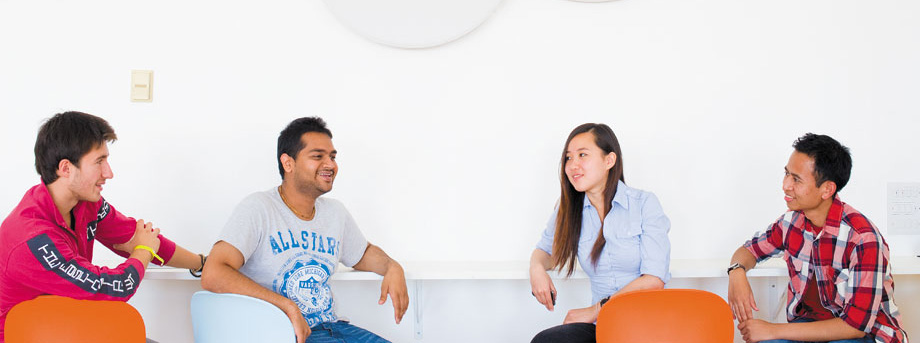
It’s that time of year again. The National Student Survey (NSS) will launch on 30 January and again offers final-year students the chance to critique their time at university.
From the quality of teaching and feedback to the learning resources available, the survey will cover all aspects of the student experience.
Responses will then be used to help Schools and the University improve that experience, while the results will go on to have a significant impact on national league tables and prospective student choices.
Following year-on-year improvement since the survey began eight years ago, Nottingham has seen its overall satisfaction score rise to 87%. However, with targets to attain a score of 90% and a top 20 place in each question area by 2015, the University is aware that more needs to be done to improve student satisfaction.
The University has listened to previous NSS responses to make changes, including the refurbishment of Hallward Library, a new system of teaching which guarantees prompt feedback on all assignments, and upgraded sports facilities across all three campuses.
These and more changes have been publicised through the Proud to be Nottingham campaign, and Schools are encouraged to do all they can to highlight the improvements made as a result of past surveys.
Pro-Vice-Chancellor for Teaching and Learning, Professor Saul Tendler, said: “The significance that the NSS has on the standing and reputation of each and every School will only continue to rise in parallel with the expectations of our students.
“It is therefore imperative that School staff do all they can to promote the survey, while being mindful not to directly influence students’ responses. It is only with honest feedback, that Nottingham can maintain its place as one of the UK’s leading universities.”
To find out more about the NSS and what your School can do, visit: www.thestudentsurvey.com or email: studentcommsoffice@nottingham.ac.uk. Alternatively, see what improvements have been made across the University at: www.nottingham.ac.uk/proudtobe.
Tags: National Student Survey, NSS
Posted in News | Comments Off on NSS 2012 — it’s time to have your say