

Campus News
BBC’s voice of badminton
July 26th, 2012
When he graduated from Nottingham with a 2.1 in Law in 1970, David Mercer looked to have a very successful career ahead as a solicitor.
But sport is his first love.
During his time at Nottingham, he was captain of the tennis team, tried his hand at rowing and, with twice-weekly runs and weight-training on Fridays, he was the fittest he’s ever been.
David played a handful of professional tennis tournaments to see if he had what it takes.
“I took one summer off to see if I was good enough — and very quickly discovered I wasn’t,” says David. “So the way to get involved was umpiring.”
And as an umpire, he was one of the best.
From 1973, the Welshman kept order on the lawns of Wimbledon — and umpired the legendary 1984 men’s singles final in which John McEnroe defeated Jimmy Connors.
“To be part of the greatest match in tennis was very special, as was John’s performance on the day. He beat Jimmy in straight sets to win his last Grand Slam title.”
David then returned to Swansea and a job as a solicitor. But his passion for sport remained.
“I entered a sports reporter competition in 1979,” says David. “And, to my total astonishment, I won!”
He started working for BBC Wales alongside his day job until the opportunity came along to join BBC Radio Sport in London in 1984.
He became their tennis correspondent in 1990 before being invited to join the BBC commentary team two years later.
This year’s was David’s 39th Wimbledon and he has the enviable job of spending much of the year chasing the sun around the globe as part of Eurosport’s tennis coverage.
“I am so lucky that my job has enabled me to see the world, from Australia to the United Arab Emirates, Beijing to Guayquil.”
This year — his sixth Olympics as a commentator – David is heading up the BBC’s badminton coverage.
“It will be a very interesting contrast to Beijing,” says David. “The facilities were wonderful but there wasn’t the party atmosphere from Sydney. So I hope London will capture that atmosphere.
“The support for the torch relay as it’s made its way around the country suggests that the London Olympics are going to be very special.”
You can hear David’s badminton commentary on the BBC from Saturday 28 July to Sunday 5 August.
Posted in People profiles | Comments Off on BBC’s voice of badminton
Medics answer Olympic call-up
July 26th, 2012
A team of 20 medics, researchers, graduates and students from the Centre for Sports Medicine in The University of Nottingham’s Division of Orthopaedic and Accident Surgery will provide medical care and support during the Olympics.
Academic staff will be working as medics and helping with research into sports injury and illness. Many Nottingham graduates have gone on to work with elite sports organisations and will be on-hand providing a range of expertise from MRI scanning to physiotherapy and osteopathy.
Professor Mark Batt, Honorary Professor and Consultant in Sport and Exercise Medicine, said: “This is a fantastic opportunity for members of the Centre for Sports Medicine to get involved with the Olympic Games as well as demonstrate their skill and expertise. The strength of The Centre for Sports Medicine has been brought home by the depth of our multidisciplinary involvement.”
The 2012 Games is hosting 26 Olympic sports in 34 venues, with 10,000 athletes and 20,000 press and media personnel. More than 9m spectator tickets have been sold. Sports medicine and emergency doctors will be needed at all the competition and training venues and medics can expect to answer tens of thousands of calls for help from athletes, staff and spectators.
The Nottingham team
Professor Batt, who is also the Wimbledon Sports Physician, has worked with The London Organising Committee for the Olympic Games (LOCOG) helping to oversee the medical arrangements for the Games. He will also be at Wimbledon looking after the players for Olympic tennis.
Dr Lisa Hodgson, lecturer in sports medicine, who graduated from Nottingham with a Masters and PhD in Sport and Exercise Medicine will be at the Olympic Games from 1 July to 14 August as venue medical manager with particular responsibility for Horse Guards Parade (HGP). HGP is the venue for the volleyball tournaments with temporary seating for 15,000 spectators.
University teacher, Dr Clodagh Dugdale, will be based with the equestrian teams at Greenwich Park as well as the BMX cycling event between 28 July and 7 August.
Dr Jonathan Power, a second-year part-time student, will be working as a field of play recovery team leader at the Aquatics Centre — the venue for the swimming, diving and synchronised swimming events.
Injury prevention is a key mandate for the International Olympic Committee (IOC) and Sports Medicine Research Fellow, Dr Debbie Palmer-Green, will working on its Injury and Illness Surveillance programme.
Dr Palmer-Green, who completed her PhD in English youth rugby union injury surveillance just two years ago, said: “The IOC has been running injury surveillance for the last four or five summer and winter Olympic Games.
“I’ll be based in the athlete’s village, working with medical staff who will complete reports on any athlete injuries or illnesses. I have also got tickets for athletics and boxing. To be there watching and working at the Games at such an early stage of my research career, will be an incredible opportunity.”
Dr Palmer-Green has also been working on a UK Sport and English Institute of Sport funded project with 14 National Governing Bodies to reduce the occurrence of injuries and illnesses among some of the nation’s brightest medal hopes.
And she has more than just a professional interest: the former Olympian suffered “more than her fair share of injuries and illness” during a career as a short-track speed-skater. She went to the Albertville, Lillehammer and Salt Lake Winter Olympic Games in a career that saw her take three world cup medals and12 European medals at various championships.
Graduates on call
Dr Patrick Wheeler is among 15 Nottingham graduates offering medical support. As Chief Medical Officer for British Triathlon he will be working with them. Dr Wheeler is also the Lead Doctor for Paralympics GB. He will be part of the team providing medical care to British athletes at the Paralympic Games. He is also the Chief Medical Officer for GB Disability Target Shooting.
Graduate Dr Anyl Lloyd Gopeesingh will be at the Games in his capacity as team physician for Trinidad and Tobago. Their medal hopes lie in the track and field events, primarily men and women sprinters.
Head of Department Professor Brigitte Scammell said: “I am very proud of Nottingham’s contribution to the games. Our staff and graduates have major roles in sport throughout the UK and to have so many of them involved in the Olympics is a fantastic achievement.”
Tags: Centre for Sports Medicine, Division of Orthopaedic and Accident Surgery, Professor Mark Batt, Sport and Exercise Medicine
Posted in News | Comments Off on Medics answer Olympic call-up
Raft of medals
July 26th, 2012
Six University of Nottingham graduates have bagged Olympic medals for Team GB over the past 20 years, making it the UK’s 7th most successful university.
To put this in context, 80 countries have never won an Olympic medal, while another 41 (including former nations) have won fewer than four, according to Wikipedia.
Our recent success has come on the water. Flat water canoeist Tim Brabants picked up a gold and a bronze in Beijing, adding to the bronze he’d won at Sydney in 2000, during a break from his degree in Medicine.
In 2009, Tim received an honorary degree from the University and an MBE. He’s looking to defend his Olympic title after securing his place for Team GB in the K1 1,000m event.
The University’s reputation on the water is secured by three more Olympic medalists. Gareth Marriott won Britain’s first Olympic canoeing medal with a silver in the Canadian Singles Class at Barcelona in 1992, and Campbell Walsh secured silver in the K1 event at Athens 2004. And London 2012 gives David Florence the chance to go one better than the silver he bagged in the C1 category in Beijing four years ago.
The University’s success goes back further than the last two decades, and includes more than just water-based sports and GB athletes.
Deng Ya Ping, who qualified with a Masters degree in Contemporary Chinese Studies in 2002, is the University’s most successful Olympian.
Table tennis champion Deng has four Olympic gold medals, six world championships and was named China’s female athlete of the 20th century. Since retiring from the sport she has worked for the International Olympic Committee and been part of the team that secured and organised the Beijing Games in 2008.
She said: “The Olympic Games not only helped the Chinese people to know better about the world, but also provided an opportunity for China to present its traditional culture as well as latest progress to the world. I am sure London and the UK will also receive a great legacy from this year’s event.
“Taking part in an Olympic event is a unique experience and I really enjoyed it. The most important gift I got from the event is the Olympic spirit of trying to exceed myself against all obstacles. This spirit is still helping my current career. I am sure it will light my way up forever.”
Robert Clift, is another gold-winning graduate; he was part of the GB Men’s hockey squad in Seoul 1988. Banker Robert also won silver medals with the England team at the 1986 World Cup and 1987 European Cup.
In the Paralympics, Dr Abu Yilla (Economics 1978) won a medal in wheelchair rugby. He’s also won 16 national championships as a player, coach and administrator in the sport and now works at the University of Texas, where his research focuses on elite disability sport.
Finally, two of Britain’s most successful Olympians Rebecca Adlington and five-time Olympic gold medalist Sir Steve Redgrave are among our Honorary Graduates. Double-gold medalist Rebecca will be competing in London 2012.
Posted in Features | 1 Comment »
Food for sport
July 26th, 2012
At the very highest levels of elite sport, excellent nutrition can make the difference between gold and silver.
Research at Nottingham by Professor Paul Greenhaff and colleagues have now found that combining nutrient L-carnitine with carbohydrate encourages muscles to burn more fat when producing energy during exercise.
Previous studies elsewhere indicated human muscle does not respond to dietary L-carnitine supplements alone. The Nottingham team found a way to get L-carnitine into muscle as a dietary supplement and increase the way it is stored and used.
“This is the first study in healthy humans showing that muscle L-carnitine content can be influenced by dietary means, and that L-carnitine plays a dual role in skeletal muscle fuel metabolism during exercise that is dependent on exercise intensity,” said Prof Greenhaff.
“These metabolic effects resulted in reduced perception of effort and increased work output in a validated exercise performance test.”
The team created spin-out company NutraMET to provide an evidence-based supplement for elite athletes; some have already intregrated NutraMET Sport into their dietary and physical training regimes.
L-carnitine is critical to energy metabolism. For over 15 years, researchers at Nottingham have investigated and explained carnitine function in muscle. It shuttles long-chain fatty acids into cells’ mitochondria where they are broken down for energy generation, as well as maintaining muscle carbohydrate oxidation and offsetting lactate production during intense exercise.
In this study, muscle total carnitine (TC) increased by 21% after six months’ supplementation. It was unchanged in the control group. Taking the supplement for 24 weeks resulted in a 10% improvement in output during a 30-minute time trial. For moderate intensity exercise athletes consuming the NutraMET SPORT formula showed 55% less muscle glycogen utilisation than those fed with carbohydrate alone. During high intensity exercise NutraMET SPORT lowered muscle lactic acid accumulation by 44% compared to the control group. It provides measurable performance benefits across sports involving moderate to high intensity exercise.
Researchers in Biomedical Sciences at Nottingham have dedicated decades to investigating the biomedical basis of elite performance. They have improved understanding of metabolic physiology and muscle maintenance, helping top athletes improve the efficacy of nutrition and training.
Prof Greenhaff contributed to research into exercise and nutrition 20 years ago which helped elite athletes use creatine successfully to improve performance, resulting in gold and silver Olympic medals. Perhaps this summer will see another leap forward.
Visit: http://tiny.cc/Nutrients.
Posted in Exchange: Olympics Special, Research | Comments Off on Food for sport
Aesthetics and the armchair sports fan
July 26th, 2012
Believe it or not, there’s a rich history of applying philosophical principles to sport. In fact, Professor Stephen Mumford, Dean of the Faculty of Arts, focuses on exactly that in his latest book, Watching Sport.
And the greatest show on earth — the Olympic Games — is no exception.
“The Olympics is something that we watch just for the sake of sport,” explains Professor Mumford. “I think the reason the Olympics is interesting is that there’s an ethos to it that people buy into.
“If you compare it with the World Cup, most of us who watch it are just rooting for one team. I think the Olympics is one of the occasions when people are usually watching sport purely for the aesthetic beauty that gets produced; where we’re often not so much bothered by who wins and loses.”
In his book, Professor Mumford differentiates between purists and partisans. Purists simply appreciate sport in general and the overall performance of athletes. While on the other hand, for partisans, it’s all about their team getting that all-important win.
“The Olympics is the case where more people are going to be watching as purists,” explains Professor Mumford. “So if you watch something like gymnastics — which is an aesthetically rich sport — the UK doesn’t have a great history in it, but nevertheless we love it as a sport even though there isn’t one of our own athletes in there competing.
“We’re not just watching to see our athlete win, we’re watching for broadly aesthetic reasons. And I think that gets more to the essence of sport: of what it’s all about.”
So, in terms of the Olympics, what’s a good example of philosophy coming into play? Professor Mumford — as outlined in Watching Sports — likes the example of Ben Johnson’s gold-winning performance in the 100 metres at the Seoul Games in 1988. It was record-breaking, awe inspiring… and drug-fuelled.
“One of the main themes of the book is the interplay between morality and aesthetics,” explains Prof Mumford. “What was interesting in the Ben Johnson case was that we thought for a couple of days he’d run one of the most beautiful races of all time — because it took a couple of days for the drug tests to reveal that he’d actually cheated.
“Now once he’d done that, which was a moral defect, it then subtracted from the aesthetic beauty of the race. So the beauty of his race was undermined by the moral flaw.”
Professor Mumford believes that when it comes to sport it’s important to remember the joy of it — and not let it be about money, medals and underhanded tactics.
“Look at Eric Cantona — he retired early,” says Prof Mumford. “If an athlete realises that they’re playing not because they love the sport but for money, that’s when all the joy goes from it. You have to be a very brave man to do what Eric Cantona did — to walk away from all the riches he could’ve earned.
“But I understand it,” he adds. “That’s when I’m truly alive, when I’m exercising my mental and physical powers — and it’s pleasurable to do so. So if you look at school kids, they’ll run around in the playground, not for any particular purpose, but purely for the joy of running around.
“It’s joyful to have a healthy body, to jump, to run, to do skilful movements, to throw — these all make us feel like we’re alive.”
Tags: Professor Stephen Mumford
Posted in Features | Comments Off on Aesthetics and the armchair sports fan
Every second counts
July 26th, 2012
Pioneering research at The University of Nottingham’s Faculty of Engineering could give British athletes the edge as they paddle for gold in the canoe slalom at the Olympics.
The University’s Stuart Morris is boat designer for the GB Slalom team and his recently completed doctorate examines new ways of testing kayak design and performance.
A successful slalom kayak is a compromise between speed, manoeuvrability and stability.
“The difference between gold and silver medal positions in the 2011 Men’s Kayak World Cup race in Bratislava was a mere 0.15 seconds — that’s just 0.17% of the total run time,” said Stu. “Competitions are regularly won and lost by fractions of a second.”
Canoe Slalom takes place on a demanding, highly variable white water course. Athletes paddle against the clock and look to their equipment as a key area when seeking performance gains.
Previously, slalom kayaks evolved slowly through trial and error. There was no methodology for comparative testing or measuring performance as athletes tried different designs.
Stu — supported by UK Sport Research & Innovation and The British Canoe Union — instead developed methods to analyse kayak design against performance.
A series of identical kayaks were manufactured and a succession of changes made to certain areas of their form to highlight the effects on performance. Laser scanning and hydrostatic analysis with 3D computer-aided design was used to define each kayak’s shape.
In three field tests — a flat water sprint, a turning task (for manoeuvrability) and a white water task (for race performance) – athletes defined the boats’ performance. The tests timed and athletes’ perception of their performance was recorded. Boats were also towed to look at drag characteristics, and acceleration and angular velocity were captured using a six-degrees-of-freedom inertial measuring unit, which captures three-dimensional movements.
By analysing the relationship between kayak form and performance, Stu’s work will allow athletes and designers to make more advanced kayaks in less time. Kayaks can now be designed and tested in a scientific, empirical manner giving athletes a clear advantage as they strive for medal-winning performance.
Posted in Exchange: Olympics Special, Research | Comments Off on Every second counts
Thomas is one to watch
July 25th, 2012
Mathematics student Thomas Green is an athlete on the up. Ranked 7th best club thrower in the world in his category and winner of the IWAS Junior Championships, the 2011 Nottinghamshire Disabled Athlete of the Year narrowly missed out on a place at the Paralympic Games due to injury.
Should the Olympic and Paralympic Games be merged?
The idea of combining the events is idealistic. It’s unlikely that the Games would be extended, so the number of events would have to be reduced and it would be the Paralympics that suffered. The games should cater for all and therefore reducing the number of disability classifications simply would not work. It has already been seen at the Commonwealth Games, where classes have been combined to such a degree that the event borders on tokenism.
The Paralympics represent a unique atmosphere for disabled athletes; crowds far exceed those that we compete in front of at any other competition.
How do you think others view the Paralympics?
The Games are not mainstream yet, but with better coverage, who knows. It annoys me when events are presented poorly due to a lack of understanding. People do not have a moral obligation to like the Paralympics, but with better coverage this summer, people will be in a better position to decide for themselves. If enough people enjoy it, coverage will increase.
Who is your sporting hero?
Stephen Millar, the three-time club-throwing Paralympic champion. Watching him I realised what it was to be an elite athlete and the level that you need to attain in order to compete at that level.
What’s your earliest Olympic memory?
Watching Linford Christie back in 1992, but it’s not until the coverage of Tannie Grey Thompson at Athens 2004 that I have a detailed memory of the Paralympics.
What is your biggest sporting achievement to date?
It would have to be beating Stephen Millar last season. I’m the first British athlete to do so in his senior athletics career. It was a special moment after growing up watching him.
Do you have any pre-event rituals?
I have a set routine — from the time I get up to the food I eat, the visualisation routine and the warm-up I go through. But there’s a fine line between routines and superstitions. I wouldn’t want my performance to be affected because of the order my socks were put on.
How important is the University’s sports bursary?
The financial support helps hugely with the costs of competition. The facilities and staff support are also fantastic, helping me to book extra sessions and to fit my course around competitions. They bend over backwards for me and have never been found wanting.
Follow Thomas on Twitter: @TJG_clubber and read his blog at: thethomasgreenblog.
Tags: IWAS Junior Championships, Thomas Green
Posted in Exchange: Olympics Special, People profiles | Comments Off on Thomas is one to watch
Blazing a trail…
July 25th, 2012
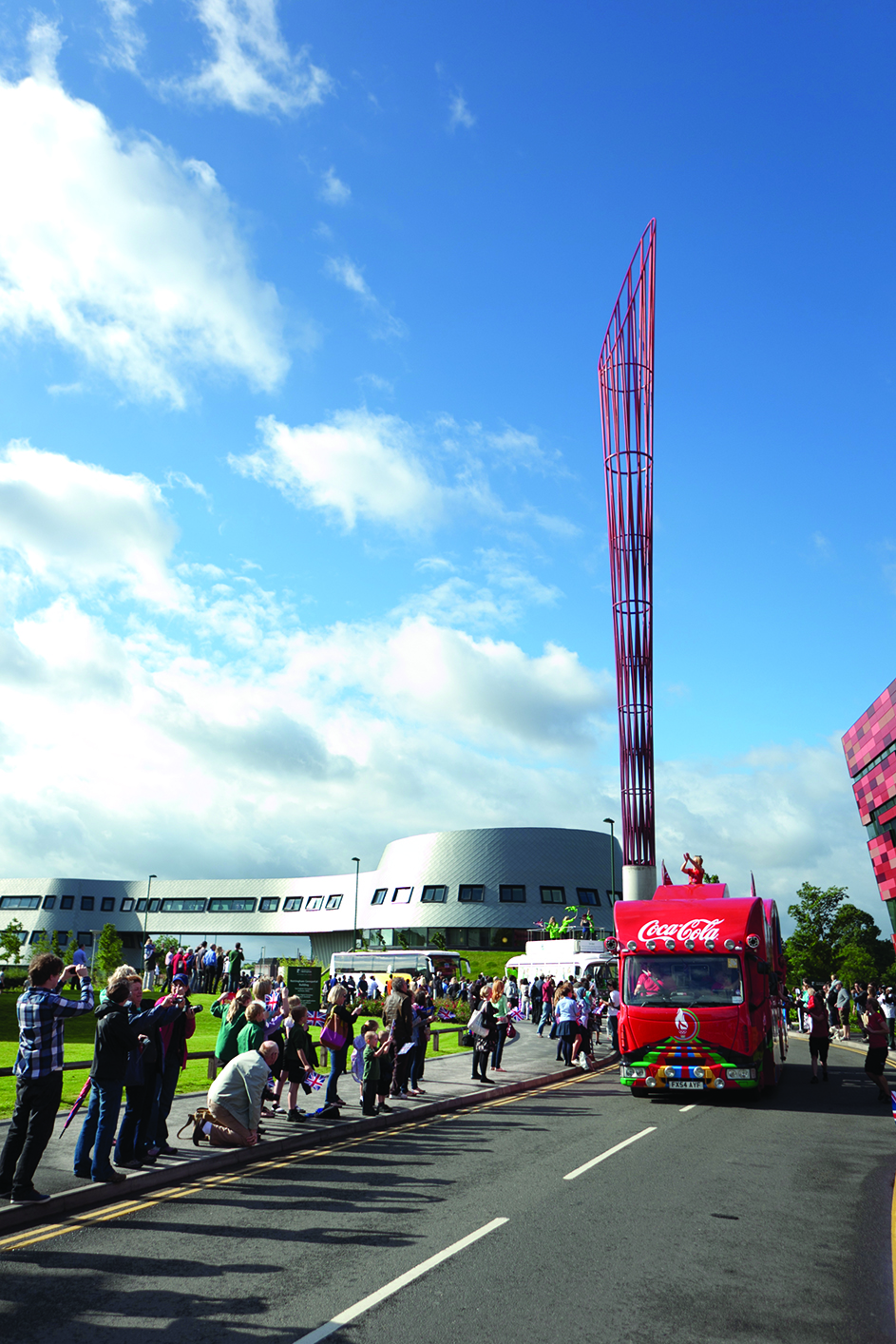
Symbolising peace, unity and friendship, the Olympic flame is perhaps the single most recognisable icon of the Games.
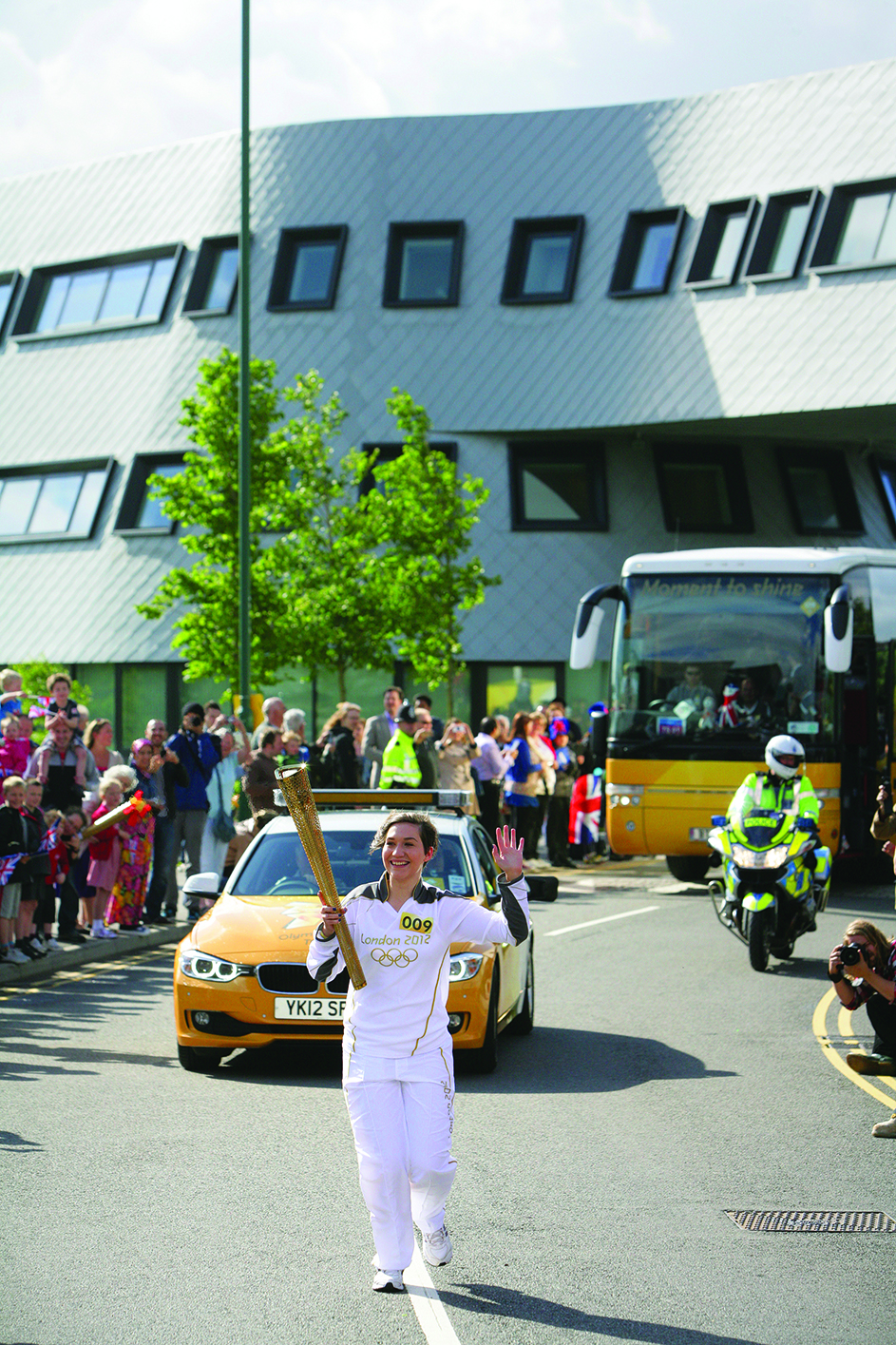
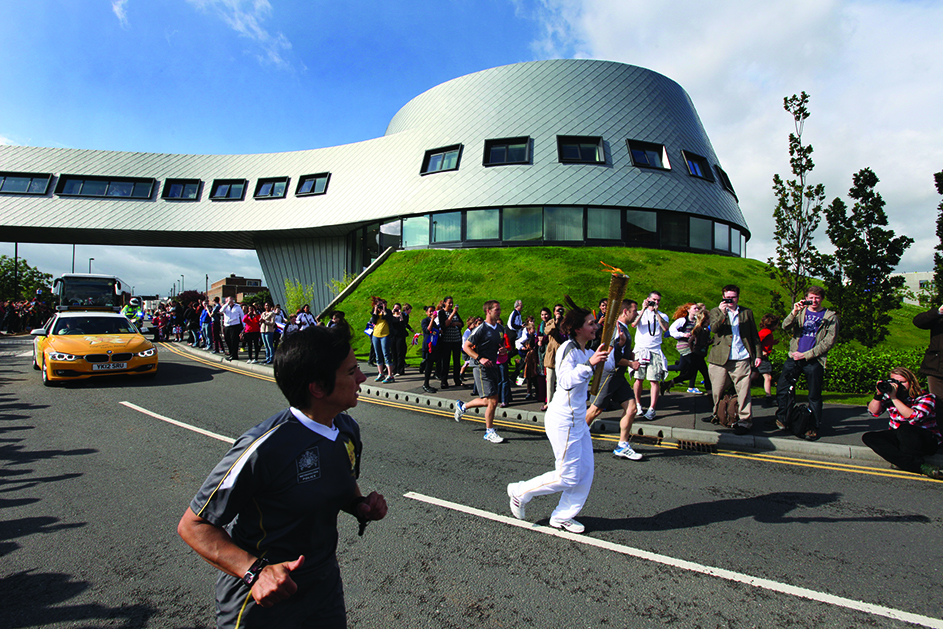
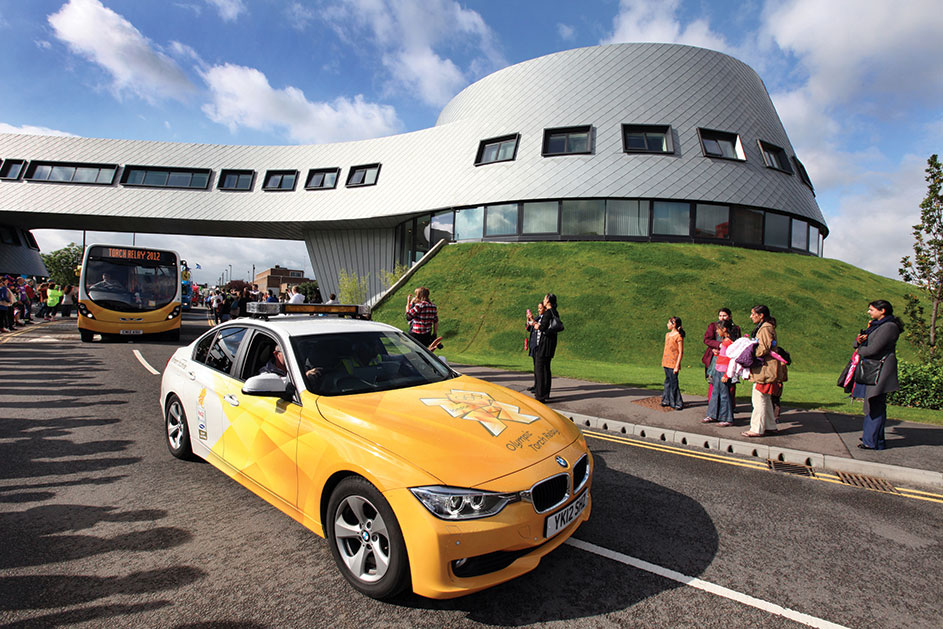
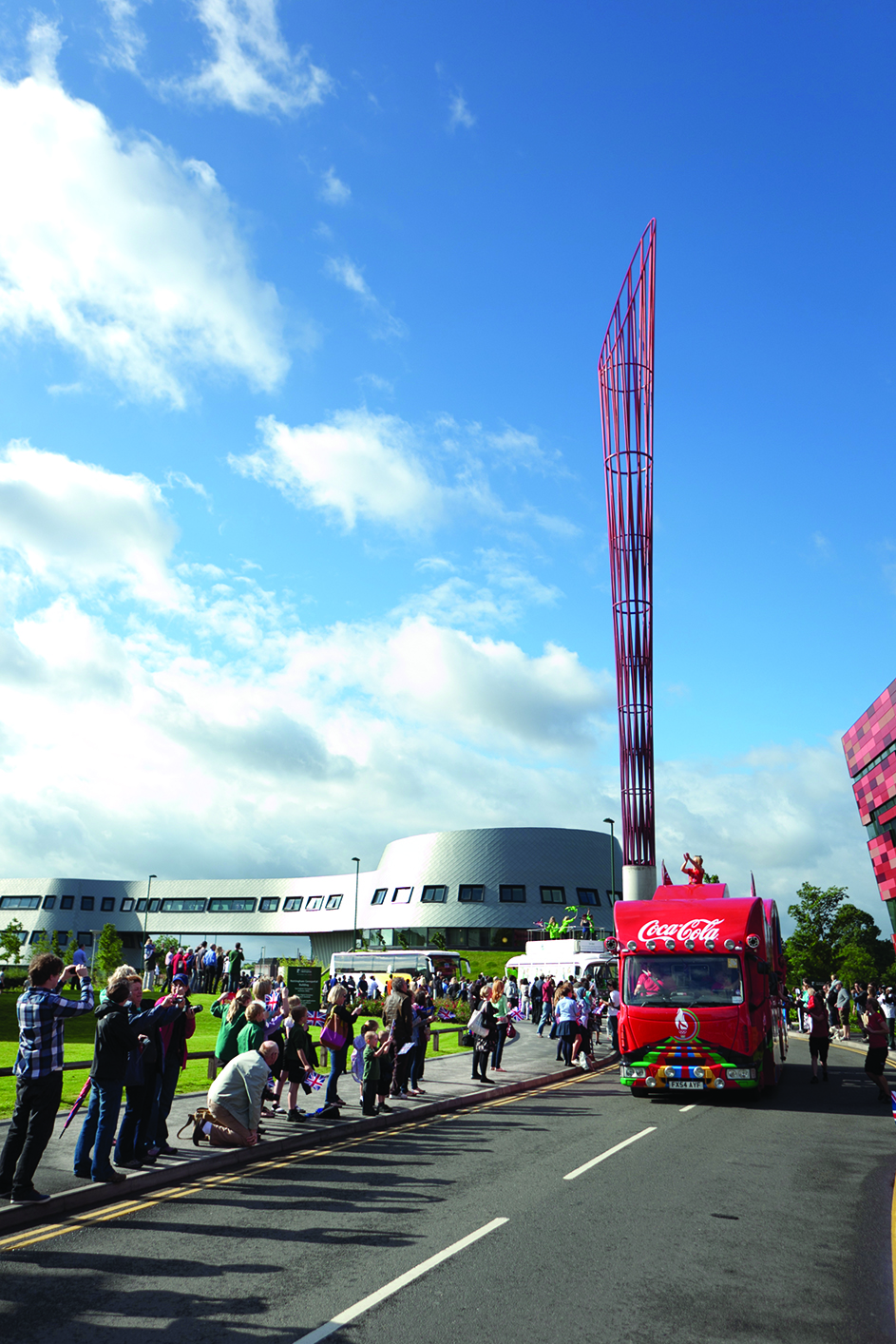
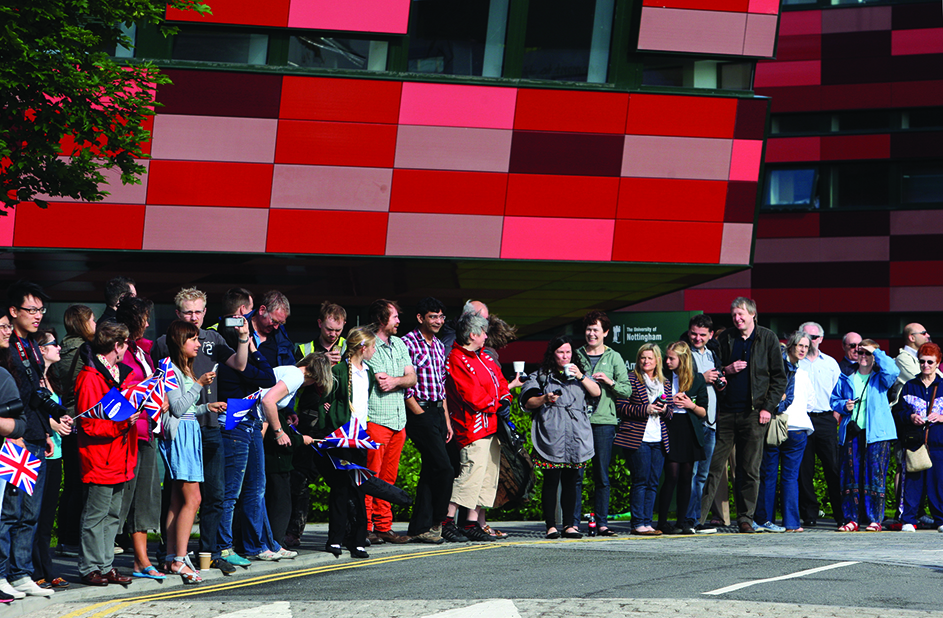
All three qualities were on show as crowds flocked to Jubilee Campus on Thursday 29 June, to see the torch pass through the University en route to London.
Staff, students and Tri Campus Games athletes joined members of the public to cheer on inspirational torch-bearers Sophie Chatel and Rebecca Lowther as they ran past the campus’ iconic red tiled buildings and giant metal sculpture, Aspire.
From Jubilee Campus, the flame continued on its journey towards the Olympic Stadium in Stratford to form the centrepiece of the London 2012 opening ceremony.
By the time the flame reaches the stadium, it will have been carried by 8,000 people, through more than 1,000 cities, towns and villages, having passed within one hour of 95% of the nation’s population.






Tags: Jubilee, London 2012 Olympics
Posted in Features | Comments Off on Blazing a trail…
Battle back to the top
July 25th, 2012
International hockey star Anne Panter worked hard to recover from an eight-car pile-up that almost ended her career — only to be in a second accident days after being selected for London 2012.
“My previous injuries meant I might have never played again, so I feel very fortunate to be going to London,” said Anne.
“Nine years ago I suffered a serious car accident, which started a cycle of injuries that threatened my career. To come back from that and be selected for London, only to miss out because of a second crash would have been ironic.”
The defender will take her place in a 16-woman squad fancied for a medal after securing silver — their best ever result — in the Champion Trophy in Argentina this February.
She said: “The team is in really good form, we are ranked 4th in the world and finished second in the Champions Trophy. Our minimum expectation is to get into the semi-finals and then do all we can to challenge for the gold medal.
“The team is almost incomparable to those I have previously played in.
“After Beijing we sat down as a team to discuss how we could turn our sixth-place finish into a medal. Since then we have turned professional and train together regularly. Our fitness is now the best in the world, our skill levels and tactical play has improved dramatically and culturally, the atmosphere in the squad is incredible.”
The Mathematics and Economics graduate (2009) who plays for the national indoor and outdoor champions Leicester, will be joined in GB’s hockey squads by fellow alumni Rob Moore and Nick Catlin, and Harry Martin, who starts an Economics degree at the University in September.
Harry said: “It’s such an honour to be a part of Team GB. Although it hasn’t completely sunk in yet, competing at a home Olympics is a once-in-a-lifetime chance and I am very excited. I owe a lot of thanks to everyone who has supported me, especially my family, friends and sponsors.
“It has been a privilege to be part of such a strong training squad with such a dedicated coaching team. Those of us that have been fortunate enough to be selected will do everything to make the rest proud.”
Tags: Anne Panter, hockey, London 2012 Olympics
Posted in News | Comments Off on Battle back to the top