

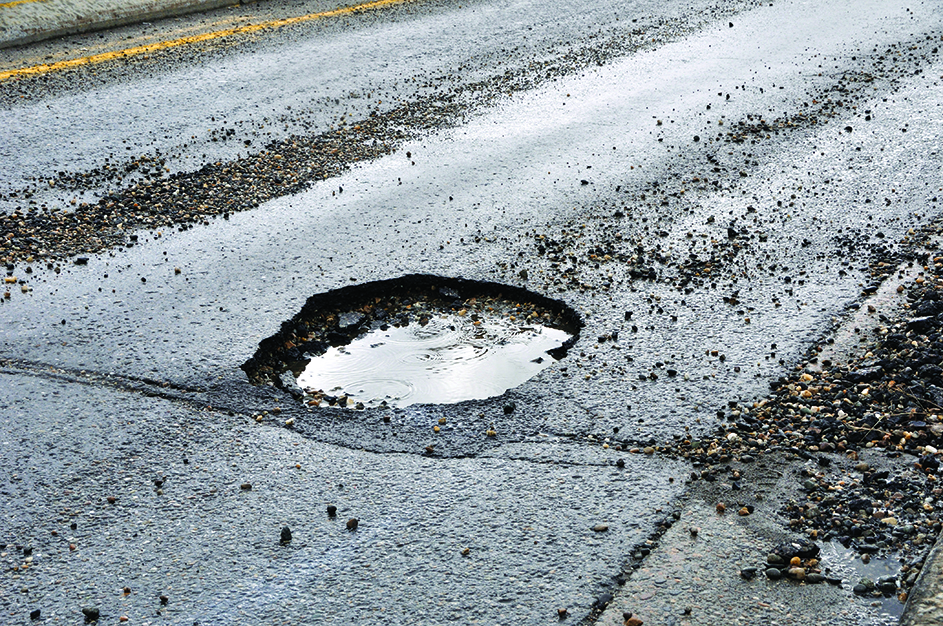
Potholes? Don’t worry, University researchers are looking into them…
October 11th, 2012
They give motorists a rough ride and cost local authorities millions of pounds every year in repairs.
Now researchers at the University — among the UK’s leading experts in road engineering — are setting their sights on potholes and aiming to make the highways hazard a thing of the past.
Research, being led by Dr Nick Thom in the Nottingham Transport Engineering Centre (NTEC), is examining why roads deteriorate in the form of discrete craters and how more effective design could stop this.
Dr Nick Thom said: “Potholes are public enemy No. 1 and they cost a lot to the economy in terms of repair bills for local authorities, delays while repairs are carried out, vehicle wear-and-tear and even compensation claims made by motorists.
“We are interested in studying why potholes occur in the first place and what can be done about them in terms of the effectiveness of repairs and, eventually, new or better materials to prevent them.”
The academics in NTEC have joined forces with Dr Mujib Rahman in the School of Architecture, Design and the Built Environment at Nottingham Trent University for a six-month pump priming project funded by the Institution of Civil Engineers to study potholes.
Potholes are a thorny issue as local authorities and the Highways Agency try to maintain the infrastructure of the nation’s roads in a climate of cutbacks and austerity. The Annual Local Authority Road Maintenance (ALARM) survey 2012 by the Asphalt Industry Alliance reported that around 1.7m potholes were filled last year, with an average of over 12,000 per local highway authority in England (excluding London). The average number of complaints about potholes each year outside London was more than 13,000.
A Department for Transport review of potholes, Prevention and a Better Cure, contained a raft of recommendations for the prevention of potholes and more effective repairs to existing roads.
Postgraduate student Yawen Liu has chosen the issue of potholes as the subject of her PhD and is using specialist testing equipment in the Nottingham Pavement Engineering building, where NTEC is based, to experiment on pothole formation.
Weather is a major causal factor in potholes. When water seeps through the surface of a road and fills air pockets in the layers beneath, it can loosen the stones and break the bonds of the bitumen holding them together, making the asphalt less stable. And in cold weather, the water can freeze, then expand, pushing the materials apart.
Yawen’s research is examining how road surface materials and the bonds between layers respond to external forces in the presence of water, identifying deterioration mechanisms and isolating those materials that successfully last the distance
Comments are closed.
Other Research

Welcome to Associate Pro-Vice-Chancellor for Researcher Academy and Research Culture Development
Professor Jeanette Woolard has been appointed as Associate Pro-Vice-Chancellor for the Researcher Academy and Research Culture Development. […]

Strong research funding performance is a fantastic achievement
Professor Tom Rodden’s research update I am delighted to report that the University of Nottingham is […]