

Parents urged to have say on findings
December 22nd, 2011
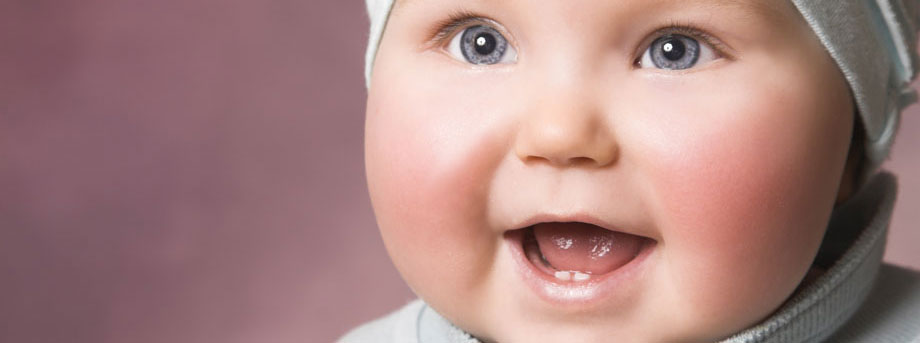
A website has been launched to help raise awareness of work being done in the region to tackle childhood obesity and to seek the views of parents and healthcare professionals.
It follows a study investigating the prevention of childhood obesity, led by researchers at The University of Nottingham. One-quarter of babies gain weight faster than they should during the first four months of life; this has been linked to a greater risk of them developing childhood obesity.
Sarah Redsell, Principal Research Fellow in the School of Nursing and Midwifery and a registered health visitor, said: “We’re keen to hear parents’ opinions about whether or not healthcare professionals should be trying to prevent childhood obesity by identifying babies who may be at risk.”
The Early Prediction and Prevention of Obesity during Childhood (EPPOC) research project explored local parents’ and healthcare professionals’ views about identifying under-ones who are at risk of being obese in childhood and what could be done to address the problem.
The research team ran focus groups across Nottinghamshire and Lincolnshire, speaking to 38 parents about their babies’ size, growth and feeding. Some parents had concerns over whether breast milk was sufficient and were confused over when to start weaning; some believed chubbier babies were more desirable; some believed that crying almost always indicated hunger and did not consider alternative explanations. Parents also seemed uncertain about whether and how healthcare professionals should act on the early signs that babies could be at risk of becoming obese.
The focus groups highlighted that parents may need extra advice about the physiology of breast feeding, how to differentiate between different cries and the timing of weaning. Parents also asked for guidance on healthy foods and how keep their babies active. (A full copy of this paper is at: www.biomedcentral.com/1471-2458/10/711/)
The research team surveyed 116 professionals, including GPs, practice nurses, health visitors and nursery and community nurses. They found that GPs were asked for feeding advice less than health visitors and nursery nurses despite knowing more about the risks of obesity. Conversely, health visitors and nursery nurses were more confident about giving such advice but were less knowledgeable about the health risks of obesity. Interviews with 12 GPs and six practice nurses found that they believed advising parents on feeding and obesity prevention was health visitors’ work. GPs said that no formal training was available to help them advise parents. They considered their relationship with parents a high priority and were unsure about intervening with those whose babies might be at risk of becoming obese as children.
The survey and interviews highlighted the need for healthcare professionals to be more knowledgeable about the early signs of childhood obesity and that advice to parents needs to be more consistent. (A full copy of this paper is at: www.biomedcentral.com/1471-2296/12/54)
The research team included academics from the Universities of Nottingham and Lincoln, a clinician from Nottingham University Hospitals NHS Trust and a health visitor from Nottingham CityCare Partnership.
Parents are invited to provide comments at: www.nottingham.ac.uk/nmpresearch/eppoc/home.aspx.
Comments are closed.
Other Research
Welcome to Associate Pro-Vice-Chancellor for Researcher Academy and Research Culture Development
Professor Jeanette Woolard has been appointed as Associate Pro-Vice-Chancellor for the Researcher Academy and Research Culture Development. […]
Strong research funding performance is a fantastic achievement
Professor Tom Rodden’s research update I am delighted to report that the University of Nottingham is […]